Sunday, 18 October 2026 • 21:56 Algiers time
Algeria Gate
News Room
Cameron Hudson: UAE is virtually the sole backer of the RSF..without its support the war in Sudan would not continue Algeria-Niger: Official launch of Trans-Saharan fibre optic link Five minutes of lament over Algeria: Amar Belani exposes CNEWS’s real obsession Algerian courts hand down first death sentences under new drugs law Ségolène Royal’s masterclass on Algeria against an ignorant and demagogic journalist President Tebboune and senior officials receive the remains of Boualem Boualem in Algiers NAPEC 2026 in Oran: Algeria at the Heart of Africa’s and the Mediterranean’s New Energy Landscape Pegasus Files: Amnesty Uncovers Morocco’s Espionage Against Spain President Tebboune Orders Salary Increases in Algeria’s 2027 Budget, Rules Out New Taxes on Citizens Algeria Emerges as a Trusted Power for Regional Peace and Stability
Share this post

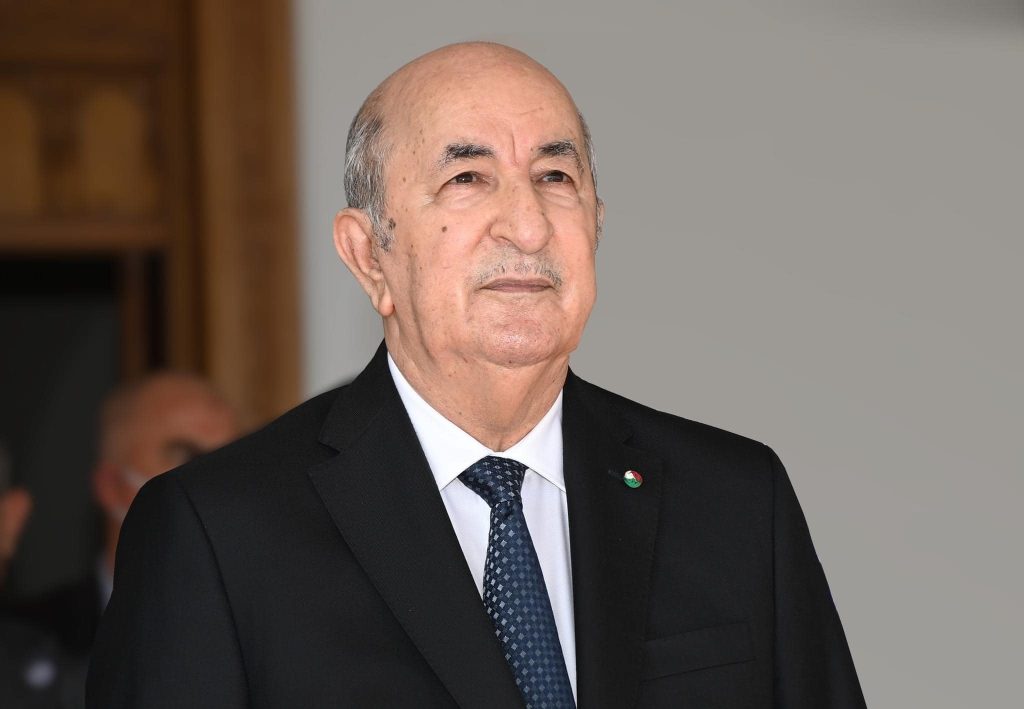
President Tebboune sends a message on the occasion of National Mujahid Day and recalls the glories of the Liberation War

• Author: Lys Iwannughen • 0 comments • 33 views
President Tebboune sends a message on the occasion of National Mujahid Day and recalls the glories of the Liberation War

Algeria Gate: President of the Republic, Abdelmadjid Tebboune, sent a message, Wednesday,  on the occasion of National Mujahid Day, which commemorates the dual anniversary of the North Constantine Offensives and the holding of the Soummam Congress (August 20th 1955–1956 / 2026).

The President opened his message by: “The Algerian people celebrate National Mujahid Day, commemorating the dual anniversary of the North Constantine Offensives and the holding of the Soummam Congress, to recall the exploits of those men among the mujahideen; the martyrs and those who remain true to the covenant. May God grant them health and long life. They struggled and persevered until victory came to them; they fulfilled their commitment, and God fulfilled His promise to them, and He is the best of helpers.”

https://twitter.com/algatedzEng/status/2090068846526845183?s=20

President Tebboune added: “What this anniversary holds of the meanings of genius that inspired the unique November generation to safeguard the flame of the revolution whose spark it had ignited, to keep pace with the necessities of development, expansion and spread within the framework of the objectives set by the Declaration of November 1st, and to confront the strategic plans of the colonial authorities that were betting on the illusion of keeping Algeria under the yoke of occupation and maintaining their control over it, and that resorted to any means aimed at preventing the Algerian people from aspiring to live in freedom and independence.”

He also affirmed in his message: “The North Constantine Offensives, led by the iconic martyr Zighoud Youcef, with their strength, heroism, comprehensiveness and steadfastness, have been and will remain full of the embodiment of the highest values under the banner of the National Liberation Front and Army, and of great historical lessons that are a beacon for the present and the future; lessons for all, near and far, that Algeria was and will remain clinging to the rope of cohesion, solidarity and national unity with which God has endowed it.”

The President further highlighted that “National Mujahid Day is also closely linked to the anniversary of the holding of the Soummam Congress, the historic conference that envisioned a comprehensive project for organising and managing the revolution in its military, logistical and organisational dimensions, and in its legislative dimension by establishing institutions that would translate the substance of the revolution in various fields, particularly the military, political and media ones, and by promoting it in international forums. Thus this historic conference framed the revolutionary project in all its dimensions to confront the most powerful colonial force of the time, supported by the Atlantic Alliance.”

President Tebboune continued: “If  August 20th 1955 embodied a strategy for confronting the enemy’s hordes on the ground, then  August 20th 1956 was a qualitative leap that crystallised a multi-dimensional strategy which created a new balance among the parties to the battle, in planning and organisation. The War of National Liberation thus became the factor that changed the equation of traditional colonialism not only in Algeria, but among all the oppressed of the earth.”

He added: “Such pivotal historical milestones, while we recall through them the symbolism of the mujahid and his lofty place in the nation’s conscience, also allow us to point with pride to the victorious present of Algeria; a present embodied in the preservation of national sovereignty and the strengthening of the building of a strong state with its institutions, based on the awareness of its youth and the cohesion of its people, so that the message of the martyrs and mujahideen remains alive, radiating giving and driving our country towards horizons of elevation, glory and leadership.”

The President’s message stated: “And I call, finally, upon today’s generation on this immortal occasion to complete the message of the fathers and grandfathers, to draw lessons from their immense sacrifices and to invest in them, and through them to continue efforts to elevate the homeland and achieve the aspirations of the glorious November generation.”

In concluding the message, Algerian President Abdelmadjid Tebboune said: “I pray for mercy upon our righteous martyrs, and I extend a greeting of reverence and recognition to my sisters the mujahidat and my brothers the mujahideen on this National Day of theirs, wishing them lasting health and complete well-being.”

#Algeria#President tebboune
Author
Lys Iwannughen
View my articles

Leave a comment

Your email address will not be published. Required fields are marked *

Algeria
Share this post

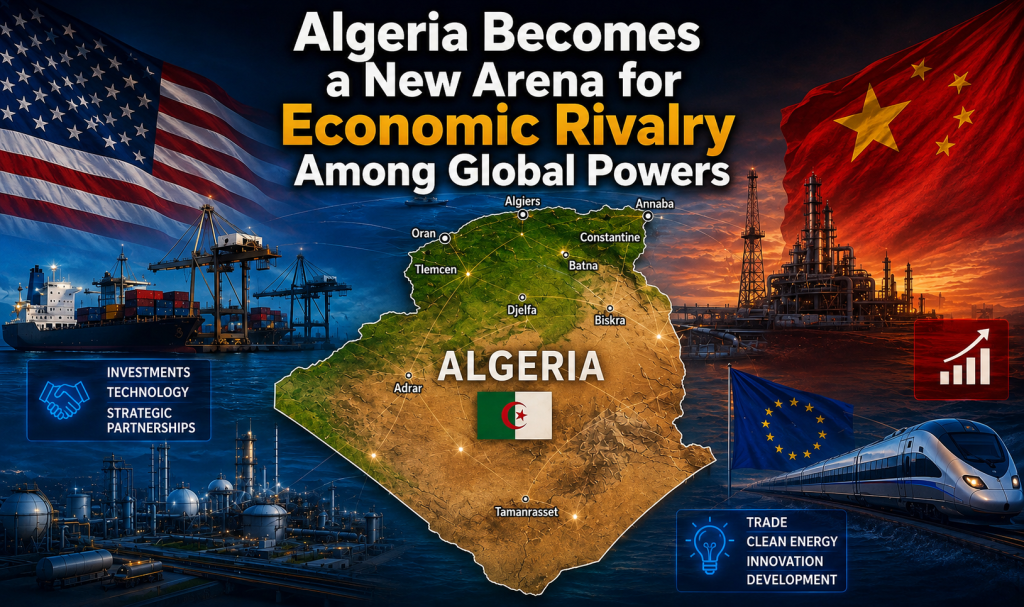
Algeria Becomes a New Arena for Economic Rivalry Among Global Powers

Algeria Becomes a New Arena for Economic Rivalry Among Global Powers

Algeria Gate: The era of Algeria negotiating as a cash-strapped market is over. In 2026, it sits down as a state with a $135 billion budget, $50 billion in projects underway, and nearly $72 billion in reserves, backed by a boom in rail, energy, desalination, mining, and industry.

Algeria Becomes a New Arena for Economic Rivalry Among Global Powers

This financial and investment mass has reshaped the attractiveness of the Algerian economy and at the same time raised the value of what the country can demand in return for opening its sectors to partners: cheaper financing, technology transfer, higher local-content ratios, industrial localization, skills training, and better access for Algerian products to foreign markets.

The shift becomes clear when the lens pulls back just five years. A study published by the Arab Reform Initiative in January 2026 put Algeria’s budget at roughly $65 billion in 2021, compared to $135 billion today, a nominal jump of about $70 billion, or nearly 108 percent. But the more telling figure isn’t the scale of spending itself; it’s what that spending is building.
Algeria is simultaneously funding new railway networks, major water infrastructure, and energy, industrial, and mining projects; investments largely aimed at expanding the economy’s productive capacity, not just covering day-to-day expenses.

From this angle, the budget tells a different story. Spending is no longer the point, conversion is. How much of it becomes tonnes of iron and phosphate, kilometres of rail, desalinated water, industrial capacity, exports, jobs. That’s the equation that will decide whether this investment boom pays off. And there’s already a signal: in 2024, the public industrial sector grew nearly 4 percent; an early sign that industry is clawing back ground in the economy.

Algeria Becomes a New Arena for Economic Rivalry Among Global Powers

From protecting hard currency to building productive capacity

This transformation predates the 2026 budget by more than a decade. Its roots trace back to the 2014 oil-price shock, which forced Algeria to abandon a model built on importing its way through domestic demand. From 2015, trade policy shifted toward cutting consumer and industrial imports. From there, import substitution spread, wherever local production capacity could bear the weight.

The numbers are starting to show it. The study puts the import bill at around $40 billion, down sharply, while foreign reserves have rebuilt to nearly $72 billion by 2024.
The payoff: Algeria now has room to finance bigger projects without giving up its cushion against external shocks.

Yet the same policy revealed aspects that need addressing, including shortages of certain products at particular stages, the growth of informal import channels, and the expansion of a portion of parallel trade. More importantly, the informal economy still represents, according to the study’s estimates, about a quarter of GDP, with transactions approaching $60 billion.

This figure is not only a problem; it is also a huge economic reserve if the state succeeds in gradually bringing it into banking and formal channels.
The portion that moves from liquidity outside the banks into accounts, organised financing, deposits, loans, investments and tax revenues can help finance a larger share of the economic transformation from within, rather than increasing reliance on the treasury alone.

This becomes all the more important amid the rise in the fiscal deficit. The study places the 2025 budget deficit at around $61 billion, or nearly 21 percent of a GDP estimated at about $278 billion, with the economy expected to grow to roughly $308 billion in 2027. If this path materialises, the economy will have added about $30 billion to its nominal size in two years; yet sustaining this expansion requires that the large projects quickly turn into productive assets and additional revenues.

This is where the private sector and public-private partnerships come in; one of the paths that could ease pressure on public financing.
The state doesn’t need to fund every road, factory, or logistics hub straight out of the treasury, provided financing, risk, and returns can be shared with investors capable of executing and operating the project under rules that safeguard the national interest.

Algeria Becomes a New Arena for Economic Rivalry Among Global Powers

Algeria grows… and partners recalculate

The more Algerian projects expand, the more important the question becomes of who will implement them and under what conditions. Here the clearest change in external economic relations has begun.

Algeria is no longer building its international relations around a single partner. Turkey has expanded its investments and interests to around $6 billion in textiles, mining, agriculture, chemicals and pharmaceuticals, while Turkish products account for about 7 percent of Algerian imports.

Qatar has for its part entered the integrated dairy project worth $3.5 billion, an investment aimed at establishing an agricultural and industrial chain in the south rather than continuing heavy reliance on imported milk powder.

These projects illustrate the shift Algeria wants to generalise in its external relations: foreign capital is more valuable when it builds production inside the country, reduces imports, employs labour and transfers knowledge, rather than turning the Algerian market into an outlet for finished products only.

Algeria Becomes a New Arena for Economic Rivalry Among Global Powers

The same logic now shapes Algeria’s ties with the EU

Two decades since the association agreement. Informal talks began in 2022. Brussels opened a formal review track in early 2025. Algeria’s demand: rebalance the relationship. Europe got a large market. Algeria got less than promised; in industrial investment, technology transfer, non-hydrocarbon exports.

State Minister, Minister of Foreign Affairs Ahmed Attaf has argued that the agreement’s previous formula held back Algeria’s economic development while favoring European interests , making renegotiation part of a broader recalibration of external economic policy: access to the Algerian market comes at a price, and that price should be paid in investment, production, technology, and added value inside Algeria.

Europe’s energy crunch after 2022 handed Algeria leverage. Scrambling to replace Russian gas, Brussels looked south: to a supplier with pipelines already in place, already linked to Europe’s northern shore. Algeria stopped being just a gas tap and became something else in European eyes: a partner for production investment, energy transition, and methane cuts.

Washington is circling too. Energy, agriculture, defense, the relationship is widening, and names like ExxonMobil and Chevron are back looking at Algerian hydrocarbons. Ambassador Sabri Boukadoum has talked up deeper commercial and defense ties with the U.S. private sector; diversification, not realignment; more partners, not less independence.

The payoff: Algeria negotiates energy and tech with the U.S., gas and industry with Europe, infrastructure and manufacturing with China, and production deals with Turkey and Qatar, all at once, tied to no single power.

China advances… but Algeria does not grant the market for free

This balance becomes more important when looking at the report “Africa in the World 2043” issued by the African Institute for Security Studies, which placed Algeria among 11 major African economies in which Chinese influence is rising continuously. The group includes, alongside Algeria, Nigeria, Egypt, South Africa, Morocco, Ethiopia, Kenya, Ghana, Côte d’Ivoire, Tanzania and the Democratic Republic of Congo.

Algeria Becomes a New Arena for Economic Rivalry Among Global Powers

But “influence” in the report’s methodology does not mean direct investment alone. It combines trade, contracts, financing, infrastructure, diplomatic relations and the capacity to exert influence; therefore China’s share in the Algerian economy can rise through the execution of large projects financed by Algeria even when the value of its direct investments remains below announced ambitions.

This distinction is very important for Algeria

Having China finance a project with its own capital, bear its risks and localise production inside the country is different from a Chinese company obtaining a contract to carry out a project whose cost Algeria pays. Both create activity, but the long-term impact on foreign investment, technology transfer and financial risks is not the same.

For this reason the coming phase appears linked less to the number of contracts and more to the quality of their conditions. Algeria, which possesses an investment programme of this size, can use competition among companies and countries to raise local-content ratios, require projects to provide training, localise certain industries, and increase the share of Algerian firms in subcontracting.

The institute’s report notes that the redistribution of influence is not limited to China. British influence has declined markedly in the African economies it studied, while Emirati presence has risen through trade, diplomatic engagement and arms transfers. As for Russia, despite the expansion of its security presence in a number of countries on the continent, its economic capacity remains more limited than that of China and the West.

The report goes further when it expects Chinese capabilities to surpass American ones in 26 out of 29 scenarios before 2060, with a large number of power-transition scenarios concentrated at the beginning of the 2040s. While China and the United States together represent about 43 percent of the world economy, the major African economies become natural arenas of competition for energy, minerals, infrastructure and markets.

For Algeria, this competition is not necessarily a threat. It can turn into an economic asset if the state manages it rigorously, because the multiplicity of offers gives it the ability to choose among financing, technology, cost, local-content ratios and export conditions.

Algeria holds cards here that are hard to ignore: a continental surface area, energy reserves, iron, phosphate and mineral resources, a large internal market, expanding infrastructure, a location adjacent to Europe and direct depth towards the Sahel and Africa.

All of this makes the foreign partner need Algeria more than it did years ago, and gives the authorities the possibility of raising the ceiling of their conditions.

A billion dollars for start-ups… and the bet on what comes after the mega-projects

But building a larger economy cannot rely on public companies and sovereign projects alone.

The data cited by the Arab Reform Initiative indicate that the number of start-ups rose from around 200 in 2019 to nearly 700 in 2024, growth of about 250 percent, with financing approaching $1 billion across different stages.

The figure is important, but the real test begins after the financing. The economy does not need only companies that carry the label “start-up”; it needs institutions that can sell their products, win contracts, export, and grow into medium then large companies.

Hence bureaucracy, the speed of file processing, the availability of financing and public demand remain among the most sensitive files. The president of the Algerian Economic Renewal Council, Kamel Moula, had previously pointed to the continuing impact of bureaucratic procedures on investment despite the reforms.

Algeria Becomes a New Arena for Economic Rivalry Among Global Powers

The skills file also remains another element in the transformation equation. The study conveys an estimate of around 500,000 doctors, engineers, researchers and scientists who have left Algeria, and puts forward a research estimate of the cumulative cost of brain drain at about $465 billion. This last figure does not represent a proven cash loss in the national accounts, but it gives an idea of the scale of value any country can lose when it finances education and training and then the skills move to other economies.

For this reason the greatest investment Algeria can achieve is not limited to railways, factories or ports; it includes creating an economy in which the engineer, doctor, researcher and entrepreneur finds inside the country a market, an opportunity, an income and a professional path capable of competing.

Washington opens the transparency file… and Algeria faces the challenge of the quality of spending

Amid this positive picture, one of the files that could further strengthen Algeria’s position remains linked to fiscal transparency and the quality of data.

In the 2026 Fiscal Transparency Report issued on 11 August, the US State Department reviewed the performance of 140 governments and entities during 2025 and considered that 73 of them met its minimum requirements, against 67 that did not. Algeria was classified in the second group, without recording “notable progress” according to the American methodology during the assessment period.

But it would be wrong to turn this result into a “corruption ranking.”

The report measures the publication of budgets and debt, oversight of public funds, the independence of audit bodies, procurement and resource-extraction contracts; it does not say that failure to meet the standards proves the existence of corruption. Moreover, the detailed page devoted to Algeria was experiencing a technical outage when reviewed, which prevents identifying the Algerian shortcomings item by item on the basis of the general report alone.

Nevertheless, improving disclosure is an Algerian interest before it is an American demand.

The larger the budget and public investment become, the more important it is to publish data that allow measurement of project cost, completion rate, return, jobs and added value. If Algeria is spending tens of billions on economic transformation, the strength of its achievements becomes greater when the state can demonstrate the impact of every dinar with clear figures.

This serves not only the outside; it improves internal decision-making itself, increases the confidence of Algerian and foreign investors, and makes it harder to waste resources or delay projects.

Algeria Becomes a New Arena for Economic Rivalry Among Global Powers

Algeria in a position of choice

When these indicators are brought together, a picture emerges that is completely different from the Algerian economy of a decade ago, which was mainly preoccupied with defending its reserves after the collapse of oil prices.

Today there is a $135 billion budget.  

There are around $50 billion of major public projects.  

There are $72 billion of foreign-exchange reserves according to the figures adopted by the study.  

And there is an economy whose size may rise from $278 billion to around $308 billion by 2027.

Abroad, China, the United States, the European Union, Turkey, Qatar and others are competing for different sectors inside the same market.

This mix gives Algeria a rare opportunity to redefine its relationship with foreign capital.

The goal is no longer to obtain investment for its own sake, but to obtain investment that serves the Algerian plan: a project that produces rather than imports, exports rather than consumes hard currency, localises technology rather than merely buying it, and trains Algerian labour rather than keeping knowledge outside the borders.

Algeria Becomes a New Arena for Economic Rivalry Among Global Powers

This is the real leap that will determine the value of the current phase.

If the new railways turn into corridors for minerals and exports, mining projects into processing industries, energy investments into export contracts and local value, agricultural projects into import substitution, and start-ups into companies capable of growth, then the large spending Algeria is recording today will have reshaped the economic base for years to come.

But if a large part of it remains mere financial cost, the expansion of the budget will become a burden rather than a lever.

For this reason the international competition over Algeria appears more as an opportunity than a mere race for influence. The existence of several powers seeking a place inside one economy gives Algeria the ability to compare, choose and negotiate, provided it uses the market, resources and geographic location to obtain the greatest possible value inside the country.

Herein lies the advantage of the present moment: Algeria is no longer obliged to choose between China, America and Europe; it can make each party offer what serves its priorities, while the economic decision remains Algerian and the national interest is the criterion of partnership.

Thus Algeria does not enter the global transformation as a spectator of the power transition between East and West, but as a large African economy at whose crossroads energy, minerals, infrastructure and markets meet, and within which the state possesses growing financial and investment capacity.
The wager now is to convert these cards from negotiating power into factories, exports, technology and jobs, so that the expansion of international interest in Algeria becomes value created inside the national economy, not influence exercised upon it from outside.


#Algeria
Author
Lys Iwannughen
View my articles
Algeria
Share this post

Morocco Takes a Page From Israel’s Playbook to Target Algeria

Morocco Takes a Page From Israel’s Playbook to Target Algeria

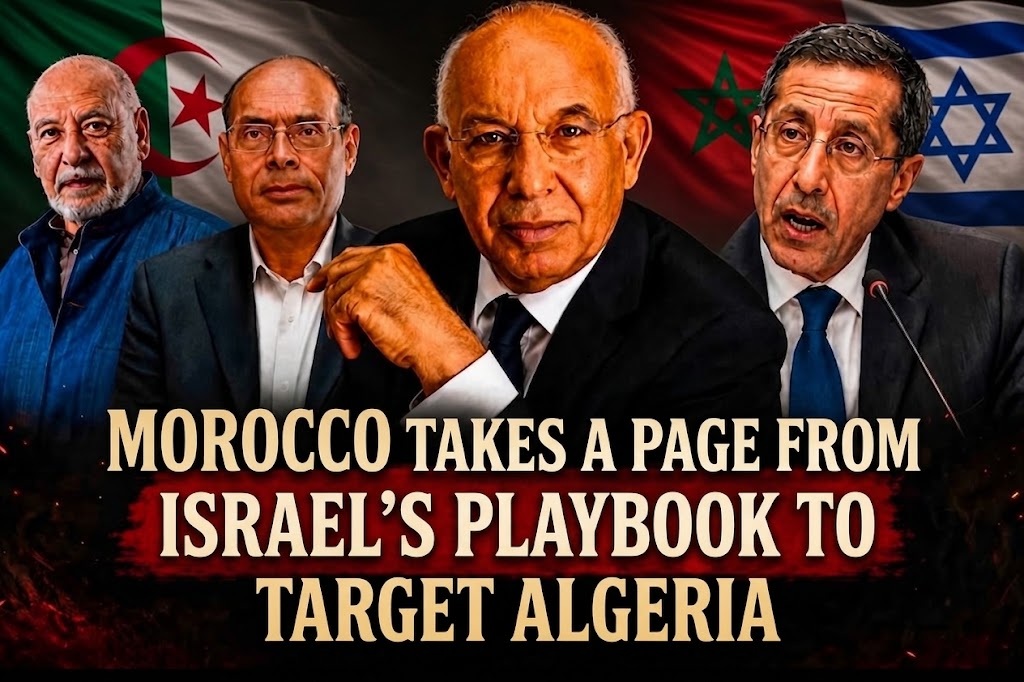
Algeria Gate: Algerian diplomat Abdelaziz Rahabi has accused Morocco of adopting tactics inspired by the Israeli model to undermine Algeria, following a series of statements targeting Algiers by Moroccan and regional figures.

The remarks came in response to recent statements by Morocco’s Permanent Representative to the United Nations Omar Hilale, Moroccan writer Tahar Ben Jelloun, and former Tunisian President Moncef Marzouki.

In an analysis published by El Khabar, Rahabi examined what he described as growing political and diplomatic pressure against Algeria, as well as the broader geopolitical tensions affecting North Africa.

Abdelaziz Rahabi Responds to Omar Hilale

Rahabi strongly criticized statements made by Morocco’s UN ambassador Omar Hilale, who claimed that Algeria did not exist as a state before 1962 and questioned its understanding of territorial integrity.

The Algerian diplomat recalled that Hilale had previously used the UN platform in July 2021 to call for the secession of Algeria’s Kabylie region. According to Rahabi, that intervention contributed to the deterioration of Algerian-Moroccan relations and preceded Algeria’s decision to sever diplomatic ties with Morocco in August 2021.

Rahabi also challenged what he described as an inaccurate interpretation of Algerian history, arguing that the country’s historical identity and territorial foundations predate the establishment of the modern Algerian state.

Algeria’s Historical Roots

According to Rahabi, Algeria’s history stretches back thousands of years and is deeply rooted in Numidia, which he described as a foundational element of Algeria’s geographical and national identity.

He pointed to King Massinissa, who ruled more than 2,200 years ago, as an important historical figure in the development of the region’s political and territorial identity.

Rahabi further argued that Numidia possessed key characteristics associated with statehood, including territory, population, and political authority, long before the emergence of modern European states.

Tahar Ben Jelloun Faces Criticism

Rahabi also criticized Moroccan writer Tahar Ben Jelloun over comments concerning the migration crisis in Ceuta.

According to Rahabi, Ben Jelloun accused Algeria of being behind what he described as a “Blue March” in Ceuta and claimed that Algerians represented the majority of the thousands of migrants who entered the Spanish enclave.

Rahabi rejected these allegations, arguing that available facts contradicted the claims. He accused Ben Jelloun of attempting to associate Algeria with the violence and humanitarian tragedy surrounding the Ceuta migration crisis.

The Algerian diplomat further argued that Morocco had turned migrants into a tool of diplomatic pressure, particularly in the context of tensions along Algeria’s borders.

Rahabi Criticizes Moncef Marzouki

Rahabi also addressed statements by former Tunisian President Moncef Marzouki, who, according to the Algerian diplomat, recently called on Algerians to launch a new “Hirak” movement.

Rahabi criticized Marzouki’s position on Algeria-Tunisia relations and accused him of contributing to diplomatic initiatives that, in his view, went beyond Tunisia’s traditional policy of neutrality on the Western Sahara issue.

He also recalled a 2014 proposal involving the Maghreb Union that, according to Rahabi, included a Moroccan autonomy plan for Western Sahara alongside the possibility of granting Algeria access to the Atlantic Ocean.

Rahabi Warns of a Coordinated Strategy Against Algeria

According to Rahabi, the statements by Hilale, Ben Jelloun, and Marzouki were issued within a relatively short period and reflect what he described as a broader strategy aimed at undermining Algeria.

He argued that Morocco is simultaneously sending messages calling for calm and normalization through international partners while mobilizing diplomatic and informal channels to maintain pressure on Algeria.

Rahabi linked this strategy to the longstanding tensions between the two neighboring countries, which have included the 1963 Sand War and the eventual severing of diplomatic relations in 2021.

“Morocco Is Drawing Inspiration From the Israeli Model”

In his concluding remarks, Rahabi argued that Morocco’s strategy seeks to portray Algeria as hostile to Western interests while strengthening Rabat’s position as a regional representative of Western interests.

He claimed that Morocco is “drawing inspiration from the Israeli model” in its efforts to influence perceptions of Algeria and secure greater diplomatic support.

Rahabi also connected the issue to Algeria’s positions on Palestine and Western Sahara, arguing that Algeria faces pressure because of its support for Palestinian rights and the principle of self-determination.

The Algerian diplomat concluded by warning against turning North Africa into an arena for confrontation between major powers. He stressed that geography remains a fundamental factor in regional strategy and argued that Algeria’s extensive borders make the country a central geopolitical actor in North Africa.

#Algeria#Israel#Morocco
Author
Lys Iwannughen
View my articles
Algeria
Share this post

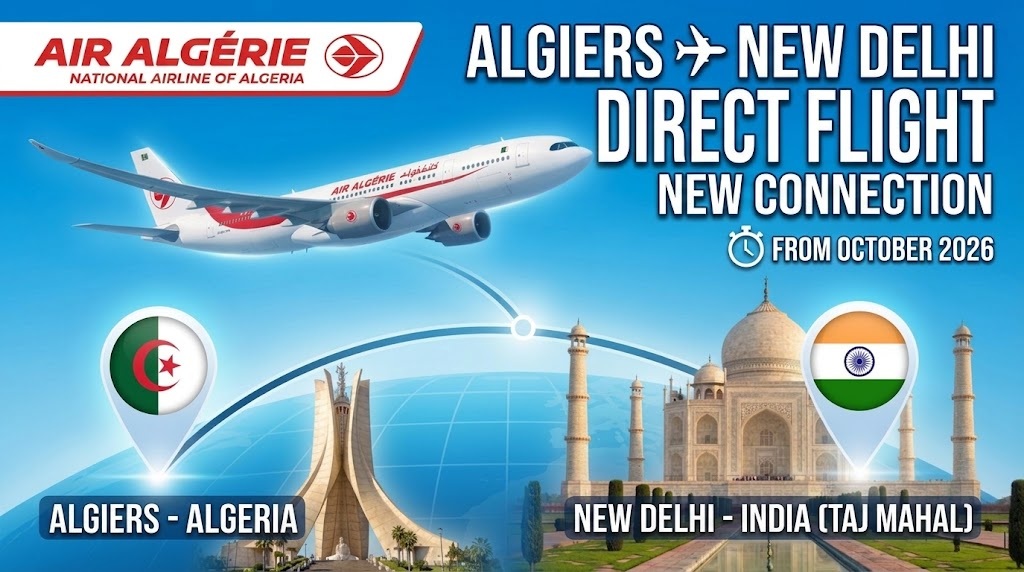
Air Algérie to Launch Direct Algiers–New Delhi Flight in October 2026

Air Algérie to Launch Direct Algiers–New Delhi Flight in October 2026

Algeria Gate: Air Algérie is set to launch a new direct flight between Algiers and New Delhi in October 2026, marking a major step in strengthening air connectivity between Algeria and India.

The new route is expected to boost tourism, business, trade, and diplomatic exchanges between the two countries.

Air Algérie to Connect Algiers and New Delhi

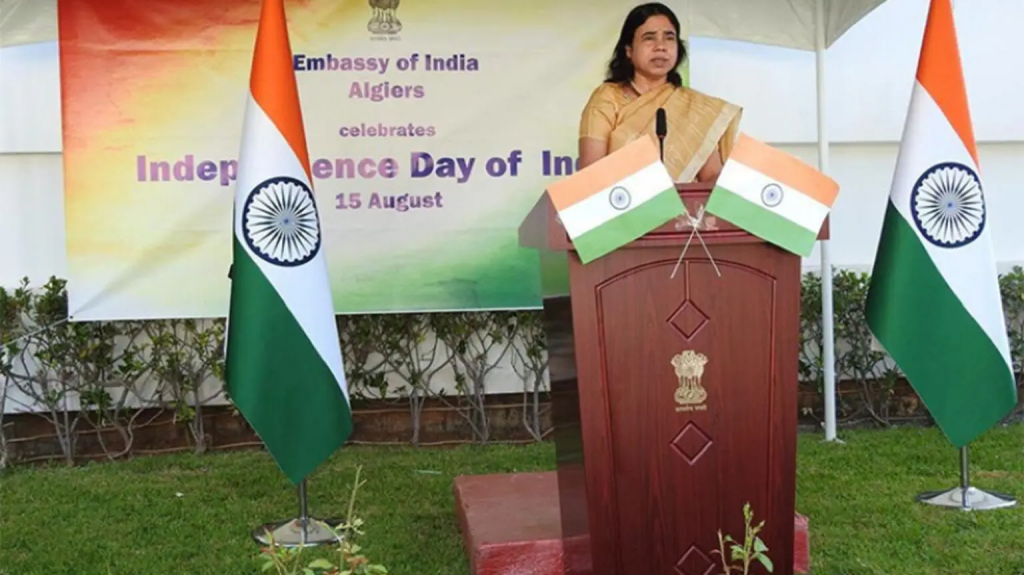
India’s Ambassador to Algeria, Swati Vijay Kulkarni, confirmed that the new Algiers–New Delhi route will begin operating in October 2026. The announcement was made during a ceremony at the Moufdi Zakaria Palace of Culture in Algiers celebrating India’s National Day.

Air Algérie to Launch Direct Algiers–New Delhi Flight in October 2026

According to information reported by AeroRoutes, the first direct flight is scheduled for October 25th, 2026.

The new service will be operated by Air Algérie three times a week, with flights scheduled for Tuesdays, Thursdays, and Saturdays.

Algiers–New Delhi Flight Schedule

Flights from Algiers will depart at 10:00 a.m. and arrive in New Delhi at 11:00 p.m. local time.

For the return journey, flights will leave New Delhi at 12:30 a.m. and arrive in Algiers at 6:05 a.m.

The direct connection is expected to make travel between Algeria and India significantly easier by providing passengers with a more convenient alternative to connecting flights.

New Route to Strengthen Algeria–India Relations

The launch of the direct flight comes as Algeria–India relations continue to expand, with growing cooperation in economic, tourism, and diplomatic fields.

The new air link is expected to facilitate greater movement between the two countries, benefiting Algerian travelers visiting India, Indian tourists traveling to Algeria, business delegations, and diplomatic exchanges.

It could also contribute to increased commercial activity by making travel between the two markets faster and more accessible.

Air Algérie Expands Its International Network

The Algiers–New Delhi route forms part of Air Algérie’s broader international expansion strategy, particularly its efforts to strengthen connections with Asia.

For its upcoming long-haul routes, the Algerian national carrier is expected to make use of its future Airbus A330-900neo aircraft, allowing it to expand its long-distance network and serve new international destinations.

The new India route therefore represents more than an additional destination for Air Algérie. It is also part of Algeria’s efforts to position Algiers as an increasingly important regional aviation hub connecting Africa with Asia.

Algiers Strengthens Its Gateway to Asia

With the launch of the direct Algiers–New Delhi service, Algeria is set to establish a stronger and more convenient air bridge with India.

The new route is expected to support tourism, trade, investment, and diplomatic cooperation, while giving passengers from both countries a direct connection between the Algerian and Indian capitals.

As relations between Algeria and India continue to develop, the new Air Algérie service could become an important link between North Africa and South Asia.

#Air Algérie#Algeria#India
Author
Lys Iwannughen
View my articles