
Friday, 6 November 2026 • 20:41 Algiers time
Algeria Gate
Share this post

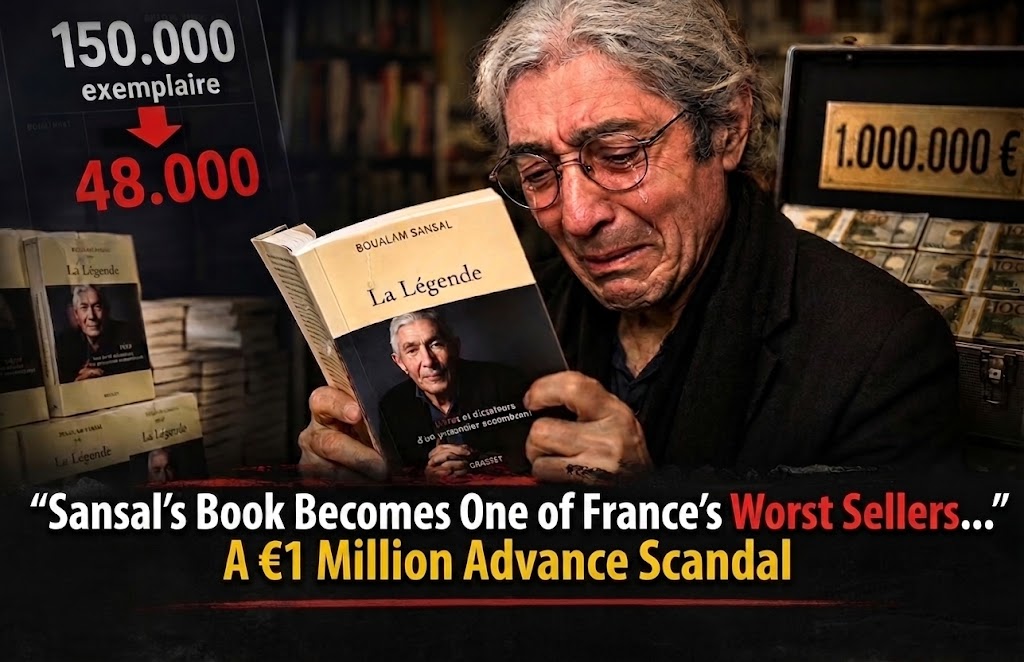
Sansal’s Book Becomes One of France’s Worst Sellers… A €1 Million Advance Scandal

• Author: Lys Iwannughen • 0 comments • 45 views
Sansal’s Book Becomes One of France’s Worst Sellers… A €1 Million Advance Scandal

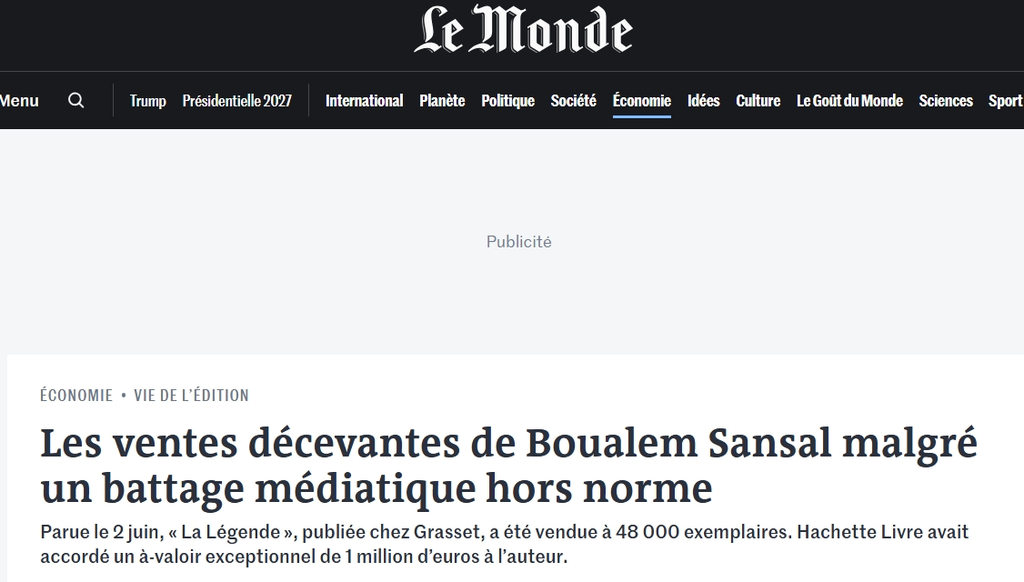
Algeria Gate: Boualem Sansal’s latest book, La Légende, published by Grasset on June 2, has reportedly sold only 48,000 copies, despite Hachette Livre granting the author an exceptional €1 million advance and investing heavily in its promotion.
Sansal’s Book Becomes One of France’s Worst Sellers… A €1 Million Advance Scandal

According to Le Monde, NielsenIQ BookData recorded 48,000 sales as of August 20, compared with an initial print run of 150,000 copies. The book initially performed strongly, selling nearly 17,000 copies in its first week and entering France’s top five bestsellers, but it quickly dropped out of the rankings.

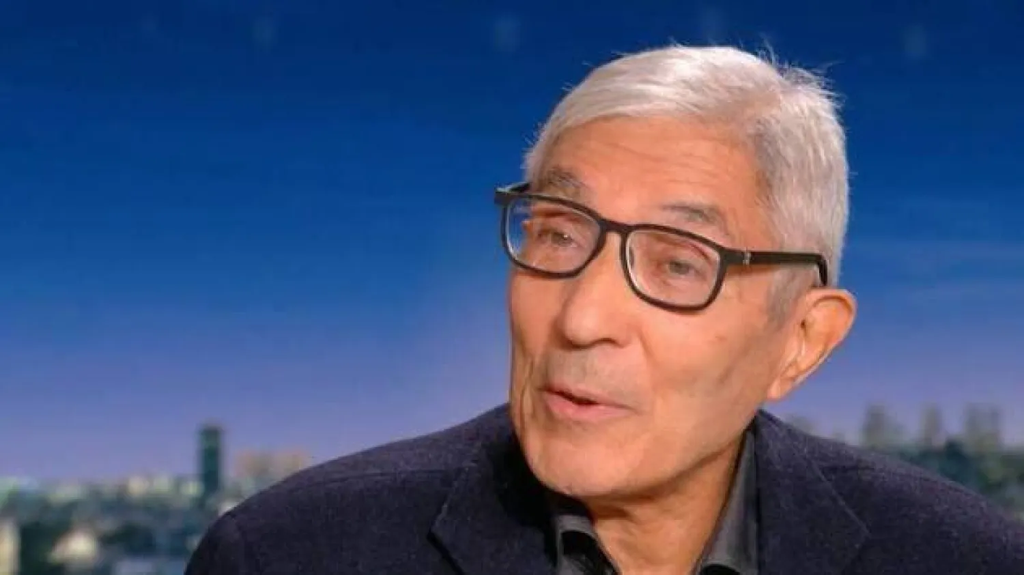
The 252-page book, priced at €22, recounts Sansal’s year in an Algerian prison over accusations of undermining national unity. It was published by Grasset, part of Hachette, the French publishing giant owned by billionaire Vincent Bolloré.

Le Monde contrasted Sansal’s performance with former French President Nicolas Sarkozy’s Le Journal d’un prisonnier, published by another Hachette imprint, Fayard. Sarkozy’s book sold 90,000 copies in its first week alone.
Sansal’s Book Becomes One of France’s Worst Sellers… A €1 Million Advance Scandal

Hachette reportedly signed Sansal away from Gallimard, which had published his works since 1999. Gallimard and French publishing circles had campaigned for his release before Algerian President Abdelmadjid Tebboune granted him a presidential pardon on November 12, 2025.

Despite the modest sales, Hachette reportedly provided extensive promotional support, including full-page newspaper advertisements, widespread appearances on Bolloré-owned media outlets, and large-scale orders ensuring prominent placement in Relay stores across major train stations and airports.

The figures have therefore raised questions about the €1 million advance and the scale of the promotional campaign, particularly given the book’s relatively weak commercial performance.


#Boualem Sansal#France
Author
Lys Iwannughen
View my articles

Leave a comment

Your email address will not be published. Required fields are marked *

Economy
Share this post

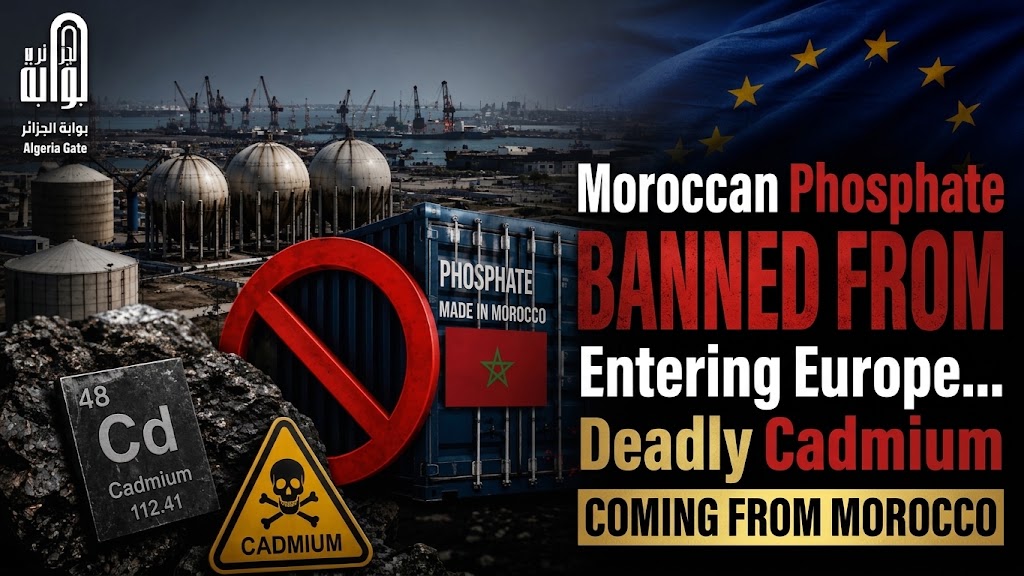
Moroccan Phosphate Banned from Entering Europe… Deadly Cadmium Coming from Morocco

Moroccan Phosphate Banned from Entering Europe… Deadly Cadmium Coming from Morocco

Algeria Gate: The Makhzen regime is facing growing challenges in maintaining its phosphate-derived fertilizer exports to European markets, amid rising concerns that these fertilizers may contain levels of toxic cadmium, a heavy metal that can migrate from soil into agricultural products and food, prompting warnings about its health and environmental risks.

In its natural state, phosphate contains cadmium, a heavy metal that is found in higher concentrations in phosphate deposits in Morocco, the United States, and Tunisia than in deposits in countries such as South Africa and Russia, according to data from the French health agency. The risks associated with this metal increase because it can migrate into agricultural soil and subsequently into food crops.

Cadmium is classified as a substance of health concern. It can cause damage to the kidneys, bones, and respiratory system and can increase the risk of cancer. It is a toxic heavy metal that occurs naturally in small quantities and can reach humans through air, water, and food. It can also accumulate in soil and agricultural crops, particularly when certain phosphate fertilizers containing high levels of cadmium are used.

The issue has become a public health concern in Europe, particularly in France, where calls have intensified for stricter controls on fertilizers imported from Morocco because of the potential risks they pose to agricultural products.

Faced with this pressure, the Moroccan Office Chérifien des Phosphates (OCP), which monopolizes the exploitation and processing of phosphate, attempted unsuccessfully to develop specific technologies to reduce cadmium levels in fertilizers destined for the European market. The group says the technology involves treating phosphoric acid and separating and isolating cadmium before it is used to manufacture fertilizers. However, this has not been enough to convince European health organizations, which have criticized the continued reliance on fertilizers imported from Morocco.

These measures have raised questions about cadmium levels in Moroccan fertilizers destined for markets outside the European Union, particularly since the company does not disclose the levels of this metal in all of its products. This has fueled concerns that different standards may be applied depending on the destination and market.

The Moroccan phosphate industry also faces environmental problems beyond cadmium, particularly those associated with fertilizer-production waste, most notably phosphogypsum, which contains heavy metals and acidic substances.

Between the risks posed by cadmium, European regulatory pressure, environmental problems, and supply disruptions, the phosphate sector produced by the Makhzen regime is entering a difficult period, while reducing toxic-metal levels has become an essential condition for maintaining its presence in the European market.

#Europe#Morocco
Author
Lys Iwannughen
View my articles
Europe
Share this post

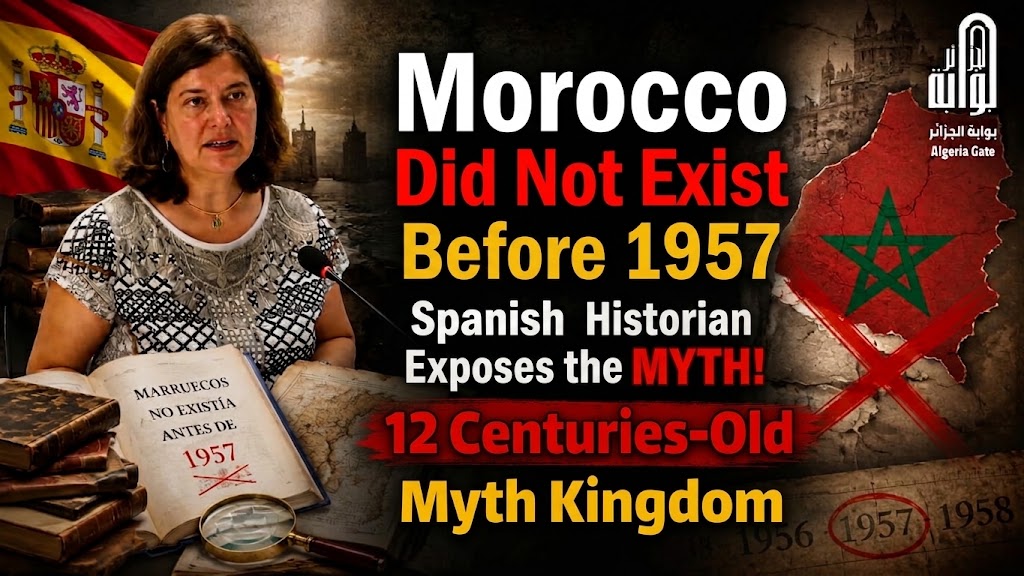
Morocco Did Not Exist Before 1957… Spanish Historian Exposes the Myth of a 12-Century-Old Kingdom!

Morocco Did Not Exist Before 1957… Spanish Historian Exposes the Myth of a 12-Century-Old Kingdom!

Algeria Gate: Historian Margarita Torres said that the Kingdom of Morocco did not exist before 1957, stressing: “We will not lose the two Spanish cities of Ceuta and Melilla, which have never been Moroccan.”

Speaking on La Tarde, a program broadcast by Spanish radio station COPE, the historian reviewed the three-thousand-year history of the two cities and compared it with the relatively recent emergence of the Alaouite Kingdom.

Historian Margarita Torres analyzed the historical foundations of Spanish sovereignty over the cities of Ceuta and Melilla during her appearance on La Tarde on COPE. Commenting on claims made by the Makhzen authorities regarding the two autonomous Spanish cities, the historian described those claims as “wild fantasy” lacking documentary evidence and historical logic.

Torres noted that both locations have continuous histories stretching back more than 3,000 years.

“This is the first thing Spaniards must understand clearly: the Kingdom of Morocco did not exist before 1957,” the historian said, comparing the modern emergence of the neighboring country with the Phoenician past of the two cities, known historically as “Abila” and “Russadir.”

When discussing Morocco’s independence from the French protectorate in 1956 under Francisco Franco, the professor drew a comparison with the 1975 Green March.

“If the people of Ceuta and Melilla, and all Spaniards, want to understand what is currently happening in Ceuta, they should study the Green March of 1975,” she warned on COPE.

The historian further warned that pressure at the borders and disputes over territorial waters are not limited to North Africa, but also point directly toward the Canary Islands.

Assessing Moroccan territorial claims and legislative moves, she stated: “Ceuta is the first step, Melilla is the second, and the Canary Islands are the third.”

Regarding the population’s longstanding connection to the cities, Torres said local residents defend their sovereignty because they “understand the side with which they have been connected for centuries and thousands of years.”

At the same time, she criticized shortcomings in the current education system for failing to include Mauretania Tingitana on school maps depicting Roman Spain.

At the conclusion of her remarks, Torres stressed the need to preserve historical memory and territorial sovereignty in the face of any external strategy, including what she described as the Makhzen regime’s expansionist plans.

She concluded firmly on La Tarde: “Of course, we will not lose the two Spanish cities of Ceuta and Melilla, which have never been Moroccan.”

#Morocco#Spain
Author
Lys Iwannughen
View my articles
Algeria
Share this post

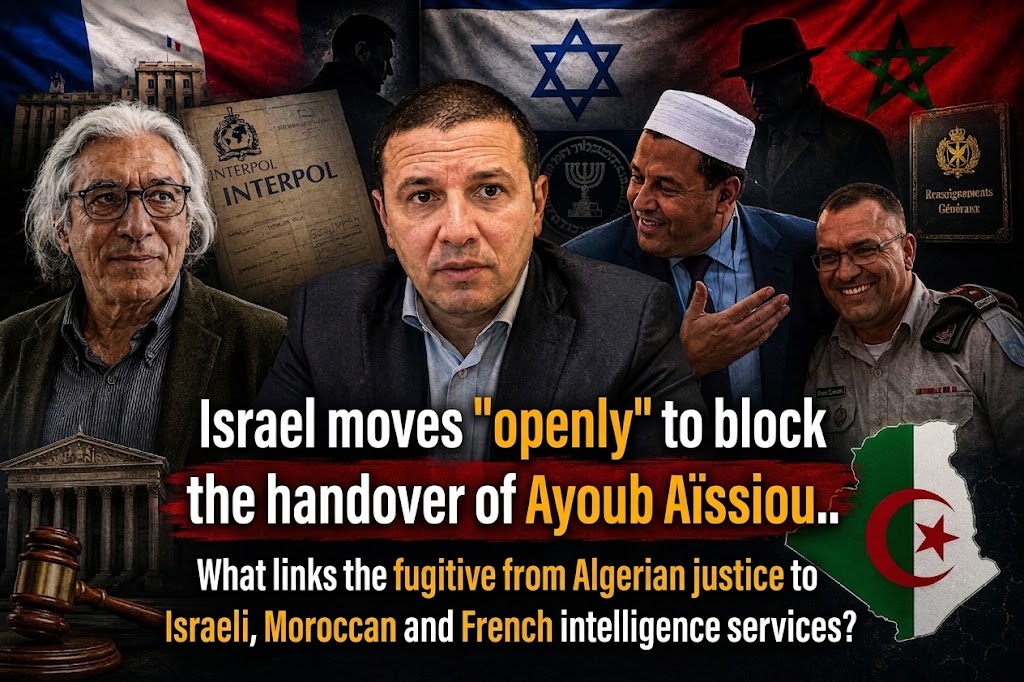
Israel moves “openly” to block the handover of Ayoub Aïssiou.. What links the fugitive from Algerian justice to Israeli, Moroccan and French intelligence services?

Israel moves “openly” to block the handover of Ayoub Aïssiou.. What links the fugitive from Algerian justice to Israeli, Moroccan and French intelligence services?

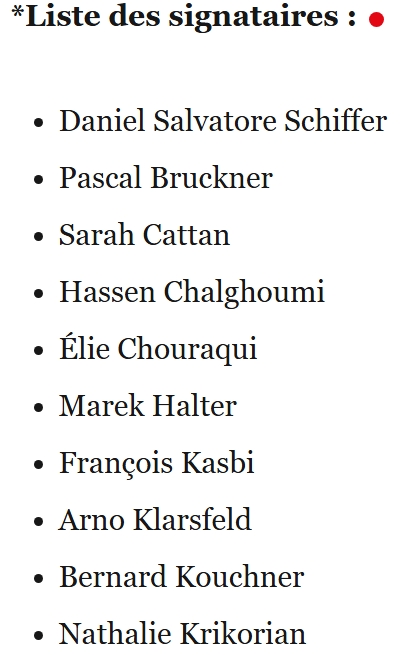
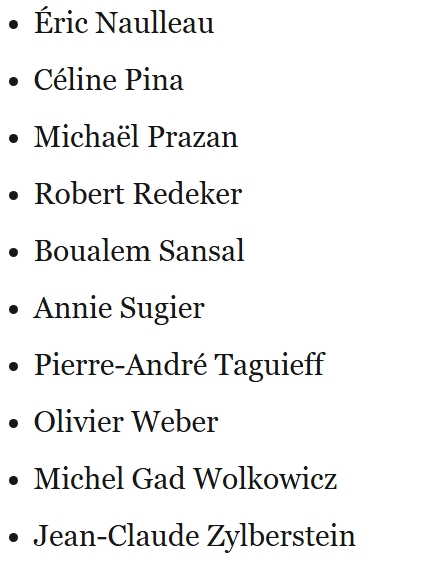
Algeria Gate: In a striking development suggesting that the self-proclaimed businessman known as Ayoub Aissiou is in reality nothing more than a long-time secret agent of Israel, according to observers, can one explain the open emergence of the Zionist lobby in France with a petition signed by several activist figures from the so-called Representative Council of Jewish Institutions in France (CRIF)?

This organisation has long influenced political decision-making in France and has become one of Israel’s most important tools for defending its interests and advancing its agenda.

What is particularly noteworthy is the publication of the petition on websites belonging to Vincent Bolloré’s empire, such as the newspaper Le JDD.

Even more surprising is the haste of the pro-Zionist imam of Tunisian origin, Hassan Chalghoumi, who is supported by the UAE, in declaring what he called his rejection of Spain’s extradition of the Algerian citizen Ayoub Issiou and in calling on the French authorities to intervene with Madrid to prevent the handover.

This raises the question: is Ayoub Aissiou a French citizen?

Israel moves “openly” to block the handover of Ayoub Aïssiou.. What links the fugitive from Algerian justice to Israeli, Moroccan and French intelligence services?

The traitor and mercenary Boualem Sansal has also entered the fray, signing the petition alongside a group of pro-Zionists linked to the Union of Jewish Students of France (UEJF). The petition is both ridiculous and revealing: it exposes Ayoub Issiou’s suspicious links to French, Israeli, Moroccan and Emirati intelligence services, while also highlighting other names active in Jewish associations with an extreme Zionist orientation, such as “Betar,” which also signed the petition.

As the decisive moment approaches in the case of the Algerian businessman Ayoub Issiou, who has been detained in Barcelona since 25 July on the basis of an international arrest warrant, the Israeli lobby in France, together with controversial French political and media figures, has mobilised to prevent his extradition to Algeria.

This move raises numerous questions about the alleged Algerian businessman’s ties to Israeli and Moroccan intelligence. Aissiou is being pursued by the Algerian judiciary in cases involving financial and commercial offences, including violations of legislation governing the movement of capital to and from abroad, illicit currency transfers, money laundering and the concealment of proceeds linked to corruption, among other charges.

What is striking is not only the nature of these moves, but also the identity of some of those involved and the way the case is being presented to European public opinion.

Israel moves “openly” to block the handover of Ayoub Aïssiou.. What links the fugitive from Algerian justice to Israeli, Moroccan and French intelligence services?

French novelist Pascal Bruckner, known for his strongly pro-Israel positions, has joined the campaign. He is joined by Boualem Sansal, convicted in Algeria on charges related to undermining national unity, and by the controversial Tunisian imam of Jewish origin, Hassan Chalghoumi.

Chalghoumi heads a French Islamic foundation supported by the UAE. He has previously visited Israel, where Israeli media photographed him embracing soldiers in Tel Aviv while claiming that the entity does not oppose Muslims.

Media support has also come from the outlets of French businessman Vincent Bolloré, whose platforms are steeped in narratives hostile to Algeria. The newspaper JDD, in particular, quickly published the alleged petition calling on French President Emmanuel Macron and Spanish Prime Minister Pedro Sánchez to intervene and prevent Aissiou’s extradition to Algeria.

Remarkably, this campaign seeks to reframe Aissiou as a “political opponent,” in an attempt to recharacterize the case away from its judicial core. The question that arises here is clear: are we dealing with a matter of freedom of opinion, or with a political attempt to reframe a judicial and financial file and give it a political cover?
According to the nature of the judicial files attributed to him, Aissiou is not a journalist imprisoned for an article, nor a writer pursued for a book, nor a political activist punished for his views. He is a businessman pursued in financial and economic cases; a fundamental difference that cannot be overlooked simply by applying the label of “political opponent.”

Even more questionable is the fact that the same circles that turned Boualem Sansal’s case into a symbolic battle under the banner of “freedom of expression” are now trying to apply the same logic to the case of a businessman.

This man has an economic trajectory and extensive networks of relationships.

The matter appears to go beyond mere humanitarian solidarity or legal defence. The political reframing of Issiou could have direct consequences for the course of his extradition, as well as for the Algerian judiciary’s ability to question him and investigate the files against him.

The man is not unknown within Algeria’s economic and media systems. His professional path brought him into contact with business circles and complex networks of influence in France and Morocco.

This is precisely what makes his file more sensitive, given the volume of information he may possess.

His return to Algeria could open the door to revealing precise details about money trails, companies and intermediaries, as well as the relationships of businessmen with political circles, and the protection and influence networks that accumulated privileges during the era of the “gang.” His statements could also help track capital flows and uncover relationships and interests that have remained in the shadows, and perhaps lift the veil on names and networks that targeted Algeria and extend into France and Morocco.

The fugitive businessman Ayoub Aissiou, who holds dual nationality (Liberian–Algerian), has for years posed as an Algerian businessman.

He transferred part of the funds he smuggled out of Algeria during the era of the “gang” to Morocco, seeking guarantees and protection from the Zionist lobby.

Aissiou, who is fleeing Algerian justice, knows full well that the Zionists control the Moroccan regime from top to bottom. He therefore planned to seek refuge in Morocco and settle there permanently, convinced that extradition to Algeria would be impossible.

This strategy followed the advice of his team of French lawyers, in exchange for transferring large sums of money from France to Morocco under the guise of investment, as Algeria Gate exclusively revealed in a series of earlier articles.

On this basis, according to a well-informed Algerian source, the plan of the Zionist-Moroccan lobby is to present Ayoub Aissiou as a businessman. In reality, he is a professional money-smuggler and launderer merely posing as one.

The Spanish judicial authorities can verify that none of the investment projects for which he obtained bank loans were ever completed. The funds have simply vanished to this day.

This applies whether to the project to rehabilitate the iron plant in M’Sila, the milk-production and cattle-import project in Djelfa, or the stone-fruit trees project in the same province.

The only projects that were partially completed were real-estate promotion apartments. These were distributed to a number of officials and their children, who later went to prison.

#Algeria#France#Israel#Morocco
Author
Lys Iwannughen
View my articles