

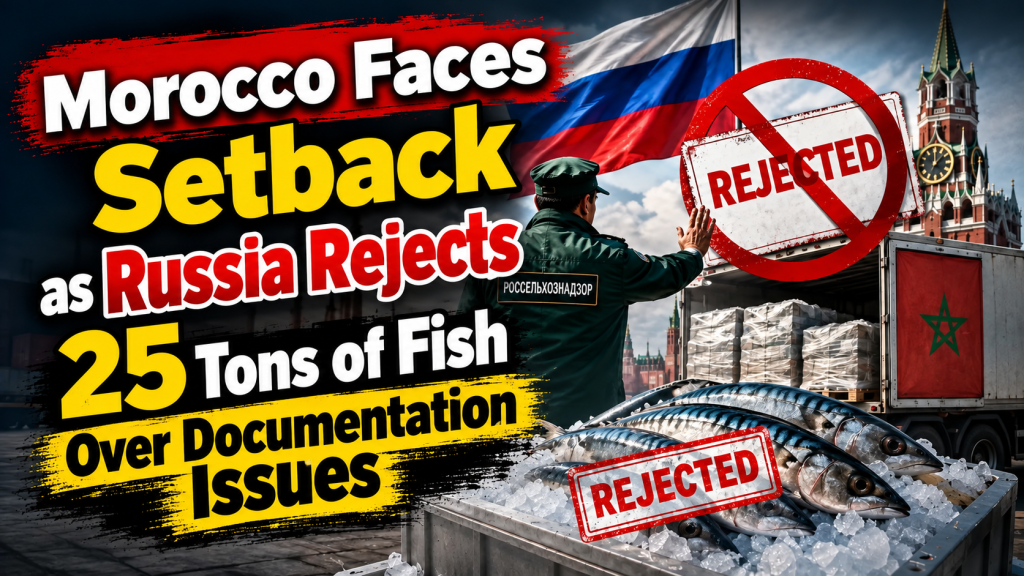
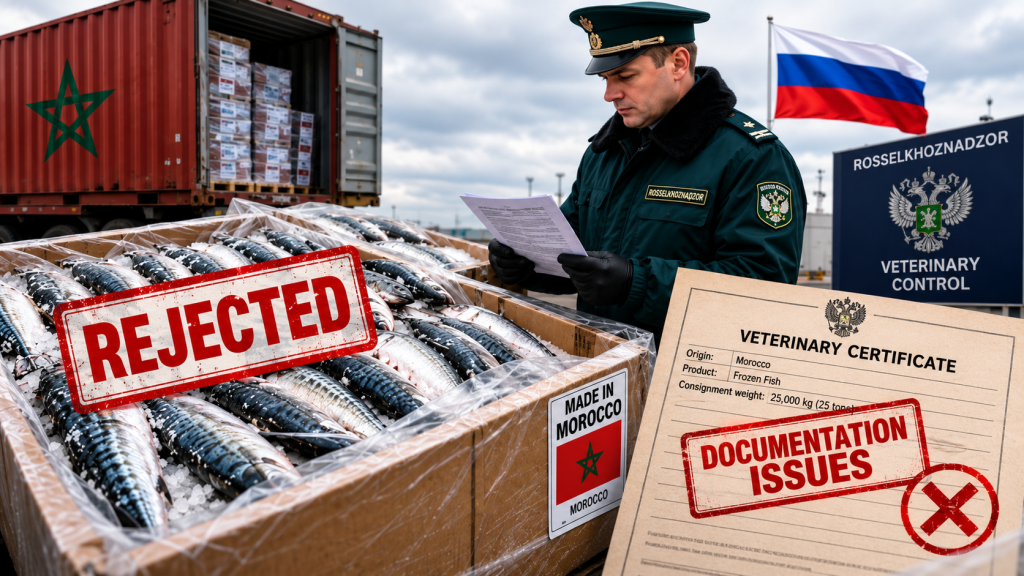
Algeria Gate: In a new blow to the image of Moroccan exports, a large shipment of fish arriving from Morocco ran into a regulatory obstacle in Russia, after Russian authorities blocked the entry of 25 tons of frozen mackerel, known as “capelin,” into Kaliningrad Oblast.
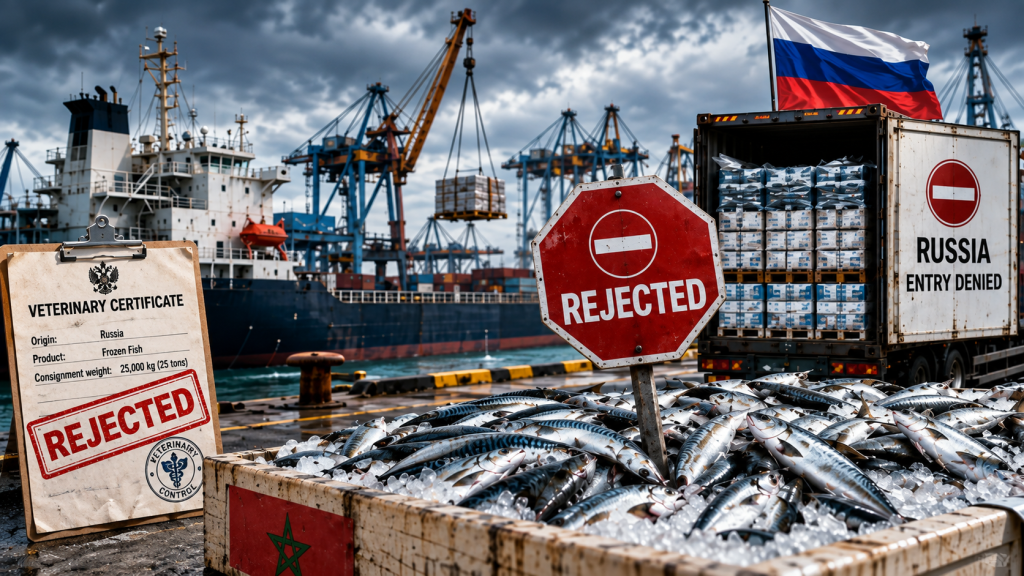
This time the issue concerns documents that are supposed to be the first links guaranteeing product safety and traceability. During the inspection, the competent Russian authorities recorded a violation in the accompanying veterinary documents after discovering that the name of the veterinary certificate does not match the model approved by the Russian authorities.
Faced with this discrepancy, the Russian authorities did not hesitate to suspend the release of the entire shipment and ban its entry into the market, placing the quantity in isolated warehouses pending official clarifications from the Moroccan veterinary services.
It is noteworthy that this is not a marginal piece of paper or an error that can be overlooked in the process of exporting food products. Veterinary certificates form an essential part of the international control system, particularly for animal and fish products, serving as a tool to verify origin, conformity, and traceability.
Thus, 25 tons of Moroccan fish found themselves stuck outside the Russian market due to a defect in the accompanying documents; an incident that once again raises questions about the rigor of Morocco’s export system and the extent to which it complies with the regulatory requirements imposed by international markets.