

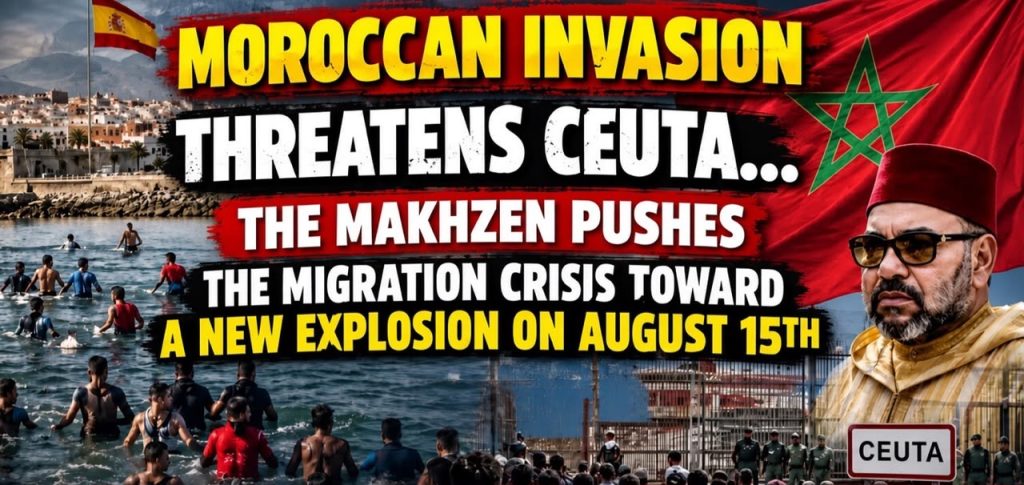
Algeria Gate: Barely had the dust settled from the recent mass crossing toward Ceuta when calls began resurfacing from within Morocco to prepare for a new attempt to reach the city on August 15 of this year.
This development once again throws the border file wide open and confronts the Makhzen with the hard reality of its failure to control the migration crisis; a crisis that, under its watch, has repeatedly been turned into a pressure card against its Spanish neighbor.

Widely circulated posts and messages on Moroccan accounts call for joining closed groups and coordinating a move toward Ceuta, setting the night of August 15th, 2026 as a possible date. Some posts spoke of a “last chance,” while others carried direct messages suggesting that something is being prepared for that date.
https://twitter.com/ElImperialEsp/status/2084634225509110153?s=20
What is striking about these calls is not merely their existence, but their return after such a short period following the previous crossing wave, which saw more than 70,000 people enter Ceuta according to Spanish authorities’ figures, before most of them returned to Morocco. This makes talk of a new attempt more than mere fleeting noise on social media, especially with the continued circulation of the calls inside closed groups.
Spanish media reports indicate that some of the new calls intersect with accounts that participated in promoting the previous move, while other reports speak of intensive digital activity being monitored to track potential preparations.
Here the paradox emerges that places the Makhzen in an extremely awkward position: a regime that presents itself to Europe as a security partner in the fight against irregular migration, yet repeatedly proves incapable of stopping its own border areas from becoming a launch point for crowds heading toward Ceuta.
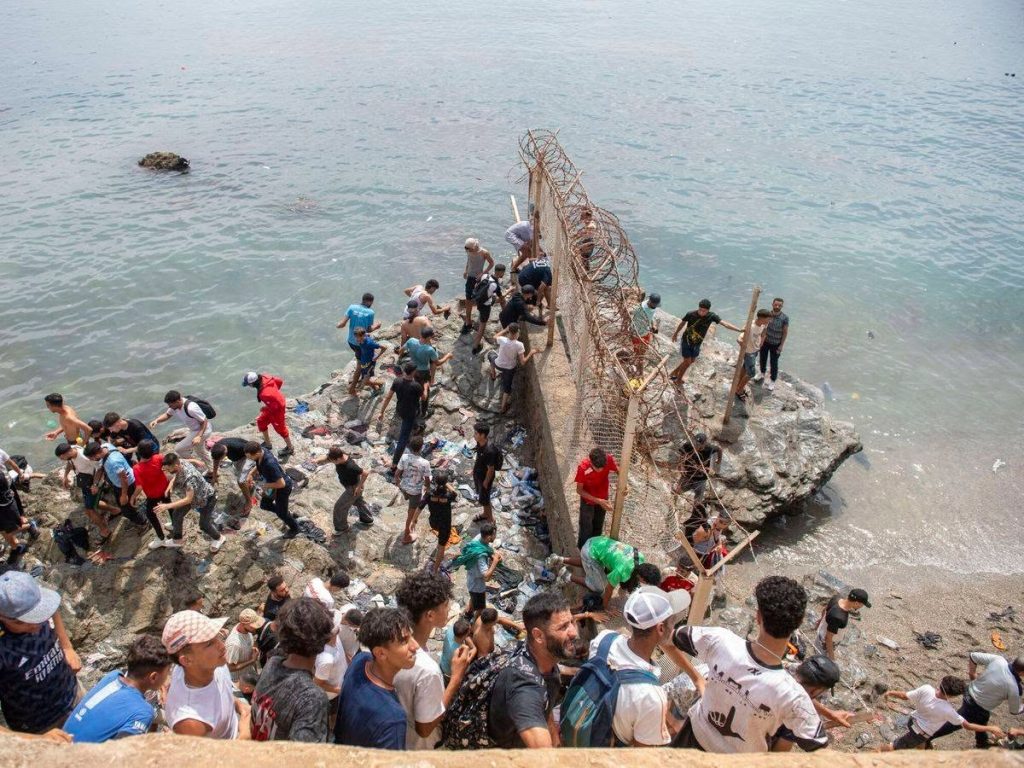
If the Makhzen possesses all the security control tools it talks about before Madrid and Brussels, how do the calls keep recurring? How do closed groups spread, set dates, and circulate movement plans with such speed? And if it is capable of stopping these movements and does not do so, then the question becomes more dangerous regarding the nature of using the migration file as a political pressure card.
The issue is no longer merely the tragedy of Moroccan youth trying to escape a stifling economic and social reality. It has come to reveal another face of the Makhzen’s management of crises: allowing situations to worsen, then dealing with their consequences when they turn into a border crisis or a problem with Europe.
What is happening around Ceuta also exposes the size of the gap between the official Moroccan discourse and reality. While Rabat talks about security cooperation, border control, and fighting irregular migration, the ground shows repeated waves of crowds and mass crossing attempts, as if the border turns every time into a new negotiation card.
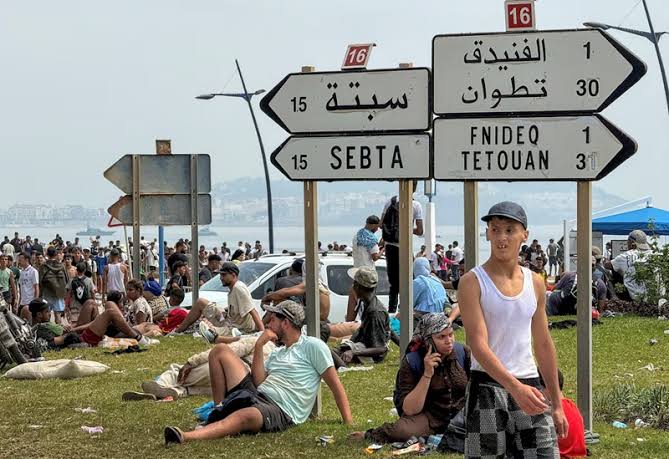
Most telling is that the Fnideq area is returning once again to the forefront of events as a potential gathering point for those wishing to reach Ceuta. This is a scenario that recalls previous movements and raises heavy question marks about the Moroccan authorities’ ability to contain the situation before it explodes.
In light of these facts, Ceuta appears to face a new date of security anticipation, while the Makhzen finds itself before a test that cannot be hidden by slogans: either it proves that these calls are merely a digital campaign with no capacity to turn into reality, or the chaos on the border is repeated and once again exposes the fragility of the Moroccan approach to the migration file.