
Sunday, 6 September 2026 12:23 Algiers time
Algeria Gate
News Room
$50B Revival: Algeria Spearheads Africa’s Economic Awakening Tiny Emirate Trapped by Hormuz, Continental Algeria’s Oil Crushes UAE’s Fragile India Bet 5.6 Million Cubic Meters per Day by 2030… Algeria Moves Desalination to the Heart of the Economy Algerian “INATEL” Enters the New Kinshasa City Project Covering 43,300 Hectares From VIP Glitter on Screens… to the Dark Shadows of Drug Networks! Tiny Companies, Astronomical Figures: AI Exposes $130 Billion Import Scam in Algeria Algeria Declares War on Cartels: Cutting Supply Lines and Choking Cash Flow After Algeria… Morocco tries to flood Spain with 3 tons of cocaine! Emirati fixer in Spain on a last-ditch bid to rescue Ayoub Aissiou! UAE falls into the trap… Algerian retaliation is coming hard! Algeria-Qatar’s Baladna project pumps $1.2 billion into the treasury every year… and buries the French import lobby!
Share this post

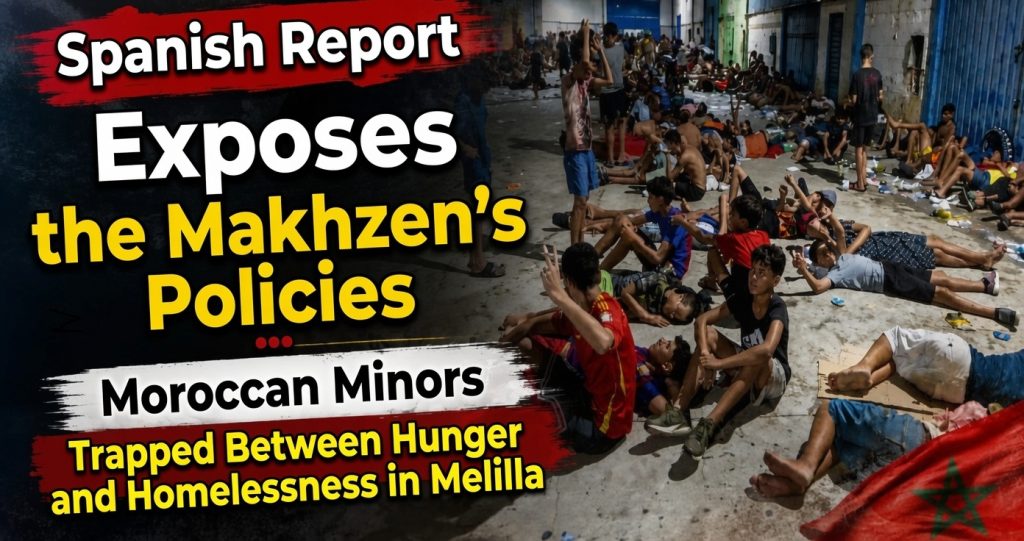
Spanish Report Exposes the Makhzen’s Policies: Moroccan Minors Trapped Between Hunger and Homelessness in Melilla

Author: Lys Iwannughen 0 comments 69 views
Spanish Report Exposes the Makhzen’s Policies: Moroccan Minors Trapped Between Hunger and Homelessness in Melilla

Algeria Gate: The growing exodus of Moroccan minors to the opposite shore is no longer an isolated phenomenon. It has become a daily indictment of the Makhzen’s policies, which have driven thousands of children to flee a reality marked by poverty, marginalization, and a lack of prospects.

When a child chooses to risk their life at sea or sleep on the streets of a foreign city, it reflects nothing less than a state’s failure to protect its own children and the failure of policies that have produced only greater despair.
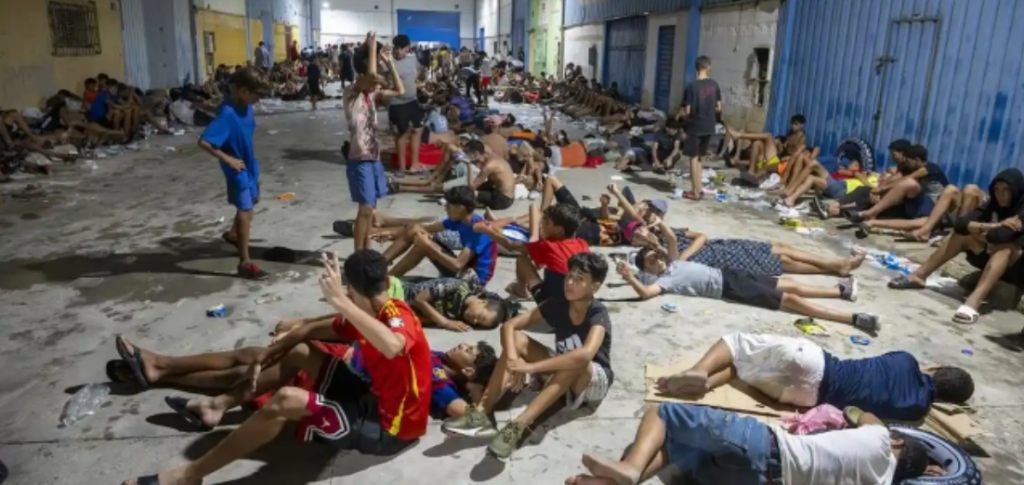
In the latest human rights criticism directed at the Makhzen, the Spanish organization Mec de la Rue, which supports migrant children and young people in the city of Melilla, revealed what it described as alarming conditions facing Moroccan minors who have arrived in the city in recent days.
The organization stated that their fundamental rights are being violated inside the reception center where they are being housed.

According to the organization, the La Purísima reception center for unaccompanied minors has become a facility lacking even the most basic standards of human dignity. Children and teenagers are reportedly forced to sleep on the floor or on pieces of cardboard due to a shortage of beds, while many have received only a single set of clothing since their arrival.

The organization added that the hardship does not end there. These children are reportedly not receiving adequate food and are being denied psychological support, including those who arrived bearing the emotional scars of the dangerous migration journey.

The severe shortage of staff has also made it impossible to provide individualized care for each minor. As a result, young children are housed alongside teenagers approaching adulthood in conditions that fail to take into account the specific needs of childhood or provide even the minimum level of protection.

According to the Spanish organization, these findings represent only one aspect of the tragedy facing Moroccan minors; a tragedy that begins inside Morocco before extending to the opposite shore.

Migration, the report argues, is not the cause of the crisis but rather the direct consequence of deep-rooted social and economic problems that drive children to flee in search of a hope they cannot find at home.

As human rights reports continue to sound the alarm, the Makhzen, according to the article, has continued to turn a blind eye to the issue, remaining silent in the face of a continuing human exodus that deprives the country of its children and turns childhood into fuel for irregular migration.


#Morocco#Spain
Author
Lys Iwannughen

Leave a comment

Your email address will not be published. Required fields are marked *

Europe
Share this post

UAE Mini-State Floods Spain with Drugs

UAE Mini-State Floods Spain with Drugs

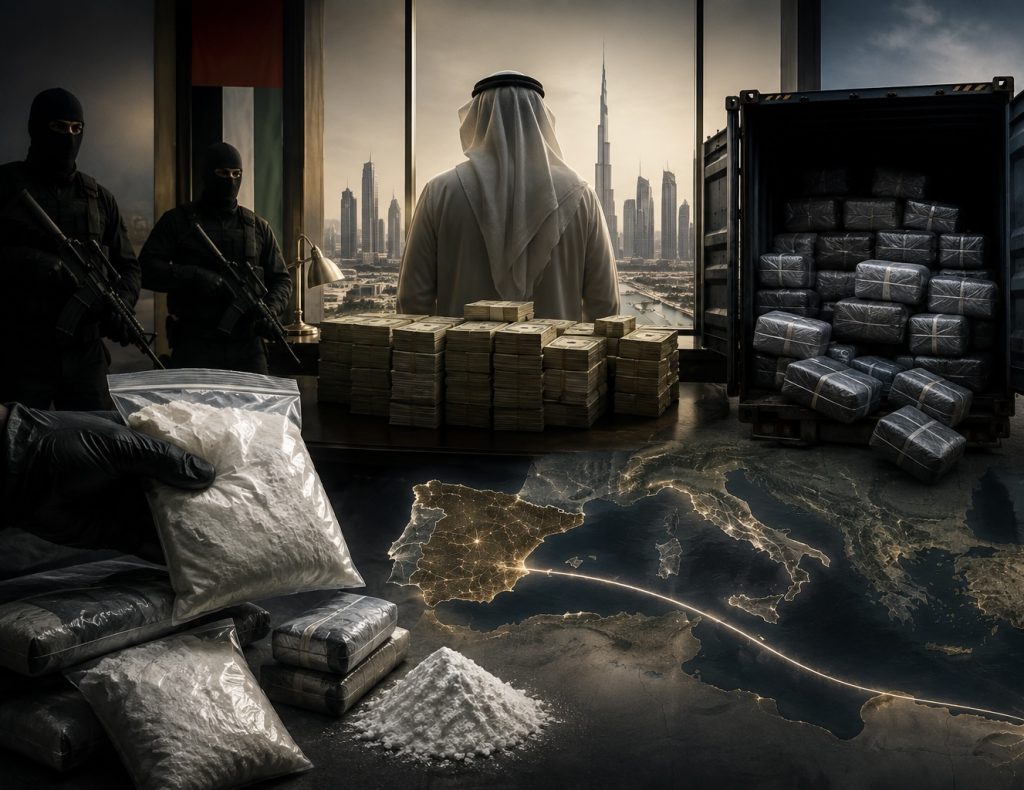
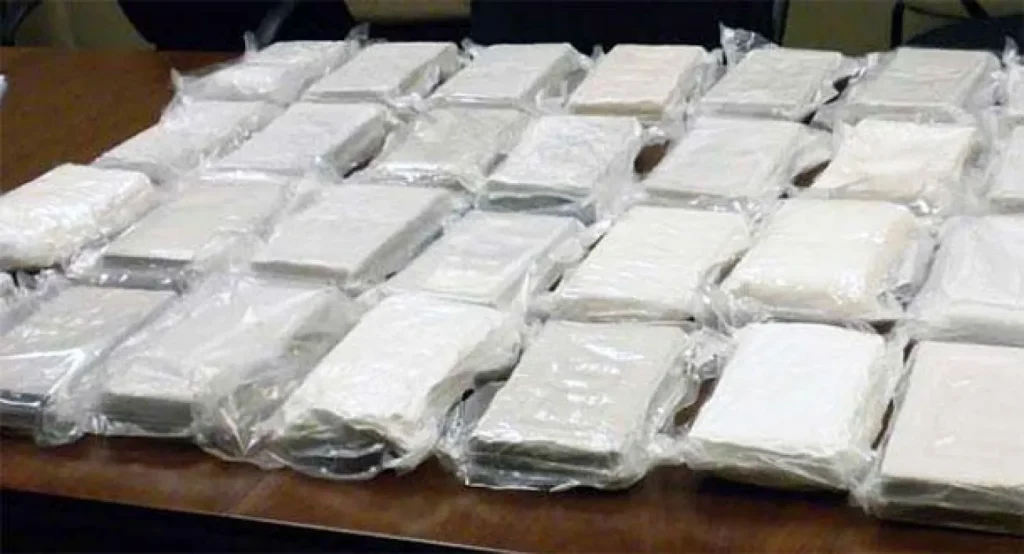
Algeria Gate: A major international security operation carried out by Spanish authorities has dismantled a criminal network specialized in smuggling cocaine into Europe. The network relied on funding from investors in Dubai. The operation resulted in the arrest of 44 people and the seizure of 21 tons of cocaine.

Years-Long Investigation Targets Cross-Border Network

According to Spanish media reports on Wednesday, the Spanish police stated that the operation was the culmination of investigations lasting several years. These targeted a cross-border criminal network involved in transporting cocaine shipments to Spain, using commercial shipping containers to conceal the drugs and introduce them into Europe.

The Spanish Civil Guard said that the operation was conducted in close coordination with the national police of Ecuador and under the supervision of Europol. The investigations revealed that the network received financial support from investors in Dubai and relied on maritime routes to deliver its shipments to Spain.

First Phase: Raids in Ecuador

The same source indicated that the first security strikes against this network date back to March 2025, when Ecuadorian authorities carried out a series of raids targeting around 50 properties and resulting in the arrest of 36 suspects as part of the first phase of the investigation.

Second Phase: Arrests and Seizures in Spain

After completing the inquiries and exchanging information among the various security agencies, Spanish authorities launched the second phase of the operation. They arrested eight suspects during raids targeting several locations inside Spain and seized one million euros suspected of being linked to proceeds from international drug trafficking.
Banana Shipments Used to Conceal Cocaine

The investigations revealed that members of the network hid the cocaine inside shipments of commercial goods departing mainly from the port of Guayaquil in Ecuador, exploiting export traffic to Europe to conceal their criminal activity. Banana shipments were among the most commonly used methods to hide the drugs inside the containers.

According to Spanish authorities, this operation reflects the scale of the challenges posed by cross-border organized crime networks that rely on international financing structures and sophisticated methods to smuggle large quantities of drugs into the European continent. This requires continuous strengthening of international security coordination to pursue and dismantle them.

#Spain#UAE
Author
Lys Iwannughen
African coast
Share this post

Spanish newspaper Moncloa: Morocco ranks among the world’s largest hashish producers and fuels international drug trafficking

Spanish newspaper Moncloa: Morocco ranks among the world’s largest hashish producers and fuels international drug trafficking

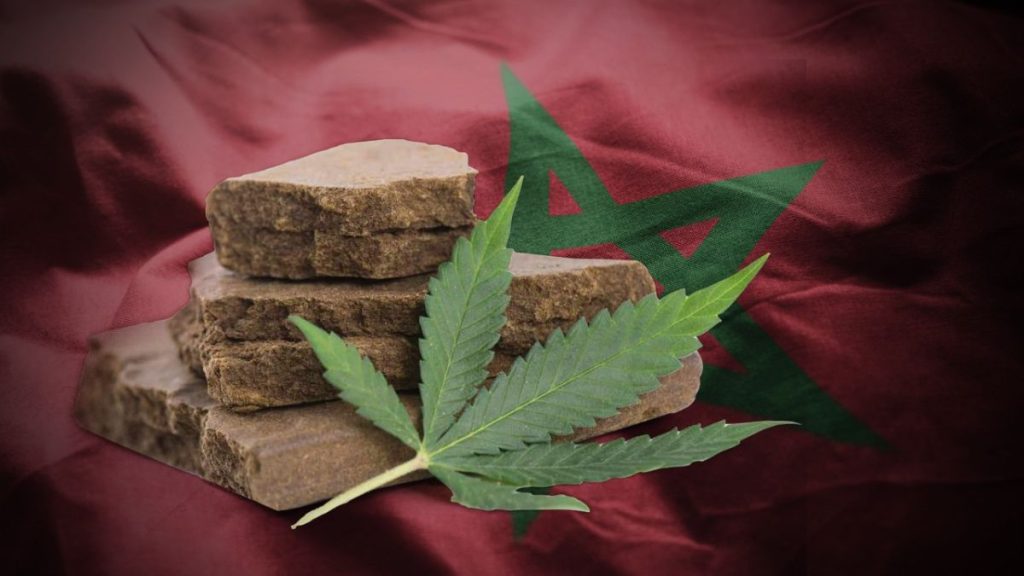
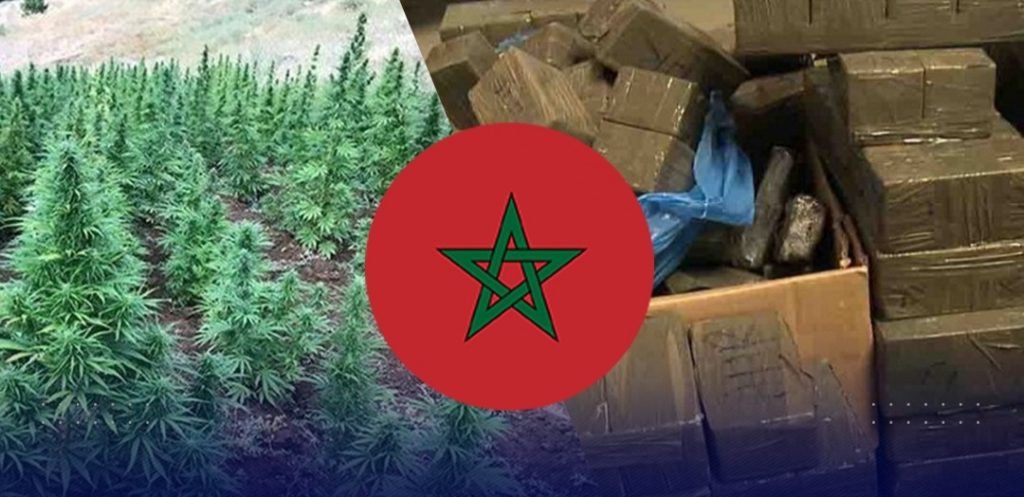
Algeria Gate: In a recent report, the Spanish newspaper Moncloa revealed that Morocco’s continued position as one of the world’s top hashish producers remains a major driver of international drug trafficking networks. The illicit trade, the report stresses, has significantly strengthened criminal gangs and expanded both their logistical reach and financial power.

Titled “How the disappearance of Spain’s anti-drug trafficking unit is affecting the situation,” the report notes that Morocco is still among the leading global producers of cannabis. As a result, the bulk of the hashish crossing the Strait of Gibraltar originates in the north of the kingdom, cementing Morocco’s role as a primary source of this illegal trade.

Oplus_131072

The newspaper points out that the Strait of Gibraltar: only 14 kilometres wide at its narrowest, has become a strategic corridor for Moroccan hashish. Criminal networks have since exploited the same logistical routes to smuggle other drugs, particularly cocaine, sharply increasing the scale of criminal activity linked to these Moroccan pathways.

According to the report, the enormous profits generated by Moroccan hashish have allowed criminal organisations to develop their capabilities on an unprecedented scale. They now operate with ultra-fast boats, advanced navigation systems, encrypted communications, and drones to monitor security forces. They can also rapidly replace seized equipment and recruit new members within a short time.

Moncloa further observes that these networks increasingly function like major corporations, managing complex financial operations and expanding money-laundering activities, all sustained by the vast revenues from the Moroccan hashish trade.

The expansion of this trade, the report adds, has entrenched the influence of criminal gangs in several Moroccan coastal areas. Visible signs of illicit enrichment and growing money-laundering networks point to the rise of a criminal economy built on drug trafficking from the kingdom.

The newspaper notes that criminal organisations are no longer limited to smuggling hashish shipments from Morocco. They are continuously investing in technology and long-term planning, enabling them to refine their methods and broaden their criminal operations.

Moncloa concludes that as long as Morocco remains one of the world’s largest hashish producers, it will continue to feed international drug trafficking networks and flood countries with these drugs.

#Morocco
Author
Lys Iwannughen
Maghrebi files
Share this post

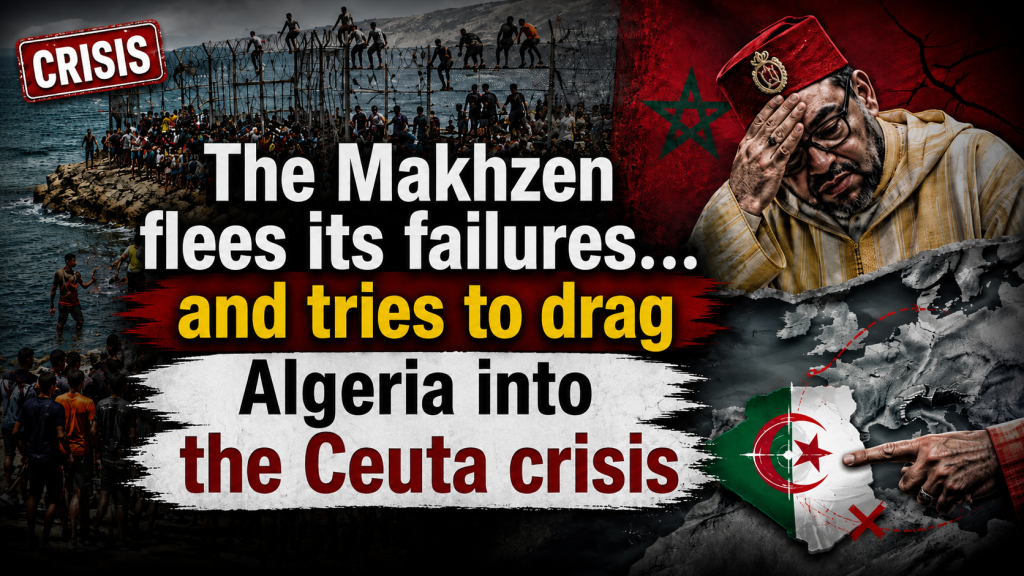
The Makhzen flees its failures… and tries to drag Algeria into the Ceuta crisis

The Makhzen flees its failures… and tries to drag Algeria into the Ceuta crisis

Algeria Gate: Whenever it faces failure, the Makhzen flees from confronting the real causes and instead rushes to invoke “Algeria” as a ready-made scapegoat to justify its crises and setbacks. Rather than presenting the facts honestly to public opinion, its loyal media weaves a recurring narrative whose constant refrain is to blame Algeria for every reverse.

This approach has resurfaced after the mass crossings into the Spanish city of Ceuta. Makhzen media quickly seized on a Spanish report and used it selectively. They tried to drag Algeria into a crisis, even though the report itself places no responsibility on Algeria. At the same time, they ignored the parts of the report that rule out any official or judicial condemnation of the Algerian state.

The Spanish report, prepared by security, intelligence and international terrorism analyst Chema Gil, did not accuse the Algerian state, made no mention of any involvement by its institutions, and presented no evidence officially linking Algeria to the Ceuta events.

Nevertheless, Moroccan media outlets chose to jump directly to political conclusions that do not exist in the report, in a blatant attempt to divert attention from the real reasons that pushed hundreds of people to risk their lives to reach Spanish territory.

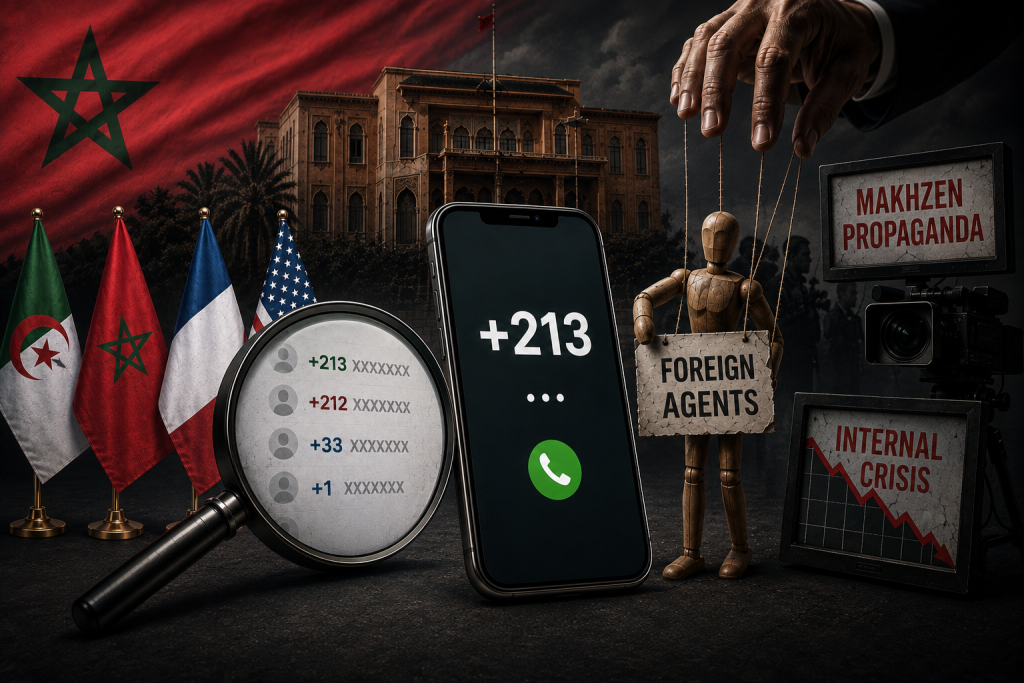
The report clearly indicated digital activity involving accounts from several countries, and also noted accounts linked to numbers beginning with the Algerian international code (+213). But turning a mere telephone prefix into “proof of guilt” for an entire state is nothing more than a selective reading that lacks the minimum of professionalism and logic.

If the appearance of numbers beginning with (+213) were evidence of Algeria’s involvement, would the existence of accounts from Morocco, France, or the United States mean that all these countries are behind the events? The same logic destroys the narrative that Makhzen media is trying to impose and reveals that the goal is not to seek the truth, but to manufacture an external enemy whenever Rabat faces an internal crisis.

Even more significantly, the report itself explicitly states that no judicial rulings exist establishing the responsibility of any specific individuals or entities for managing the digital campaign, and that no official positions confirm those conclusions. Yet this crucial passage was completely omitted from Moroccan headlines, simply because it does not serve the pre-prepared narrative.

What happened in Ceuta is not an isolated event, but comes in the context of a recurring crisis related to irregular migration and the social and economic pressures that Morocco has been experiencing for years. Instead of opening a serious discussion about the causes of this phenomenon, Makhzen media chose to return to the Algeria scapegoat, in an attempt to export internal failures and reproduce a discourse based more on provocation than on facts.

Once again, Makhzen media has fallen into the trap of exaggeration and political instrumentalization, turning an analytical document into propaganda material. Yet the truth remains clear: the report did not condemn Algeria, and the facts do not support what some Moroccan outlets tried to claim. This is simply another attempt to avoid confronting the real causes of the crisis by exporting them abroad and dragging Algeria into a matter that has nothing to do with it.

#Algeria#Makhzen#Morocco
Author
Lys Iwannughen