
Monday, 7 September 2026 07:09 Algiers time
Algeria Gate
News Room
Two Years into President Tebboune’s Second Term: Algeria Expands Its Influence from New York to Niamey President Tebboune draws the red line: Death for those who burn and those who kidnap children Algeria expands pharmaceutical presence across Africa President Tebboune in Madrid in October: Algiers takes back the initiative Egypt: TV presenter Sarah Khalifa sentenced to death in a drug-trafficking case President Tebboune’s directives and instructions to the Algerian government Aouchiche… Hanoun and the RCD… Will the people hold them to account on November 28? $50B Revival: Algeria Spearheads Africa’s Economic Awakening Tiny Emirate Trapped by Hormuz, Continental Algeria’s Oil Crushes UAE’s Fragile India Bet 5.6 Million Cubic Meters per Day by 2030… Algeria Moves Desalination to the Heart of the Economy
Share this post

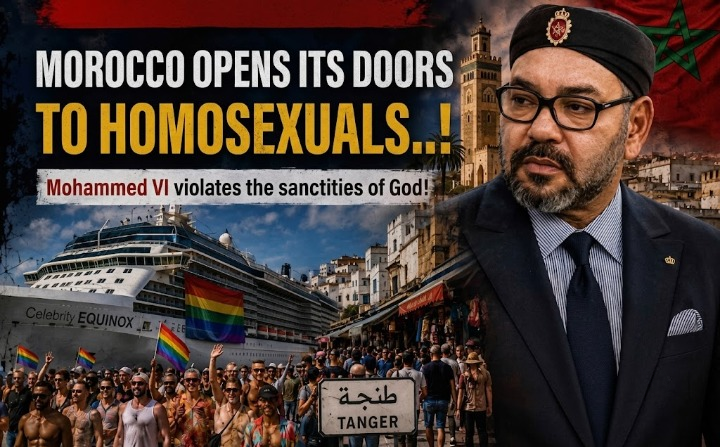
Morocco opens its doors to homosexuals… Mohammed VI violates the sanctities of God!

Author: Lys Iwannughen 0 comments 68 views
Morocco opens its doors to homosexuals… Mohammed VI violates the sanctities of God!

Algeria Gate: The one nicknamed the Commander of the Faithful, Mohammed VI, has crossed every red line in violating the sanctities of God and the teachings of the Islamic religion by allowing a ship packed with homosexuals, the Celebrity Equinox, to dock on Sunday morning at the port of Tangier as part of a tourist cruise organized by the company VACAYA, which specializes in the gay and lesbian community. This was its first stop on the Moroccan coast.

At a time when Morocco was supposed to declare national mourning for the souls of the victims of the mass escape from the hell of Morocco toward the Spanish city of Ceuta, the streets of the city turned into a playground for homosexuals; a moral catastrophe for someone who claims to be a descendant of the Prophet Muhammed, peace be upon him.

It is worth noting that a similar cruise was banned in both Turkey and Egypt, but the Makhzen had a different opinion. The ship arrived at the port around 7 a.m. and left around 4 p.m. after its passengers spent several hours in the city.

Hundreds of tourists wandered through the old city of Tangier, the Casbah, and the Grand Square. They also visited the traditional markets, and some of them ate in local restaurants and cafés.

The scene sparked anger and disgust among social media users, who described the incident and the policies pursued by the Makhzen on issues of Islamic identity as a catastrophe and a crime.

#Morocco
Author
Lys Iwannughen

Leave a comment

Your email address will not be published. Required fields are marked *

Algeria
Share this post

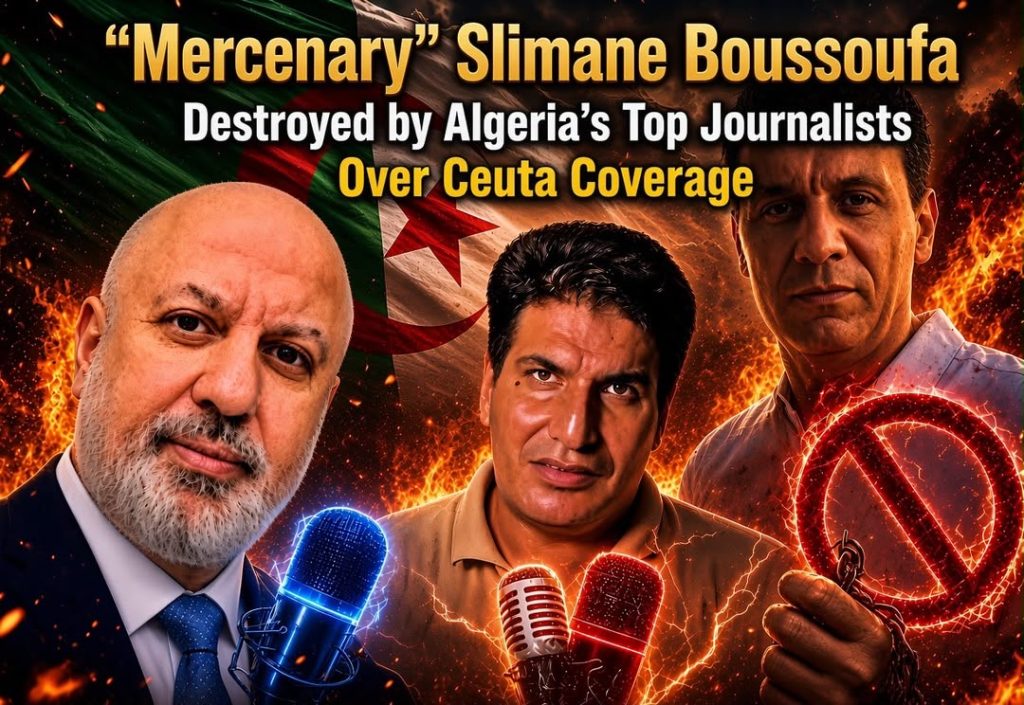
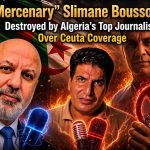
“Mercenary “Slimane Boussoufa Destroyed by Algeria’s Top Journalists Over Ceuta Coverage

“Mercenary “Slimane Boussoufa Destroyed by Algeria’s Top Journalists Over Ceuta Coverage

Slimane Boussoufa, “the Mercenary,” Under Heavy Fire from Algerian Journalists

Algeria Gate: Former Hespress and France 24 journalist Slimane Boussoufa has provoked widespread fury among Algerian journalists both inside the country and abroad.

His coverage of the Ceuta events has been condemned as unprofessional, crude, and driven by a clear anti-Algerian agenda laced with personal revenge.

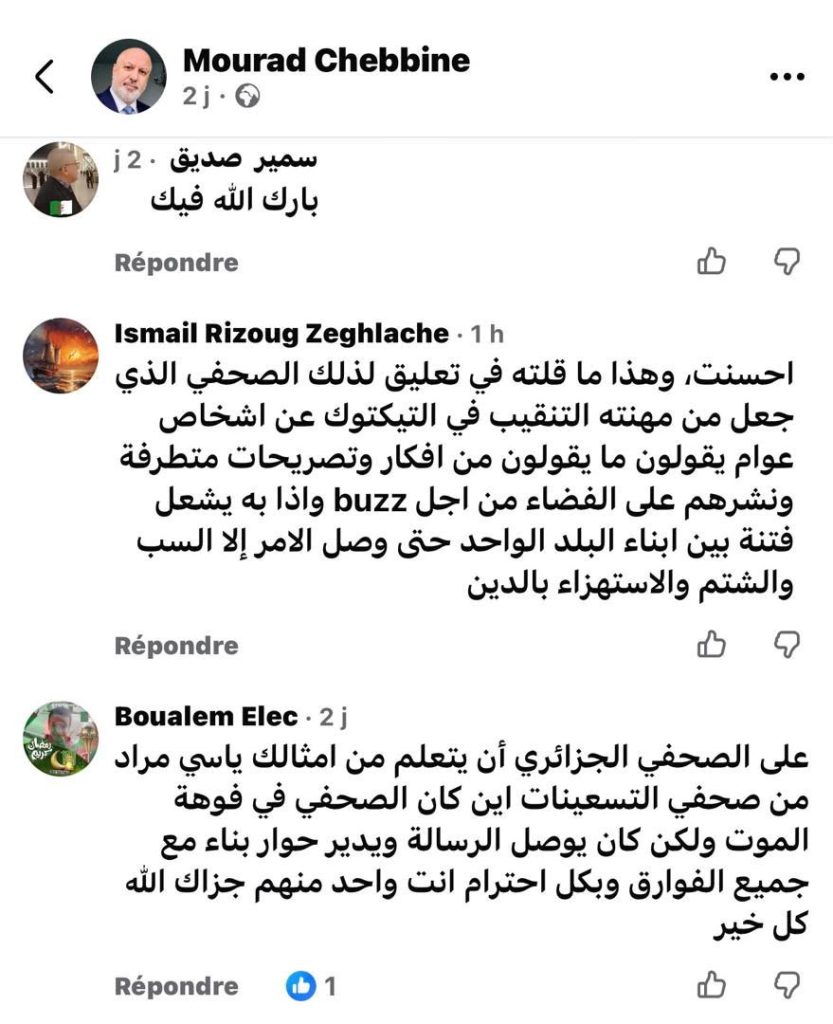
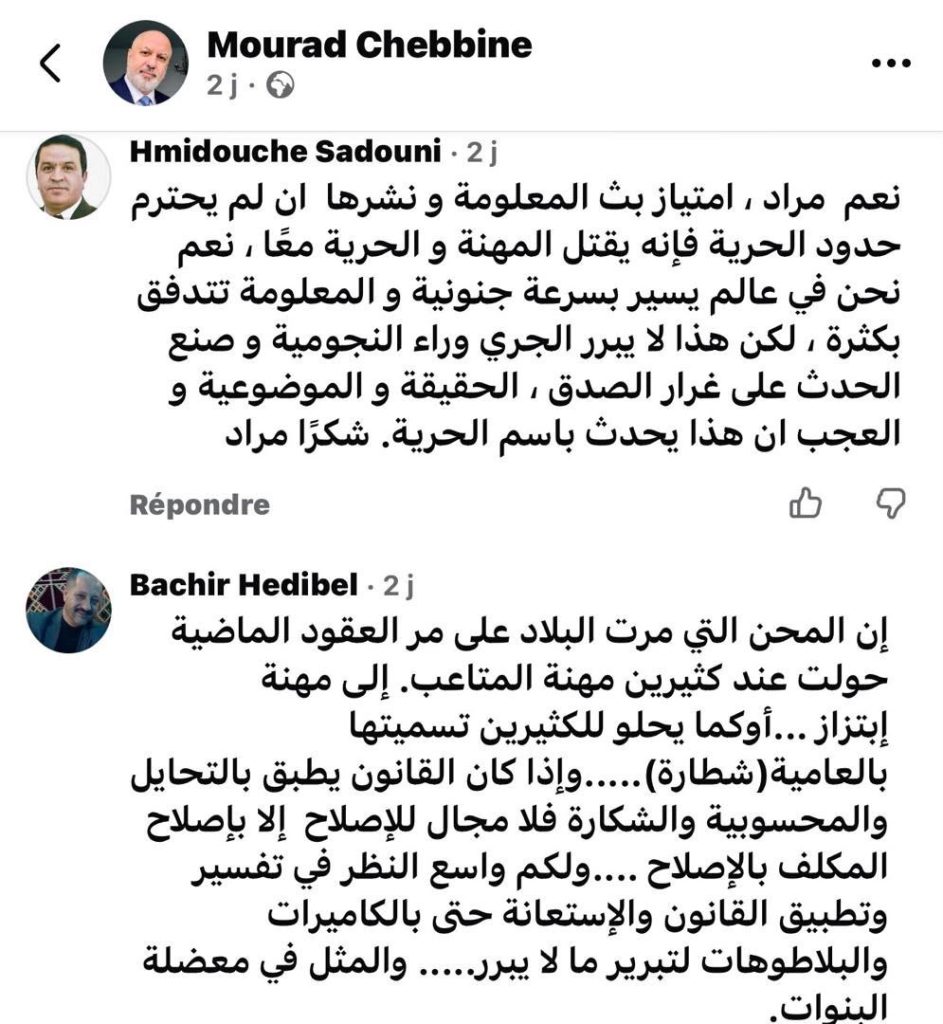
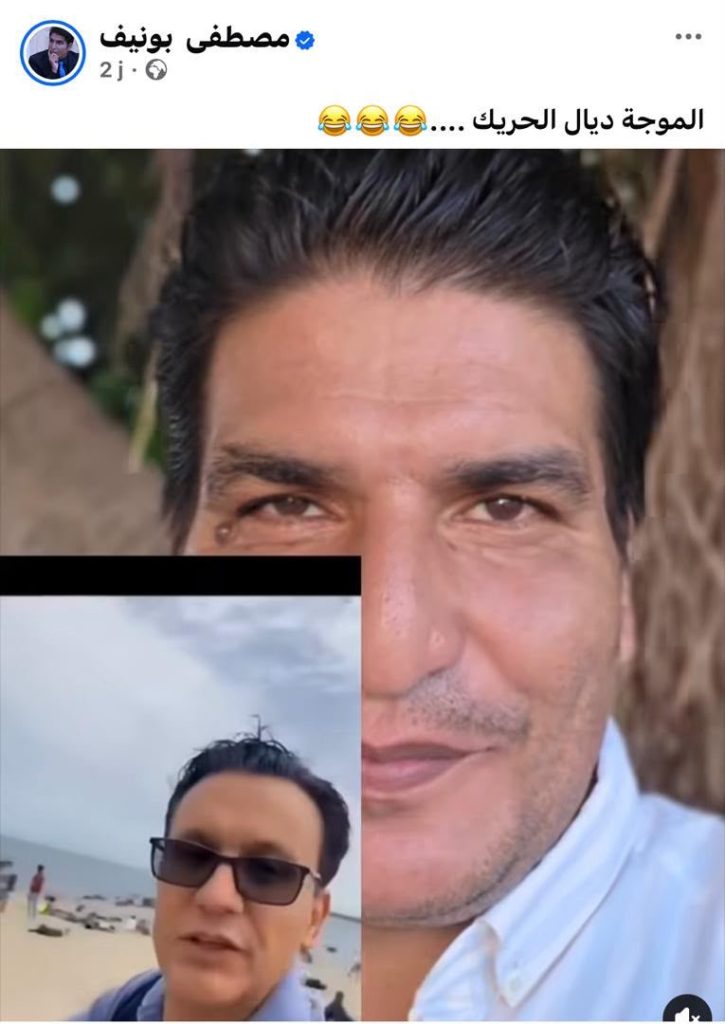
Two heavyweights of Algerian media Mourad Chebine and Mustapha Bounif have led the charge.

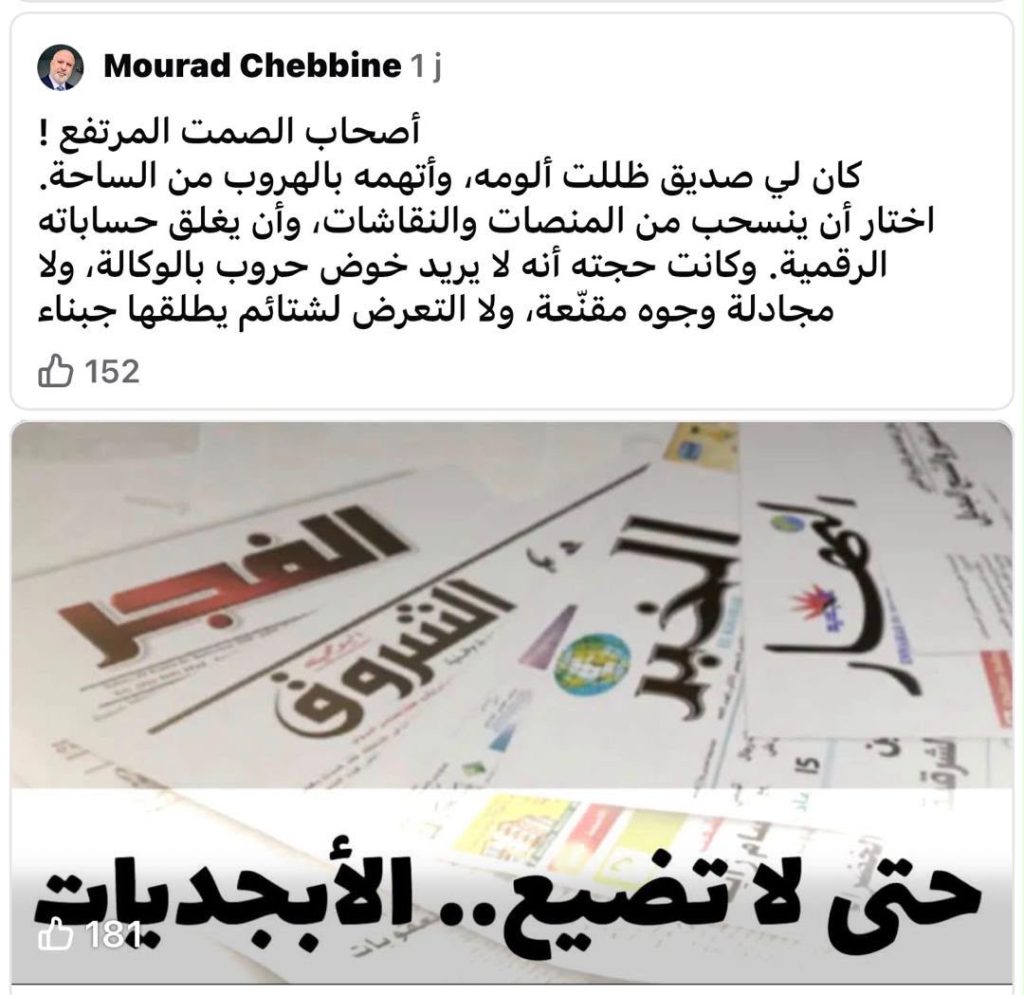
Mourad Chebine’s Brutal Professional Lesson

Mourad Chebine, the iconic face of Algerian television in the 1990s and a former senior figure at Sky News Arabia, delivered a masterclass in journalistic ethics without ever naming Boussoufa the classic method of heavyweights who refuse to elevate the unworthy.

He opened with a series of devastating questions:

“Is press freedom the right to cross the sea hunting for ‘harraga’ from your own country among tens of thousands of Moroccans who stormed Ceuta?

Is freedom of expression the right to threaten someone with exposing their private secrets simply because they disagree with your political stance?

Is it freedom to publish dubious information about a case still before the courts in order to steer public opinion or influence the course of justice?

Has lying become a point of view, blackmail investigative journalism, defamation courage, and the violation of privacy a right?”

Chebine continued with uncompromising clarity:

“These questions do not require lengthy answers.

They require a constant reminder that freedom is not a privilege without limits.

Journalism is not built by turning platforms into courts, nor by using people’s reputations and private lives as fuel for scoops and sensationalism.

Freedom of expression does not mean inventing facts, spreading lies, manufacturing hatred, forging images and documents, or exploiting information for blackmail.”

He concluded with a line that cuts deep:

“These are not restrictions invented by any authority to muzzle journalists.

They are the most basic foundations of a press that understands its mission.

Professional ethics are not measured by what others do, but by what we ourselves have sworn to respect.

Governments change, laws change, balances of power shift.

One thing must never change: a journalist does not derive the honour of the profession from how far he is willing to go, but from how much he deliberately chooses not to cross.

There are lines that, once crossed, do not merely bring down journalism — they destroy the very meaning for which freedom was created.”

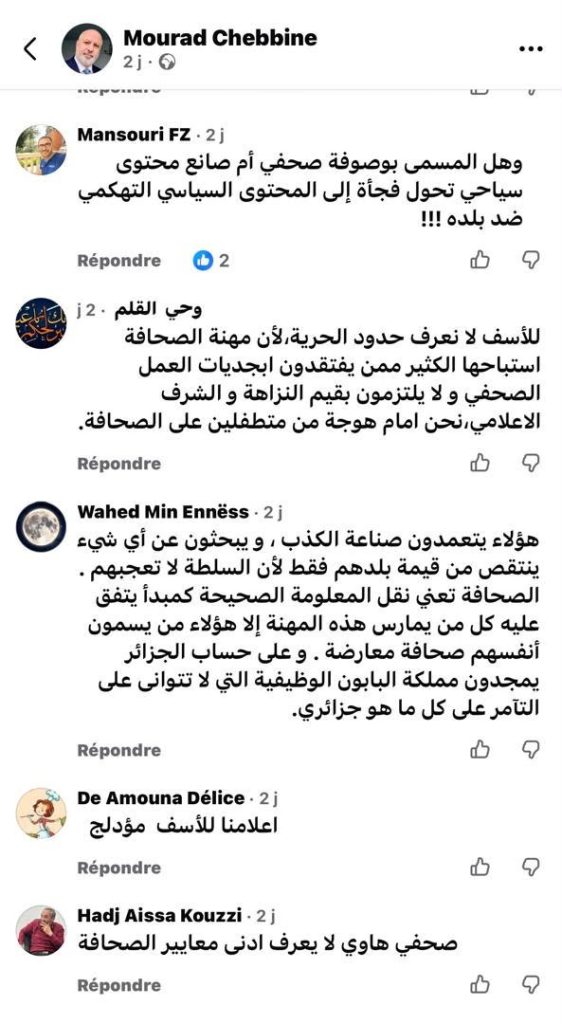
Chebine’s post was met with near-unanimous support from fellow journalists.

Mustapha Bounif Delivers the Final Blow

Influential journalist Mustapha Bounif finished the job with a video that leaves little room for escape.

He asked Boussoufa a simple, devastating question: where is the proof that the young man he interviewed in Ceuta was actually Algerian?

The man’s accent was unmistakably Moroccan.

The T-shirt he was wearing carried the word

“Casablanca” in Latin letters.

Bounif forced viewers to confront the obvious: why would an Algerian “harraga” wear a shirt bearing the name of a Moroccan city?

And would that detail have worked in his favour if Spain had decided to send him back with the rest of the group?

Boussoufa, it seems, never noticed.

A Journalist Against His Own Country

There is a reason this kind of coverage is possible.

When Moroccan authorities grant an Algerian journalist access to cover such a sensitive event on their soil, it is rarely an act of journalistic neutrality.

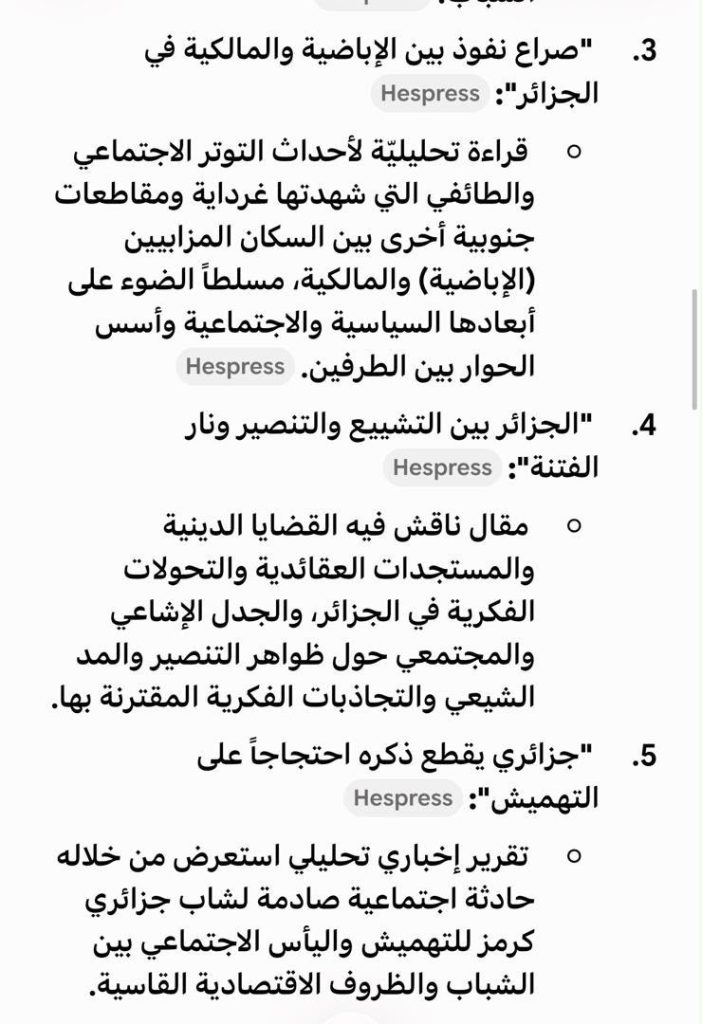
Boussoufa’s earlier work for Hespress between 2008 and 2010 particularly his articles on communal tensions in Algeria  already revealed a pattern of extreme hostility.

A journalist from the Mozabite community of Ghardaïa who left Algeria and then used hostile foreign platforms (Moroccan and French) to pour fuel on internal divisions is not a common occurrence.

In Boussoufa’s case, it appears unique.

There is a clear difference between a professional journalist and an unethical one.

The professional works within the rules, without tricks.

The other needs a certain cunning to obscure the absence of ethics and to confuse the public.

But that cunning rarely fools actual professionals.

In this case, it did not

#Algeria#Morocco
Author
بوابة الجزائر
Maghrebi files
Share this post

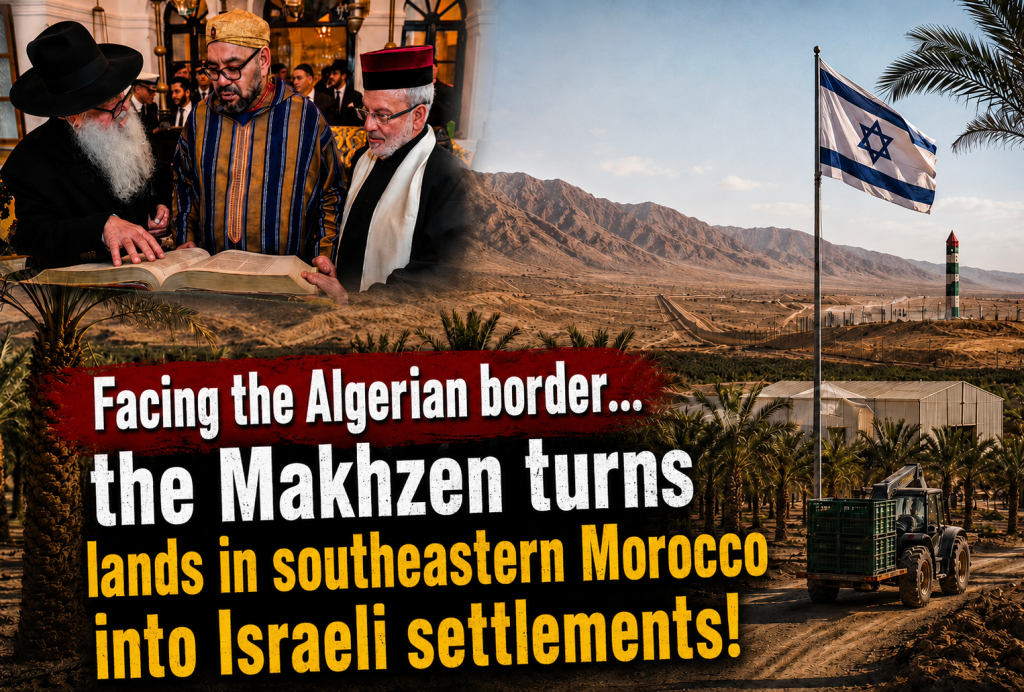
Facing the Algerian border… the Makhzen turns lands in southeastern Morocco into Israeli settlements!

Facing the Algerian border… the Makhzen turns lands in southeastern Morocco into Israeli settlements!

Algeria Gate: It appears that the transformation of Morocco into “Israeli settlements and kibbutzim” by order of the Moroccan Makhzen regime and under pressure from the Zionist lobby that has tightened its grip on Rabat is proceeding at an accelerating pace.

In a blatant violation of human rights and citizenship, original Moroccan inhabitants are being expelled from their lands to hand them over on a golden platter to Israeli settlers.

Several areas in southeastern Morocco, near the Algerian border, witnessed unprecedented popular tensions and unrest just days before the Ceuta migration crisis, in which some 60,000 irregular Moroccan migrants fled the hell of Mohammed VI, over the seizure of residents’ lands and their allocation to Jewish settlers.

This was confirmed by Ahmed Wehman, president of the Moroccan Observatory Against Normalization, during his appearance as a guest on a Moroccan news channel. He noted that clashes involving live fire occurred in some areas, such as Kenitra, against the backdrop of disputes over collective (soulaliya) lands.

In the same vein, Wehman spoke of lands and pastures that he said had been seized from tribes and population groups in the southeast. Among those he mentioned were “Ait Merghad, Ait Haddidou, Ait Yahya, Ait Yazzi, Ait Sahrouj, and Ait Atta.”

“These lands were allocated to Israeli investors for agricultural investment, particularly the cultivation of “Medjool” dates,” he said.

He mentioned Bourouk Tafilalet as an exampl; an Israeli settlement in the heart of Morocco that he described as covering vast areas larger than the Gaza Strip. “These lands were taken from poor categories of nomads and livestock breeders before being allocated to two Zionist investors,” he added.

Moreover, he said that the Ait Khabash area in the southeast, relatively close to the Algerian border, itself witnessed what he called a “social tremor” days before the Ceuta crisis over issues related to collective lands. He also pointed to residents of mountainous areas taking to the streets in protest marches, considering that these movements reflected, in his words, a state of social tension linked to the file of those lands.

Wehman went further, arguing that the dispute takes on a more sensitive dimension in the southeast, where there are lands that historically belonged to a group of tribes, including Ait Khabash, Ait Atta, and Ait Yaflman.

These are areas he said were linked to “epics of resistance against French colonialism,” citing in this context the battles of Bougafer and Bab Doub.

He considered that the sons of those “resistants” who took part in those battles today face the risk of losing these lands, while at the same time criticizing what he described as “neglect of the national memory.”

In a scene that reflects the accelerating pace of comprehensive Zionization following the shameful Moroccan-Zionist normalization, this sounds the alarm amid the rising influence of Mohammed VI’s Zionist advisor André Azoulay, who is leading the kingdom toward total destruction.

#Algeria#Morocco#Zionist
Author
Lys Iwannughen
Maghrebi files
Share this post

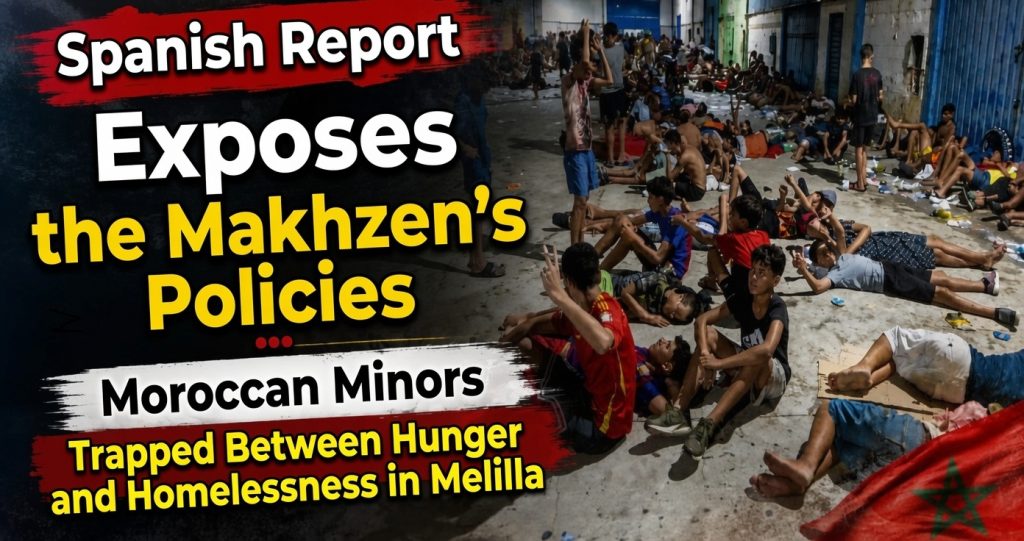
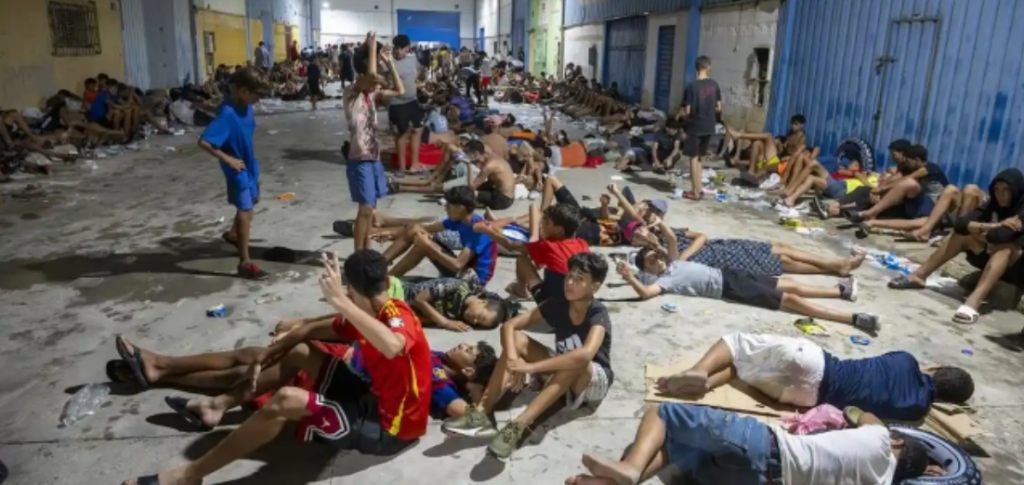
Spanish Report Exposes the Makhzen’s Policies: Moroccan Minors Trapped Between Hunger and Homelessness in Melilla

Spanish Report Exposes the Makhzen’s Policies: Moroccan Minors Trapped Between Hunger and Homelessness in Melilla

Algeria Gate: The growing exodus of Moroccan minors to the opposite shore is no longer an isolated phenomenon. It has become a daily indictment of the Makhzen’s policies, which have driven thousands of children to flee a reality marked by poverty, marginalization, and a lack of prospects.

When a child chooses to risk their life at sea or sleep on the streets of a foreign city, it reflects nothing less than a state’s failure to protect its own children and the failure of policies that have produced only greater despair.

In the latest human rights criticism directed at the Makhzen, the Spanish organization Mec de la Rue, which supports migrant children and young people in the city of Melilla, revealed what it described as alarming conditions facing Moroccan minors who have arrived in the city in recent days.
The organization stated that their fundamental rights are being violated inside the reception center where they are being housed.

According to the organization, the La Purísima reception center for unaccompanied minors has become a facility lacking even the most basic standards of human dignity. Children and teenagers are reportedly forced to sleep on the floor or on pieces of cardboard due to a shortage of beds, while many have received only a single set of clothing since their arrival.

The organization added that the hardship does not end there. These children are reportedly not receiving adequate food and are being denied psychological support, including those who arrived bearing the emotional scars of the dangerous migration journey.

The severe shortage of staff has also made it impossible to provide individualized care for each minor. As a result, young children are housed alongside teenagers approaching adulthood in conditions that fail to take into account the specific needs of childhood or provide even the minimum level of protection.

According to the Spanish organization, these findings represent only one aspect of the tragedy facing Moroccan minors; a tragedy that begins inside Morocco before extending to the opposite shore.

Migration, the report argues, is not the cause of the crisis but rather the direct consequence of deep-rooted social and economic problems that drive children to flee in search of a hope they cannot find at home.

As human rights reports continue to sound the alarm, the Makhzen, according to the article, has continued to turn a blind eye to the issue, remaining silent in the face of a continuing human exodus that deprives the country of its children and turns childhood into fuel for irregular migration.

#Morocco#Spain
Author
Lys Iwannughen