Sunday, 18 October 2026 • 19:26 Algiers time
Algeria Gate
News Room
Cameron Hudson: UAE is virtually the sole backer of the RSF..without its support the war in Sudan would not continue Algeria-Niger: Official launch of Trans-Saharan fibre optic link Five minutes of lament over Algeria: Amar Belani exposes CNEWS’s real obsession Algerian courts hand down first death sentences under new drugs law Ségolène Royal’s masterclass on Algeria against an ignorant and demagogic journalist President Tebboune and senior officials receive the remains of Boualem Boualem in Algiers NAPEC 2026 in Oran: Algeria at the Heart of Africa’s and the Mediterranean’s New Energy Landscape Pegasus Files: Amnesty Uncovers Morocco’s Espionage Against Spain President Tebboune Orders Salary Increases in Algeria’s 2027 Budget, Rules Out New Taxes on Citizens Algeria Emerges as a Trusted Power for Regional Peace and Stability
Share this post

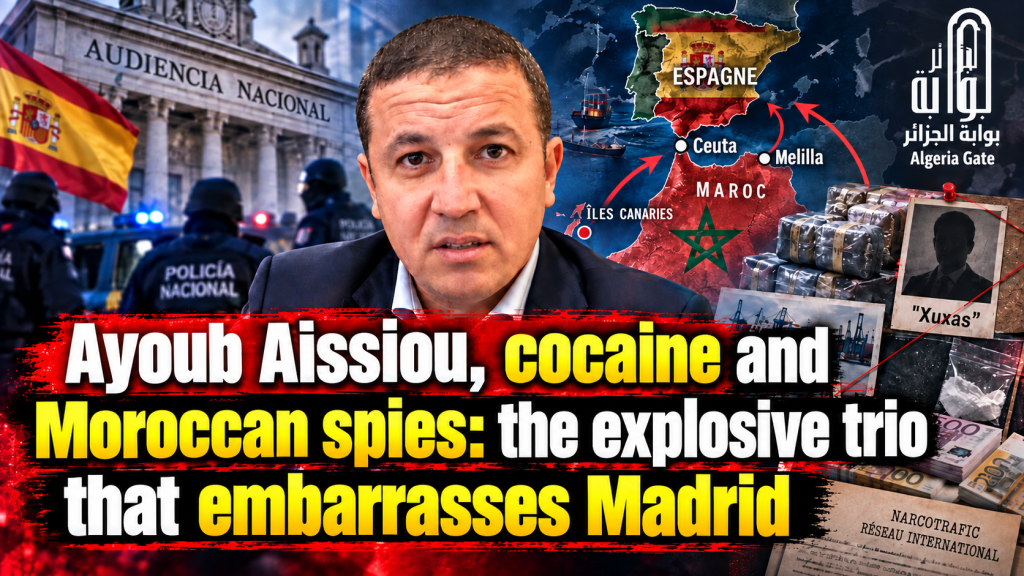
Moroccan Nationals Linked to Criminal Network Laundering €8.6 Million in Cocaine Proceeds in Spain

• Author: Lys Iwannughen • 0 comments • 42 views
Moroccan Nationals Linked to Criminal Network Laundering €8.6 Million in Cocaine Proceeds in Spain

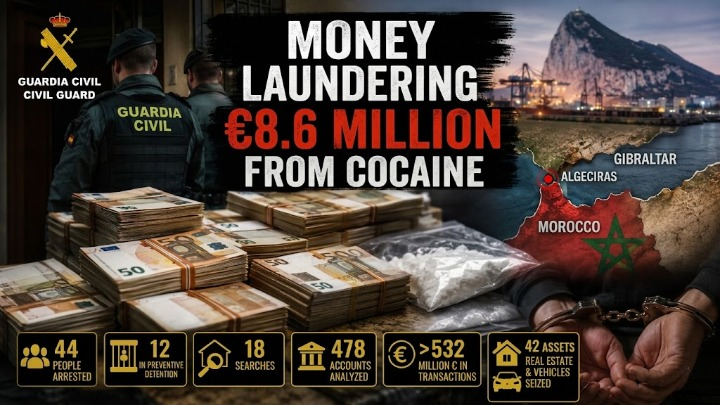
Algeria Gate/Agencies: Spanish authorities in Algeciras have dismantled a major criminal network accused of laundering €8.6 million in proceeds from cocaine trafficking, in an operation that uncovered the involvement of Moroccan nationals in a transnational drug-trafficking and money-laundering network.

Spanish Authorities Dismantle Cocaine Money-Laundering Network

The Spanish Civil Guard, in coordination with the European Union Agency for Law Enforcement Cooperation (Europol), dismantled the network as part of Operation Omnis, according to Spanish media reports.

The operation led to the arrest of 44 people, with 12 placed in pretrial detention. Authorities also carried out 18 searches across several Spanish provinces as part of the investigation into the criminal organization.

Investigators say the network was involved not only in international cocaine trafficking but also in sophisticated methods designed to conceal and launder the proceeds generated by the drug trade.

Shell Companies Used to Hide Cocaine Proceeds

According to investigators, money generated through international cocaine trafficking was moved through shell companies with little or no genuine commercial activity.

Some of these companies reportedly had no employees or actual business premises. The organization also allegedly relied on fragmented bank transfers, unpaid loans and international financial transactions that lacked a clear commercial purpose.

These methods were reportedly designed to obscure the criminal origin of the money and introduce drug proceeds into the legitimate financial system.

More Than €3 Million Used for Judicial Bail

The investigation also uncovered the use of drug-trafficking proceeds to finance the legal defense of members of the criminal organization.

Investigators identified more than €3 million allegedly allocated to pay judicial bail for members of the network. The funds were reportedly moved between different companies through fictitious transactions before reaching the accounts used to pay the bail.

This allowed proceeds allegedly generated through drug trafficking to be used to secure the release of suspects from prison.

Investigators Examined 478 Bank Accounts

Spanish authorities significantly expanded the financial investigation as they traced the movement of the suspected illicit funds.

Investigators analyzed 478 bank accounts and more than 228,000 financial transactions conducted between 2022 and 2024. The transactions had a combined value of more than €532 million.

Authorities also froze the bank accounts of 32 individuals and 26 companies. In addition, they seized 42 properties and 17 vehicles allegedly connected to the criminal network.

Previous Operations Targeted the Same Organization

Operation Omnis follows several earlier investigations into the same criminal organization.

In 2021, Operation Gimeta resulted in the arrest of 29 people and the seizure of 1.6 tonnes of cocaine and €16.5 million.

A separate operation in 2024 uncovered five alleged attempts to smuggle approximately 3.4 tonnes of cocaine through the Port of Algeciras, one of Spain’s most strategically important gateways for international maritime trade.

Moroccan Nationals and Cross-Border Drug Trafficking

The reported involvement of Moroccan nationals adds another dimension to the investigation into drug trafficking and money laundering networks operating between North Africa and Europe.

Southern Spain’s geographic position makes it a key area in investigations into drug trafficking between Morocco and Europe. The Strait of Gibraltar separates southern Spain from Morocco’s northern coast, creating a relatively short maritime corridor between the two regions.

European authorities have repeatedly investigated transnational networks involved in trafficking different types of drugs, including hashish and cocaine, as well as the subsequent laundering of criminal proceeds.

A Criminal Network Extending Beyond Drug Smuggling

The Algeciras investigation illustrates how modern drug-trafficking organizations can operate beyond the physical movement of narcotics.

According to investigators, the network allegedly combined cocaine trafficking, financial concealment, shell companies, suspicious bank transactions and money laundering in an effort to legitimize illicit proceeds.

The case therefore highlights the increasingly complex financial structures used by transnational criminal organizations to conceal drug profits and reinvest them through the legitimate economy.


#Morocco#Spain
Author
Lys Iwannughen
View my articles

Leave a comment

Your email address will not be published. Required fields are marked *

Europe
Share this post

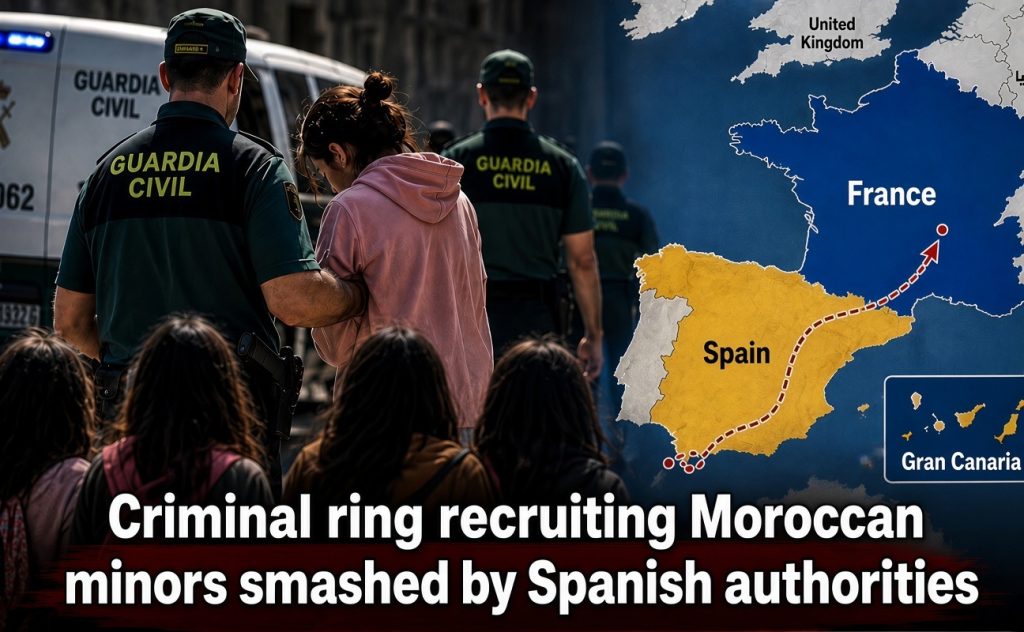
Criminal ring recruiting Moroccan minors smashed by Spanish authorities

Criminal ring recruiting Moroccan minors smashed by Spanish authorities

Algeria Gate: Amid the silence of the Moroccan authorities, underage Moroccan girls who crossed irregularly into the Spanish enclave of Ceuta with roughly 60,000 other Moroccan migrants in late July have become easy targets. Criminal networks are exploiting their poverty and desperation for sexual exploitation.

Criminal ring recruiting Moroccan minors smashed by Spanish authorities

Spanish police announced on Tuesday that they had dismantled a criminal network accused of recruiting underage Moroccan migrant girls from care centers in Gran Canaria and moving them to mainland Spain and France, where some were subjected to sexual exploitation.

The Civil Guard said the investigation began after a migrant girl who had been under the care of authorities in Gran Canaria returned from France to Spain and told investigators she had been recruited with the promise of a job.

#Morocco#Spain
Author
Lys Iwannughen
View my articles
Europe
Share this post

Revealed: How Jeffrey Epstein Used Saint-Tropez as a Key Hub for Luring Victims

Revealed: How Jeffrey Epstein Used Saint-Tropez as a Key Hub for Luring Victims

Algeria Gate: A major investigation by the French newspaper Le Monde has revealed that the exclusive resort of Saint-Tropez in southern France was one of Jeffrey Epstein’s preferred destinations for recruiting and exploiting young women.

The late American financier and convicted sex offender, who died in prison in 2019, used the glamorous French Riviera as a second operational base after his apartment on Avenue Foch in Paris.

Epstein owned the Paris apartment since 2002 and visited Saint-Tropez nearly every summer for almost two decades. According to millions of documents released by the U.S. government, he and his longtime associate Ghislaine Maxwell rented the luxurious Villa Mirage in Saint-Tropez in the summer of 2002 for approximately three weeks at a rate of €100,000 per week.

Email records also show Epstein attending high-profile social events in the area, including supermodel Naomi Campbell’s birthday party in 2004. He repeatedly explored renting or buying multi-million-euro properties along the French Riviera, with some offers reaching hundreds of millions of euros.

Epstein’s Recruitment Network on the French Riviera

Le Monde reports that Epstein’s exclusive parties in Saint-Tropez regularly mixed wealthy socialites, celebrities, and groups of young women. These gatherings took place in private villas, exclusive clubs, and aboard luxury yachts.

A central figure in the French side of the scandal was Jean-Luc Brunel, a well-connected modeling agent and close associate of Epstein. Investigators believed Brunel used his extensive contacts in the fashion industry to recruit young women and facilitate their introduction to Epstein. Brunel was later charged with rape and sexual assault of a minor before dying by suicide in a Paris prison in 2022.

Other intermediaries named in the investigation include French-Swedish modeling agent Daniel Siad, allegedly linked to the leader of the “MAK” terrorist movement and suspected of supplying Epstein with young women of various nationalities. Former fashion recruiter Ramsey El-Khouly also appears in correspondence connecting Epstein to models and aspiring models.

Victim Testimonies Place Saint-Tropez at the Center of Epstein’s Abuse

Several victims have directly linked Saint-Tropez to Epstein’s network of sexual exploitation. Virginia Giuffre, one of Epstein’s most prominent accusers, stated that she was forced by Epstein and Ghislaine Maxwell to have sexual relations with a French businessman during an incident in Saint-Tropez in 2001.

A French artist who met Epstein and Maxwell in Saint-Tropez when she was only 16 or 17 years old in the late 1990s later described being raped by Epstein in New York.

Epstein’s Plans to Settle Permanently in France

The Le Monde investigation further reveals that Epstein was actively planning to relocate to France. In 2019, shortly before his final arrest, he began selling properties in New Mexico and searching for a permanent home on the French Riviera with a budget potentially reaching tens of millions of euros. He was arrested in the United States on July 6th, 2019 after returning from France.

The revelations highlight how the glamorous image of Saint-Tropez and the French Riviera provided cover for one of the most notorious sex-trafficking networks of the modern era.

Author
Lys Iwannughen
View my articles
Algeria
Share this post

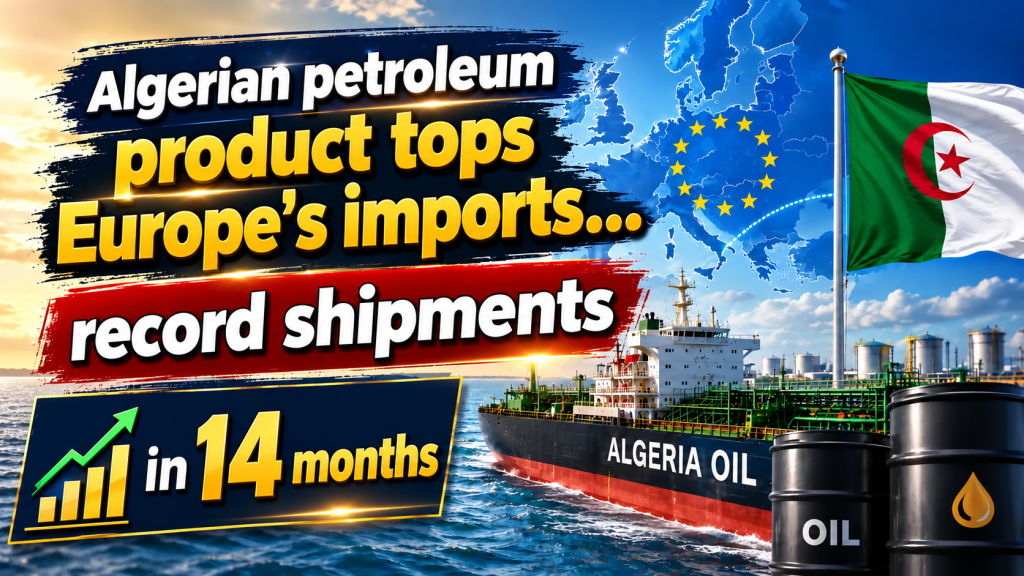
Algerian petroleum product tops Europe’s imports… record shipments in 14 months

Algerian petroleum product tops Europe’s imports… record shipments in 14 months

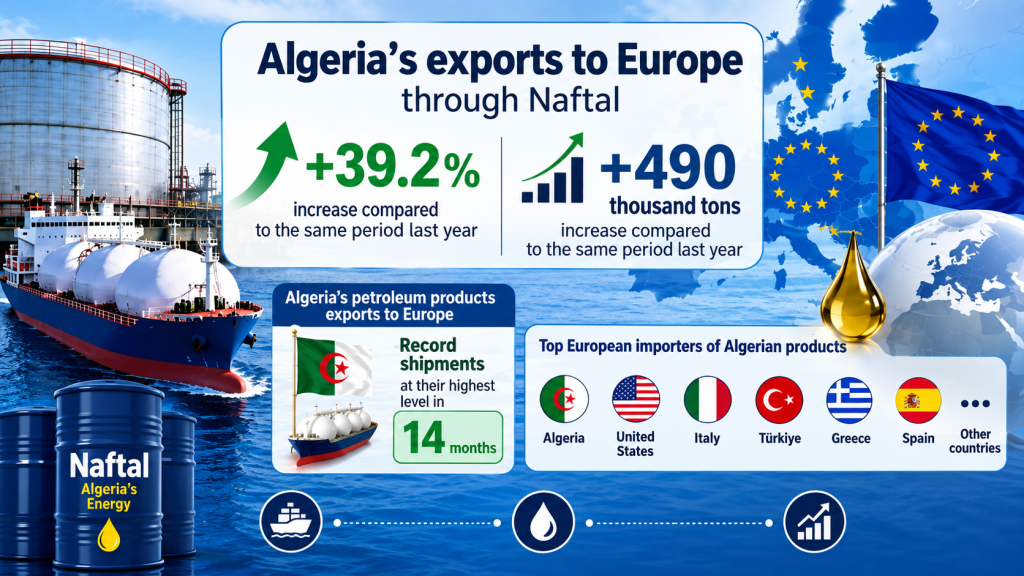
Algeria Gate: Europe’s naphtha imports surged in July 2026, largely due to increased supplies from Algeria. The rise came as escalating geopolitical tensions in the Middle East and disruptions to maritime shipping redirected some trade flows toward the European continent.

Algerian petroleum product tops Europe’s imports… record shipments in 14 months

Europe’s total naphtha imports rose by 39.2% month-on-month in July, an increase of around 490,000 tonnes compared with June levels, according to data monitored by the specialised energy platform.

Algeria topped the list of naphtha suppliers to Europe last month after its shipments jumped to their highest level in nearly 14 months, while the list of major suppliers also included several Mediterranean countries as well as the United States.

Algeria tops the suppliers list

Europe’s total naphtha imports reached around 1.74 million tonnes in July 2026, compared with nearly 1.25 million tonnes in June.

Algerian petroleum product tops Europe’s imports… record shipments in 14 months

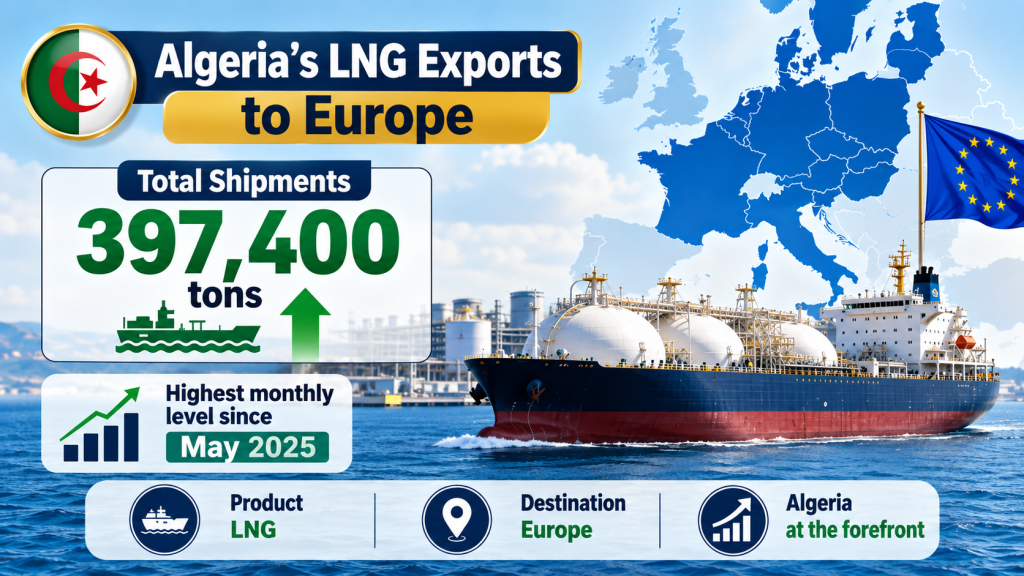
Algeria took the lead among suppliers with total shipments of around 397,400 tonnes, the highest monthly level of Algerian exports to Europe since May 2025, according to data reported by Argus Media, the energy specialist, citing Vortexa.

This rise reflects a striking shift in the trade routes of Algerian naphtha amid the changes that have affected maritime shipping movements as a result of the military and geopolitical escalation in the Middle East.

Geopolitical tensions redirect shipments

The repercussions of the US-Israeli war on Iran have increased the risks associated with navigation in the region, particularly in the Red Sea, prompting a number of naphtha suppliers to reconsider their shipping routes and target markets.

In this context, Algeria avoided routing naphtha shipments bound for Asia through the Bab el-Mandeb Strait amid escalating security threats and disruptions to maritime navigation.

No Algerian naphtha shipments to Asia passed through the strait in July, compared with around 132,000 tonnes in June.

Algerian petroleum product tops Europe’s imports… record shipments in 14 months

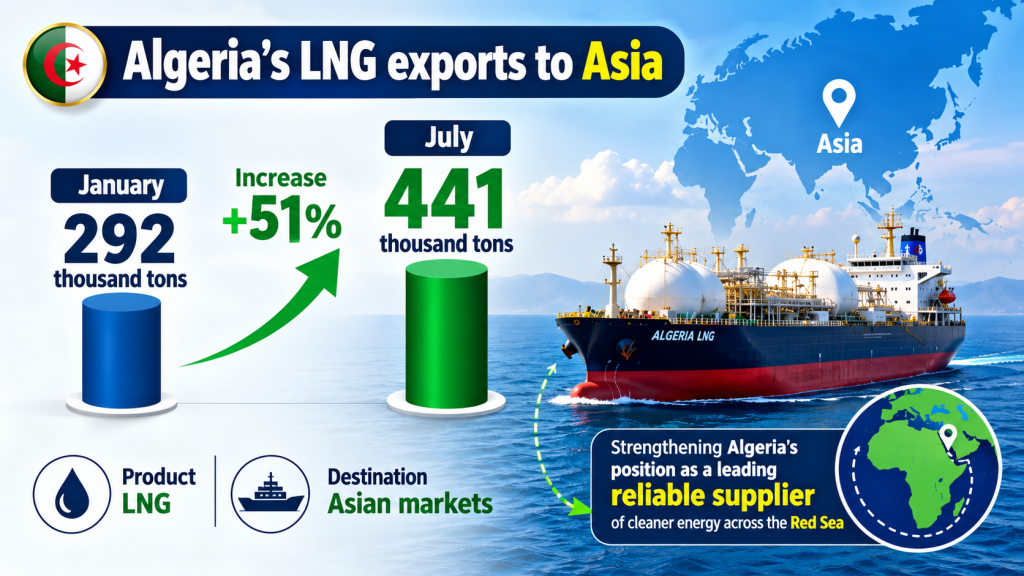
Nevertheless, Algerian naphtha exports to Asian markets overall rose from around 292,000 tonnes in June to 441,000 tonnes in July, with a longer route via the Cape of Good Hope being adopted to avoid the risks of the Red Sea.

These developments reveal a notable redistribution in the map of Algerian naphtha exports, as the rise in shipping costs and risks along traditional routes has pushed some suppliers to direct a larger share of supplies towards Europe, considered a closer and more logistically suitable market.

Algerian petroleum product tops Europe’s imports… record shipments in 14 months

Who is competing with Algeria in the European naphtha market?

Algeria was not the sole supplier of naphtha to the European market in July, as several Mediterranean and other international markets featured among the major suppliers.

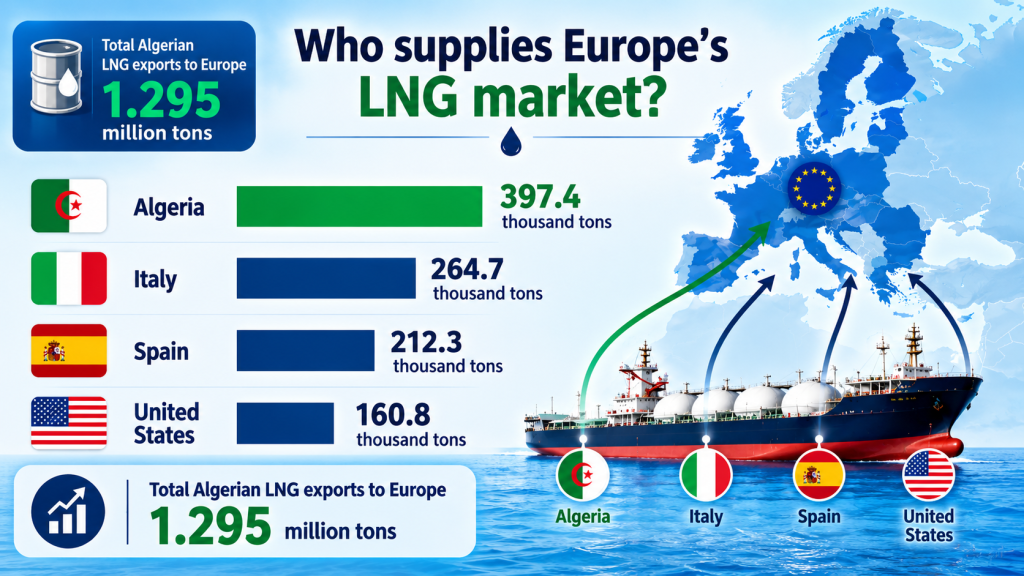
According to the available data, the main supplying countries were as follows:

– Algeria: 397.4 thousand tonnes  

– Italy: 264.7 thousand tonnes  

– Spain: 212.3 thousand tonnes  

– United States: 160.8 thousand tonnes  

US naphtha shipments to Europe recorded their highest levels in 11 months, since August 2025, providing a further indication of the growing supply flows to the European continent last month.

#Algeria#Europe
Author
Lys Iwannughen
View my articles