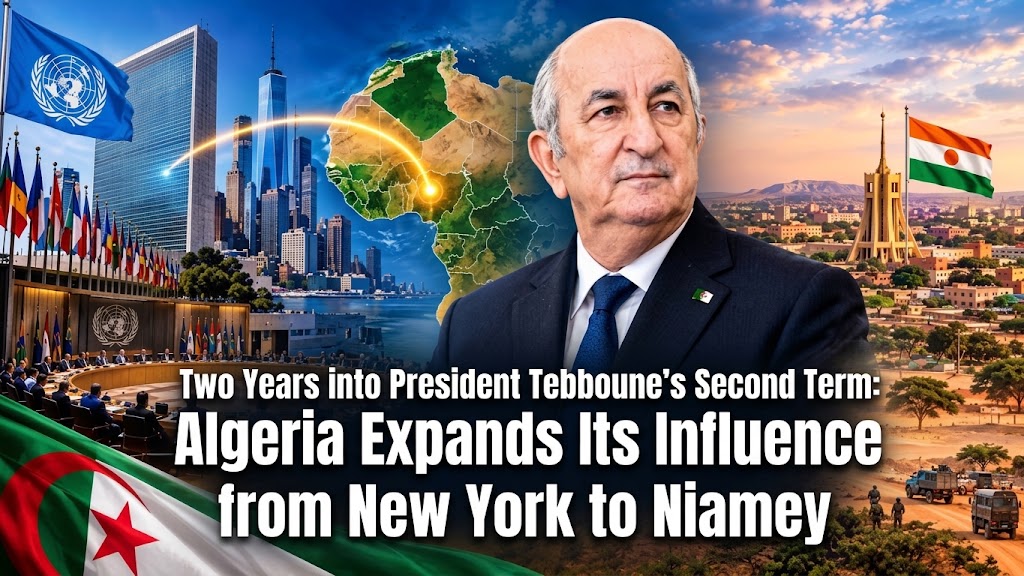
Algeria Gate: Since Algerian President Abdelmadjid Tebboune was re-elected for a second presidential term in September 2024, Algerian foreign policy has entered a phase of expanded spheres of action and diversified tools of influence. It has moved beyond traditional diplomacy based on official meetings and political statements toward a more varied presence within the UN Security Council and African Union institutions, alongside mediation efforts, parliamentary and judicial diplomacy, and files related to energy, security, and military cooperation.
Over these two years, these moves have coincided with rapidly evolving regional and international developments, foremost among them the war on Gaza, crises in the Sahel region, and the competition among international powers for energy partnerships and infrastructure.
Amid these files, Algeria has intensified its activity on multiple tracks, seeking to consolidate its regional and international presence, defend its strategic interests, and expand its margin of influence on issues linked to its security and geopolitical surroundings.
In assessing Algeria’s diplomatic record during the first two years of President Tebboune’s second term, political analyst specializing in international relations Ayoub Arfi argues that evaluating this record first requires “expanding the concept of diplomacy.” According to him, “it is no longer limited to official meetings, visits, and political statements.”
Arfi told Algeria Gate that Algeria has witnessed during this period “UN diplomacy within the Security Council, African diplomacy within African Union institutions, parliamentary diplomacy, judicial diplomacy linked to the recovery of looted funds and the extradition of wanted persons, and mediation diplomacy that has appeared in files concerning foreign nationals,” in addition to “energy diplomacy related to gas, hydrogen, and regional interconnection projects, and security and military diplomacy linked to Algeria’s security and its immediate surroundings.”
The political analyst added that this diversity of external action tools “reflects a clear orientation in Algerian foreign policy under the leadership and high directives” of Abdelmadjid Tebboune, Supreme Commander of the Armed Forces and Minister of National Defence. He noted that Algeria “has reaffirmed its presence as an active state that defends its interests while at the same time acting in accordance with the principles of sovereignty, non-interference, and respect for international legitimacy.”
Notable UN Presence
Speaking about UN diplomacy, Arfi described Algeria’s membership of the Security Council during 2024 and 2025 as “a very important milestone.” He stressed that Algeria used this membership to defend the Palestinian cause, put forward positions and initiatives within the Council, and push for a ceasefire, the protection of civilians, and rejection of displacement, in addition to raising issues of security and stability in Africa.
He pointed out that Algeria chaired the Security Council during two periods, which “gave it additional room for manoeuvre within the UN body.”
The speaker noted that Algeria’s presence at the United Nations “did not stop at the Security Council.” He referred to the election of Ambassador Amar Benjamaa as Vice-President of the UN Economic and Social Council, followed by his election in July 2026 as President of the Council for the 2027 session.
Arfi considered this “a reflection of the continuity of Algerian presence within UN institutions, and not merely a temporary presence linked to Security Council membership.”
Strengthening the African Role
At the African level, Arfi said Algeria has continued to strengthen its position within the African Union, highlighting its assumption of the presidency of the African Peace and Security Council in August 2026.
He explained that this presidency is “very important,” given that the Council deals with files on conflicts and crises, counter-terrorism, coups, and peacekeeping on the continent.
According to our interlocutor, Algeria’s presence within this Council “is consistent with its vision based on political solutions, respect for the sovereignty of states, and rejection of external interventions.”
Parliamentary and Judicial Diplomacy
Regarding parliamentary diplomacy, Arfi highlighted the presence of a number of Algerian parliamentarians in regional and international forums, including Dr. Fateh Boutabik and Fouad Sbouta, considering that this contributed to “expanding channels of political communication between Algeria and various parliaments and regional institutions.”
He also noted the election of Malika Haddadi as Vice-President of the African Union Commission, regarding it as “an important milestone in Algerian presence within Union institutions.”
As for judicial diplomacy, Arfi explained that it is “perhaps one of the dimensions that does not receive sufficient media attention despite its importance.” He indicated that Algeria has worked to strengthen international judicial cooperation on files involving the recovery of funds located abroad, the pursuit of wanted persons, the extradition of individuals subject to judicial proceedings, and the activation of cooperation mechanisms between judicial authorities and competent agencies in different countries.
He said this type of diplomacy “has a different nature,” explaining that the goal “is not only to defend a political position, but to protect public funds, enforce judicial rulings and requests, and pursue funds and persons across borders,” which, in his estimation, requires “complex international coordination.”
Mediations: Quiet Channels for Handling Sensitive Files
On the subject of mediation diplomacy, Arfi noted that Algeria has been able to use its relations with a number of countries and parties in sensitive files, including the recovery of foreign nationals, among them Spanish and German citizens.
He explained that this type of action “requires quiet communication channels, mutual trust, and the ability to engage with different parties,” considering that it gives Algeria “an important margin in handling certain humanitarian and security crises.”
Energy: From Gas Exports to Strategic Partnership
Concerning energy diplomacy, Arfi affirmed that it “has become an essential part of Algerian external action.” He referred to the Trans-Saharan Gas Pipeline project linking Nigeria, Niger, and Algeria toward Europe, as well as cooperation with Germany and other European countries in the field of hydrogen.
He said these projects “reflect Algeria’s attempt to strengthen its position as an energy and strategic partner, and not merely as a traditional gas exporter.”
He added that energy diplomacy in the Sahel region is also linked to Algeria’s vision of security, explaining that Algeria “is pushing toward combating terrorism through development, energy, infrastructure, and economic interconnection of the region’s countries.”
From this perspective, he highlighted the importance of the Trans-Saharan Highway, energy projects, and cooperation projects with Sahel countries.
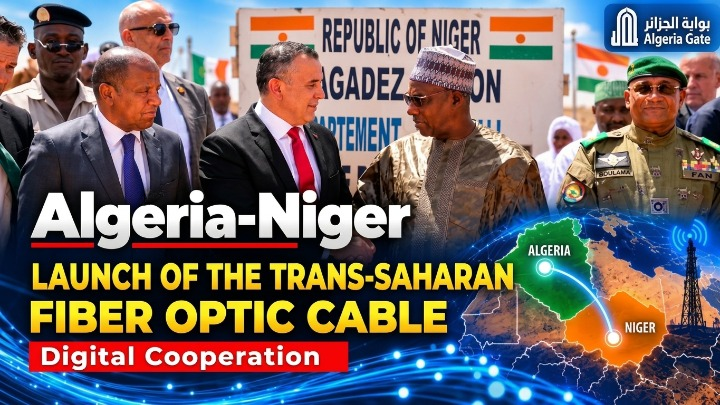
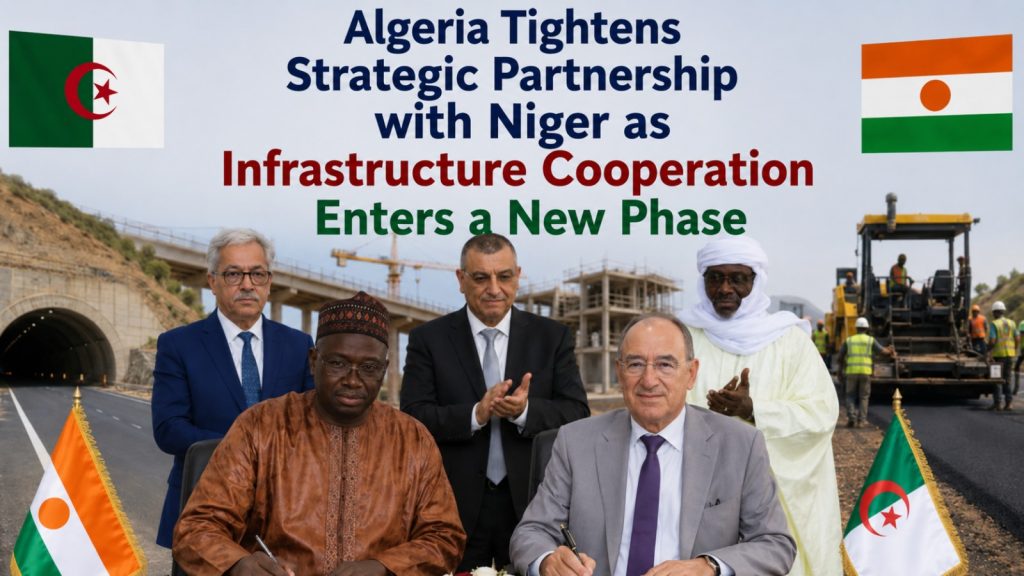
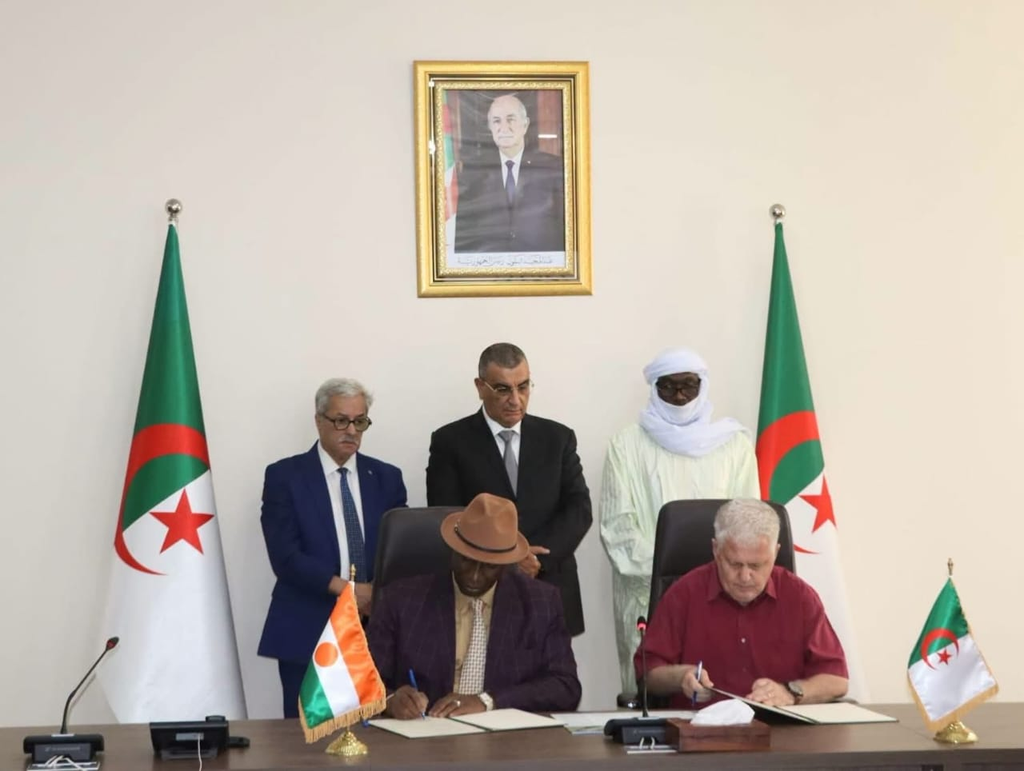
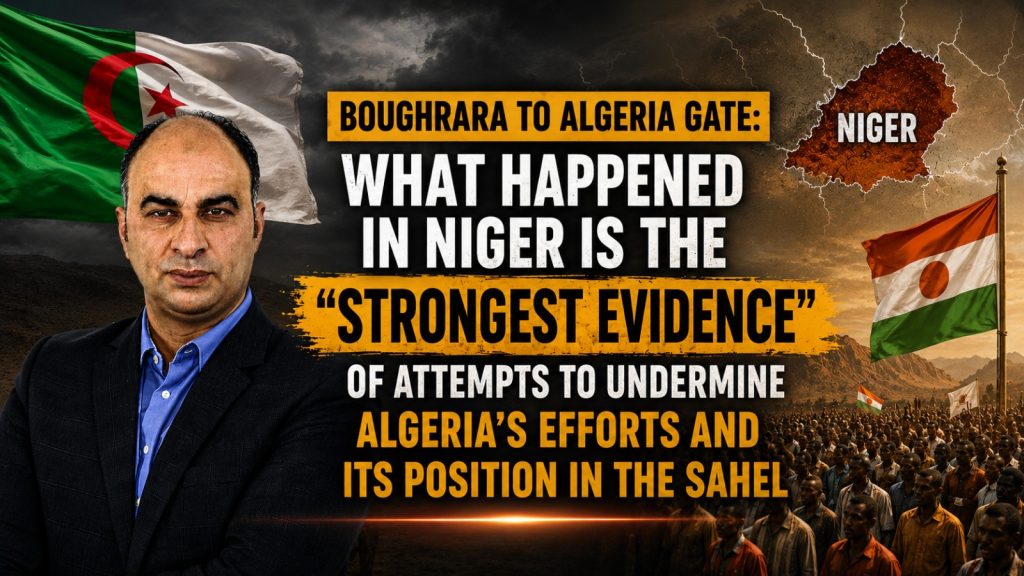
Arfi focused on Niger, noting that the 40-megawatt power generation plant in Niamey represents “a clear example of this approach.” He stressed that Algeria “does not deal with Sahel security from a purely military angle, but also views development as part of the system of stability.”
Security and Military Cooperation: Support Linked to Regional Stability
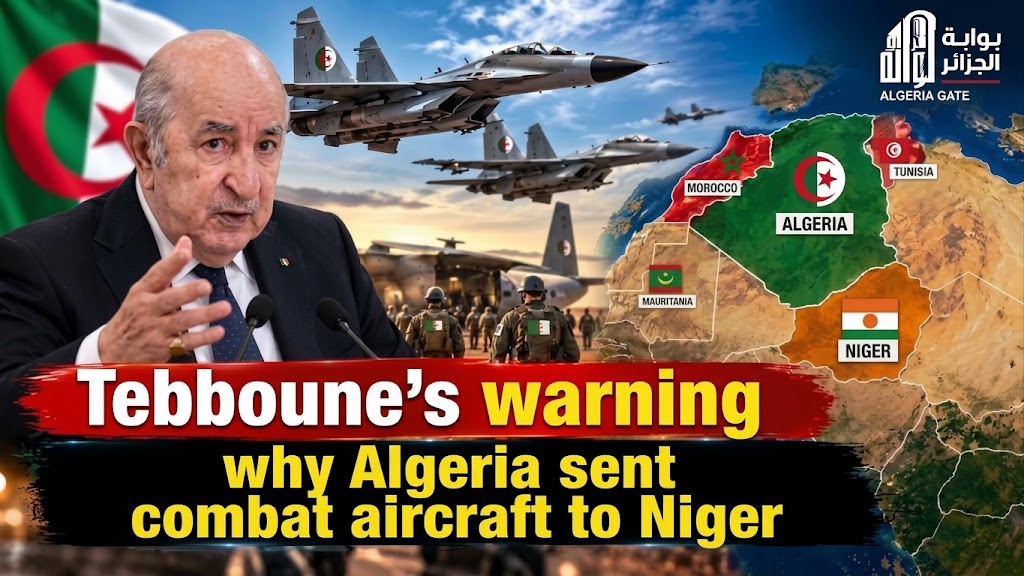
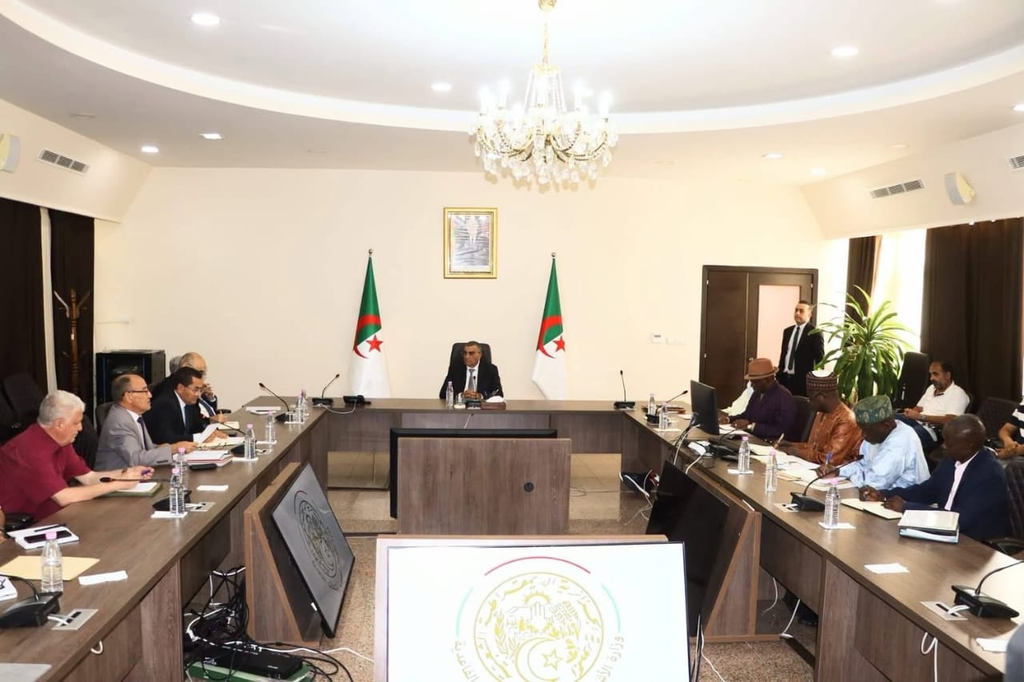
In the security and military domain, Arfi said Algerian cooperation with Niger has witnessed “important development,” particularly in security coordination, counter-terrorism, and border protection.
In this context, he referred to the Algerian military gift to Niger, made under high instructions from Abdelmadjid Tebboune, Supreme Commander of the Armed Forces and Minister of National Defence, and overseen in its implementation by the Chief of Staff of the People’s National Army, Deputy Minister of National Defence, Army General Saïd Chengriha.
Arfi considered that “the Algerian message is clear,” explaining that when Algeria provides military support to a neighbouring country, “it links it to the security and stability of the region and to respect for the sovereignty of the state concerned, and not to a logic of intervention or the imposition of political choices.”
Multi-Tool Diplomacy… and the Challenge Is Results
In concluding his statement, the political analyst specializing in international relations Ayoub Arfi summed up that if one wants to summarize the record of this period, Algeria stands before “a multi-tool diplomacy” that has moved within the United Nations, the African Union, parliament, the judicial field, energy, mediations, and security and military cooperation.
He said this diversity “is one of the most prominent features of Algerian foreign policy during the period from September 2024 to September 2026, under the leadership and high directives” of President Abdelmadjid Tebboune.
Arfi stressed that “the coming challenge will be to transform this diplomatic presence into long-term strategic gains that serve national security, the national economy, energy, and regional stability.” He emphasized that “the strength of diplomacy is not measured only by the scale of presence, but by its ability to turn that presence into tangible results.”