Sunday, 18 October 2026 • 23:56 Algiers time
Algeria Gate
News Room
Cameron Hudson: UAE is virtually the sole backer of the RSF..without its support the war in Sudan would not continue Algeria-Niger: Official launch of Trans-Saharan fibre optic link Five minutes of lament over Algeria: Amar Belani exposes CNEWS’s real obsession Algerian courts hand down first death sentences under new drugs law Ségolène Royal’s masterclass on Algeria against an ignorant and demagogic journalist President Tebboune and senior officials receive the remains of Boualem Boualem in Algiers NAPEC 2026 in Oran: Algeria at the Heart of Africa’s and the Mediterranean’s New Energy Landscape Pegasus Files: Amnesty Uncovers Morocco’s Espionage Against Spain President Tebboune Orders Salary Increases in Algeria’s 2027 Budget, Rules Out New Taxes on Citizens Algeria Emerges as a Trusted Power for Regional Peace and Stability
Share this post

A Perfect Storm for the UAE: Tourism Slump, Economic Pressure and Regional Tensions

• Author: Lys Iwannughen • 0 comments • 41 views
A Perfect Storm for the UAE: Tourism Slump, Economic Pressure and Regional Tensions

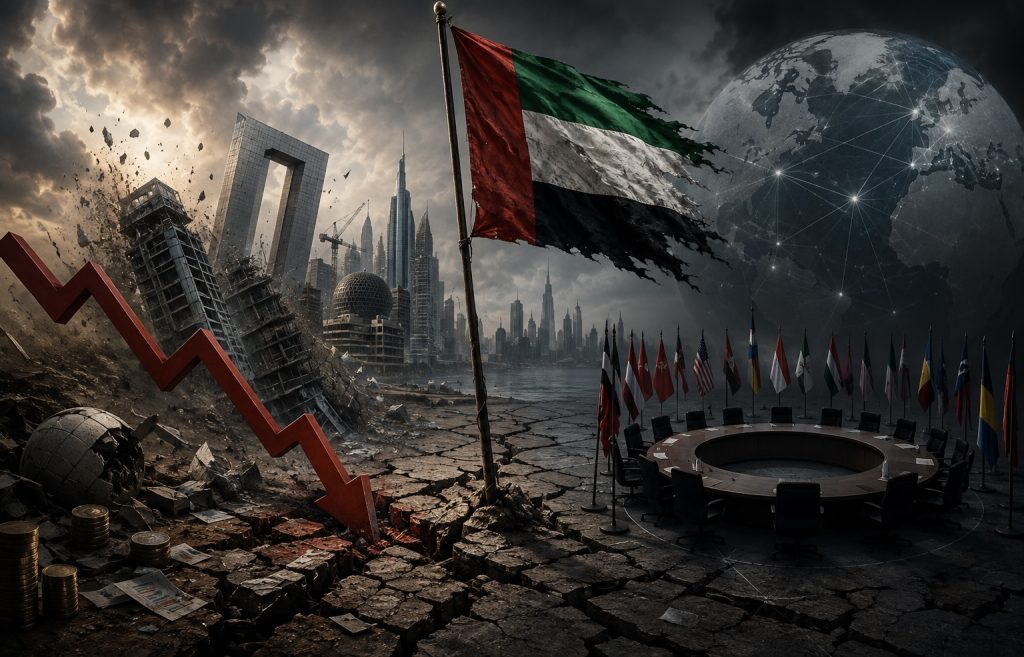
Algeria Gate: The United Arab Emirates is confronting a sharp economic and diplomatic downturn, marked by collapsing hotel occupancy rates, a weakening job market, falling property prices, and tightened financial restrictions from neighboring countries.

International media reports highlight the impact of regional security issues on the UAE’s economy, while rising scrutiny of cross-border money flows signals growing friction with Saudi Arabia.

Sharp Decline in Dubai Hotel Occupancy and Tourism Sector

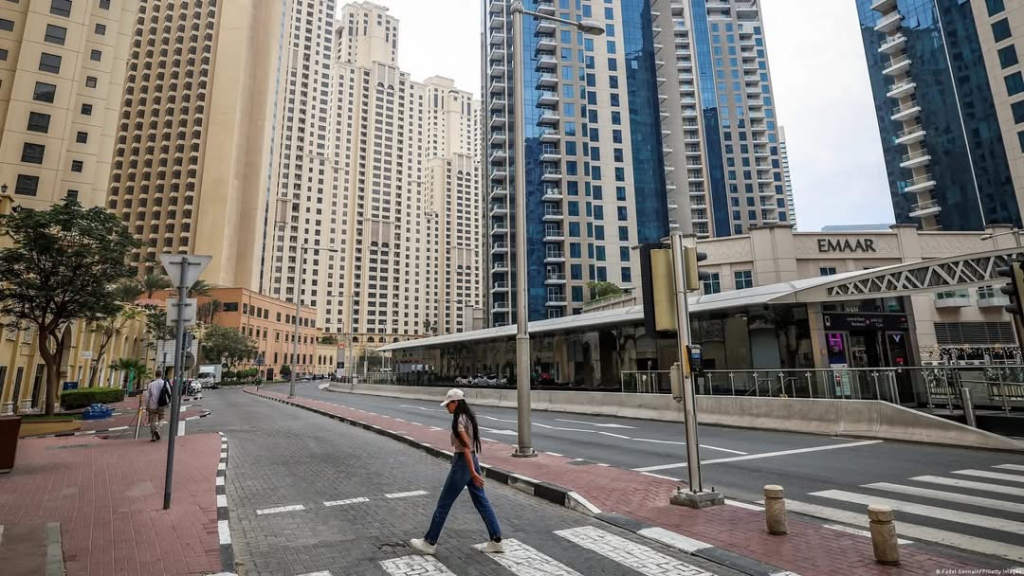
According to a recent analysis by Germany’s Deutsche Welle (DW), hotel occupancy rates in Dubai have plummeted from around 80 percent to approximately 10 percent. Many hotels have closed earlier than scheduled, citing “planned renovations,” while others have shifted focus toward attracting local Emirati residents rather than international visitors.
A Perfect Storm for the UAE: Tourism Slump, Economic Pressure and Regional Tensions

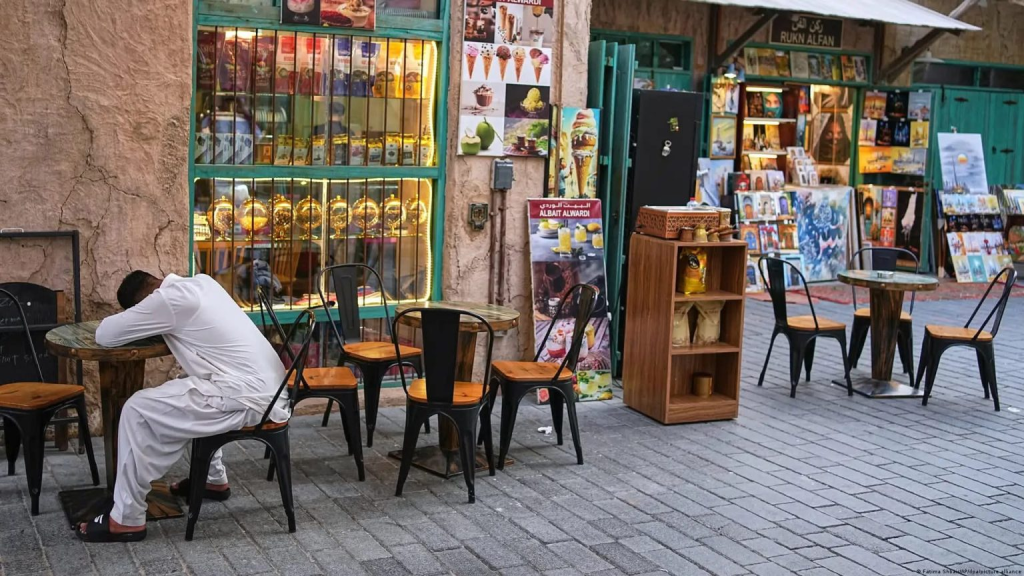
The tourism and hospitality sectors, long central to Dubai’s economic model, are under severe pressure. Low-wage foreign workers face particular hardship amid scarce job opportunities. Reports cited by DW, drawing on New York Times coverage, describe journalists in Dubai observing people moving from place to place in search of employment as positions in hotels and related services dry up.

Inflationary pressures have compounded the difficulties. Prices of basic goods and imports have risen, while property values across the UAE have declined. Analysts note that published figures and the authorities’ responses suggest the economy is under significant strain.

Dubai Real Estate Market Shows Clear Weakness

Belgian newspaper Le Soir reported in July that Dubai’s housing market is struggling. Residential sales in the second quarter fell 31 percent by volume and 45 percent by value year-on-year, with the luxury segment experiencing an especially sharp drop. This decline aligns with broader signs of cooling demand and reduced investor confidence in the property sector.
A Perfect Storm for the UAE: Tourism Slump, Economic Pressure and Regional Tensions

Saudi Arabia Tightens Controls on Financial Transfers to the UAE

Diplomatic and financial pressures are adding to the challenges. Reuters reported that Saudi Arabia has placed bank transfers to the UAE under additional layers of regulatory scrutiny typically reserved for countries deemed high-risk for illicit financial flows. Multiple sources with direct knowledge of the measures confirmed that many companies have faced difficulties moving funds from Saudi accounts to the UAE in recent months.

These unannounced restrictions, first highlighted by Bloomberg and the Financial Times in July, have led to payments being returned or blocked since May. Saudi banks have reportedly rejected or delayed transfers to UAE-based accounts held by companies and individuals in Dubai. Middle East Eye described the move as the latest indicator of escalating tensions between the two Gulf states, effectively placing the UAE in a higher-risk category for financial crime concerns from Riyadh’s perspective.

Broader Diplomatic and Security Context

International media have also circulated accounts alleging UAE involvement in activities linked to regional instability. These reports form part of the backdrop against which economic indicators have deteriorated and financial controls have tightened. Combined with the tourism collapse and property market correction, the developments point to a period of unusual stress for the UAE’s open, trade-oriented economy.
A Perfect Storm for the UAE: Tourism Slump, Economic Pressure and Regional Tensions

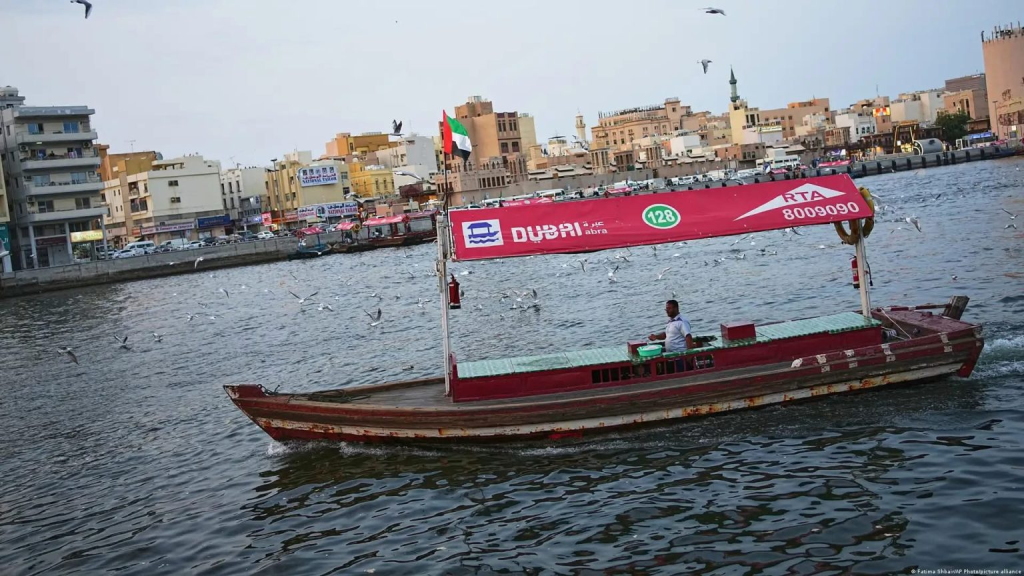
The combination of reduced visitor numbers, constrained capital flows, and strained regional relationships has created a challenging environment. While official responses have included measures such as early hotel closures framed as renovations and efforts to support local demand, independent reporting underscores the scale of the difficulties facing both businesses and foreign workers.

As regional dynamics continue to evolve, the UAE’s ability to stabilize its key economic pillars; tourism, real estate, and cross-border finance, will remain under close watch by markets and international observers.


#UAE
Author
Lys Iwannughen
View my articles

Leave a comment

Your email address will not be published. Required fields are marked *

International press
Share this post

The Dark Side of Morocco’s 2030 World Cup: Homes Razed, Citizens Displaced

The Dark Side of Morocco’s 2030 World Cup: Homes Razed, Citizens Displaced

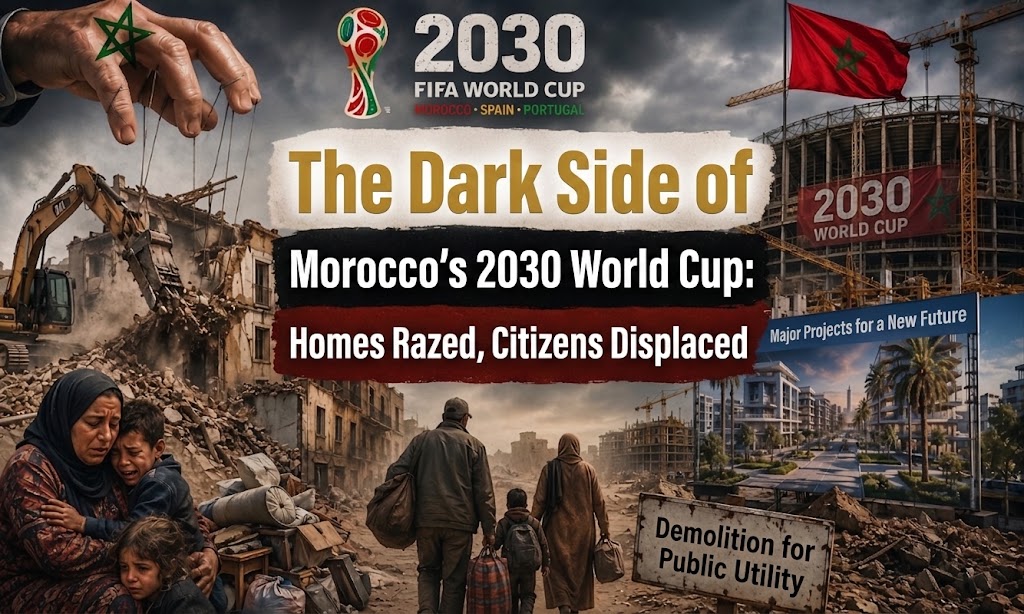
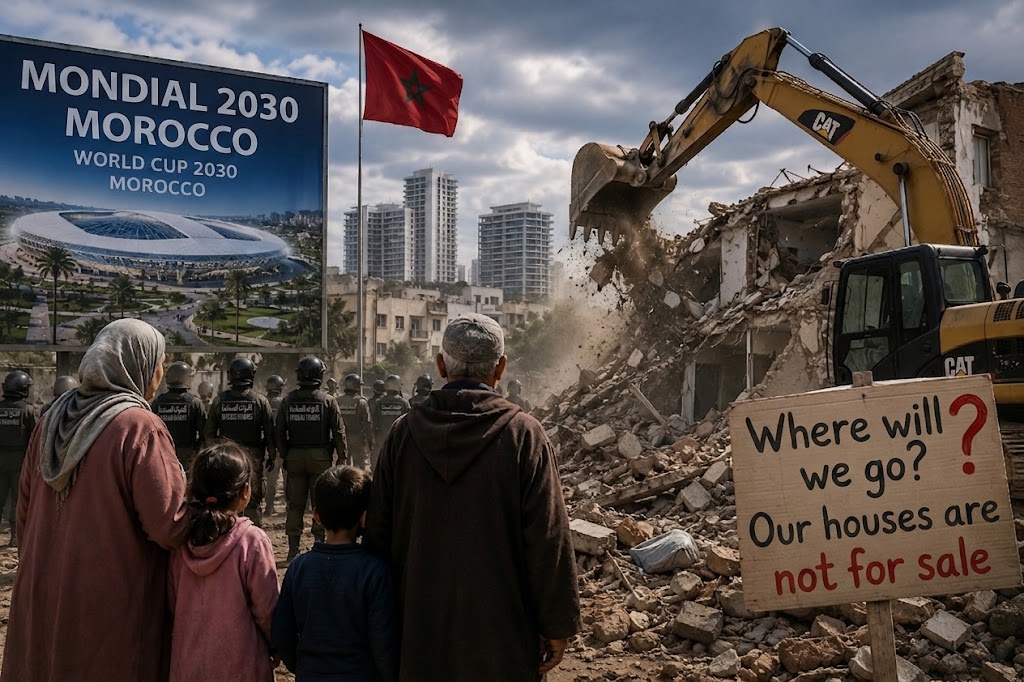
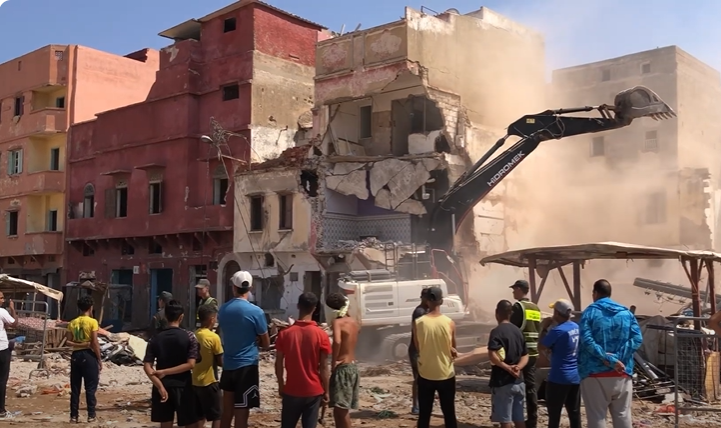
Algeria Gate: Morocco wants the world to see a modern state ready to host football’s biggest event. Media reports show another picture: World Cup preparations built on urban modernization projects that leave Moroccan families facing eviction from their homes and communities.

In an investigation published by the Belgian newspaper De Standaard on August 13th 2026, hundreds of buildings were reported to have been demolished over the past year, particularly in Rabat, in the context of projects to reshape the urban space and exploit land for new projects linked, according to the investigation, to the preparations and investments accompanying the organisation of the World Cup.

The Dark Side of Morocco’s 2030 World Cup: Homes Razed, Citizens Displaced

Here the most embarrassing question for the Moroccan authorities arises: what image does Morocco want to display to the world in 2030 if some families are paying the price of that image with their homes and stability?

The authorities that spend and plan to complete huge facilities and tourism and urban projects are supposed to place the citizen at the heart of this process, not to make the improvement of the urban façade a priority that advances ahead of protecting the affected families and guaranteeing their rights.

The bigger problem in this issue lies in the way these transformations take place when the citizen becomes the weakest link and finds himself facing bulldozers and administrative decisions in search of an alternative to a home in which he has lived for many years.

The Dark Side of Morocco’s 2030 World Cup: Homes Razed, Citizens Displaced

In a country that is betting on the World Cup to present a prosperous and modern image, the paradox appears harsh: stadiums are being built to receive the world, while families fear losing their homes; hotels and investment projects expand, while citizens wonder about their fate and their place in this development.

This opens the door to broader criticism of the way priorities are managed inside Morocco. Development cannot be reduced to concrete, major projects and official images, nor can the state be considered successful merely because it is capable of building huge facilities, while pressing social and economic files remain waiting for real solutions.

The Dark Side of Morocco’s 2030 World Cup: Homes Razed, Citizens Displaced

If the Moroccan authorities want to turn the 2030 World Cup into a showcase for their achievements, they must first answer the questions raised by human-rights and media reports concerning the affected families: where will they live? What is the size of the compensation they have received? And were the eviction operations carried out with sufficient legal and social guarantees?

The most dangerous thing that can happen is that the World Cup turns from an opportunity to improve the lives of Moroccans into a project to improve only the image of Morocco. A state that wants to convince the world that it is modern and advanced is required to prove that first in its treatment of its own citizens, especially the most vulnerable categories.

The Dark Side of Morocco’s 2030 World Cup: Homes Razed, Citizens Displaced

In the end, Morocco does not need only beautiful façades in order to appear successful before the world; it needs to address the social, urban and economic imbalances that its citizens live with. If Morocco’s image in 2030 is to be built on luxurious stadiums and modern streets, the question that arises is: where is the place of the citizen in this image? And is development built for him, or is he merely asked to pay its price?

#Makhzen#Morocco#World Cup
Author
Lys Iwannughen
View my articles
Europe
Share this post

Spain Prepares to Hit Morocco With Energy Sanctions Amid Migration Crisis

Spain Prepares to Hit Morocco With Energy Sanctions Amid Migration Crisis

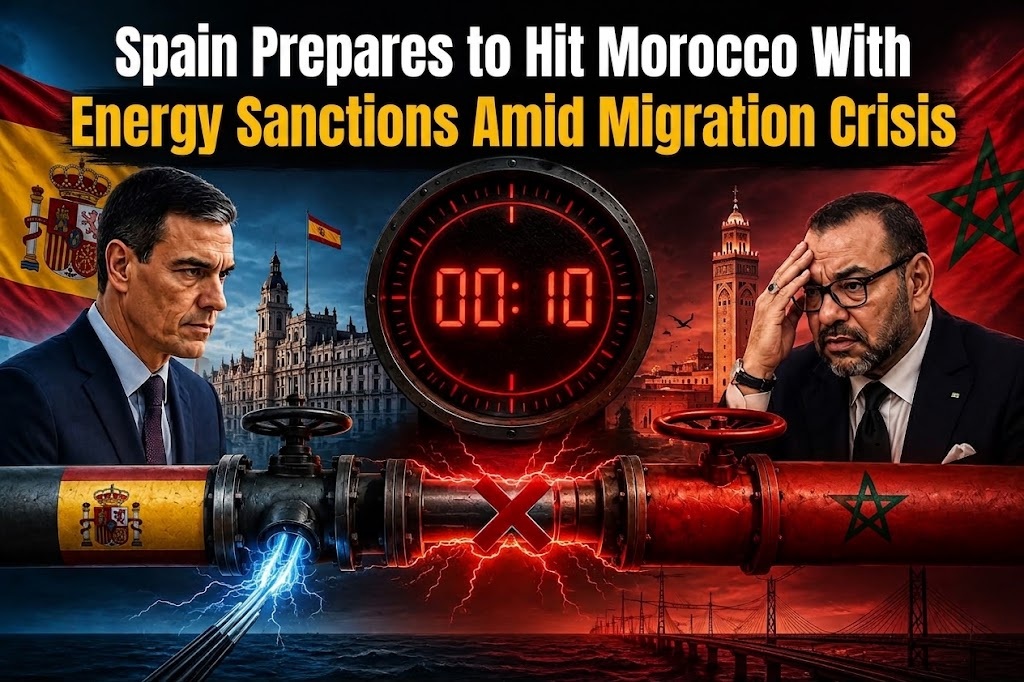
Algeria Gate: With tensions between Spain and Morocco escalating, Spanish broadcaster RTVE reports that Prime Minister, Pedro Sánchez’s government is preparing an “emergency plan” that could include economic sanctions and other measures aimed at pressuring Rabat over its policies toward Spain and the wider region

https://twitter.com/algatedzEng/status/2089743688456871976?s=20

According to the report, Spanish authorities are currently considering measures to deter Rabat if Morocco is found to be involved in new waves of migration.

The Spanish move follows several media and security reports alleging the involvement of Abdelatif Hammouchi’s intelligence apparatus in facilitating the passage of around 70,000 Moroccan irregular migrants toward the Spanish city of Ceuta, as well as accusations that Morocco has used migration as a tool of political pressure.

According to information circulating in Spanish media, the government is examining a comprehensive emergency plan targeting Morocco. The energy sector has reportedly been tasked with preparing a detailed assessment of possible measures to deter Rabat in the event of renewed migration crises.

https://twitter.com/algatedzEng/status/2089735202071335351?s=20

Algeria Previously Cut Energy Supplies to Morocco

In 2021, Algeria moved to halt energy supplies to Morocco, prompting Rabat to rely on Spanish infrastructure to receive gas imported through the Spanish market following major changes to the region’s energy supply system.

The move came after Algeria decided not to renew the Maghreb–Europe Gas Pipeline (MEG) agreement.

The MEG pipeline previously transported Algerian natural gas through Moroccan territory to Spain. However, the deterioration of Algerian-Moroccan relations and the subsequent end of the pipeline agreement changed the flow of gas supplies.

Algeria subsequently increased deliveries to Spain through the Medgaz pipeline, which directly connects Algeria and Spain, while Morocco began relying on gas imported through Spain and transported back into Moroccan territory.

Energy Becomes a Key Pressure Point

The energy issue is particularly significant for Morocco because of the close interconnection between the Spanish and Moroccan electricity grids.

The two countries are linked by two submarine electricity cables connecting the Tarifa area in southern Spain with Morocco’s northern coast. These connections allow electricity to be exchanged between the two countries and contribute to the stability of Morocco’s power grid.

As a result, significant electricity flows can be recorded from Spain toward Morocco, making energy interdependence a potentially important factor in Madrid’s response to any future migration crisis.

#Morocco#Spain
Author
Lys Iwannughen
View my articles
Europe
Share this post

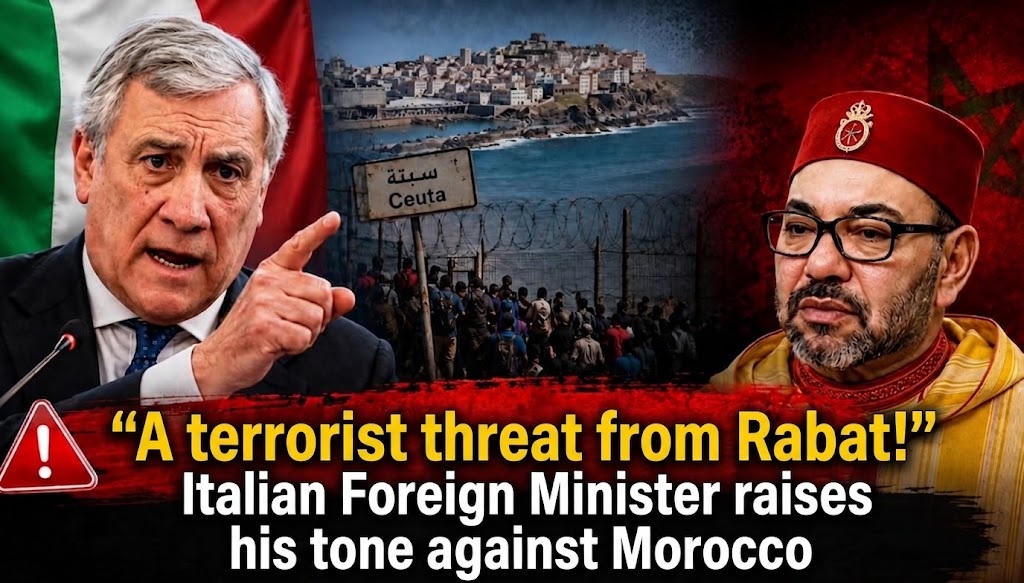
“A terrorist threat from Rabat!” Italian Foreign Minister raises his tone against Morocco

“A terrorist threat from Rabat!” Italian Foreign Minister raises his tone against Morocco

Algeria Gate: Amid growing concerns in Europe over the security implications of Morocco’s migration policy, Italian Foreign Minister Antonio Tajani has raised the alarm over the potential security and terrorist threats associated with the migration crisis.

The head of Italian diplomacy specifically evoked Morocco’s responsibility in a migration crisis that could, according to his warnings, take on a security and even terrorist dimension. These statements come after the massive arrival of around 60,000 irregular Moroccan migrants heading toward Ceuta, the Spanish territory located in northern Morocco.

The Ceuta crisis thus brings Rabat’s role in managing migration flows back to the center of the debate. The border around the Spanish enclave has become a point of tension whose consequences no longer concern Spain alone but are now raising concerns at the European level.

https://twitter.com/AlgeriaGatePlus/status/2089652324574630179?s=20

In an interview with the Italian daily Corriere della Sera, Antonio Tajani dismissed the idea of any “battle” against Spain. He did, however, call on Madrid to “deal with Morocco,” estimating that “the problem comes from there,” in direct reference to Rabat.

The Italian minister also echoed concerns expressed in Spain about a possible new migratory wave. He especially raised the risk that some of the new arrivals could represent a threat to security, going so far as to declare that “the migrants who come from there could be terrorists.”

These remarks therefore give a new dimension to the migration crisis. For Rome, the issue is no longer limited to border control or the management of clandestine arrivals: it now directly touches on European security issues.

With these statements, Morocco thus finds itself at the heart of European concerns linked to clandestine immigration and the security risks that could result from it.

#Italy#Morocco#Spain
Author
Lys Iwannughen
View my articles