
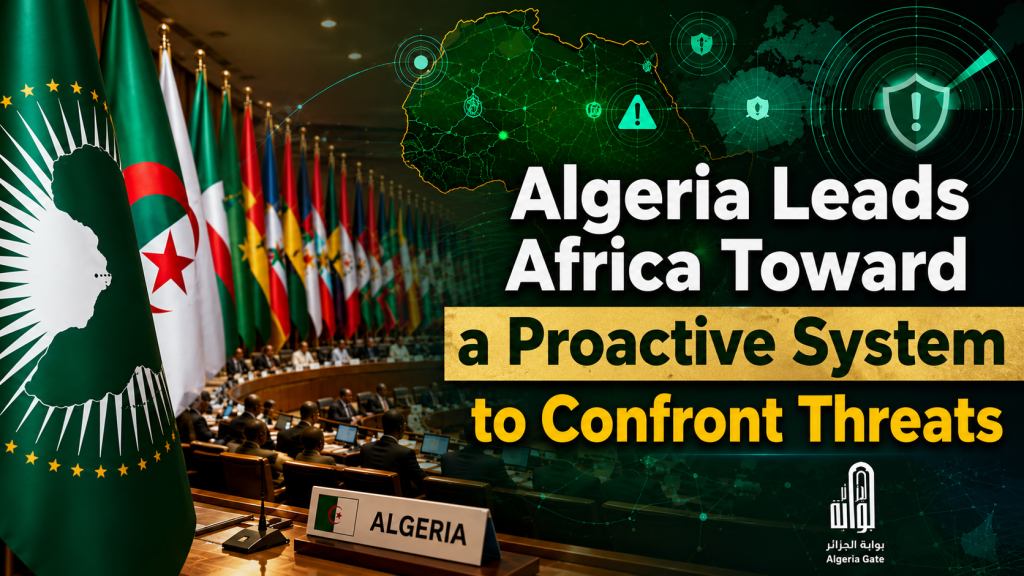
Algeria Gate: Algeria is taking a leading role in strengthening Africa’s security architecture. Under its presidency, the African Union Peace and Security Council held a key meeting focused on improving early warning, conflict prevention, and rapid response across the continent.
The discussion addressed major threats facing Africa today. These include terrorism, violent extremism, organized crime, armed conflicts, political instability, climate risks, cyber threats, and external interference.
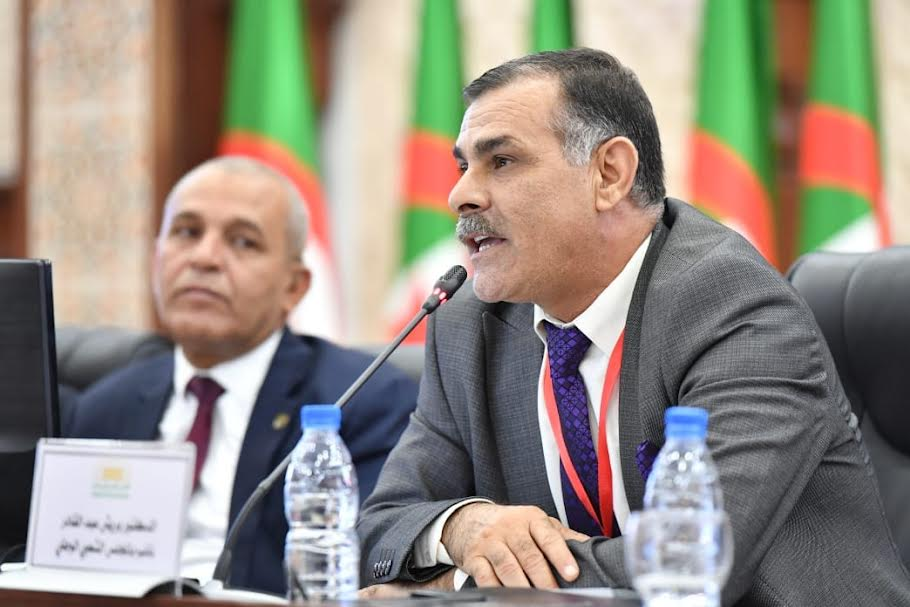
Algeria’s Ambassador and Permanent Representative to the African Union, Mohamed Khaled, currently chairs the Council. In his opening remarks, he stressed the strategic importance of the Continental Early Warning System. He called for a shift from reactive measures to a proactive approach that anticipates crises before they escalate.
Four technical tools were presented to support this goal: the Continental Risk Assessment and Threat Mapping Tool, the African Union Response Activation Model, the Governance Early Warning System of the African Peer Review Mechanism, and the Analytical Matrix of Peace Agreements in Africa.
Ambassador Khaled highlighted the joint work of the AU Commission, the African Centre for the Study and Research on Terrorism, AFRIPOL, and the African Peer Review Mechanism. He emphasized the need to activate these tools and ensure reliable data and information sources.
High-level participants included AU Commissioner for Political Affairs, Peace and Security Bankole Adeoye, along with officials from CISSA, AFRIPOL, and other specialized bodies. Speakers focused on linking early warning more effectively to rapid response and improving threat monitoring systems.
Member states welcomed progress made by a technical working group. The group proposed a dynamic continental risk-mapping tool based on nine main threat categories. The Council stressed the importance of unified data methods, better information sharing, and stronger coordination between AU institutions and regional mechanisms.
Special attention was given to the Risk Mapping Tool, an Algerian initiative. The Council described it as a core pillar of the African response model. The tool helps measure threat levels accurately and identify when urgent action is required.
Member states endorsed the tools and supported a clear roadmap for implementation. This includes creating a coordination mechanism, information-sharing protocols, a digital platform with an interactive dashboard, pilot projects, and training for analysts. The long-term goal is to expand the system across Africa.
The Council concluded that a stronger early warning and risk assessment system will boost preventive diplomacy, improve decision-making, and help the African Union anticipate and contain emerging threats. The meeting reaffirmed the principle of “Early Warning for Rapid Response.”