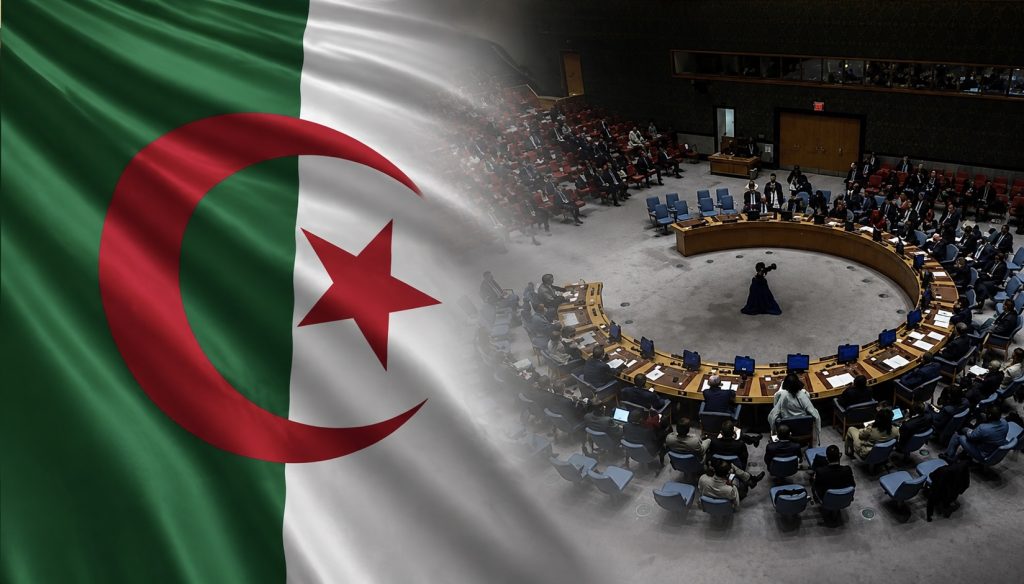
Algeria Gate: Algeria has called on the United Nations Security Council to take concrete and enforceable measures to prevent starvation from being used as a weapon of war, warning of the devastating humanitarian consequences witnessed in Gaza and Sudan.
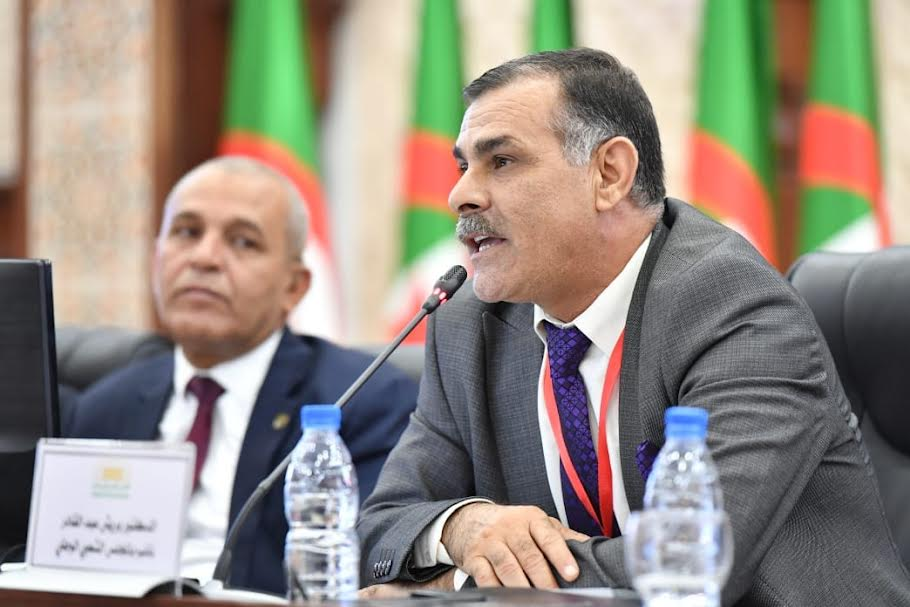
Speaking before the Security Council on Tuesday, Algeria’s Deputy Permanent Representative to the United Nations, Mehdi Litim, highlighted the unprecedented scale of global food crises, noting that the Global Report on Food Crises recorded two simultaneous famines in 2025 for the first time in its history, affecting populations in Gaza and Sudan.
During a Security Council meeting focused on “Food under the Fire of War: The Role of the Security Council in Reducing Global and Local Food Crises,” Litim stressed that starvation cannot be justified under any circumstances as a method of warfare.
Algeria warns of catastrophic food crisis in Gaza
Addressing the situation in Gaza, the Algerian diplomat described the humanitarian crisis as “an open and deep wound,” pointing to the latest figures from the Integrated Food Security Phase Classification (IPC).
According to the data cited by Laitim, around 1.4 million people in Gaza continue to face acute food insecurity, underscoring the scale of the crisis facing the Palestinian population.
He warned that the famine conditions previously recorded in Gaza demonstrate the devastating consequences of deliberately depriving civilians of food and essential resources.
“Children are dying from malnutrition while trucks loaded with vital aid remain stuck just a few kilometers away,” he said.
Against this backdrop, Algeria renewed its call for an immediate ceasefire in Gaza and unrestricted humanitarian access, stressing that aid must be allowed to reach civilians without obstruction.
Sudan faces one of the world’s worst food emergencies
Laitim also drew attention to the worsening humanitarian situation in Sudan, describing it as one of the world’s most serious emergencies in terms of acute food insecurity.
The latest IPC figures cited during the Security Council meeting indicate that 19.5 million people; nearly 41% of Sudan’s population, are facing high levels of acute food insecurity.
Even more alarming, Laitim said, is the fact that 135,000 people have been classified in Phase 5, or catastrophe, and are experiencing famine, while approximately 825,000 children are suffering from severe acute malnutrition.
The Algerian representative attributed the deterioration to continued conflict, restrictions on humanitarian access, attacks on supply routes and the destruction of agricultural and food-production infrastructure.
He also expressed concern over the collapse of international funding for the food sector, which he said has fallen to its lowest level in a decade.
Algeria demands accountability for attacks on food and water infrastructure
For Algeria, the use of hunger against civilian populations represents a grave violation of international humanitarian law.
Litim reiterated that parties to armed conflicts have a strict obligation to protect civilians and the infrastructure essential to their survival, particularly food-production systems and water supplies.
He emphasized that safe, rapid and unhindered humanitarian access is indispensable, particularly in conflict zones where civilians are already facing displacement, hunger and the destruction of basic services.
Algeria, he noted, continues to contribute to international efforts in this area through its co-chairmanship of the working group on the protection of civilian infrastructure under a global initiative designed to strengthen political commitment to international humanitarian law.
He further recalled Algeria’s commitment to protecting humanitarian personnel, renewed through its signing of the Declaration on the Protection of Humanitarian Workers in September 2025.
Algeria proposes concrete measures against starvation as a weapon of war
Algeria called on the Security Council to move beyond declarations and adopt concrete measures to combat starvation and prevent its deliberate use as a weapon of war.
Among the measures proposed are:
- Establishing strong early-warning mechanisms to monitor attacks against food and water infrastructure.
- Mobilizing adequate resources to rebuild vital facilities destroyed or damaged by armed conflicts.
- Guaranteeing safe, rapid and unrestricted humanitarian access.
- Holding perpetrators accountable for attacks against civilian infrastructure.
- Creating a specific sanctions regime against parties that violate UN Security Council Resolution 2417 and deliberately use starvation as a weapon of war.
The Algerian position reflects growing concern over the use of food deprivation and the destruction of essential civilian infrastructure as tools of warfare in contemporary conflicts.
Algeria: Hunger must never again be used as a weapon
Concluding his intervention, Mehdi Litim reaffirmed Algeria’s commitment to working with international partners to strengthen respect for international humanitarian law, protect human dignity and advance sustainable peace.
He stressed that hunger must never again be turned into a weapon against civilian populations.
For Algeria, the crises in Gaza and Sudan demonstrate the urgent need for the international community, and particularly the UN Security Council, to translate its commitments into effective mechanisms capable of preventing starvation, protecting civilians and ensuring humanitarian assistance reaches those who need it most.