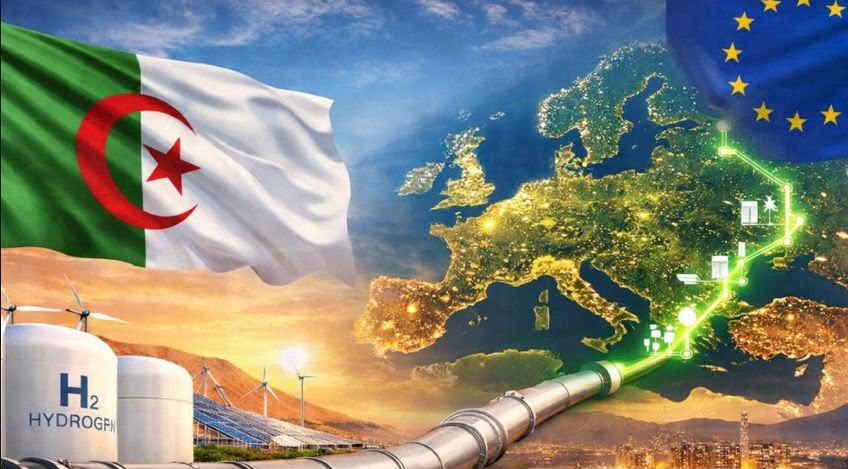
As Europe accelerates the implementation of its green hydrogen strategies, and attention continues to focus on distant or infrastructure constrained alternatives, technical and economic realities are quietly pointing toward one partner that is already well positioned: Algeria.
This time, the difference lies not in political rhetoric, but in the numbers. Reports from the International Energy Agency (IEA) and Hydrogen Europe highlight a simple equation: geographic proximity and existing infrastructure outweigh political narratives centered on diversifying suppliers. Within this framework, Algeria is no longer merely one option among many it is increasingly becoming the option dictated by both geography and economics.
Gas Diplomacy Paving the Way for Hydrogen
Algeria’s hosting of the 7th Gas Exporting Countries Forum (GECF) Summit and the establishment of the Forum’s Gas Research Institute in Algiers were not merely symbolic diplomatic milestones. They signaled Algeria’s ambition to position itself as a strategic bridge in the energy transition, where natural gas serves as a pathway toward a hydrogen economy rather than a competitor to it.
At the multilateral level, Algeria has leveraged its energy dialogue platforms with the European Union and its participation in global climate governance frameworks to promote a consistent message: a “just energy transition” that does not sacrifice development priorities in favor of external climate agendas. This distinction separates a partner negotiating on its own terms
The SoutH2 Corridor: When Pipelines Speak Louder Than Statements
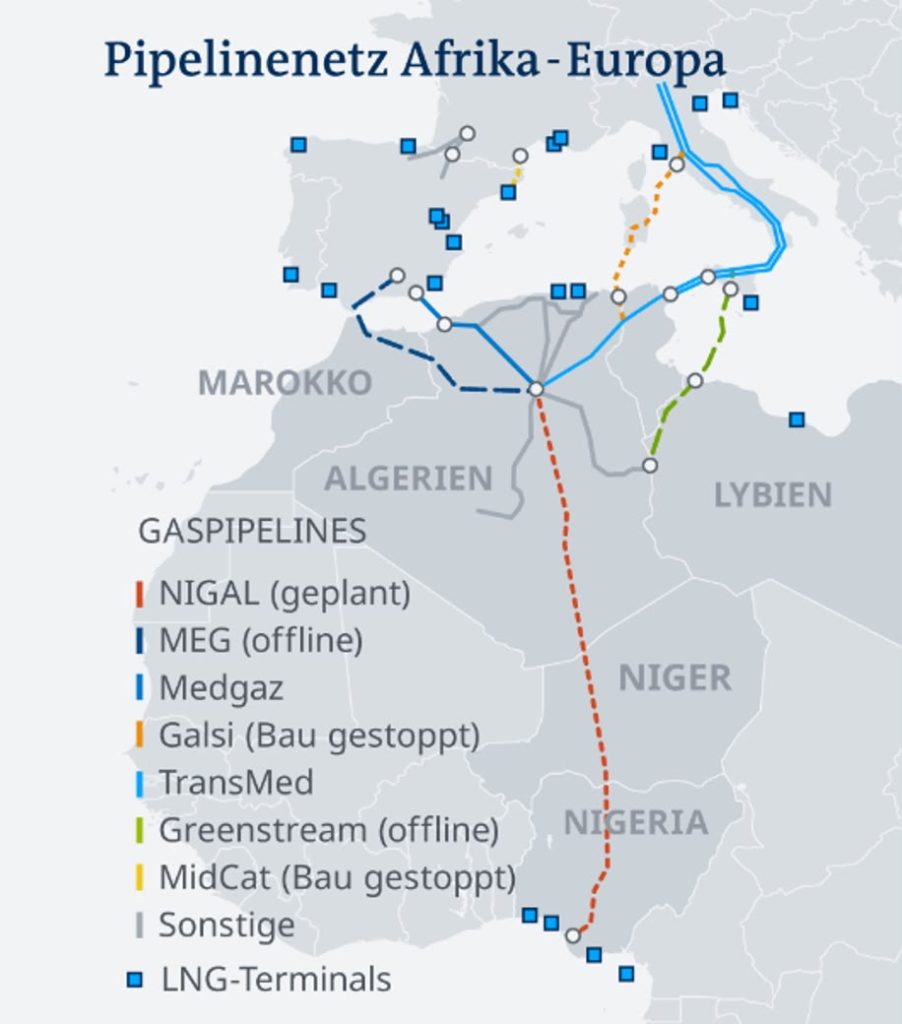
Perhaps the clearest illustration of this shift is the SoutH2 Corridor, backed by Germany, Italy, and Austria. The project aims to repurpose existing trans-Mediterranean gas infrastructure to transport up to four million tonnes of green hydrogen annually to Europe’s industrial centers.
Significantly, studies by the International Renewable Energy Agency (IRENA) and European institutions indicate that pipeline transport is more cost-effective than liquefying hydrogen and shipping it by sea. In practical terms, if Europe seeks commercially viable hydrogen rather than ambitious plans on paper, the route increasingly runs through Algeria.
Why Algeria?
The answer lies in a unique combination of structural advantages:
- A mature energy infrastructure supported by decades of expertise in the hydrocarbons sector.
- Some of the world’s highest solar irradiation levels across the Sahara.
- Existing industrial partnerships rather than hypothetical projects, with Sonatrach, Eni, and TotalEnergies already moving beyond concepts toward feasibility studies and initial investments.
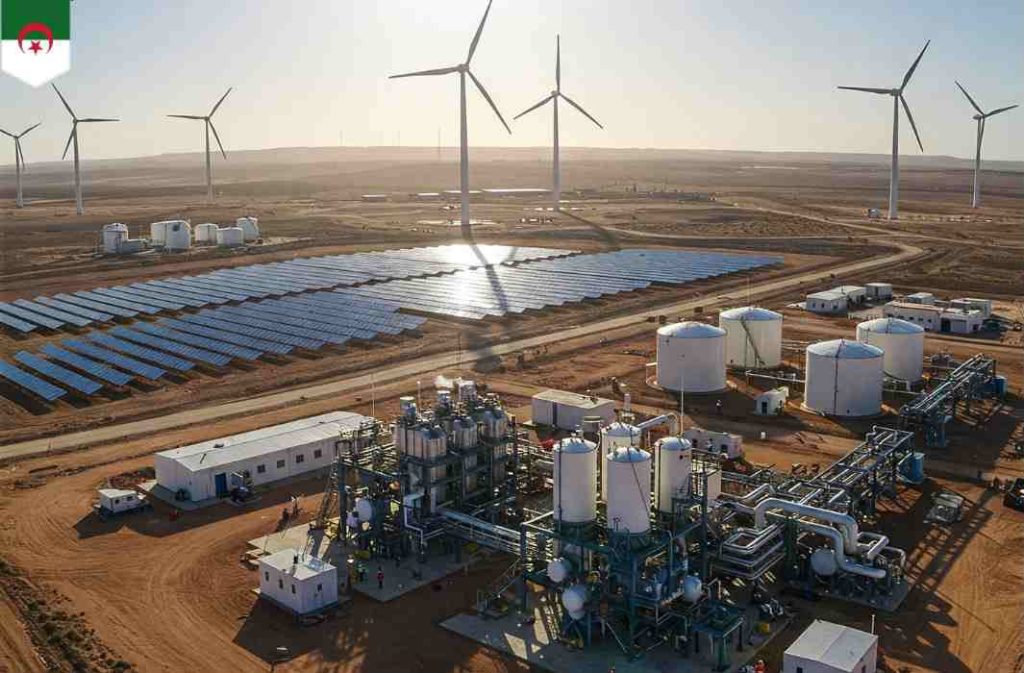
Another less-publicized but strategically important development is the expansion of seawater desalination projects along Algeria’s coastline. These projects address one of the key challenges of green hydrogen production: securing sufficient water for electrolysis. Beyond supporting hydrogen ambitions, they also strengthen Algeria’s domestic water security creating a rare win-win dynamic often overlooked in European analyses.
Europe Is Not Looking for Friendship It Is Looking for Stability
Europe’s heavy industries, particularly in Germany, Italy, and Austria, are not searching for politically fashionable partnerships. They are seeking geographically close suppliers capable of delivering long-term contractual stability at competitive costs. This is precisely where Algeria’s advantages become most evident, regardless of alternative narratives that lack the infrastructure and scalability required for implementati
in conclusion
Europe’s energy transition will not be determined by technological innovation alone. It will also depend on a realistic reassessment of geography and infrastructure. In that context, Algeria is gradually evolving from a traditional hydrocarbons supplier into a structural geopolitical actor within the Mediterranean green hydrogen value chain—steadily, strategically, and without unnecessary fanfare.