Sunday, 18 October 2026 • 23:06 Algiers time
Algeria Gate
News Room
Cameron Hudson: UAE is virtually the sole backer of the RSF..without its support the war in Sudan would not continue Algeria-Niger: Official launch of Trans-Saharan fibre optic link Five minutes of lament over Algeria: Amar Belani exposes CNEWS’s real obsession Algerian courts hand down first death sentences under new drugs law Ségolène Royal’s masterclass on Algeria against an ignorant and demagogic journalist President Tebboune and senior officials receive the remains of Boualem Boualem in Algiers NAPEC 2026 in Oran: Algeria at the Heart of Africa’s and the Mediterranean’s New Energy Landscape Pegasus Files: Amnesty Uncovers Morocco’s Espionage Against Spain President Tebboune Orders Salary Increases in Algeria’s 2027 Budget, Rules Out New Taxes on Citizens Algeria Emerges as a Trusted Power for Regional Peace and Stability
Share this post

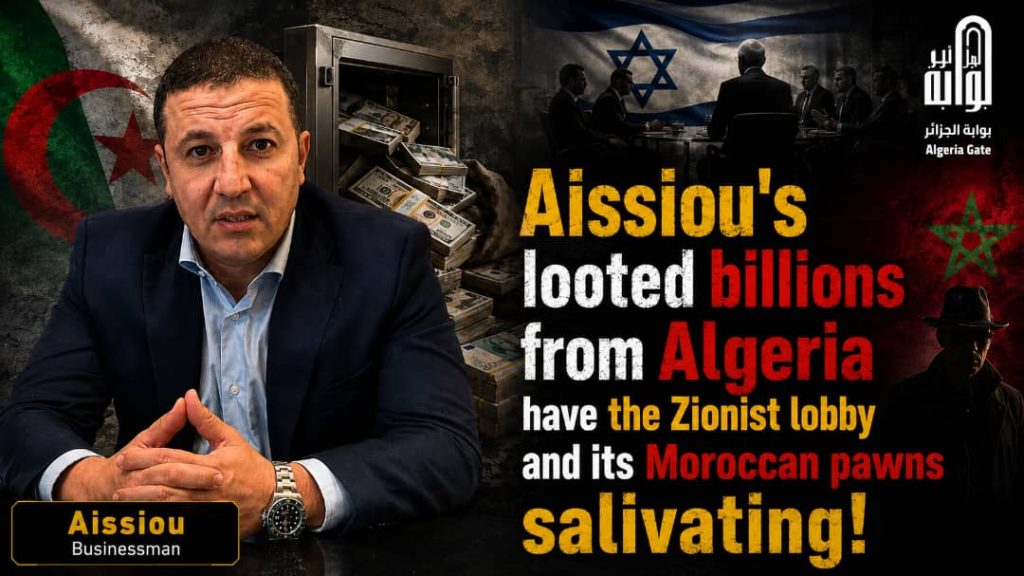
Aissiou’s looted billions from Algeria have the Zionist lobby and its Moroccan pawns salivating!

• Author: Lys Iwannughen • 0 comments • 52 views
Aissiou’s looted billions from Algeria have the Zionist lobby and its Moroccan pawns salivating!

Algeria Gate: The case of Ayoub Aissiou has evolved from an extradition dispute into a wider political and media campaign. While Aissiou’s supporters portray him as an Algerian opposition figure persecuted for criticizing the authorities, the judicial proceedings in Spain and Algeria also concern allegations of forgery, money laundering, and the transfer of assets abroad.
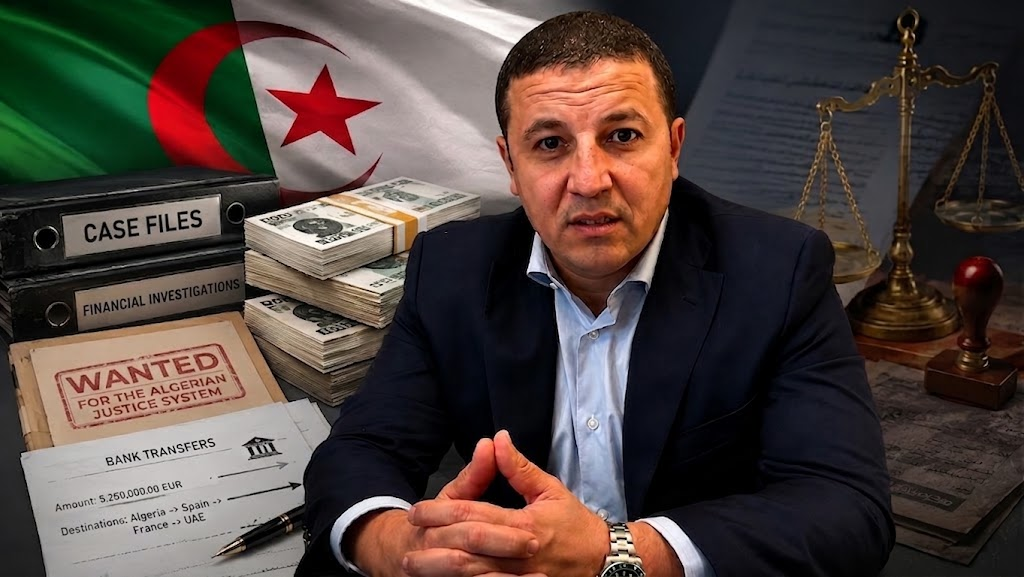
Aissiou’s looted billions from Algeria have the Zionist lobby and its Moroccan pawns salivating!

On August 21, 2026, an open letter called on French President Emmanuel Macron and Spanish Prime Minister Pedro Sánchez to intervene to secure Aissiou’s release and allow him to return to France. The campaign includes prominent French figures, some of whom are associated with pro-Israel circles and activities linked to CRIF, as well as Boualem Sansal.

The campaign has raised questions about why a case involving serious financial allegations is being presented primarily as a political dispute.

Aissiou’s Judicial Record

Aissiou was arrested at Barcelona–El Prat Airport on July 25 after arriving from Casablanca. Algeria had submitted an extradition request based on an international arrest warrant issued by its Economic and Financial Criminal Division on April 9, 2026.

According to Spanish reporting, the investigation concerns three allegedly forged powers of attorney dating from 2019, which were reportedly used to manage real-estate assets and transfer proceeds abroad. The allegations include forgery, use of forged documents, and money laundering. Aissiou’s defense denies the charges and describes the proceedings as politically motivated.

His wider judicial record is also significant. In December 2025, he was sentenced in absentia to 20 years in prison and fined 8 million dinars in a money-laundering case involving an organized criminal group and alleged corruption proceeds. The sentence was upheld by the Algiers Court of Appeal in March 2026.

Other cases have involved companies, an iron factory in M’Sila, agricultural and dairy projects, imports, and a real-estate project in Kolea. Investigators have alleged that companies linked to the Aissiou brothers were used to move or conceal substantial sums of money.
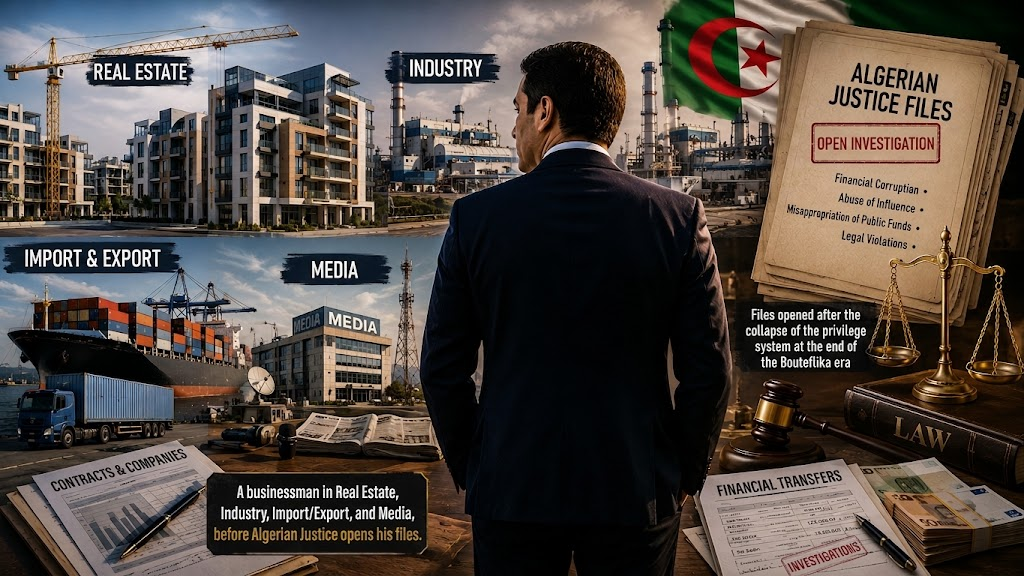
Aissiou’s looted billions from Algeria have the Zionist lobby and its Moroccan pawns salivating!

These cases provide the financial background to Algeria’s efforts to bring Aissiou back, not only to enforce existing convictions, but potentially to investigate the movement of assets and money abroad.

French Companies and Assets

French commercial records link Aissiou to several companies, including REAL INVEST CORP, ONE INVEST CORP, MY & DA, and SCI Les Jasmins.

He has held management or executive positions in several of these entities. REAL INVEST CORP, for example, has capital of €100,000 and lists Aissiou as a manager and shareholder. ONE INVEST CORP entered judicial liquidation in March 2026.

These records confirm his legal involvement in French companies, although they do not establish the value of his personal assets or the ownership of every asset linked to these businesses.

Claims have circulated that Aissiou’s signature could be necessary to move certain assets and that some wealth may have been redirected toward Morocco. However, no publicly available bank records or agreements reviewed so far conclusively establish such transfers or an arrangement involving protection in exchange for assets.

For that reason, the alleged Moroccan financial trail remains an area requiring further investigation rather than an established fact.

Why Morocco Matters

Aissiou’s arrest after arriving from Casablanca has added another dimension to the case. His journey from Morocco does not, by itself, prove that the country was used to protect his assets or arrange his relocation.

Nevertheless, given the existing allegations concerning the transfer of money abroad, investigators could examine whether Moroccan companies, intermediaries, powers of attorney, or assets became connected to his network after the Algerian investigations began.

If future banking or corporate documents confirm transfers from France to Morocco, the case could develop into a broader cross-border investigation into the concealment or relocation of assets.

The Paris Campaign

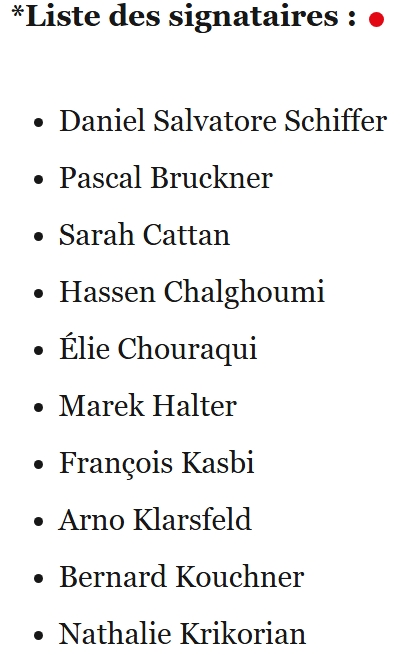
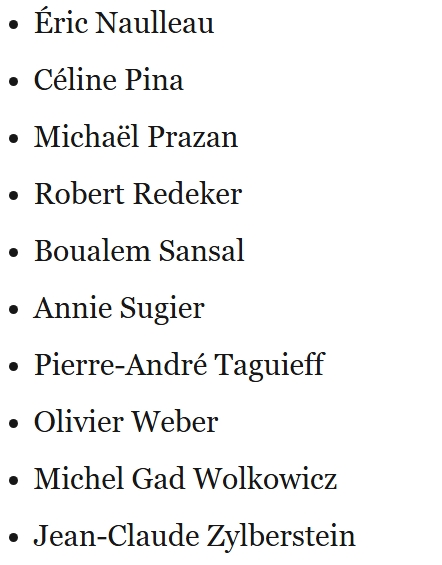
The open letter seeking Aissiou’s release was launched by Daniel Salvatore Schiffer, with the participation of Marek Halter and Hassen Chalghoumi, and was signed by several prominent French personalities, including Pascal Bruckner, Arno Klarsfeld, Bernard Kouchner, and Boualem Sansal.

Some signatories have links to France’s pro-Israel political and media sphere or to organizations associated with CRIF. This does not establish that CRIF organized the campaign, nor does it prove any financial relationship between the signatories and Aissiou.

However, the composition of the campaign raises questions about the political networks mobilized around his case and why they are seeking intervention before the Spanish judiciary completes its review.

The publication of the appeal in Le Journal du Dimanche has further amplified the campaign, giving the issue access to a major French media platform.

The Central Question

The key issue is whether Aissiou’s case should be treated primarily as political persecution or as a judicial matter involving serious financial allegations.

His defense is entitled to argue that the charges are politically motivated. Ultimately, however, the Spanish courts must assess Algeria’s extradition request and determine whether the legal requirements for extradition are met.

For Algeria, the stakes go beyond enforcing a prison sentence. Aissiou’s return could potentially shed light on the movement of money, corporate structures, powers of attorney, beneficiaries, and assets allegedly transferred abroad.

The case therefore raises a broader question for France and Spain: Will judicial cooperation prevail, or will political and media pressure succeed in preventing the Algerian judiciary from pursuing the financial trail surrounding Aissiou?

#Algeria#Israel#Morocco
Author
Lys Iwannughen
View my articles

Leave a comment

Your email address will not be published. Required fields are marked *

African coast
Share this post

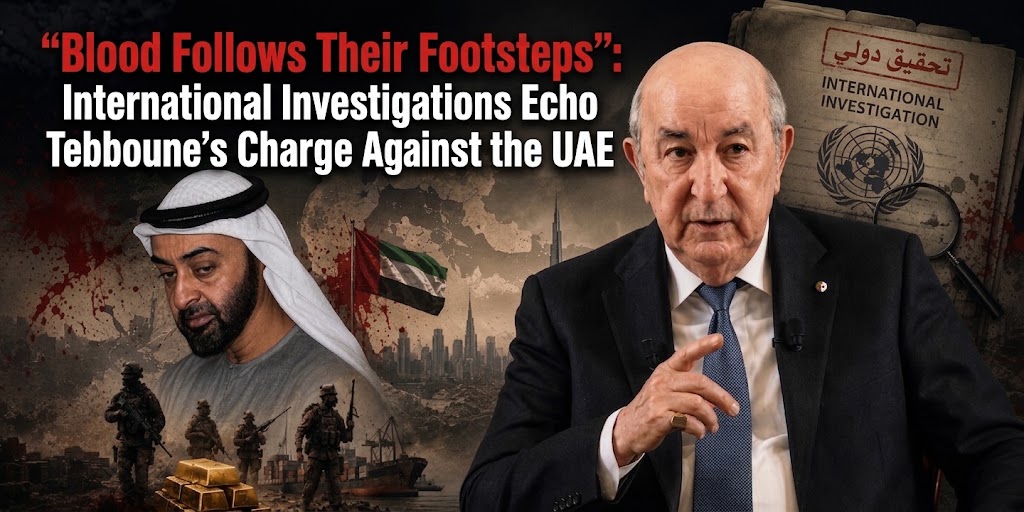
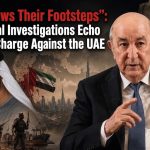
“Blood Follows Their Footsteps”: International Investigations Echo Tebboune’s Charge Against the UAE

“Blood Follows Their Footsteps”: International Investigations Echo Tebboune’s Charge Against the UAE

Bab El Djazair News Portal: Before the Financial Times described Emirati expansion in Africa as an “imperial” push, before Human Rights Watch tracked Colombian mercenaries through UAE military facilities to Sudan, and before Reuters revealed that a $50 million ransom financed an al-Qaeda attack in Mali (with three regional sources attributing the payment to the UAE), President Abdelmadjid Tebboune had already, in March 2024, mapped the danger in three countries by name: Mali, Libya and Sudan.

“Blood Follows Their Footsteps”: International Investigations Echo Tebboune’s Charge Against the UAE

He said the money of an unnamed Arab state was present “in every place where there is conflict,” listed those three countries, and declared that “patience has limits.” More than two years later, the importance of that statement lies in the precision of the geography he chose: the three arenas have successively become the subject of UN reports and international investigations into weapons, gold, mercenaries, financing and networks of influence linked to the UAE.

This does not mean every Algerian accusation has been proven, nor that the president formally named the UAE on every occasion. Yet placing the statements on a timeline and overlaying later evidence shows Algeria was reading a pattern early: massive capital moving beyond borders, ports and strategic assets, relationships with armed actors, and security and financial tools far beyond traditional investment.

“Blood Follows Their Footsteps”: International Investigations Echo Tebboune’s Charge Against the UAE

January 2024… The Warning First Came from the High Security Council

On January 10th 2024, President Tebboune chaired a High Security Council meeting on the neighbourhood and the Sahel. The statement expressed regret at “hostile actions” by a “brotherly Arab country” towards Algeria, without naming it. Media linked the reference to the UAE; the first institutional warning.

The region was changing rapidly: Mali had ended the Algiers Agreement process, Libya remained divided, and Sudan was locked in war since April 2023. Earlier Emirati support for Khalifa Haftar had already been documented, including violations of the Libyan arms embargo and a major airlift in 2020. Algeria saw external financial and military powers altering the balances around its borders.

“Blood Follows Their Footsteps”: International Investigations Echo Tebboune’s Charge Against the UAE

March 2024… Tebboune Draws the Map: Mali, Libya, Sudan

On 30 March 2024, Tebboune spoke publicly and in detail about the crisis with the Gulf state, still without naming it. He kept a diplomatic tone at first, then accused the actions of “arrogance” and drew a red line: Algeria “does not bow.”

The key phrase: “Wherever there is conflict, we find the money of this state: in Mali, in Libya, in Sudan… patience has limits.” He placed money at the heart of the economy of conflicts—who finances, who allies with whom, who can reshape the balance inside a weak state.

Anwar Gargash replied indirectly on 2 April about a “distant sisterly state” using hints against the UAE. Two months later, SWISSAID revealed that 435 tonnes of gold worth over $30 billion left Africa undeclared in 2022, with the UAE the main destination (about 405 tonnes). Over the previous decade, unrecorded African gold appearing in UAE imports exceeded 2,500 tonnes, valued at more than $115 billion. Dubai had become a central corridor for African wealth leaking outside official records.

“Blood Follows Their Footsteps”: International Investigations Echo Tebboune’s Charge Against the UAE

2025… From Warning Against a State to Warning Against a Model of Intervention

By October 2025, Tebboune said Algeria’s Gulf relations were good “except for one state,” linking the problem to interference in internal affairs and an attempt at “ruin in my house.”

On 11 November, while receiving the Somali president, he described Sudan’s tragedy as caused by “blatant interventions that stoke discord.” Amnesty International had already documented modern weapons, including from the UAE, in the Sudanese war, and later concluded that advanced Chinese weapons “almost certainly” re-exported from the UAE had reached the Rapid Support Forces. Abu Dhabi denied supporting any side. Sudan’s case against the UAE at the ICJ was dismissed in May 2025 for lack of jurisdiction.

“Blood Follows Their Footsteps”: International Investigations Echo Tebboune’s Charge Against the UAE

December 2025… Tunisia Enters Algeria’s National Security Circle

On 30 December, Tebboune warned against attempts to drive a wedge between Algeria and Tunisia, stressing that the security of both is interconnected and that Algeria does not interfere in Tunisian affairs. The doctrine was clear: non-interference is a principle of regional security, not a slogan against one adversary.

“Blood Follows Their Footsteps”: International Investigations Echo Tebboune’s Charge Against the UAE

February 2026… The Accusation Moves to Elections and Investment Capital

On 7 February, Tebboune openly accused the unnamed “state, not to say a mini-state” of intervening in Algerian elections and of threatening arbitration over investments. He closed with a severe warning: “Do not make us regret the day we came to know you.” The same day Algeria began terminating the 2013 air-services agreement with the UAE. The issue now encompassed political interference, capital and legal pressure.

July 2026… The Harshest Phrase: “Wherever They Set Foot, Blood Flows”

In a 27 July interview, Tebboune described the party as a “small state” with a “very negative” effect and uttered the sharpest line of the chronology: “Wherever they set foot, blood flows,” adding that Algeria possesses evidence. He linked Tunisia’s security directly to Algeria’s and said he would have cut relations long ago were it not for the desire to avoid further Arab divisions.

“Blood Follows Their Footsteps”: International Investigations Echo Tebboune’s Charge Against the UAE

Then Came the Documents: Mercenaries, Weapons and Sudan’s Routes

In May 2026, Human Rights Watch reported that hundreds of Colombian contractors were trained by Emiratis inside the UAE before deployment to Sudan, with the Abu Dhabi-based Global Security Services Group appearing in the recruitment. The UAE denied allowing its territory to be used for such purposes.

The Financial Times in August estimated around 2,000 Colombian fighters reached Sudan via routes through the UAE, Libya, Somalia and Chad, some trained on drones and air defence. The U.S. Treasury had already sanctioned a Colombian recruitment network in December 2025 and identified a retired Colombian officer resident in the UAE as a central figure, without officially attributing the network to the Emirati government. Reuters had earlier tracked dozens of flights from the UAE to Am Djarass in Chad that raised suspicions of supplying the Rapid Support Forces.

“Blood Follows Their Footsteps”: International Investigations Echo Tebboune’s Charge Against the UAE

Mali… The Most Dangerous Intersection with the March 2024 Statement

In March 2024 Tebboune had placed Mali at the top of the list. In August 2026 a UN Security Council experts’ report revealed that a roughly $50 million ransom paid in late 2025 financed a major JNIM attack in Mali. Three regional sources told Reuters the payer was the UAE. Usual ransoms ranged from $4–6 million; experts described $50 million as extraordinary. The UN report itself did not name the payer, but the intersection with Tebboune’s earlier warning about “money” in Mali is highly sensitive.

Libya… The Arena That Preceded the Warning

Libya’s path predated the 2024 statements. UN and rights reports had long documented Emirati support for Haftar, including drones and an airlift of at least 160 flights in early 2020. When Tebboune grouped Mali, Libya and Sudan together, Libya already stood as a living model of external financing, weapons and proxy activity. Sensitivity rose again in 2024 when Haftar’s forces moved near the Algerian border.

Ports and Gold… When Influence Becomes Economic Before It Becomes Military

The Financial Times investigation of August 2026 mapped a broader picture: more than $168 billion in announced Emirati projects in Africa since 2017 across ports, minerals, land, energy and logistics. The issue is not legitimate investment itself, but the accumulation of control at the same chokepoints—port, corridor, resource, financial centre—sometimes paired with security presence or armed alliances.

Gold remains the clearest example: if the UAE is the largest destination for unrecorded African gold, influence is measured by Dubai’s ability to turn African material into globally tradable money. Claims of systematic “buying of consciences” lack documentary proof as state policy; what is documented is a highly attractive environment for money and elites, as shown by the Dubai Unlocked investigation.

Even London… An Emirati-Financed Mercenary Outside African Arenas

An ITV News investigation of 19 August 2026 revealed that security contractor Abraham Golan, previously linked to UAE operations in Yemen, ran a surveillance operation in London in 2016 against British activist Anas al-Tikriti while receiving Emirati funds. The investigation did not prove a direct government order for assassination, but it added another example of Emirati-financed contractors operating far beyond traditional borders—reinforcing that private military tools are part of a wider pattern, not a solitary Algerian claim.

From Warning to Doctrine: Why Tebboune’s Reading Appears Prophetic

Tebboune did not predict any single report. He identified early the structure of the danger that later investigations would examine: money rather than conventional armies; Mali, Libya and Sudan rather than a narrow bilateral dispute; then internal interference, elections, investment pressure and finally the comprehensive formula of a “very negative” effect accompanied by blood.

Parallel evidence moved in the same direction: tens of billions in gold flows, alleged re-exported weapons, suspicious flights, a Colombian recruitment network, around 2,000 fighters, a $50 million ransom that reshaped jihadist financing in Mali, and ports and investments drawing a map of influence larger than the Gulf state itself.

The UAE continues to deny supporting the Rapid Support Forces or allowing mercenary recruitment on its soil, and defends its African investments as developmental partnerships (citing more than $110 billion committed between 2019 and 2023). Those replies no longer close the file, because the questions no longer come from Algeria alone.

Algeria Was Not Warning Against the UAE’s Wealth… But Against the Function of Money

Tebboune never objected to the UAE being rich or investing in Africa. Algeria itself seeks investment and maintains close ties with other Gulf states. The consistent question in his discourse was: what does money do when it leaves the economy and enters internal politics and war?
Money that builds a factory or a commercial port can create value. Money that reaches an armed faction, finances a terrorist ransom, sustains a mercenary network or pressures sovereign decisions enters a different equation entirely.

This is why Algeria’s approach to Africa is structurally opposite: it bets on projects such as the Trans-Saharan Gas Pipeline and the African Energy Bank, whose value rises when neighbouring states stabilise. Turning those states into conflict arenas is a direct loss for Algerian security, trade, energy and borders.

The phrase “patience has limits” in March 2024 was the beginning of an ascending chronology. Two years later came the stronger line: “Wherever they set foot, blood flows.” Between them appeared the gold data, the expanded Sudan file, Chinese weapons, mercenary sanctions, the Colombian route, the $50 million Mali ransom, and the Financial Times synthesis of ports, mines, gold and security power.

The strength of Tebboune’s reading does not lie in the sharpness of his words, but in the fact that the geography he warned about in 2024 is the same geography that in 2026 became the stage for the heaviest international investigations into Emirati influence.

Mali: money and al-Qaeda.
Libya: weapons and Haftar.
Sudan: gold, weapons and mercenaries.
Dubai: the centre where trade, money, African wealth and elites meet.

Algeria’s position has been consistent from the start: no one buys the right to reshape its neighbourhood, and investment does not become a licence to interfere in the sovereignty of states. After the investigations, the chronology of Tebboune’s statements reads less as a bilateral quarrel and more as an early record of a wider battle over who holds the decision in Africa; the African state itself, or external capital when it turns from economic partner into a tool of influence.

#Algeria#President tebboune#UAE
Author
Lys Iwannughen
View my articles
Algeria
Share this post

Israel moves “openly” to block the handover of Ayoub Aïssiou.. What links the fugitive from Algerian justice to Israeli, Moroccan and French intelligence services?

Israel moves “openly” to block the handover of Ayoub Aïssiou.. What links the fugitive from Algerian justice to Israeli, Moroccan and French intelligence services?

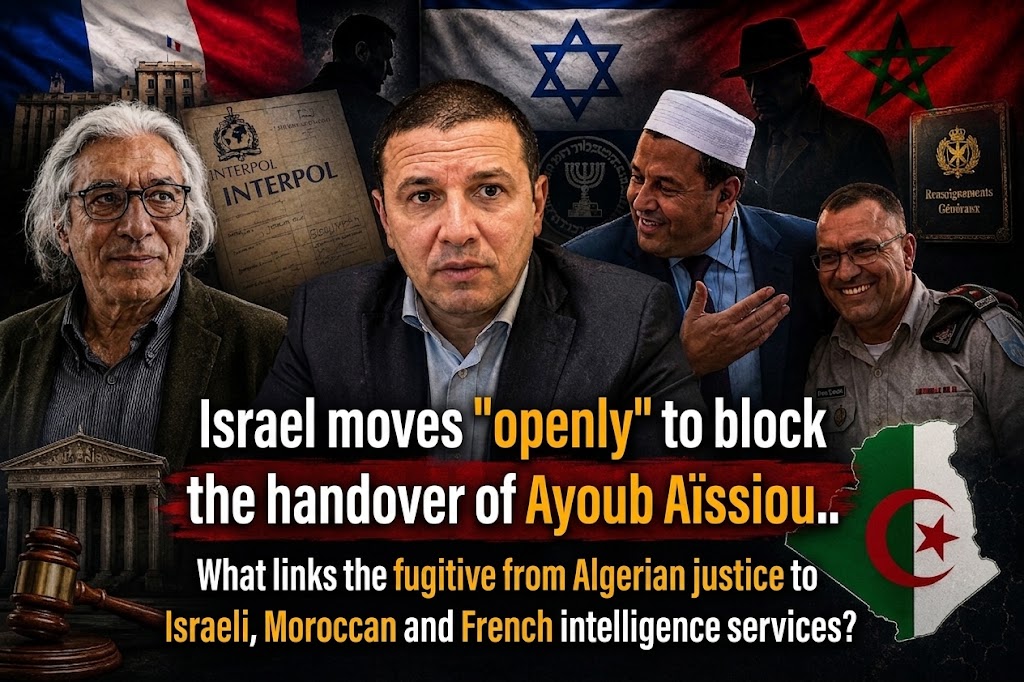
Algeria Gate: In a striking development suggesting that the self-proclaimed businessman known as Ayoub Aissiou is in reality nothing more than a long-time secret agent of Israel, according to observers, can one explain the open emergence of the Zionist lobby in France with a petition signed by several activist figures from the so-called Representative Council of Jewish Institutions in France (CRIF)?

This organisation has long influenced political decision-making in France and has become one of Israel’s most important tools for defending its interests and advancing its agenda.

What is particularly noteworthy is the publication of the petition on websites belonging to Vincent Bolloré’s empire, such as the newspaper Le JDD.

Even more surprising is the haste of the pro-Zionist imam of Tunisian origin, Hassan Chalghoumi, who is supported by the UAE, in declaring what he called his rejection of Spain’s extradition of the Algerian citizen Ayoub Issiou and in calling on the French authorities to intervene with Madrid to prevent the handover.

This raises the question: is Ayoub Aissiou a French citizen?

Israel moves “openly” to block the handover of Ayoub Aïssiou.. What links the fugitive from Algerian justice to Israeli, Moroccan and French intelligence services?

The traitor and mercenary Boualem Sansal has also entered the fray, signing the petition alongside a group of pro-Zionists linked to the Union of Jewish Students of France (UEJF). The petition is both ridiculous and revealing: it exposes Ayoub Issiou’s suspicious links to French, Israeli, Moroccan and Emirati intelligence services, while also highlighting other names active in Jewish associations with an extreme Zionist orientation, such as “Betar,” which also signed the petition.

As the decisive moment approaches in the case of the Algerian businessman Ayoub Issiou, who has been detained in Barcelona since 25 July on the basis of an international arrest warrant, the Israeli lobby in France, together with controversial French political and media figures, has mobilised to prevent his extradition to Algeria.

This move raises numerous questions about the alleged Algerian businessman’s ties to Israeli and Moroccan intelligence. Aissiou is being pursued by the Algerian judiciary in cases involving financial and commercial offences, including violations of legislation governing the movement of capital to and from abroad, illicit currency transfers, money laundering and the concealment of proceeds linked to corruption, among other charges.

What is striking is not only the nature of these moves, but also the identity of some of those involved and the way the case is being presented to European public opinion.

Israel moves “openly” to block the handover of Ayoub Aïssiou.. What links the fugitive from Algerian justice to Israeli, Moroccan and French intelligence services?

French novelist Pascal Bruckner, known for his strongly pro-Israel positions, has joined the campaign. He is joined by Boualem Sansal, convicted in Algeria on charges related to undermining national unity, and by the controversial Tunisian imam of Jewish origin, Hassan Chalghoumi.

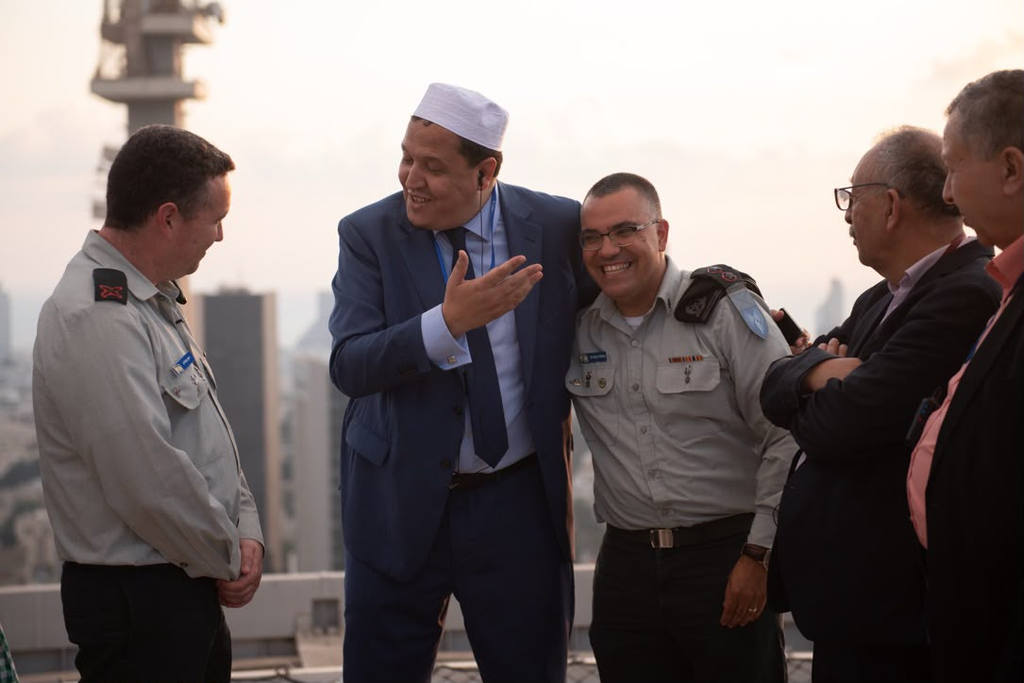
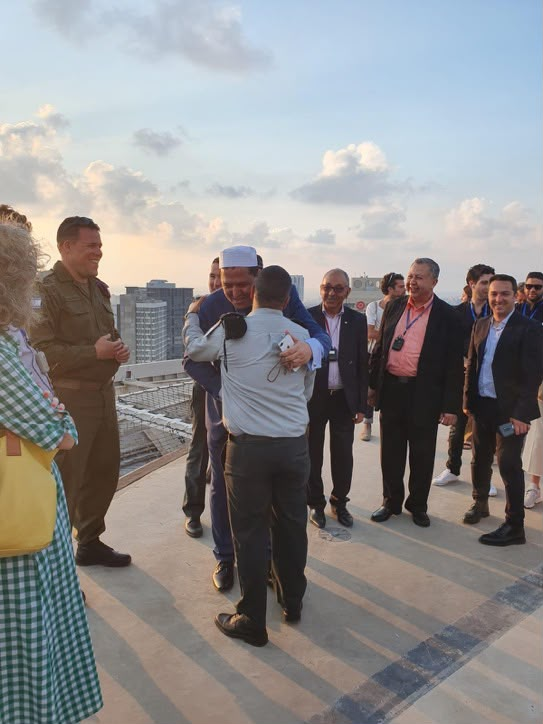
Chalghoumi heads a French Islamic foundation supported by the UAE. He has previously visited Israel, where Israeli media photographed him embracing soldiers in Tel Aviv while claiming that the entity does not oppose Muslims.

Media support has also come from the outlets of French businessman Vincent Bolloré, whose platforms are steeped in narratives hostile to Algeria. The newspaper JDD, in particular, quickly published the alleged petition calling on French President Emmanuel Macron and Spanish Prime Minister Pedro Sánchez to intervene and prevent Aissiou’s extradition to Algeria.

Remarkably, this campaign seeks to reframe Aissiou as a “political opponent,” in an attempt to recharacterize the case away from its judicial core. The question that arises here is clear: are we dealing with a matter of freedom of opinion, or with a political attempt to reframe a judicial and financial file and give it a political cover?
According to the nature of the judicial files attributed to him, Aissiou is not a journalist imprisoned for an article, nor a writer pursued for a book, nor a political activist punished for his views. He is a businessman pursued in financial and economic cases; a fundamental difference that cannot be overlooked simply by applying the label of “political opponent.”

Even more questionable is the fact that the same circles that turned Boualem Sansal’s case into a symbolic battle under the banner of “freedom of expression” are now trying to apply the same logic to the case of a businessman.

This man has an economic trajectory and extensive networks of relationships.

The matter appears to go beyond mere humanitarian solidarity or legal defence. The political reframing of Issiou could have direct consequences for the course of his extradition, as well as for the Algerian judiciary’s ability to question him and investigate the files against him.

The man is not unknown within Algeria’s economic and media systems. His professional path brought him into contact with business circles and complex networks of influence in France and Morocco.

This is precisely what makes his file more sensitive, given the volume of information he may possess.

His return to Algeria could open the door to revealing precise details about money trails, companies and intermediaries, as well as the relationships of businessmen with political circles, and the protection and influence networks that accumulated privileges during the era of the “gang.” His statements could also help track capital flows and uncover relationships and interests that have remained in the shadows, and perhaps lift the veil on names and networks that targeted Algeria and extend into France and Morocco.

The fugitive businessman Ayoub Aissiou, who holds dual nationality (Liberian–Algerian), has for years posed as an Algerian businessman.

He transferred part of the funds he smuggled out of Algeria during the era of the “gang” to Morocco, seeking guarantees and protection from the Zionist lobby.

Aissiou, who is fleeing Algerian justice, knows full well that the Zionists control the Moroccan regime from top to bottom. He therefore planned to seek refuge in Morocco and settle there permanently, convinced that extradition to Algeria would be impossible.

This strategy followed the advice of his team of French lawyers, in exchange for transferring large sums of money from France to Morocco under the guise of investment, as Algeria Gate exclusively revealed in a series of earlier articles.

On this basis, according to a well-informed Algerian source, the plan of the Zionist-Moroccan lobby is to present Ayoub Aissiou as a businessman. In reality, he is a professional money-smuggler and launderer merely posing as one.

The Spanish judicial authorities can verify that none of the investment projects for which he obtained bank loans were ever completed. The funds have simply vanished to this day.

This applies whether to the project to rehabilitate the iron plant in M’Sila, the milk-production and cattle-import project in Djelfa, or the stone-fruit trees project in the same province.

The only projects that were partially completed were real-estate promotion apartments. These were distributed to a number of officials and their children, who later went to prison.

#Algeria#France#Israel#Morocco
Author
Lys Iwannughen
View my articles
Algeria
Share this post

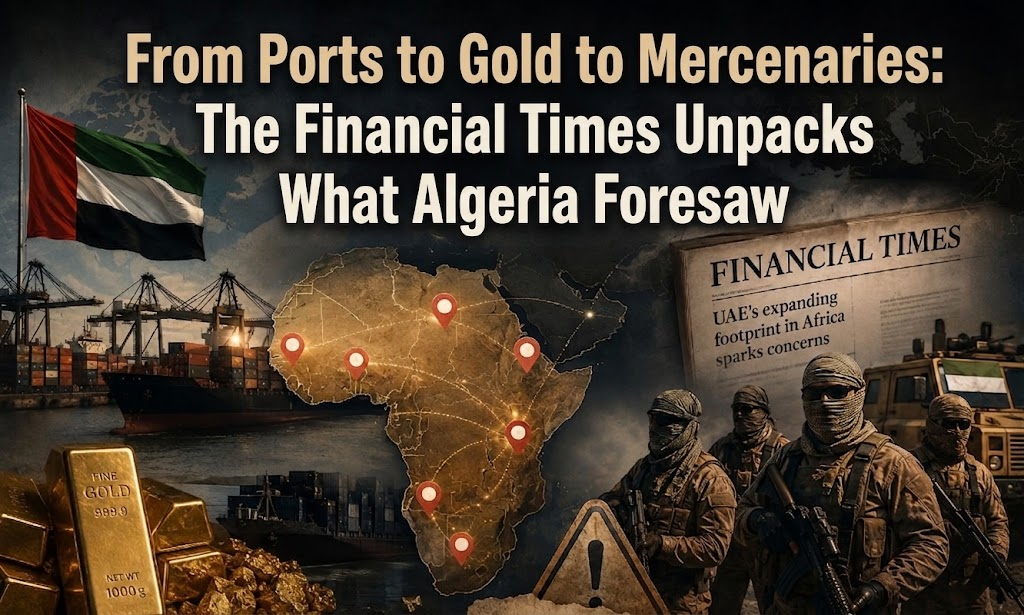
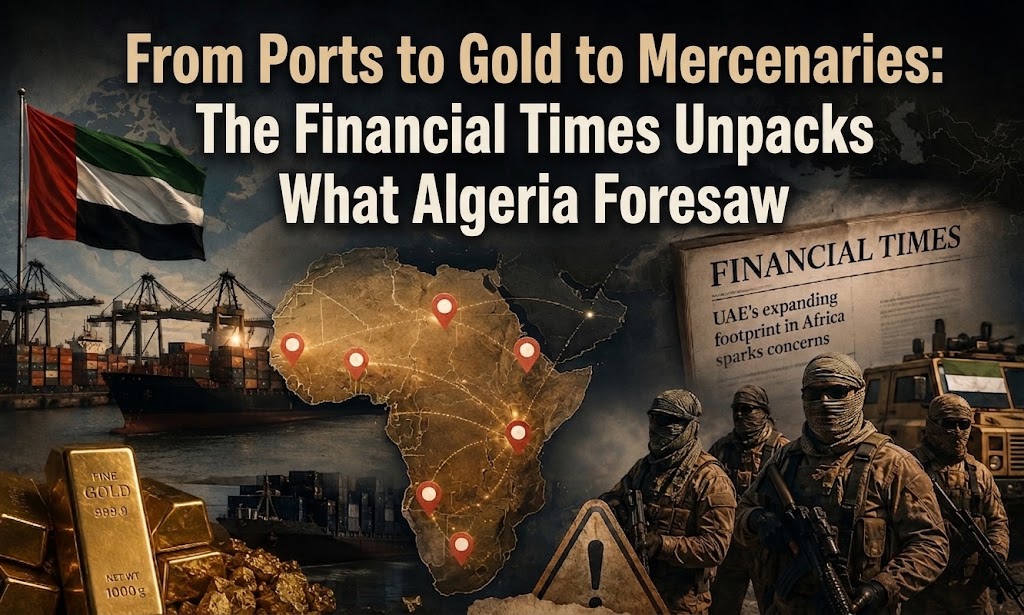
From Ports to Gold to Mercenaries: The Financial Times Unpacks What Algeria Foresaw

From Ports to Gold to Mercenaries: The Financial Times Unpacks What Algeria Foresaw

Algeria Gate: The image Abu Dhabi has spent years building around its African expansion; investment, ports, development, is starting to crack.

The official story was simple: Gulf capital rushing in to meet a continent’s financing needs.

International investigations now tell a different one. Strategic ports doubling as security footholds. African gold pouring into Dubai in bulk, much of it off the books in its countries of origin. Money chasing mines, land, and trade corridors. And a war in Sudan whose trail leads back to Abu Dhabi-based security firms and foreign fighters ferried in through a transcontinental network.

From Ports to Gold to Mercenaries: The Financial Times Unpacks What Algeria Foresaw

This deconstruction no longer comes from Algeria alone, which had warned early on about outside money seeping into conflict zones.

It now comes from the Financial Times, Human Rights Watch, SWISSAID, and the U.S. Treasury Department.

In its latest reporting, the Financial Times described the Emirati expansion into Africa as having an “imperial” character. A separate investigation by the paper traced roughly 2,000 Colombian fighters who ended up in Sudan’s war, funneled in through a recruitment network tied to a UAE-based security company.

Abu Dhabi rejects this framing, insisting its ties to the continent rest on investment, development, and respect for state sovereignty.

But the weight of accumulating evidence is making that argument harder to sustain, and harder to confine to the language of commerce alone.

From Ports to Gold to Mercenaries: The Financial Times Unpacks What Algeria Foresaw

This is where Algeria’s earlier reading of events takes on a different meaning. In March 2024, more than two years before the current investigations, President Abdelmadjid Tebboune spoke of a state he did not officially name, criticising the presence of its money wherever conflicts exist, and specifically mentioning Mali, Libya and Sudan. Media at the time linked the remarks to the UAE, without the president naming it explicitly.

One cannot claim today that the Financial Times has proven the identity of the state he had in mind. But what the investigations reveal places concrete mechanisms in front of his old warning: money, ports, minerals, security companies, mercenaries, and war zones.

In this way, the issue moves from a diplomatic dispute between Algeria and Abu Dhabi to a far broader question: does capital enter Africa to build its economies, or can it in some cases become a tool for controlling corridors and resources and reshaping the balance of power inside fragile states?

From Commercial Quay to Node of Influence

Emirati power in Africa began from a point any maritime economy understands: whoever owns the port draws closer to controlling the route that trade follows. That is why DP World and other Emirati companies expanded across maritime terminals, free zones and logistics hubs, while a Financial Times investigation tracked the widening of Emirati interests into ports, agriculture, mines, energy and infrastructure.

Since 2017, the value of announced Emirati projects in Africa has exceeded $168 billion according to fDi Markets data. This figure does not mean $168 billion has actually been injected on the ground, as part of the projects remained at the announcement stage. Yet it reveals the scale of ambition towards assets that are not marginal: ports, energy, copper, gold, iron and agricultural land.

Berbera in Somaliland stands out as the most condensed model. DP World’s investments in developing the port and its logistics corridor towards Ethiopia have been paired with Emirati security and military arrangements. When the port, the trade corridor and the security facility come together in one space, separating the economic project from the geopolitical function becomes more difficult.

The problem for Africa is not the existence of a foreign investor; the continent’s financing needs are enormous. The issue begins when the investor is simultaneously close to the raw material, the route it takes, the exit point from which it leaves, and the financial centre where its returns settle.

From this exact point the port leads to the gold.

Africa Extracts the Gold… Dubai Harvests the Value

The figures compiled by SWISSAID are harsher than any political description. In 2022 alone, the organisation estimated that more than a tonne of African gold was leaving the continent every day without authorisation, and that at least 435 tonnes left that year outside official export records, worth nearly $31 billion.

Between 2012 and 2022, the UAE recorded imports of about 2,569 tonnes of African gold whose counterparts were not registered as exports by the countries of origin, valued at around $115.3 billion. In 2022 alone the UAE took 47 per cent of direct African gold exports, compared with 21 per cent for Switzerland and 12 per cent for India.

This figure does not mean that all the gold is “stolen”; a trade-data gap is not enough to prove the criminal origin of every shipment. But it does prove a deeper African problem: an enormous value of the continent’s resources can leave without appearing in the books of the states from which it was extracted, only to appear later in an external commercial centre.

The trend has not stopped. In 2024 the UAE imported 1,392 tonnes of gold from the world worth $105.4 billion, including 748 tonnes from Africa alone; an 18 per cent rise in a year. It also recorded 29 tonnes from Sudan, 18 from Chad, nine from Libya, and 27 from Egypt. That is why SWISSAID concluded in November 2025 that the UAE remains a major centre for gold of questionable origin and conflict gold.

Abu Dhabi can reply that it has tightened anti-money-laundering and responsible-sourcing systems. But the economic question remains: what does the African state gain if its gold leaves raw or off the books, only to be refined, financed and re-exported from Dubai?

The loss is not in the metal alone. It includes taxes, hard currency, refining, brokerage, financing, logistics and re-export margins. Africa produces the asset, while significant parts of its economy can shift abroad.

With the Sudanese war, this imbalance moved from the pages of trade into the heart of the battlefield.

Sudan: Where Gold Meets War

When war broke out in Khartoum in April 2023, financial facilities and gold stores were looted. A Financial Times investigation tracked a case of about 1.5 tonnes of gold then valued at roughly $100 million, drawing on testimony about the metal crossing Sudan’s borders and neighbouring countries before ending up, according to the accounts, on routes linked to the UAE.

The Rapid Support Forces deny responsibility; the UAE denies what is attributed to it. The details therefore remain a journalistic investigation, not a final judicial ruling.

But Sudan quickly showed that gold is only one side of the problem.

As the war continued, the Rapid Support Forces acquired more sophisticated military capabilities, and the file of external support became one of the most sensitive issues. Here appeared the link that makes the latest investigations more dangerous for Abu Dhabi’s image: the foreign fighters.

In May 2026, Human Rights Watch issued an 83-page report titled “From Bogotá to El Fasher,” based on interviews with Colombian military contractors, a former employee of an Emirati security company, and witnesses from El Fasher, together with analysis of documents, company records, photos, videos and geographic data. The organisation concluded that Global Security Services Group (GSSG), headquartered in Abu Dhabi and with documented links to Emirati institutions and officials, appears to have taken part in recruiting Colombian fighters deployed in Sudan to support the Rapid Support Forces.

More sensitive still is that HRW documented contractors passing through the Al-Ghiyathi military base and a facility in Al-Wathba in Abu Dhabi before heading to Sudan; one contractor said he received training from Emiratis. The organisation said the evidence makes the deployment appear state-supported; a conclusion the UAE rejects, denying military support for the Rapid Support Forces.

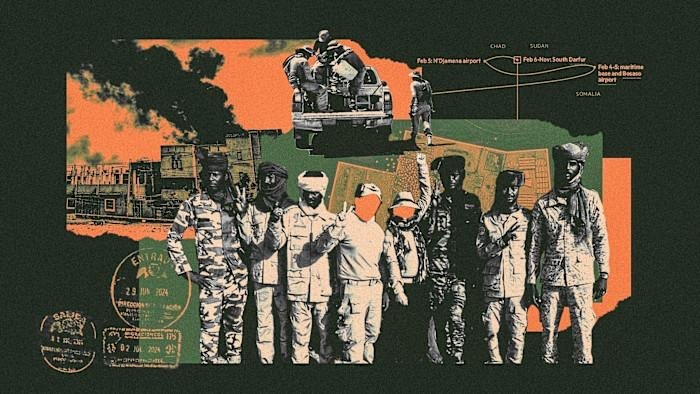
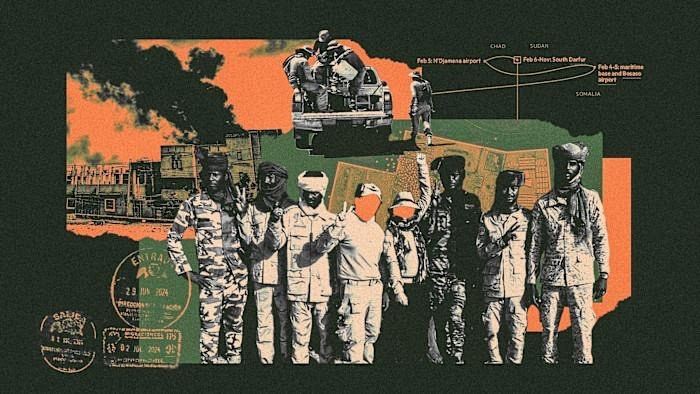
Then the Financial Times in August widened the picture, estimating the number of Colombian fighters who reached Sudan at around 2,000, and tracking testimonies, device data, flights and logistics routes through Libya, Bosaso in Somalia and Chad, with references to training on drones and air defence.

At this point the scene Algeria warned about becomes clearer: it is no longer merely money entering a conflict zone, but money, companies, individuals, training and transcontinental transport routes.

U.S. Sanctions Make the Network Larger Than a Journalistic Narrative

The mercenary file did not remain confined to NGO and newspaper investigations. On 9 December 2025 the U.S. Treasury Department imposed sanctions on four individuals and four companies within a cross-border network that it said recruits former Colombian military personnel to fight alongside the Rapid Support Forces.

The Treasury confirmed that these fighters served as infantry, artillerymen, drone and vehicle operators and trainers, and that some took part in training children. It identified the retired Colombian officer Álvaro Andrés Quijano Becerra, resident in the UAE, as a central figure in recruitment, deployment and moving money.

Washington returned in April and then June 2026 to expand sanctions on the networks feeding the war, confirming that hundreds of former Colombian military personnel had reached Sudan since 2024.

Here a precise distinction is needed. The U.S. Treasury did not say the Emirati government runs the recruitment network. Human Rights Watch went further, linking GSSG to Emirati military facilities and official levels in Abu Dhabi. The Financial Times added testimonies, routes and technical information and expanded the scale to nearly 2,000 fighters.

But differences in the degree of proof do not erase the core of the issue; they clarify its scale: there is a recruitment network confirmed by U.S. sanctions, a company based in Abu Dhabi that appears in the human-rights investigation, routes through facilities inside the UAE, and fighters who ultimately reach a war in which widespread atrocities are being committed.

Here returns the question Algeria posed before all these details accumulated: what happens when external money becomes part of the structure of conflict?

What Algeria Read Politically Is Now Being Dissected Economically and in Security Terms

In March 2024 President Tebboune did not have the figure of 2,000 fighters, nor the HRW report, nor the U.S. sanctions. Yet his warning focused on the money present in Mali, Libya and Sudan. He was not discussing the size of the UAE’s economy, but the function of money when it enters spaces of conflict.

That is a fundamental point for understanding the Algerian forward-looking view. Algeria did not build its position on Sudan around who can spend more money, but on a constant of its foreign policy: preserving the state, rejecting interference, and keeping the settlement of the crisis in the hands of the Sudanese.

This explains why the current investigations appear to be re-reading the Algerian position retrospectively. What was said in Algeria in an early political formulation is today being dissected in London, Washington and human-rights organisations in financial, logistical and security terms.

Indeed, the difference between the two models appears even more clearly when one looks at what Algeria is actually doing in Africa.

In June 2026 Algeria launched work on the Algerian section of the Trans-Saharan Gas Pipeline (TSGP) in implementation of President Tebboune’s directives; a project linking Nigeria and Niger to Hassi R’Mel and then to international markets. The planned length is about 4,128 kilometres, with a capacity of up to 30 billion cubic metres of gas per year. Its success requires the stability of Nigeria, Niger and Algeria; Algeria’s economic interest rises when the neighbouring states are stronger and more stable, not when they fragment.

In parallel, the Algerian Farid Ghezali is leading the African Petroleum Producers’ Organization towards the operational launch of the African Energy Bank in September 2026, with a target capital of up to $5 billion, to finance energy projects inside the continent and reduce dependence on external financing.

Algeria is pushing for a pipeline shared by African states, a bank financed by the continent, companies and expertise moving south, and projects that succeed only when strong states capable of protecting decisions and investment exist.

In contrast, the investigations into the Emirati model reveal points of intersection between the port and the base, between gold and conflict, between capital and security companies.

This does not mean that every Emirati investment in Africa is a sabotage project or that every Emirati company is part of these networks. But it does mean that the narrative of “development and investment only” is no longer sufficient to explain this presence.

$168 Billion Does Not Buy an Answer to the Question of Sovereignty

The UAE replied to the Financial Times that describing its African engagement as an imperial project ignores the will of African states themselves, and affirmed that its investments are based on mutual respect and development, pointing to a commitment of more than $110 billion for projects on the continent between 2019 and 2023, of which about $70 billion were in development and renewable energy.

This is an argument that cannot simply be dismissed; a number of African states chose these investments of their own will and need them.

But money alone does not close the sovereignty file. The question is not whether Africa needs $110 or $168 billion. It needs far more. The question is what remains for the continent after the investment.

Do the jobs, technology, added value, taxes and control of the corridors remain? Or does the external port become a gateway for the raw material, and Dubai a place where the wealth settles, while the African state bears the effects of unrest, poverty and war?

Moreover, the Algerian approach appears deeper than a mere bilateral dispute with Abu Dhabi. Algeria, under the leadership of President Abdelmadjid Tebboune, does not reject a plurality of partners in Africa; on the contrary, it itself is opening up to China, Europe, the United States, Turkey and the Gulf states. But the red line it has consistently defended is that cooperation does not turn into tutelage, investment does not turn into a political decision, and money does not become fuel for internal conflicts.

That is why Tebboune’s warning in 2024 was forward-looking in its essence: he was not judging the value of the investment portfolio, but warning about the nature of its use when it meets crises.

Two years later the facts surrounding this question have become heavier: $168 billion in announced projects, $115.3 billion in the African gold-trade gap with the UAE over a decade, 748 tonnes of African gold entering the UAE in 2024, recruitment networks sanctioned by Washington, a security company based in Abu Dhabi that an HRW report places at the heart of the transfer of fighters to Sudan, and some 2,000 Colombians tracked by the Financial Times to the battlefields.

These figures alone do not prove that every thread was moved by order of the Emirati government, nor do they allow suspicion to be turned into a verdict. But they make the question Algeria raised early more urgent: when does money stop being investment and become a tool of influence inside the crises of states?

This is the point that today gives Algeria a political and moral advantage in reading the scene. Algerian power in Africa was not built on buying scattered ports or creating private military companies, but on a natural continental position, borders and joint projects, and a diplomacy that regards the stability of the Sahel as a direct extension of national security.

From here, Algeria does not need to prove its African presence by seizing other people’s keys. It is present in Africa by virtue of geography, history and interest, and what it needs in order to grow stronger is for the surrounding states to be more stable, sovereign and prosperous.

That is perhaps the most important paradox revealed by the 2026 investigations: what two years ago was presented as Algerian rigidity in the face of external interventions now appears closer to an early diagnosis of the nature of the sovereignty battle facing the continent.

Gold, ports and mercenaries do not represent three separate files. They are three degrees of a single question: who controls African wealth, who controls its route, and what happens when money becomes capable of influencing the war itself?

Algeria posed the question early… Today, documents from outside Algeria make ignoring it harder.

#Africa#Algeria#UAE
Author
Lys Iwannughen
View my articles