Sunday, 18 October 2026 • 23:15 Algiers time
Algeria Gate
News Room
Cameron Hudson: UAE is virtually the sole backer of the RSF..without its support the war in Sudan would not continue Algeria-Niger: Official launch of Trans-Saharan fibre optic link Five minutes of lament over Algeria: Amar Belani exposes CNEWS’s real obsession Algerian courts hand down first death sentences under new drugs law Ségolène Royal’s masterclass on Algeria against an ignorant and demagogic journalist President Tebboune and senior officials receive the remains of Boualem Boualem in Algiers NAPEC 2026 in Oran: Algeria at the Heart of Africa’s and the Mediterranean’s New Energy Landscape Pegasus Files: Amnesty Uncovers Morocco’s Espionage Against Spain President Tebboune Orders Salary Increases in Algeria’s 2027 Budget, Rules Out New Taxes on Citizens Algeria Emerges as a Trusted Power for Regional Peace and Stability
Share this post

Abdelmadjid Tebboune receives Malian Prime Minister Abdoulaye Maiga

• Author: Lys Iwannughen • 0 comments • 48 views
Abdelmadjid Tebboune receives Malian Prime Minister Abdoulaye Maiga

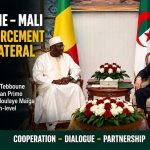
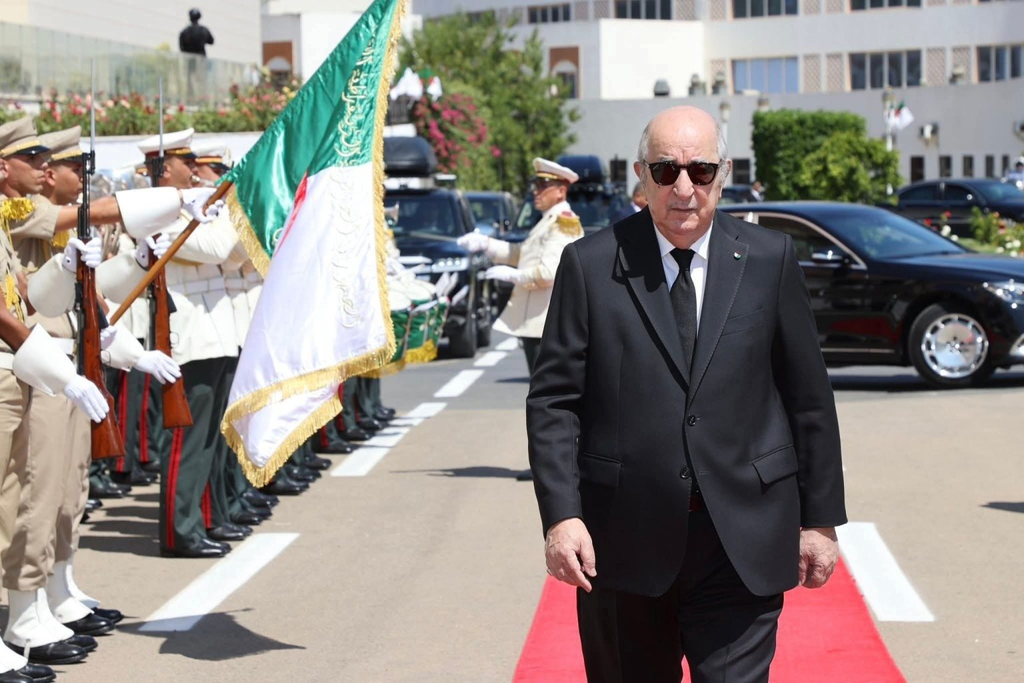
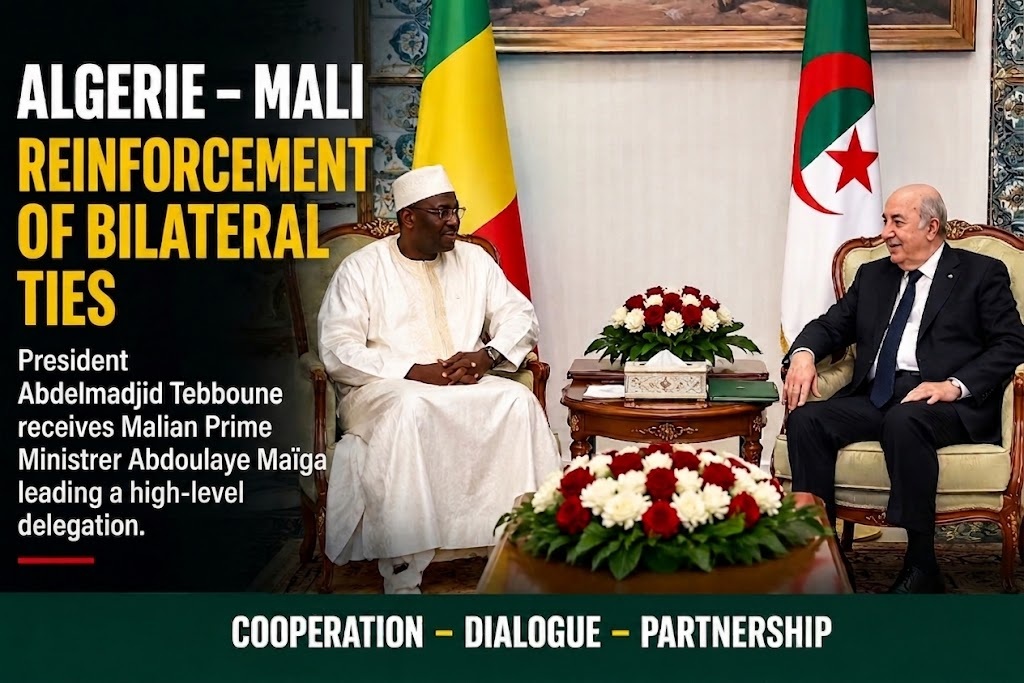
Algeria Gate: The President of the Republic, Abdelmadjid Tebboune, received this Monday the Prime Minister and head of government of the Republic of Mali, Abdoulaye Maiga, at the head of a major delegation.
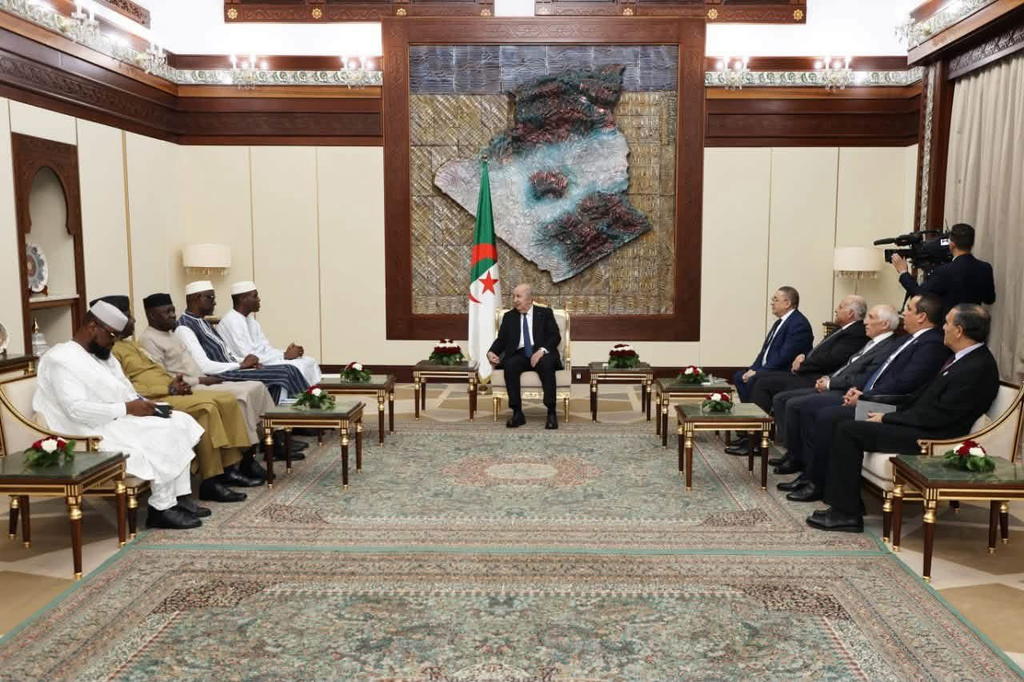
Abdelmadjid Tebboune receives Malian Prime Minister Abdoulaye Maiga

This meeting takes place in a context marked by the desire of Algiers and Bamako to strengthen their bilateral relations and cooperation. Several senior Algerian officials took part in the talks, including the Minister of State, Minister of Foreign Affairs, Ahmed Attaf, as well as officials responsible for diplomatic and security matters.

This visit reflects the importance that both countries attach to consolidating their relations and coordinating on issues of common interest

#Algeria#Mali#President tebboune
Author
Lys Iwannughen
View my articles

Leave a comment

Your email address will not be published. Required fields are marked *

African coast
Share this post

Mali’s PM Heads to Algeria: A Sahel Pivot Toward Pragmatism, and a Blow to Morocco’s Standing

Mali’s PM Heads to Algeria: A Sahel Pivot Toward Pragmatism, and a Blow to Morocco’s Standing

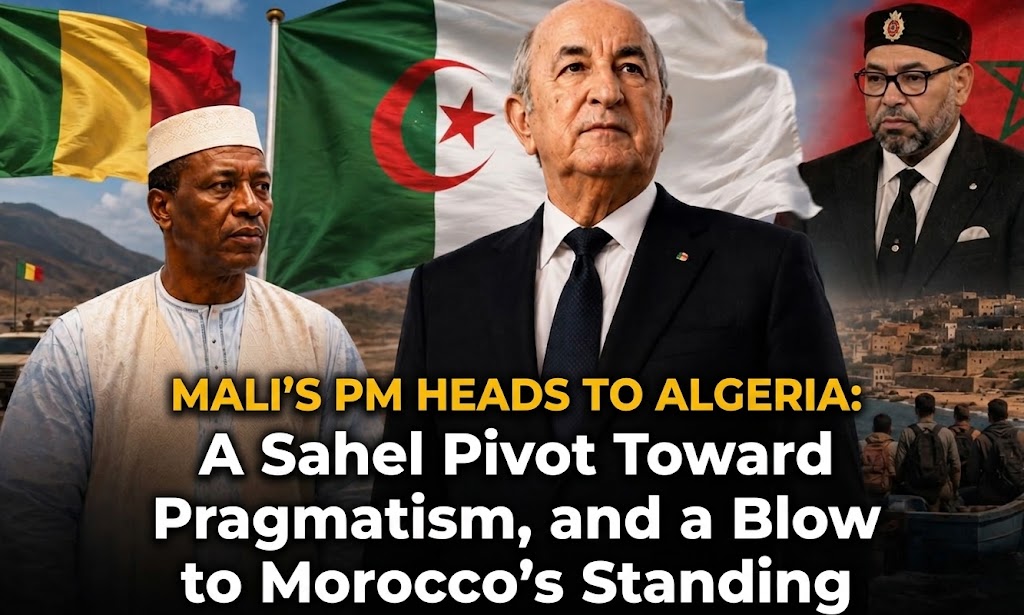
Algeria Gate: Malian Prime Minister Abdoulaye Maïga arrives in Algeria tomorrow, invited by his Algerian counterpart, carrying a message from President Assimi Goïta to President Tebboune, marking a thaw after a 14-month diplomatic crisis. He’ll be received by Tebboune, with talks aimed at launching bilateral cooperation.

The visit follows an August 9 phone call between the two PMs, the return of ambassadors, and the reopening of airspace in July; signs of gradual normalization. For Bamako, reconciling with Algiers reflects geographic and strategic reality: Algeria is a direct neighbor and key partner on security and development.

The move also comes as Mali’s earlier bet on Morocco’s Atlantic-access Sahel initiative has yielded little concrete progress, while Morocco faces its own economic and social strains and growing international criticism over using migration as political leverage, notably facilitating roughly 70,000 undocumented Moroccan migrants toward Ceuta.

Algeria, by contrast, points to tangible cooperation: a donated power plant in Niger, military support including helicopters and equipment, and a security approach tying its own stability to that of its neighbors.

Analysts frame Maïga’s visit as more than protocol; a sign Sahel states are prioritizing pragmatic, results-driven partnerships over unfulfilled promises, with Morocco’s regional influence appearing increasingly strained.

#Africa#Algeria#Mali
Author
Lys Iwannughen
View my articles
African coast
Share this post

“Blood Follows Their Footsteps”: International Investigations Echo Tebboune’s Charge Against the UAE

“Blood Follows Their Footsteps”: International Investigations Echo Tebboune’s Charge Against the UAE

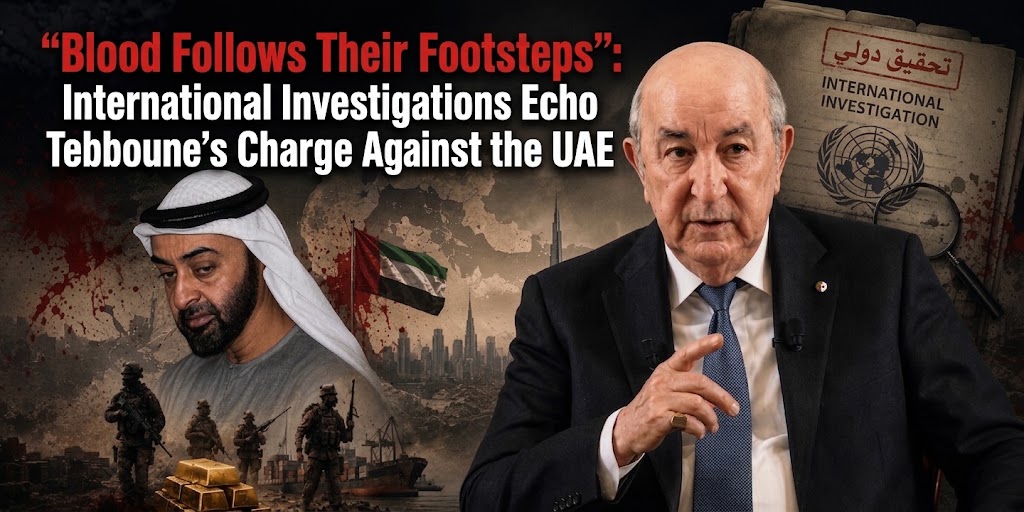
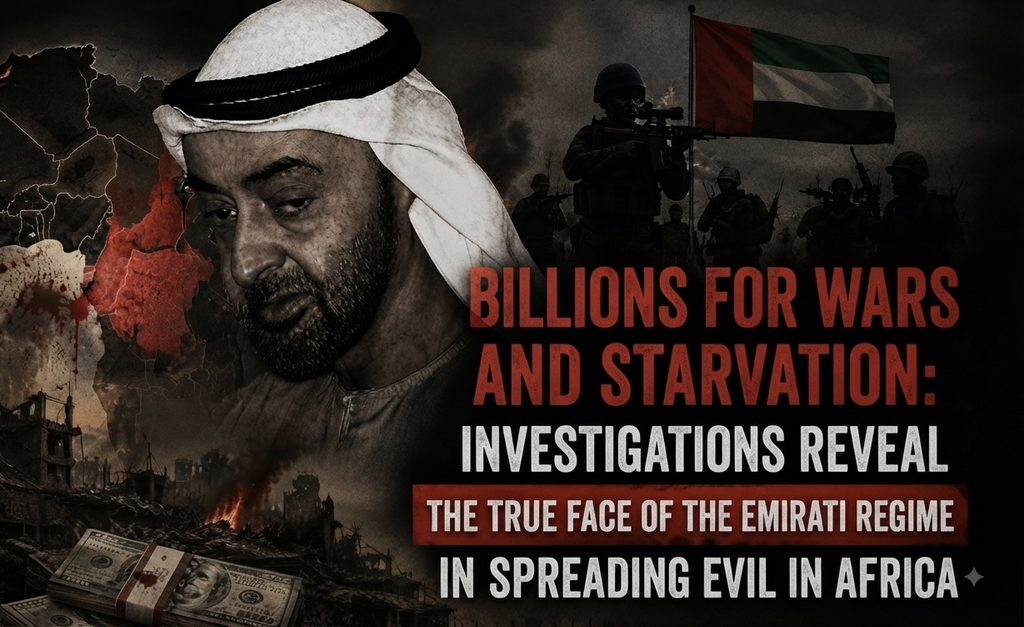
Bab El Djazair News Portal: Before the Financial Times described Emirati expansion in Africa as an “imperial” push, before Human Rights Watch tracked Colombian mercenaries through UAE military facilities to Sudan, and before Reuters revealed that a $50 million ransom financed an al-Qaeda attack in Mali (with three regional sources attributing the payment to the UAE), President Abdelmadjid Tebboune had already, in March 2024, mapped the danger in three countries by name: Mali, Libya and Sudan.

“Blood Follows Their Footsteps”: International Investigations Echo Tebboune’s Charge Against the UAE

He said the money of an unnamed Arab state was present “in every place where there is conflict,” listed those three countries, and declared that “patience has limits.” More than two years later, the importance of that statement lies in the precision of the geography he chose: the three arenas have successively become the subject of UN reports and international investigations into weapons, gold, mercenaries, financing and networks of influence linked to the UAE.

This does not mean every Algerian accusation has been proven, nor that the president formally named the UAE on every occasion. Yet placing the statements on a timeline and overlaying later evidence shows Algeria was reading a pattern early: massive capital moving beyond borders, ports and strategic assets, relationships with armed actors, and security and financial tools far beyond traditional investment.

“Blood Follows Their Footsteps”: International Investigations Echo Tebboune’s Charge Against the UAE

January 2024… The Warning First Came from the High Security Council

On January 10th 2024, President Tebboune chaired a High Security Council meeting on the neighbourhood and the Sahel. The statement expressed regret at “hostile actions” by a “brotherly Arab country” towards Algeria, without naming it. Media linked the reference to the UAE; the first institutional warning.

The region was changing rapidly: Mali had ended the Algiers Agreement process, Libya remained divided, and Sudan was locked in war since April 2023. Earlier Emirati support for Khalifa Haftar had already been documented, including violations of the Libyan arms embargo and a major airlift in 2020. Algeria saw external financial and military powers altering the balances around its borders.

“Blood Follows Their Footsteps”: International Investigations Echo Tebboune’s Charge Against the UAE

March 2024… Tebboune Draws the Map: Mali, Libya, Sudan

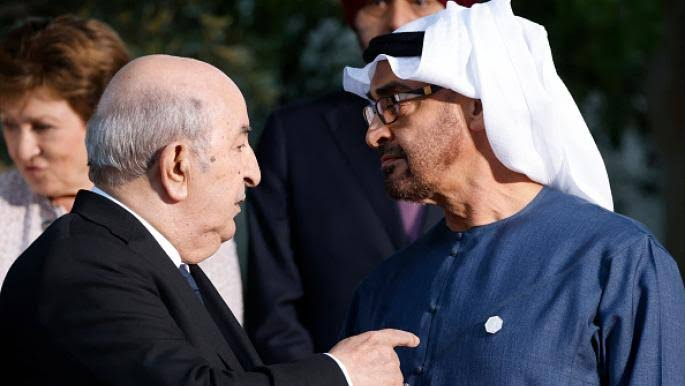
On 30 March 2024, Tebboune spoke publicly and in detail about the crisis with the Gulf state, still without naming it. He kept a diplomatic tone at first, then accused the actions of “arrogance” and drew a red line: Algeria “does not bow.”

The key phrase: “Wherever there is conflict, we find the money of this state: in Mali, in Libya, in Sudan… patience has limits.” He placed money at the heart of the economy of conflicts—who finances, who allies with whom, who can reshape the balance inside a weak state.

Anwar Gargash replied indirectly on 2 April about a “distant sisterly state” using hints against the UAE. Two months later, SWISSAID revealed that 435 tonnes of gold worth over $30 billion left Africa undeclared in 2022, with the UAE the main destination (about 405 tonnes). Over the previous decade, unrecorded African gold appearing in UAE imports exceeded 2,500 tonnes, valued at more than $115 billion. Dubai had become a central corridor for African wealth leaking outside official records.

“Blood Follows Their Footsteps”: International Investigations Echo Tebboune’s Charge Against the UAE

2025… From Warning Against a State to Warning Against a Model of Intervention

By October 2025, Tebboune said Algeria’s Gulf relations were good “except for one state,” linking the problem to interference in internal affairs and an attempt at “ruin in my house.”

On 11 November, while receiving the Somali president, he described Sudan’s tragedy as caused by “blatant interventions that stoke discord.” Amnesty International had already documented modern weapons, including from the UAE, in the Sudanese war, and later concluded that advanced Chinese weapons “almost certainly” re-exported from the UAE had reached the Rapid Support Forces. Abu Dhabi denied supporting any side. Sudan’s case against the UAE at the ICJ was dismissed in May 2025 for lack of jurisdiction.

“Blood Follows Their Footsteps”: International Investigations Echo Tebboune’s Charge Against the UAE

December 2025… Tunisia Enters Algeria’s National Security Circle

On 30 December, Tebboune warned against attempts to drive a wedge between Algeria and Tunisia, stressing that the security of both is interconnected and that Algeria does not interfere in Tunisian affairs. The doctrine was clear: non-interference is a principle of regional security, not a slogan against one adversary.

“Blood Follows Their Footsteps”: International Investigations Echo Tebboune’s Charge Against the UAE

February 2026… The Accusation Moves to Elections and Investment Capital

On 7 February, Tebboune openly accused the unnamed “state, not to say a mini-state” of intervening in Algerian elections and of threatening arbitration over investments. He closed with a severe warning: “Do not make us regret the day we came to know you.” The same day Algeria began terminating the 2013 air-services agreement with the UAE. The issue now encompassed political interference, capital and legal pressure.

July 2026… The Harshest Phrase: “Wherever They Set Foot, Blood Flows”

In a 27 July interview, Tebboune described the party as a “small state” with a “very negative” effect and uttered the sharpest line of the chronology: “Wherever they set foot, blood flows,” adding that Algeria possesses evidence. He linked Tunisia’s security directly to Algeria’s and said he would have cut relations long ago were it not for the desire to avoid further Arab divisions.

“Blood Follows Their Footsteps”: International Investigations Echo Tebboune’s Charge Against the UAE

Then Came the Documents: Mercenaries, Weapons and Sudan’s Routes

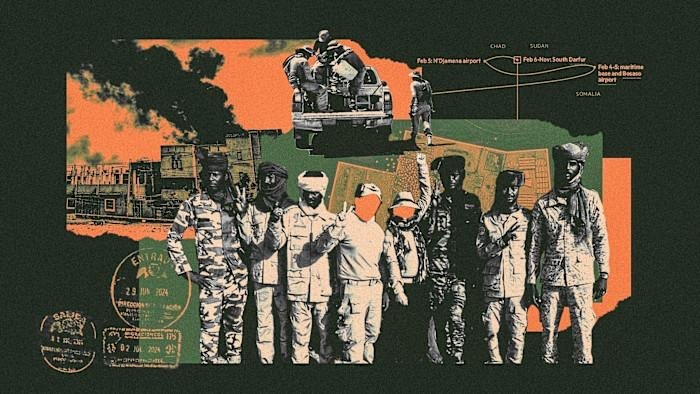
In May 2026, Human Rights Watch reported that hundreds of Colombian contractors were trained by Emiratis inside the UAE before deployment to Sudan, with the Abu Dhabi-based Global Security Services Group appearing in the recruitment. The UAE denied allowing its territory to be used for such purposes.

The Financial Times in August estimated around 2,000 Colombian fighters reached Sudan via routes through the UAE, Libya, Somalia and Chad, some trained on drones and air defence. The U.S. Treasury had already sanctioned a Colombian recruitment network in December 2025 and identified a retired Colombian officer resident in the UAE as a central figure, without officially attributing the network to the Emirati government. Reuters had earlier tracked dozens of flights from the UAE to Am Djarass in Chad that raised suspicions of supplying the Rapid Support Forces.

“Blood Follows Their Footsteps”: International Investigations Echo Tebboune’s Charge Against the UAE

Mali… The Most Dangerous Intersection with the March 2024 Statement

In March 2024 Tebboune had placed Mali at the top of the list. In August 2026 a UN Security Council experts’ report revealed that a roughly $50 million ransom paid in late 2025 financed a major JNIM attack in Mali. Three regional sources told Reuters the payer was the UAE. Usual ransoms ranged from $4–6 million; experts described $50 million as extraordinary. The UN report itself did not name the payer, but the intersection with Tebboune’s earlier warning about “money” in Mali is highly sensitive.

Libya… The Arena That Preceded the Warning

Libya’s path predated the 2024 statements. UN and rights reports had long documented Emirati support for Haftar, including drones and an airlift of at least 160 flights in early 2020. When Tebboune grouped Mali, Libya and Sudan together, Libya already stood as a living model of external financing, weapons and proxy activity. Sensitivity rose again in 2024 when Haftar’s forces moved near the Algerian border.

Ports and Gold… When Influence Becomes Economic Before It Becomes Military

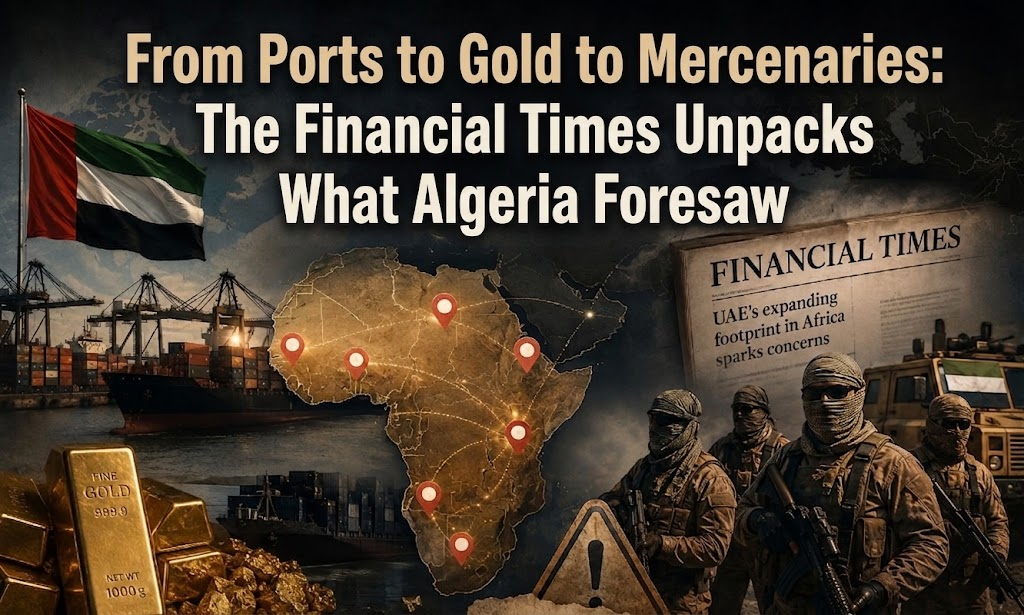
The Financial Times investigation of August 2026 mapped a broader picture: more than $168 billion in announced Emirati projects in Africa since 2017 across ports, minerals, land, energy and logistics. The issue is not legitimate investment itself, but the accumulation of control at the same chokepoints—port, corridor, resource, financial centre—sometimes paired with security presence or armed alliances.

Gold remains the clearest example: if the UAE is the largest destination for unrecorded African gold, influence is measured by Dubai’s ability to turn African material into globally tradable money. Claims of systematic “buying of consciences” lack documentary proof as state policy; what is documented is a highly attractive environment for money and elites, as shown by the Dubai Unlocked investigation.

Even London… An Emirati-Financed Mercenary Outside African Arenas

An ITV News investigation of 19 August 2026 revealed that security contractor Abraham Golan, previously linked to UAE operations in Yemen, ran a surveillance operation in London in 2016 against British activist Anas al-Tikriti while receiving Emirati funds. The investigation did not prove a direct government order for assassination, but it added another example of Emirati-financed contractors operating far beyond traditional borders—reinforcing that private military tools are part of a wider pattern, not a solitary Algerian claim.

From Warning to Doctrine: Why Tebboune’s Reading Appears Prophetic

Tebboune did not predict any single report. He identified early the structure of the danger that later investigations would examine: money rather than conventional armies; Mali, Libya and Sudan rather than a narrow bilateral dispute; then internal interference, elections, investment pressure and finally the comprehensive formula of a “very negative” effect accompanied by blood.

Parallel evidence moved in the same direction: tens of billions in gold flows, alleged re-exported weapons, suspicious flights, a Colombian recruitment network, around 2,000 fighters, a $50 million ransom that reshaped jihadist financing in Mali, and ports and investments drawing a map of influence larger than the Gulf state itself.

The UAE continues to deny supporting the Rapid Support Forces or allowing mercenary recruitment on its soil, and defends its African investments as developmental partnerships (citing more than $110 billion committed between 2019 and 2023). Those replies no longer close the file, because the questions no longer come from Algeria alone.

Algeria Was Not Warning Against the UAE’s Wealth… But Against the Function of Money

Tebboune never objected to the UAE being rich or investing in Africa. Algeria itself seeks investment and maintains close ties with other Gulf states. The consistent question in his discourse was: what does money do when it leaves the economy and enters internal politics and war?

Money that builds a factory or a commercial port can create value. Money that reaches an armed faction, finances a terrorist ransom, sustains a mercenary network or pressures sovereign decisions enters a different equation entirely.

This is why Algeria’s approach to Africa is structurally opposite: it bets on projects such as the Trans-Saharan Gas Pipeline and the African Energy Bank, whose value rises when neighbouring states stabilise. Turning those states into conflict arenas is a direct loss for Algerian security, trade, energy and borders.

The phrase “patience has limits” in March 2024 was the beginning of an ascending chronology. Two years later came the stronger line: “Wherever they set foot, blood flows.” Between them appeared the gold data, the expanded Sudan file, Chinese weapons, mercenary sanctions, the Colombian route, the $50 million Mali ransom, and the Financial Times synthesis of ports, mines, gold and security power.

The strength of Tebboune’s reading does not lie in the sharpness of his words, but in the fact that the geography he warned about in 2024 is the same geography that in 2026 became the stage for the heaviest international investigations into Emirati influence.

Mali: money and al-Qaeda.
Libya: weapons and Haftar.
Sudan: gold, weapons and mercenaries.
Dubai: the centre where trade, money, African wealth and elites meet.

Algeria’s position has been consistent from the start: no one buys the right to reshape its neighbourhood, and investment does not become a licence to interfere in the sovereignty of states. After the investigations, the chronology of Tebboune’s statements reads less as a bilateral quarrel and more as an early record of a wider battle over who holds the decision in Africa; the African state itself, or external capital when it turns from economic partner into a tool of influence.

#Algeria#President tebboune#UAE
Author
Lys Iwannughen
View my articles
African coast
Share this post

CNAN El Djazaïr Opens a New Maritime Gateway to West Africa

CNAN El Djazaïr Opens a New Maritime Gateway to West Africa

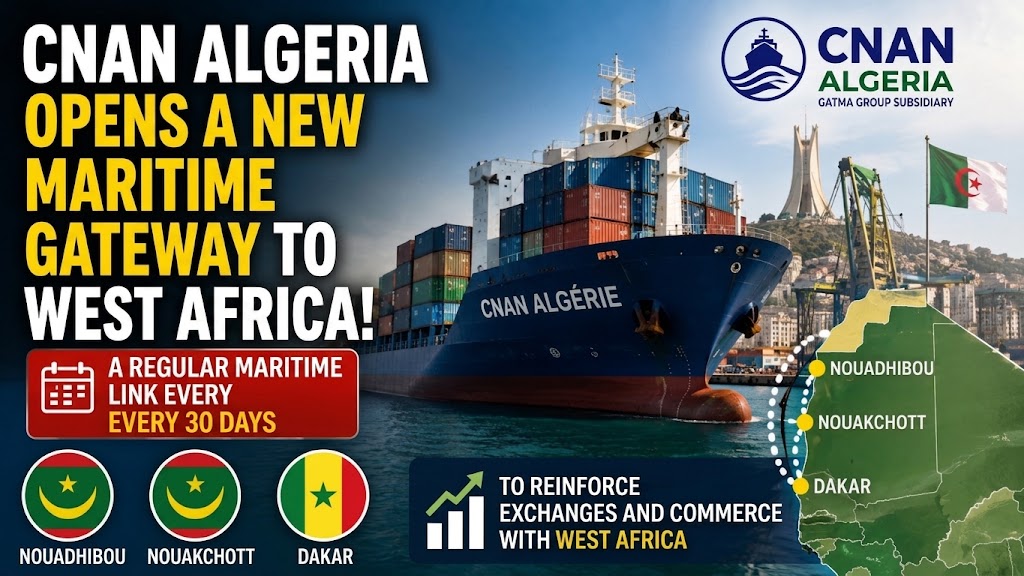
Algeria Gate: State-owned company CNAN El Djazaïr, a subsidiary of the Algerian Maritime Transport Group (GATMA), is strengthening its presence in West Africa with the launch of a regular maritime link operating once every 30 days. The route will connect Algeria to the ports of Nouakchott and Nouadhibou in Mauritania, as well as Dakar in Senegal.

This new line is primarily aimed at facilitating trade and improving the shipment of Algerian goods to West African markets. It forms part of a broader strategy to develop maritime freight transport and support non-hydrocarbon exports.

According to CNAN El Djazaïr‘s official website, the company already operates regular services to Mauritania and Senegal, with a fleet that includes container ships and General Cargo-type vessels.

With this monthly link, Algiers aims to strengthen its economic foothold in West Africa and provide Algerian operators with a more regular maritime logistics option for accessing these markets.

This initiative underscores the growing role of maritime transport in Algeria’s strategy of export diversification and the consolidation of trade ties with the African continent.

#Algeria#Mauritania#Senegal
Author
Lys Iwannughen
View my articles