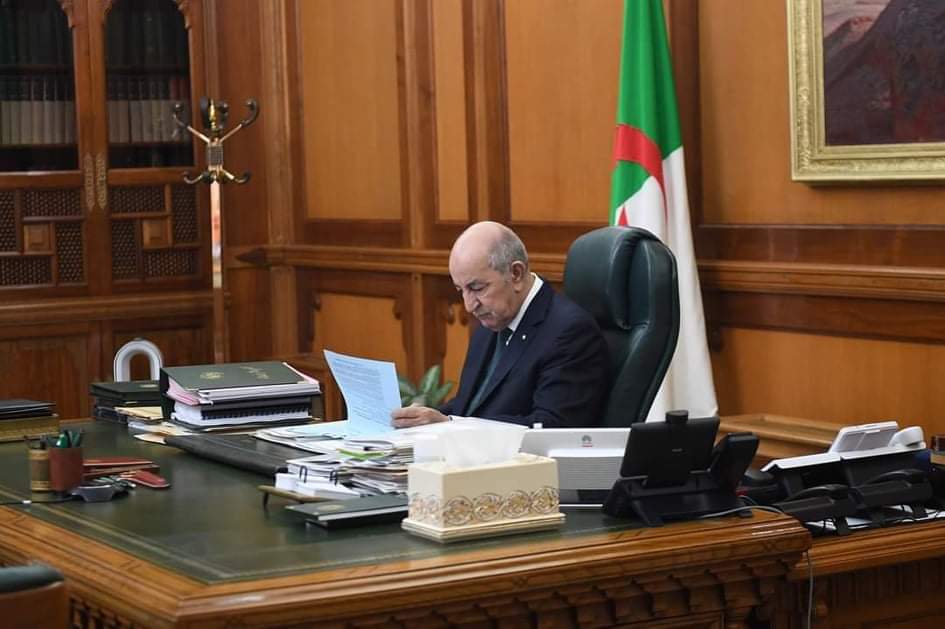
Algeria Gate: Algeria is engaged in a new phase of its economic diversification strategy, based on the establishment of integrated value chains linking agriculture, mining resources, energy, the processing industry, railway infrastructure, digital platforms, and export ports. This orientation, led by the President of the Republic, Abdelmadjid Tebboune, aims to durably transform the national economic model by reducing the country’s dependence on hydrocarbon revenues.
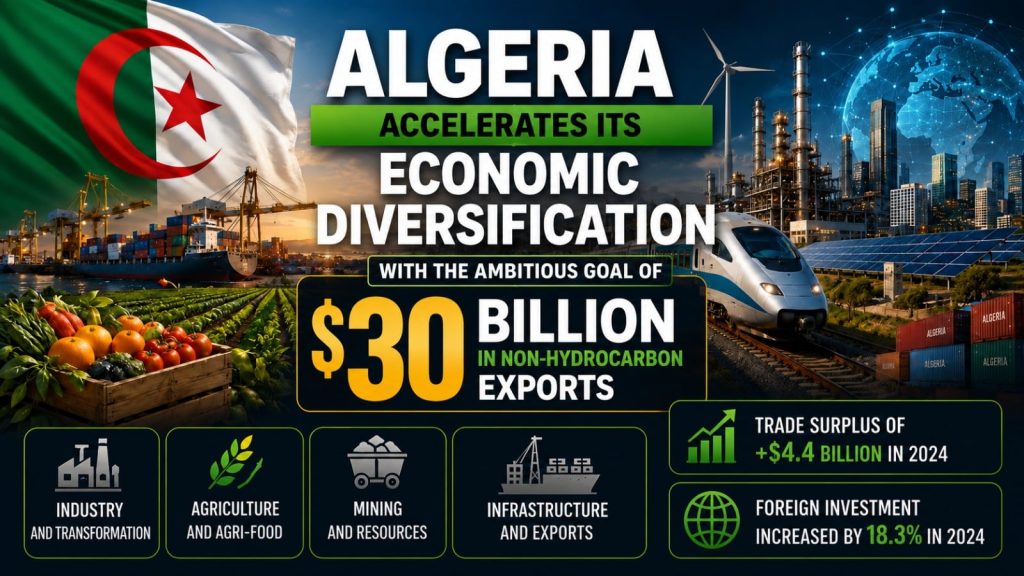
At the heart of this strategy is a particularly ambitious objective: to raise non-hydrocarbon exports to $30 billion by the 2029–2030 horizon. This target represents a major scale-up, as these exports currently exceed $7 billion. Reaching such a level would require nearly quadrupling foreign sales in just a few years.
This transformation does not rest solely on increasing production volumes. It also involves the development of new industrial sectors, improving the added value of Algerian products, expanding the number of exporting companies, and conquering new international markets.
Despite the progress recorded in recent years, hydrocarbons continue to largely dominate the country’s foreign trade. According to World Bank data, oil and gas accounted for an average of 82.6% of Algerian exports and 45.8% of budget revenues over the 2020–2024 period. These figures show that, despite the growth of non-hydrocarbon exports, the structure of the economy remains heavily dependent on energy revenues.
Recent economic indicators nonetheless point to positive developments. In 2024, Algeria maintained a trade surplus, with exports exceeding imports by $4.482 billion. Merchandise trade approached $100 billion, illustrating the dynamism of the country’s commercial flows.
At the same time, Algeria continues to attract more foreign investment. Foreign direct investment (FDI) flows rose by 18.3% in 2024, according to the latest data presented by the World Bank and the United Nations Conference on Trade and Development (UNCTAD). This increase reflects growing investor interest in several strategic sectors, notably industry, mining, renewable energies, and infrastructure.
Through this roadmap, the authorities aim to build a more diversified, more competitive economy that is more oriented toward exports. The success of this strategy will depend in particular on the ability of national companies to move upmarket, strengthen their competitiveness, and establish themselves sustainably in international markets, so as to make non-hydrocarbon exports a true engine of growth for the Algerian economy.