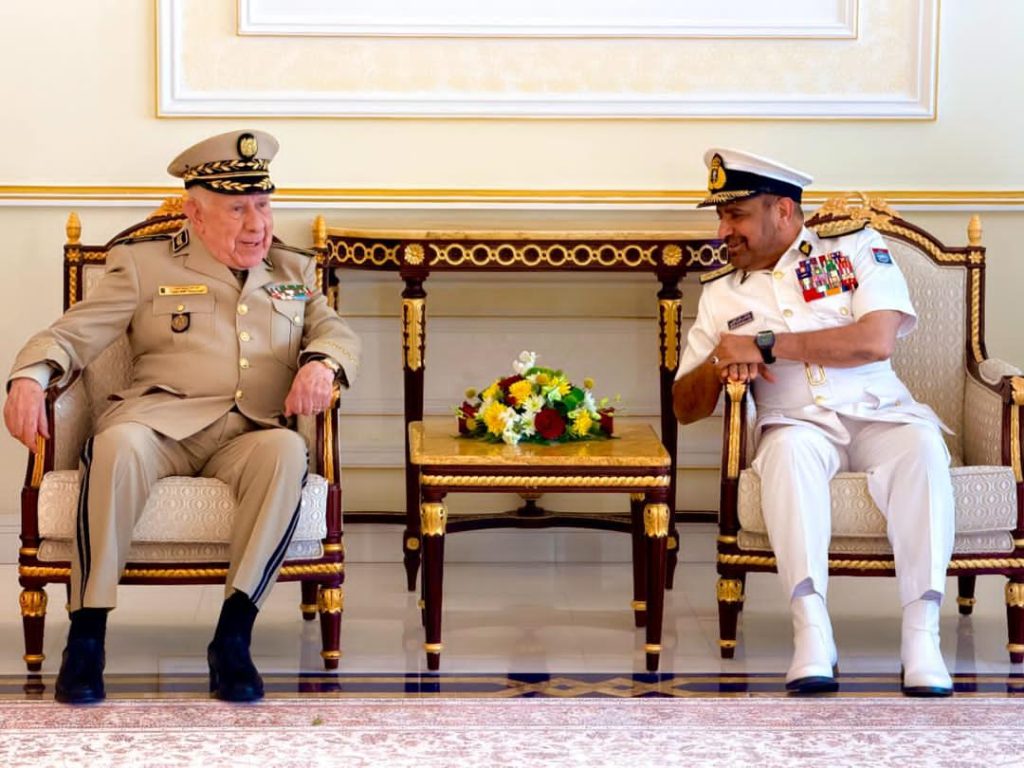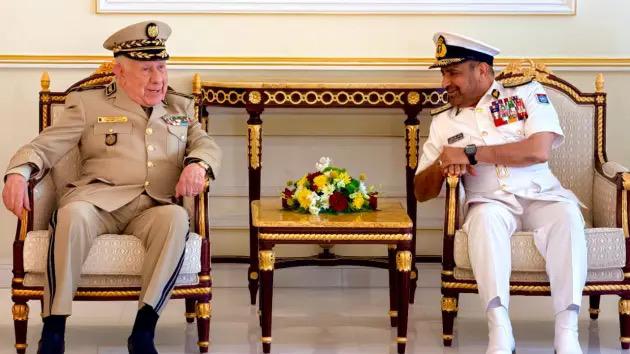
The visit of General Saïd Chanegriha, Chief of Staff of the Algerian People’s National Army, to the Sultanate of Oman is far from a routine diplomatic or military stop on an official itinerary. It is a carefully calibrated move that carries political and security messages extending well beyond formal meetings and protocol photographs — and understanding it requires placing it within a complex regional environment rather than viewing it in isolation.
Context First: Algeria in a Rising Polarized Environment
Today, Algeria operates in a regional landscape shaped by three overlapping pressures.
First, the Algerian–Moroccan rivalry, which has moved beyond traditional diplomatic tension since 2021, following the severing of diplomatic relations and the intensification of the Western Sahara dispute. Morocco’s growing security alignment with Israel through the Abraham Accords has added a new strategic layer to an already sensitive western frontier.
Second, the expanding Emirati footprint across Africa, where Abu Dhabi and Algiers are increasingly perceived as competing for influence in the Sahel region, amid the broader collapse of French influence and the ongoing reconfiguration of alliances in Mali, Niger, and Burkina Faso.
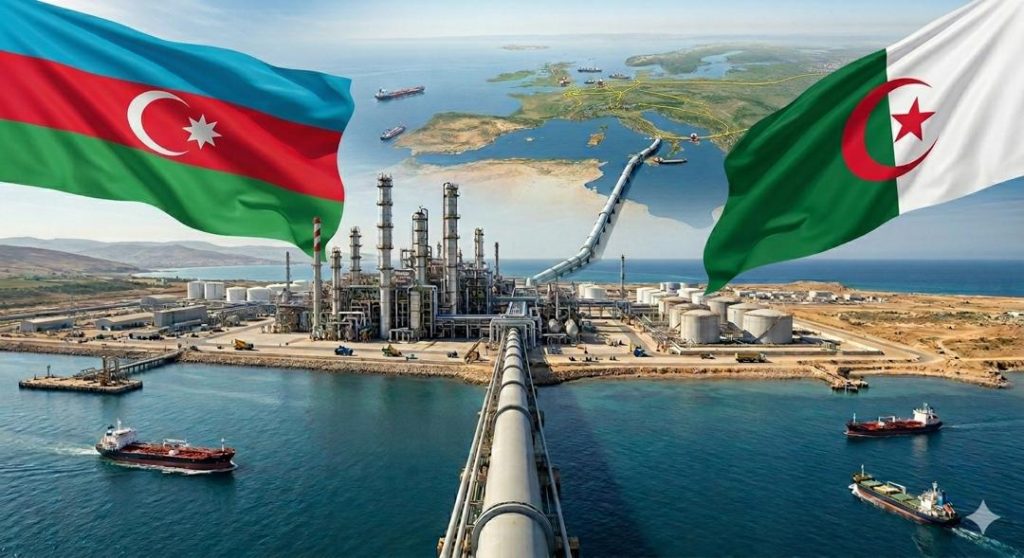
Third, renewed Western pressure on Algeria to adopt clearer positions on the Ukraine conflict and energy-related geopolitical alignments, counterbalanced by incentives tied to European and American partnership frameworks.
In this climate, Algeria’s priority is to preserve strategic flexibility by engaging partners that do not force alignment within rigid geopolitical blocs.
Why Oman Specifically?
The choice of Muscat is far from incidental; it reflects a precise reading of Oman’s unique diplomatic identity.
Oman remains the only Gulf state that has maintained open channels with Iran for decades, often serving as a discreet mediator in sensitive negotiations, including the groundwork that led to the 2013 nuclear agreement. It has also consistently avoided participation in regional military coalitions, most notably in Yemen. This model of quiet neutrality and pragmatic mediation closely mirrors the diplomatic posture Algeria seeks to project.
In this sense, Algeria is not pursuing confrontation-based alliances, but rather seeking partners that embody balanced engagement and strategic restraint.
The Deeper Message: Managing Strategic Ambiguity
At its core, this visit reflects Algeria’s broader doctrine of “controlled strategic ambiguity.” The country is neither fully aligned with the Riyadh–Abu Dhabi axis, nor with the Tehran–Ankara sphere of influence, nor with Western blocs, nor entirely within the Russia–China strategic orbit.
This ambiguity is not a weakness, but a tool. It allows Algeria to maintain room for maneuver, negotiate across multiple power centers, and preserve autonomy in critical dossiers such as the Sahel, Western Sahara, and energy policy.
Engaging with Oman reinforces this logic: building partnerships with actors that share a preference for non-alignment and quiet diplomacy, while expanding Algeria’s security cooperation networks outside high-tension geopolitical fault lines.
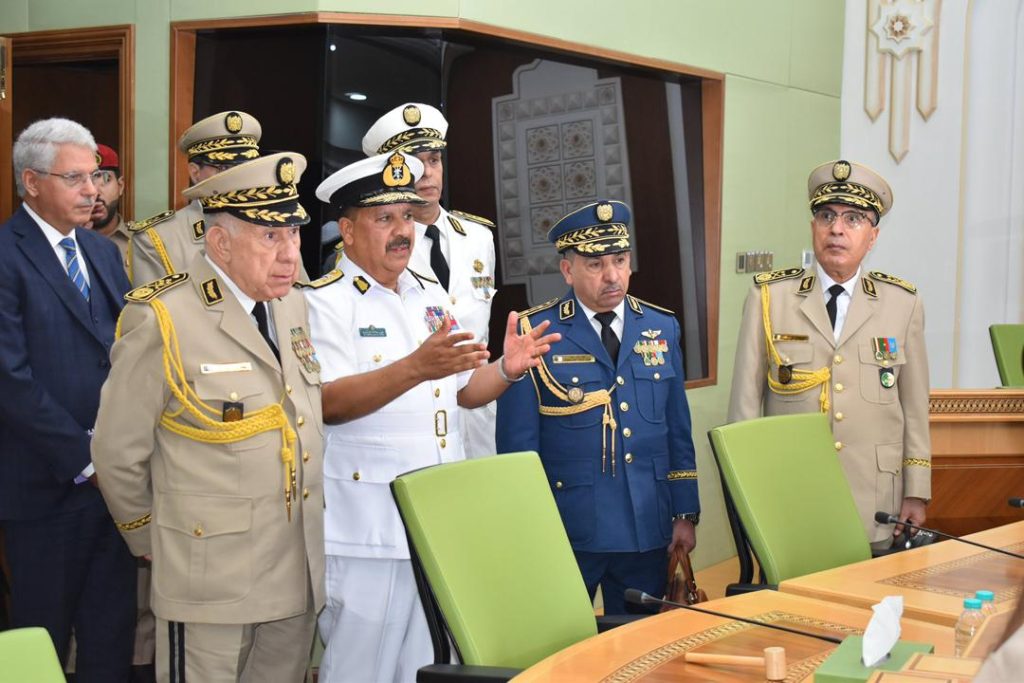
Ultimately, the visit signals not a shift in direction, but a refinement in approach.
Algeria is steadily consolidating a foreign and security policy that avoids alignment politics in favor of calibrated, interest-driven partnerships. In this framework, Oman is not just a destination — it is a mirror of the diplomatic model Algeria is increasingly inclined to follow.
In geopolitics, sometimes the most meaningful signals are not loud declarations, but carefully chosen silences.