Sunday, 18 October 2026 • 23:56 Algiers time
Algeria Gate
News Room
Cameron Hudson: UAE is virtually the sole backer of the RSF..without its support the war in Sudan would not continue Algeria-Niger: Official launch of Trans-Saharan fibre optic link Five minutes of lament over Algeria: Amar Belani exposes CNEWS’s real obsession Algerian courts hand down first death sentences under new drugs law Ségolène Royal’s masterclass on Algeria against an ignorant and demagogic journalist President Tebboune and senior officials receive the remains of Boualem Boualem in Algiers NAPEC 2026 in Oran: Algeria at the Heart of Africa’s and the Mediterranean’s New Energy Landscape Pegasus Files: Amnesty Uncovers Morocco’s Espionage Against Spain President Tebboune Orders Salary Increases in Algeria’s 2027 Budget, Rules Out New Taxes on Citizens Algeria Emerges as a Trusted Power for Regional Peace and Stability
Share this post

Libya Achieves Historic Economic Breakthrough: Unified National Budget Signed After 13 Years of Division

• Author: بوابة الجزائر • 0 comments • 51 views
Libya Achieves Historic Economic Breakthrough: Unified National Budget Signed After 13 Years of Division

Libya is on the verge of adopting a unified national budget. Following an agreement signed between the two primary opposing factions—Tripoli, home to the internationally recognized Government of National Unity (GNU), and Benghazi, represented by the House of Representatives supported by Marshal Haftar—the country is moving toward financial consolidation.

Facilitated by American mediation, the parliaments of both regions signed an accord to adopt a common budget. This represents a significant feat in a nation deeply divided since the fall of Gaddafi in 2011, where political progress has remained stagnant despite numerous initiatives by the UN, the African Union, and neighboring countries.

After years of managing the war-torn country independently, the two camps recently succeeded in reunifying the Central Bank. This move ended the disruptions that plagued financial institutions due to political disputes between the East and West, effectively halting the fiscal crises that hindered regional governance.

Despite intensified political disagreements fueled by foreign interference, both parties managed to transcend their divisions to secure a minimum consensus on hydrocarbons. For years, Libyan oil was largely subject to smuggling despite various restrictions. This led to significant financial deficits and eroded the credibility of authorities who were unable to transparently manage energy exports.

Joint Oil Exports and Equitable Revenue Sharing

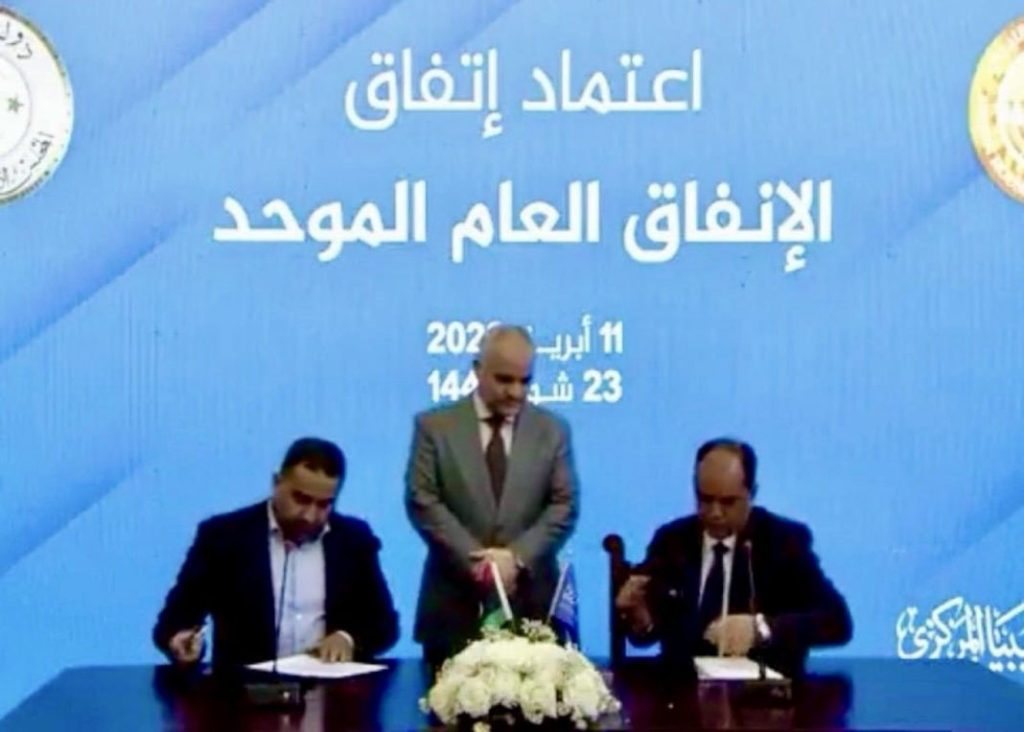
The camps of Abdul Hamid Dbeibah (GNU) and Marshal Haftar have finally agreed to organize joint oil exports and ensure the equitable sharing of revenues. The unification of public spending, announced yesterday by the Tripoli government, appears to be the culmination of a long process of economic and financial rapprochement. “This step reflects real progress toward unifying fiscal policy and enhancing the management of public spending,” stated the Central Bank, noting that this is the first consensus on unified spending in Libya in over 13 years. The agreement was signed by Issa Al-Arebi (Benghazi) and Abdeljalil Al-Chawish (Tripoli).

Controlled exports have now reached 1.5 million barrels per day (bpd), with ambitions to increase to 2 million bpd. Although Libya’s reserves are estimated at 48.4 billion barrels, the country has faced a deficit since 2011 due to political and security instability. With only $22 billion in revenue for Africa’s largest oil reserve, the Central Bank estimates a deficit of $9 billion.

Prime Minister Dbeibah thanked Massad Boulos, advisor to Donald Trump for Arab and African affairs, for his support in the mediation efforts. “This is a step full of promising signs, but the real test remains the serious commitment of all parties to translate this into concrete results for citizens in their daily lives,” Dbeibah stated. The challenge now for both camps, and the international community, is to accelerate the political process to establish elected institutions and end the legitimacy crisis.

Source: lalgerieaujourdhui.dz

#Libya
Author
بوابة الجزائر
View my articles

Leave a comment

Your email address will not be published. Required fields are marked *

Europe
Share this post

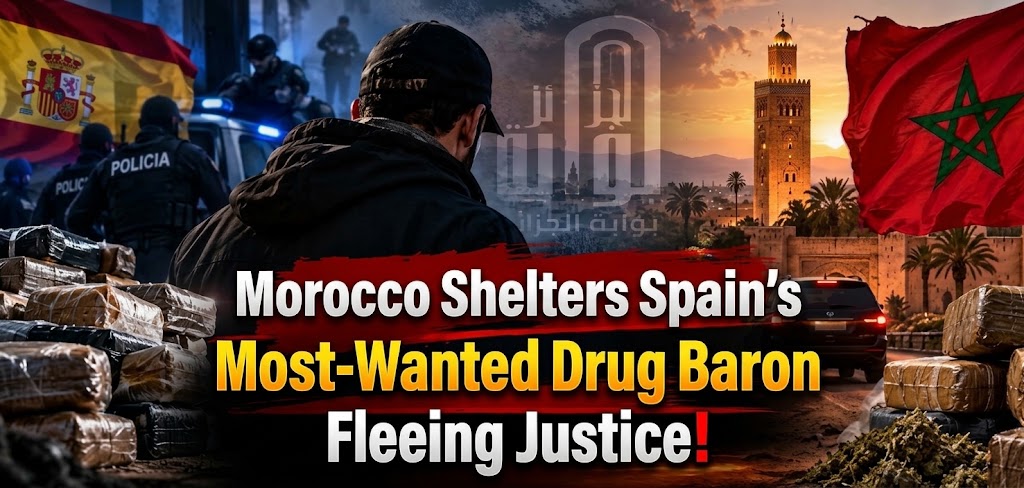
Norway Urges Morocco to Cooperate as “Mocro Maffia” Poses Growing National Security Threat

Norway Urges Morocco to Cooperate as “Mocro Maffia” Poses Growing National Security Threat

BUENOS AIRES – Norwegian police have expressed growing impatience with the Moroccan government’s lack of cooperation regarding the “Mocro Maffia,” a criminal organization now ranked as one of the most significant threats to the Nordic country. According to Argentine media reports, this diplomatic impasse is stalling the extradition of approximately 20 wanted traffickers.

A specialized security threat assessment in Norway identified the “Mocro Maffia”—which operates extensively within the country—as a “top-tier threat” in the realm of international drug trafficking, as reported by the Argentine news outlet Infobae.

The report clarifies that “approximately 20 Norwegian citizens of Moroccan descent, linked to large-scale drug networks, have sought refuge in Morocco in recent years.” From there, these individuals are reportedly managing criminal operations and smuggling routes targeting the Norwegian market.

Infobae highlighted that the primary obstacle remains the Moroccan “Makhzen’s” refusal to cooperate in this judicial field, a stance that “greatly complicates the process of extraditing these suspects to face justice in Norway.”

In response, Norwegian law enforcement has called for increased diplomatic intervention to pressure Moroccan authorities. The goal is to neutralize the “Mocro Maffia,” which strategically utilizes the Spanish port of Malaga as a primary gateway for smuggling narcotics into the European continent.

Author
بوابة الجزائر
View my articles
Algeria
Share this post

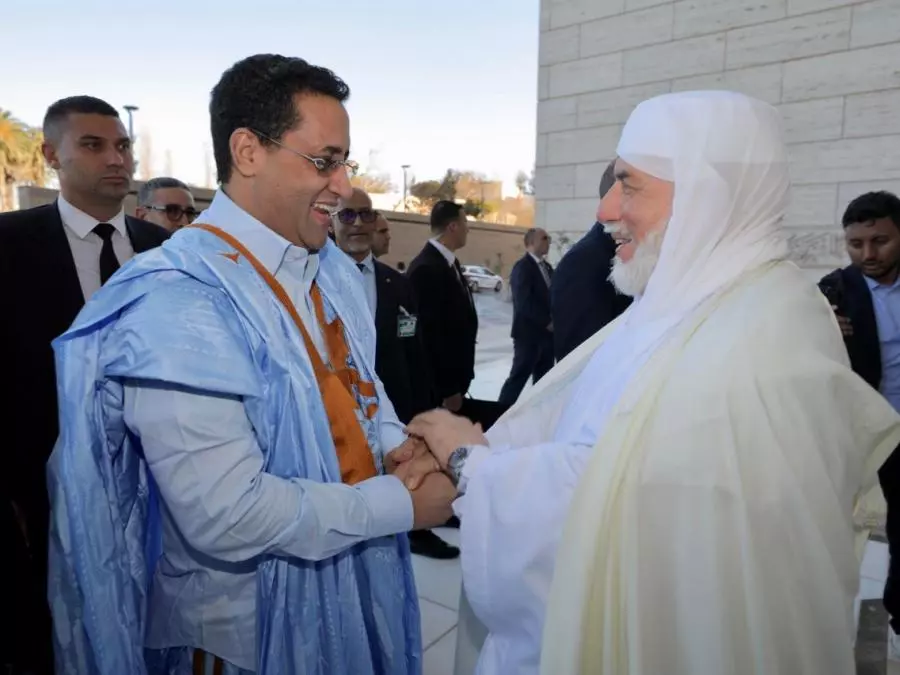
Mauritanian Prime Minister Visits Djamaa El-Djazair in Algiers

Mauritanian Prime Minister Visits Djamaa El-Djazair in Algiers

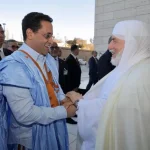
The Prime Minister of the Islamic Republic of Mauritania, Mr. Mokhtar Ould Diay, visited Djamaa El-Djazair (the Great Mosque of Algiers) on Monday evening, where he was received by its Rector, Sheikh Mohamed Mamoune El Kacimi El Hassani.

During the visit, the Mauritanian Prime Minister was briefed on the mosque’s architectural features and its scientific and cultural facilities. He commended the depth of the fraternal and spiritual ties that bind the two brotherly nations.

Earlier in the day, Mr. Mokhtar Ould Diay arrived in Algeria on an official visit, leading a high-level ministerial delegation, as part of the 20th session of the Algerian–Mauritanian Joint Grand Commission for Cooperation.

Author
بوابة الجزائر
View my articles
Maghrebi files
Share this post

Algeria and Mauritania to Ink Strategic Cooperation Agreements This Tuesday

Algeria and Mauritania to Ink Strategic Cooperation Agreements This Tuesday

Prime Minister Sifi Ghrieb and his Mauritanian counterpart, Mokhtar Ould Djay, are set to sign a series of strategic cooperation and partnership agreements this coming Tuesday in Algiers. The signing ceremony will take place during the 20th session of the Algerian-Mauritanian Great Joint Commission, a high-level summit hosted by Algeria to bolster bilateral ties.

Ahead of the event, the session commenced at the level of experts from both countries to review the cooperation and partnership relations between the two countries.

The experts are currently working on studying ways to strengthen relations, preparing draft agreements, and drafting the session’s final minutes.

Source: Algerian Radio Multimedia

Author
بوابة الجزائر
View my articles