Sunday, 18 October 2026 • 20:52 Algiers time
Algeria Gate
News Room
Cameron Hudson: UAE is virtually the sole backer of the RSF..without its support the war in Sudan would not continue Algeria-Niger: Official launch of Trans-Saharan fibre optic link Five minutes of lament over Algeria: Amar Belani exposes CNEWS’s real obsession Algerian courts hand down first death sentences under new drugs law Ségolène Royal’s masterclass on Algeria against an ignorant and demagogic journalist President Tebboune and senior officials receive the remains of Boualem Boualem in Algiers NAPEC 2026 in Oran: Algeria at the Heart of Africa’s and the Mediterranean’s New Energy Landscape Pegasus Files: Amnesty Uncovers Morocco’s Espionage Against Spain President Tebboune Orders Salary Increases in Algeria’s 2027 Budget, Rules Out New Taxes on Citizens Algeria Emerges as a Trusted Power for Regional Peace and Stability
Share this post

Mohammed bin Salman Moves to Cut UAE’s Claws Amid Deepening Saudi-Emirati Rift

• Author: Lys Iwannughen • 0 comments • 88 views
Mohammed bin Salman Moves to Cut UAE’s Claws Amid Deepening Saudi-Emirati Rift

Algeria Gate: Relations between Saudi Arabia and the United Arab Emirates appear to be facing renewed strain, with Saudi authorities reportedly imposing tighter scrutiny on financial transfers to the UAE.

According to Reuters, citing three informed sources, Saudi Arabia has subjected some financial transfers destined for the United Arab Emirates to additional regulatory checks similar to those applied to jurisdictions considered high-risk for illicit financial activity.

Saudi Banks Reportedly Delay UAE-Linked Transfers

Several businessmen told Reuters that their companies had experienced delays in receiving transfers in different currencies. In some cases, Saudi banks reportedly returned the payments without providing an official explanation.

The head of a Dubai-based consulting firm said some of his Saudi clients had encountered difficulties paying the company’s invoices. According to the executive, some clients even asked the firm to establish operations outside the UAE to facilitate business dealings.

An investor with stakes in two Emirati companies said both businesses had received similar requests from Saudi clients. These clients reportedly said that Saudi authorities had instructed them not to conduct business with companies based in the UAE.

Some companies reportedly waited several weeks to receive payments from Saudi Arabia. In certain cases, the delayed amounts were below 1 million UAE dirhams (approximately $272,000), despite such transactions previously being completed within only a few days.

Increased Financial Scrutiny

The reported measures appear to fall within the broader framework of Saudi Arabia’s anti-money-laundering and counter-terrorist-financing controls.

The Saudi Central Bank requires financial institutions to conduct enhanced due diligence when dealing with customers or jurisdictions considered particularly exposed to money laundering, terrorism financing, and other financial crimes.

However, the reported treatment of UAE-linked transfers comes against the backdrop of increasingly visible disagreements between Riyadh and Abu Dhabi over several regional issues.

Growing Saudi-UAE Tensions

Saudi Arabia and the UAE have traditionally been close regional partners, but their interests have increasingly diverged in recent years, particularly over regional conflicts and economic and geopolitical strategies.

Tensions reportedly intensified toward the end of last year following a Saudi-led coalition operation targeting what Riyadh described as weapons and military vehicles at Yemen’s Mukalla port.

At the time, Saudi Arabia reportedly viewed Emirati actions in Yemen as “extremely dangerous” and a threat to its national security. Riyadh also warned that any infringement on the Kingdom’s security would constitute a “red line.”

The latest reports concerning financial transfers could therefore signal another dimension of the widening differences between the two Gulf powers.

What the Saudi Measures Could Mean for UAE Businesses

If sustained, tighter scrutiny of Saudi financial transfers to the UAE could create additional challenges for Emirati companies operating with Saudi clients and partners.

Payment delays, increased compliance requirements, and requests to establish operations outside the UAE could potentially raise the cost and complexity of cross-border business between the two countries.

The developments underscore how economic ties between Saudi Arabia and the UAE are increasingly being influenced by their broader geopolitical differences.


#Saudi Arabia#UAE
Author
Lys Iwannughen
View my articles

Leave a comment

Your email address will not be published. Required fields are marked *

Algeria
Share this post

Air Algérie to Launch Direct Algiers–New Delhi Flight in October 2026

Air Algérie to Launch Direct Algiers–New Delhi Flight in October 2026

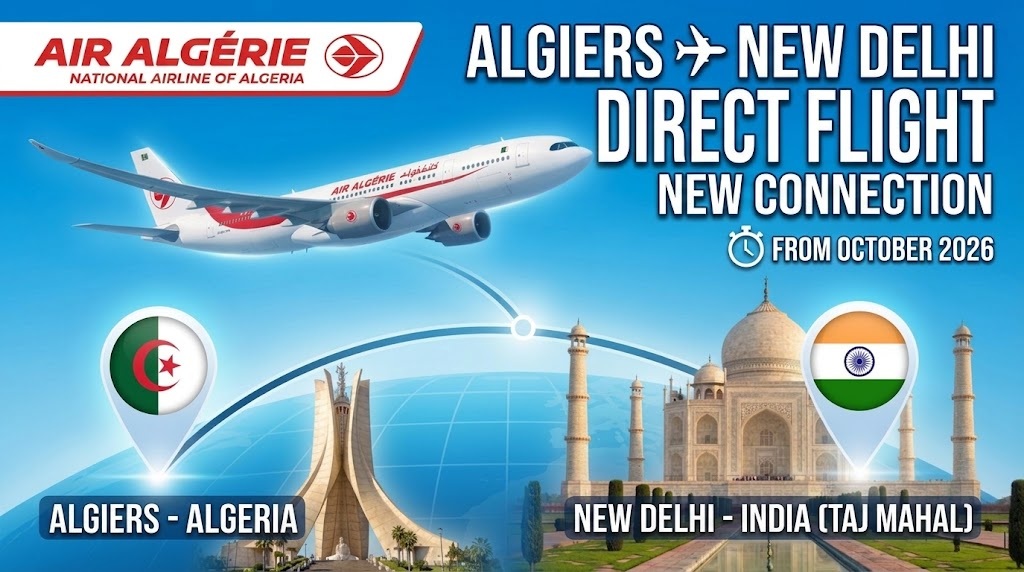
Algeria Gate: Air Algérie is set to launch a new direct flight between Algiers and New Delhi in October 2026, marking a major step in strengthening air connectivity between Algeria and India.

The new route is expected to boost tourism, business, trade, and diplomatic exchanges between the two countries.

Air Algérie to Connect Algiers and New Delhi

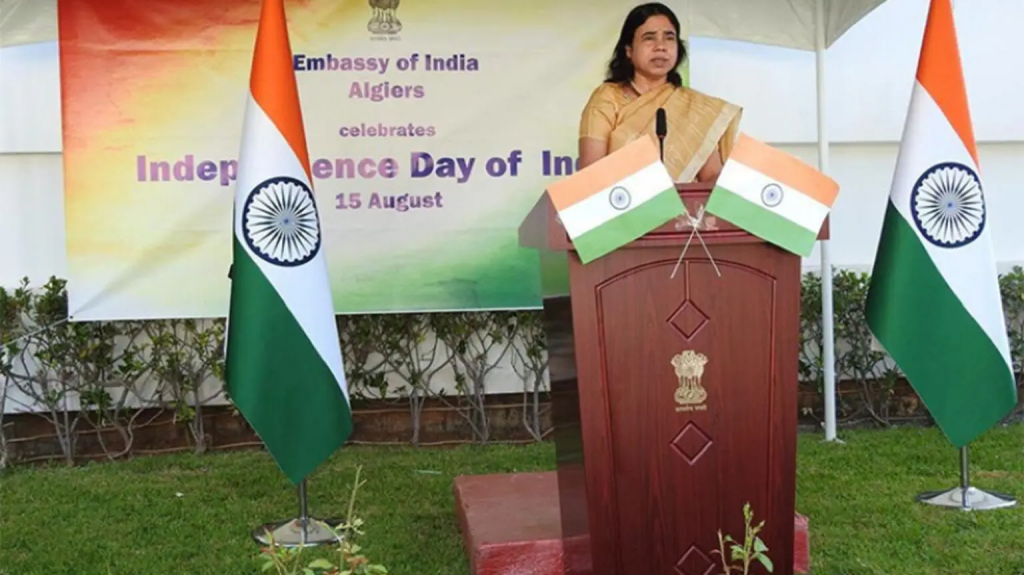
India’s Ambassador to Algeria, Swati Vijay Kulkarni, confirmed that the new Algiers–New Delhi route will begin operating in October 2026. The announcement was made during a ceremony at the Moufdi Zakaria Palace of Culture in Algiers celebrating India’s National Day.

Air Algérie to Launch Direct Algiers–New Delhi Flight in October 2026

According to information reported by AeroRoutes, the first direct flight is scheduled for October 25th, 2026.

The new service will be operated by Air Algérie three times a week, with flights scheduled for Tuesdays, Thursdays, and Saturdays.

Algiers–New Delhi Flight Schedule

Flights from Algiers will depart at 10:00 a.m. and arrive in New Delhi at 11:00 p.m. local time.

For the return journey, flights will leave New Delhi at 12:30 a.m. and arrive in Algiers at 6:05 a.m.

The direct connection is expected to make travel between Algeria and India significantly easier by providing passengers with a more convenient alternative to connecting flights.

New Route to Strengthen Algeria–India Relations

The launch of the direct flight comes as Algeria–India relations continue to expand, with growing cooperation in economic, tourism, and diplomatic fields.

The new air link is expected to facilitate greater movement between the two countries, benefiting Algerian travelers visiting India, Indian tourists traveling to Algeria, business delegations, and diplomatic exchanges.

It could also contribute to increased commercial activity by making travel between the two markets faster and more accessible.

Air Algérie Expands Its International Network

The Algiers–New Delhi route forms part of Air Algérie’s broader international expansion strategy, particularly its efforts to strengthen connections with Asia.

For its upcoming long-haul routes, the Algerian national carrier is expected to make use of its future Airbus A330-900neo aircraft, allowing it to expand its long-distance network and serve new international destinations.

The new India route therefore represents more than an additional destination for Air Algérie. It is also part of Algeria’s efforts to position Algiers as an increasingly important regional aviation hub connecting Africa with Asia.

Algiers Strengthens Its Gateway to Asia

With the launch of the direct Algiers–New Delhi service, Algeria is set to establish a stronger and more convenient air bridge with India.

The new route is expected to support tourism, trade, investment, and diplomatic cooperation, while giving passengers from both countries a direct connection between the Algerian and Indian capitals.

As relations between Algeria and India continue to develop, the new Air Algérie service could become an important link between North Africa and South Asia.

#Air Algérie#Algeria#India
Author
Lys Iwannughen
View my articles
Algeria
Share this post

Sonatrach and Eni Sign New Memorandum to Reduce Emissions in Algeria’s Oil and Gas Sector

Sonatrach and Eni Sign New Memorandum to Reduce Emissions in Algeria’s Oil and Gas Sector

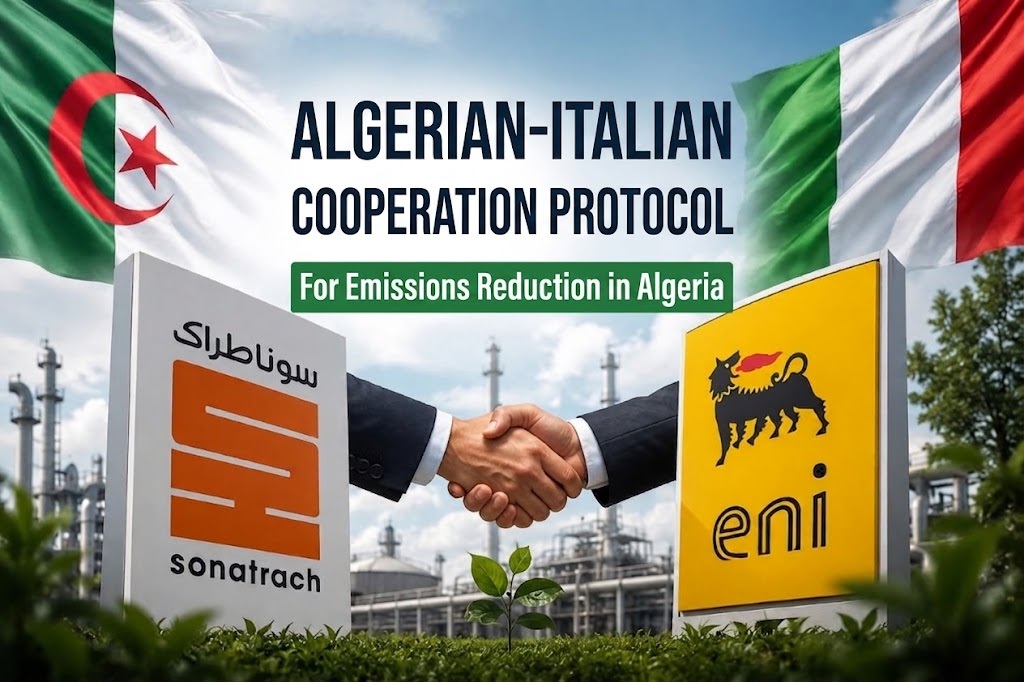
Algeria Gate: Algeria’s state energy group Sonatrach and Italy’s Eni have signed a new memorandum of intent aimed at cutting greenhouse gas emissions, including methane, across Algeria’s oil and gas sector. The agreement targets concrete decarbonization opportunities and initiatives, drawing on international best practices adopted across the global oil and gas industry.

Building on the 2023 Sonatrach-Eni Partnership

According to a Sonatrach statement, the new protocol extends work carried out under a 2023 memorandum of intent between the two companies, which focused on technological cooperation to reduce and make better use of flared gas, along with developing emissions-reduction technologies.

Energy audits and technical assessments carried out under that earlier agreement identified opportunities of mutual interest and paved the way for concrete emissions-reduction measures on the ground.

Joint Emissions-Reduction Initiatives

As part of the ongoing partnership, Sonatrach and Eni carried out a structured program of joint activities, including:

  • Technical analyses of emissions sources
  • Capacity-building initiatives and staff training
  • Field visits to operational sites

Targeted training courses were also developed for immediate rollout, alongside precise technical measures required at individual production sites.

Leak Detection and Repair Campaign Cuts Fugitive Emissions

The implementation of the 2023 memorandum already enabled a joint leak detection and repair (LDAR) campaign, which significantly reduced fugitive methane emissions across shared operations.

Leak detection and repair measurement campaigns are now carried out on a regular, systematic basis at gas complexes jointly operated by Sonatrach and Eni. A baseline emissions assessment has also been completed across six facilities run jointly by the two companies in Algeria.

What the New Protocol Means Going Forward

The newly signed protocol allows Sonatrach and Eni to continue the emissions-reduction work launched in 2023 while exploring new areas for further initiatives. It also strengthens cooperation on natural carbon dioxide capture, including through a dedicated reforestation project, expanding the partnership beyond technical fixes to nature-based climate solutions.

#Algeria#Italy#sonatrach
Author
Lys Iwannughen
View my articles
Algeria
Share this post

Algeria’s Integrated Phosphate Project Reflects President Tebboune’s Planning Capacity and Foresight

Algeria’s Integrated Phosphate Project Reflects President Tebboune’s Planning Capacity and Foresight

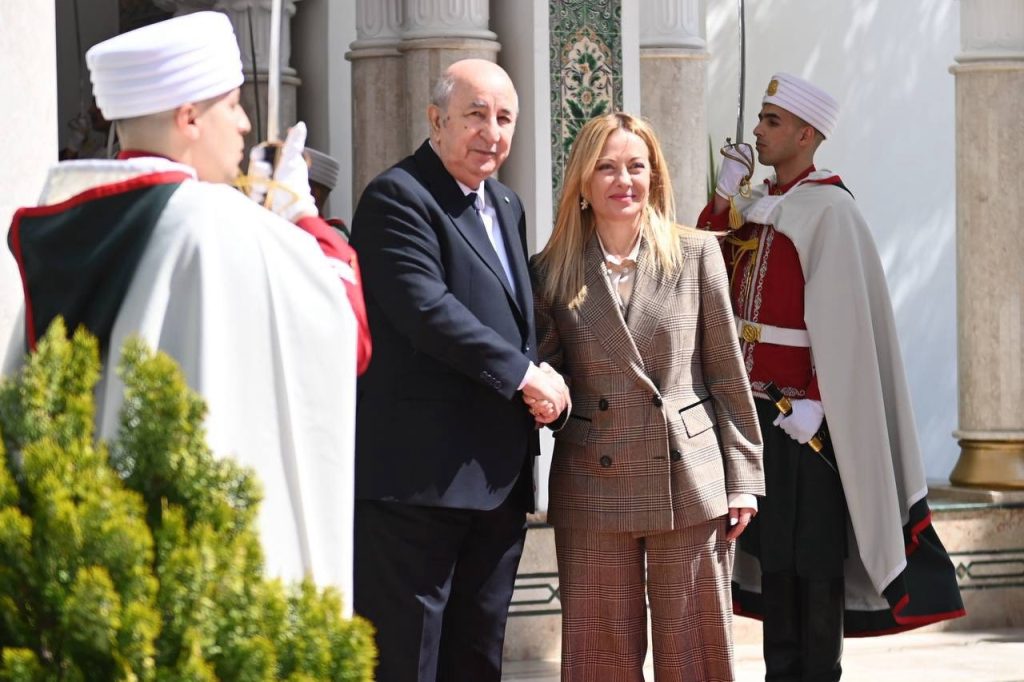
Algeria Gate: Italy’s Ambassador to Algeria, Alessandra Chiavo, has described Algeria’s integrated phosphate project as a highly ambitious and forward-looking initiative that aligns with the goals of Italy’s Mattei Plan. The project aims to build production capacity, transfer expertise, and strengthen the self-sufficiency of an African nation that Italy regards as a priority partner on the continent.

Speaking to the Nova news agency on the sidelines of the launch ceremony for the project’s first phase, in which the Italian energy and engineering company Saipem is participating, Ambassador Chiavo said the initiative reflects the planning capacity and long-term vision of Algerian President Abdelmadjid Tebboune and the Algerian government. She noted, however, that implementation will pose both technological and organizational challenges due to the very short deadlines set for the facilities to enter service.

A Model of Cooperation Beyond Traditional Energy Ties

The Italian diplomat stressed that the integrated phosphate project offers a concrete example of cooperation that goes beyond the conventional framework of energy relations. By establishing a full local industrial chain, the initiative is expected to contribute to Algeria’s economic and social development.

Algeria’s Integrated Phosphate Project Reflects President Tebboune’s Planning Capacity and Foresight

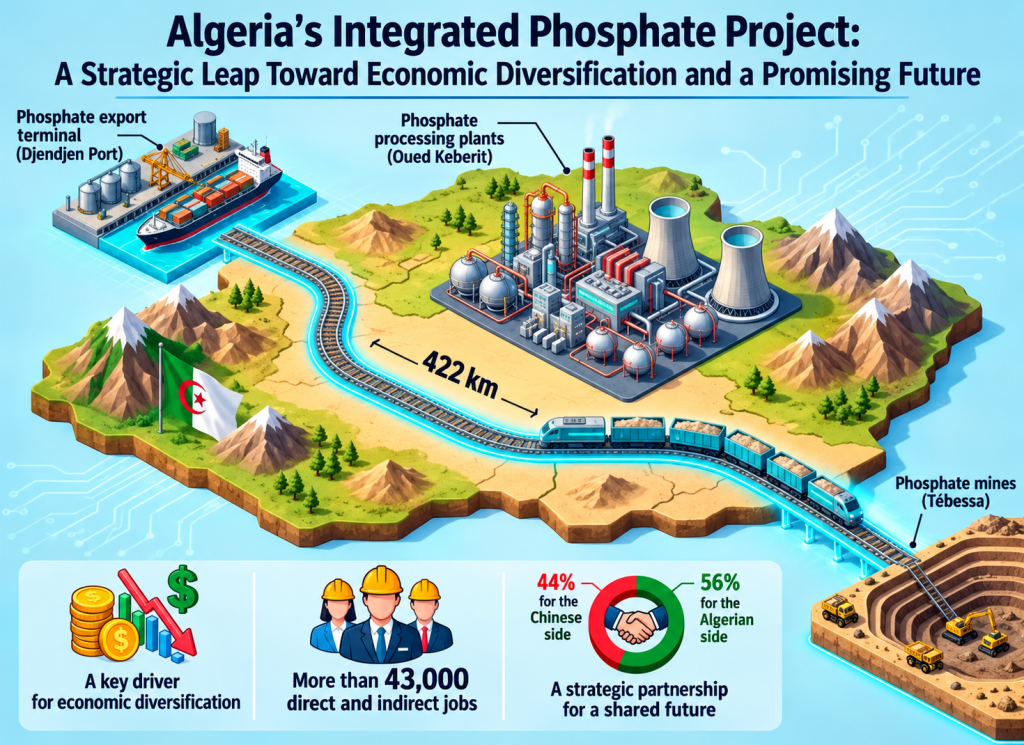
Ambassador Chiavo underlined that the project marks a significant expansion of collaboration between Saipem and Algeria, extending well beyond the hydrocarbons sector. Saipem will help construct the mining and industrial infrastructure required to extract phosphate at Bled El Hadba in Tebessa Province and to process it into fertilizers at Oued El Kebirit in Souk Ahras Province.

Supporting Algeria’s Food Sovereignty Strategy

According to Chiavo, the scale of the operation exceeds its purely mining and industrial value. Converting phosphate into fertilizers fits directly into Algeria’s broader strategy of boosting agricultural production and reducing the country’s vulnerability to international crises.

“A nation’s food sovereignty is its sovereignty in the full sense of the word,” the Ambassador stated. She explained that dependence on imports leaves countries exposed to price volatility, supply-chain disruptions, and shocks caused by global crises.

Algeria’s Integrated Phosphate Project Reflects President Tebboune’s Planning Capacity and Foresight

By developing domestic fertilizer production capacity, Algeria aims to strengthen its agricultural sector and enhance national resilience; objectives that the Italian side views as fully consistent with the Mattei Plan’s emphasis on creating productive capacity and supporting African self-sufficiency.

The launch of the first phase of the integrated phosphate project, with Saipem’s involvement, therefore represents both a strategic industrial investment for Algeria and a tangible step in the evolving economic partnership between Algiers and Rome.

#Algeria#Italy#phosphate
Author
Lys Iwannughen
View my articles