Sunday, 18 October 2026 • 20:52 Algiers time
Algeria Gate
News Room
Cameron Hudson: UAE is virtually the sole backer of the RSF..without its support the war in Sudan would not continue Algeria-Niger: Official launch of Trans-Saharan fibre optic link Five minutes of lament over Algeria: Amar Belani exposes CNEWS’s real obsession Algerian courts hand down first death sentences under new drugs law Ségolène Royal’s masterclass on Algeria against an ignorant and demagogic journalist President Tebboune and senior officials receive the remains of Boualem Boualem in Algiers NAPEC 2026 in Oran: Algeria at the Heart of Africa’s and the Mediterranean’s New Energy Landscape Pegasus Files: Amnesty Uncovers Morocco’s Espionage Against Spain President Tebboune Orders Salary Increases in Algeria’s 2027 Budget, Rules Out New Taxes on Citizens Algeria Emerges as a Trusted Power for Regional Peace and Stability
Share this post

New Investigations Reveal How Moroccan Networks Are Evolving to Flood Europe with Hashish

• Author: Lys Iwannughen • 0 comments • 54 views
New Investigations Reveal How Moroccan Networks Are Evolving to Flood Europe with Hashish

Algeria Gate: Recent criminal and financial investigations in Belgium and Italy have exposed a dangerous shift in the tactics of Moroccan-linked criminal networks involved in hashish trafficking.

These groups no longer confine themselves to smuggling hashish alone; they have refined methods for concealing the drug, moving its proceeds, and have extended their operations into cocaine; a development that highlights the expanding drug trade aimed at saturating European markets with narcotics.

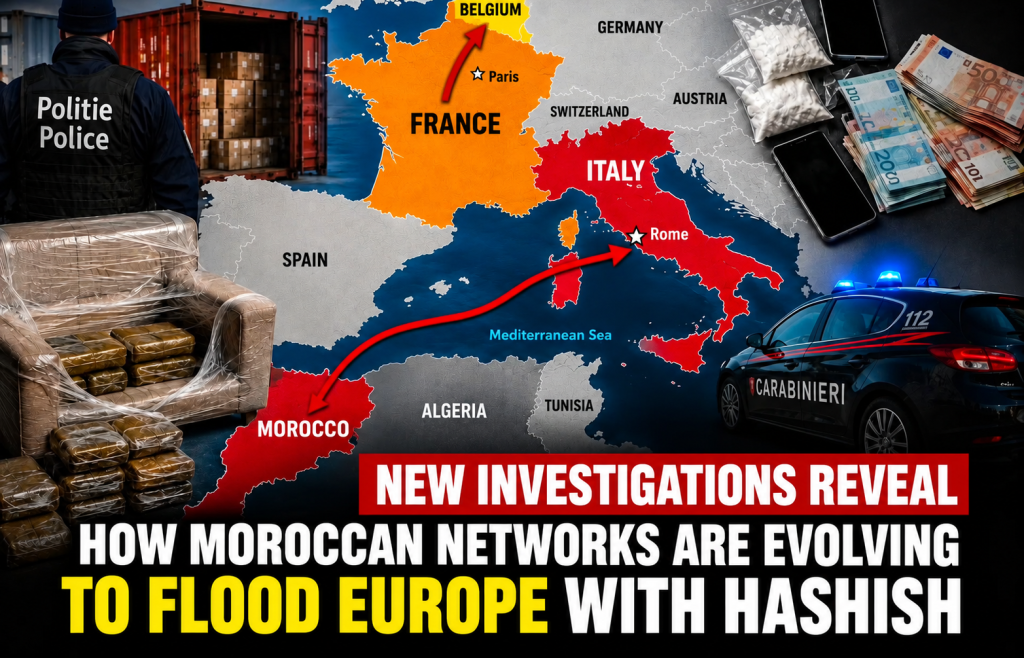
The Antwerp Public Prosecutor’s Office in Belgium revealed in a statement that a furniture store in the Borgerhout area had been sealed under judicial seals. The store was being used to smuggle hashish arriving from Morocco into Belgium. The 61-year-old manager of the store was also arrested in a case combining drug trafficking and financial investigations.

The Antwerp Public Prosecutor’s Office confirmed that the drugs were hidden inside furniture and passed under the cover of commercial activity before the proceeds of this trade returned to Morocco to be reinvested.

The investigations highlighted how the Moroccan hashish trade has transformed from mere smuggling shipments into an integrated system that combines concealment, transport and the reinvestment of proceeds across borders, becoming a tributary of the parallel economy.

For its part, Italian police in the city of Viareggio arrested a 22-year-old Moroccan youth in possession of 19 bags of cocaine, cash sums and two mobile phones.

Italian investigators are analyzing the content of the two phones in order to reconstruct the network of suppliers and customers and identify communications linked to the drug trade. In parallel, they are examining the packaging method of the seized cocaine, which had previously been recovered in another security operation in the western pine forest, providing them with an additional path to determine the links between distribution operations and supply sources.

#Morocco
Author
Lys Iwannughen
View my articles

Leave a comment

Your email address will not be published. Required fields are marked *

Algeria
Share this post

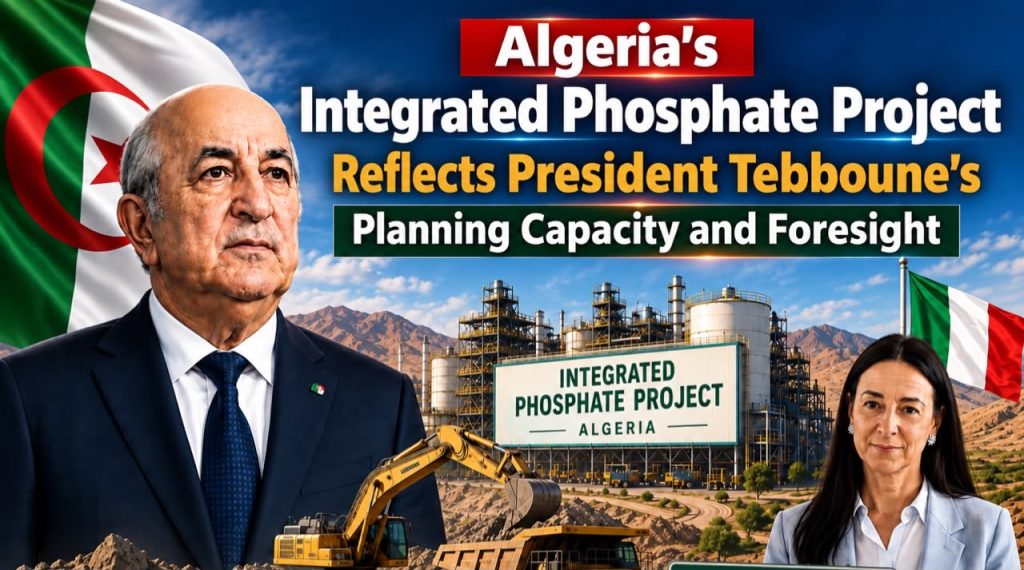
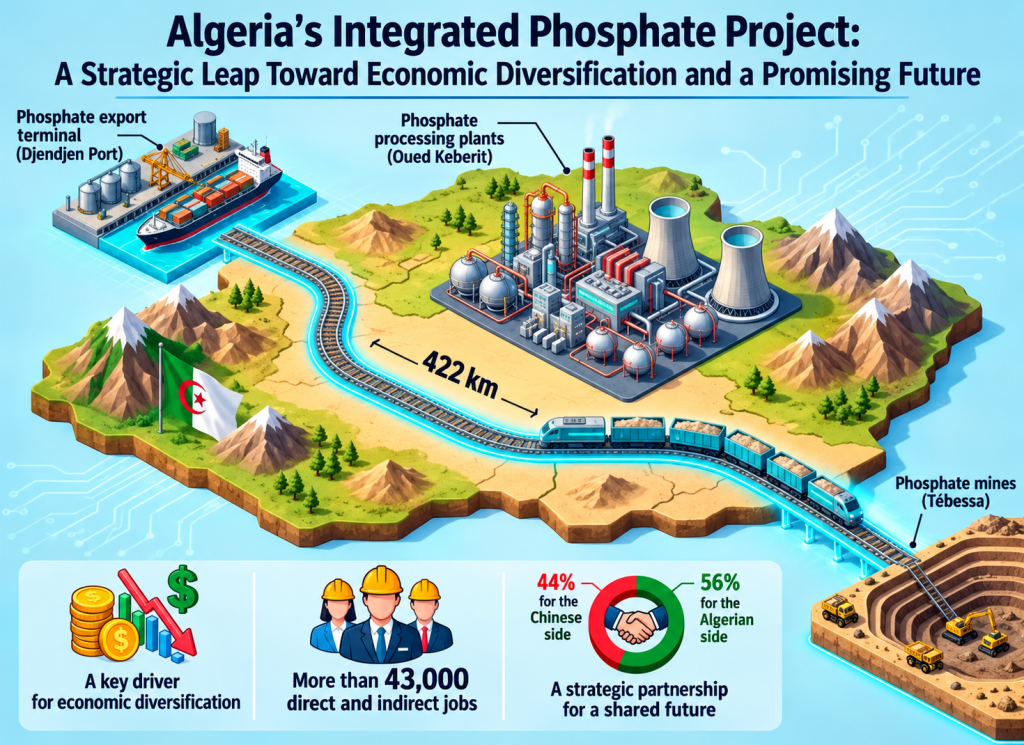
Algeria’s Integrated Phosphate Project Reflects President Tebboune’s Planning Capacity and Foresight

Algeria’s Integrated Phosphate Project Reflects President Tebboune’s Planning Capacity and Foresight

Algeria Gate: Italy’s Ambassador to Algeria, Alessandra Chiavo, has described Algeria’s integrated phosphate project as a highly ambitious and forward-looking initiative that aligns with the goals of Italy’s Mattei Plan. The project aims to build production capacity, transfer expertise, and strengthen the self-sufficiency of an African nation that Italy regards as a priority partner on the continent.

Speaking to the Nova news agency on the sidelines of the launch ceremony for the project’s first phase, in which the Italian energy and engineering company Saipem is participating, Ambassador Chiavo said the initiative reflects the planning capacity and long-term vision of Algerian President Abdelmadjid Tebboune and the Algerian government. She noted, however, that implementation will pose both technological and organizational challenges due to the very short deadlines set for the facilities to enter service.

A Model of Cooperation Beyond Traditional Energy Ties

The Italian diplomat stressed that the integrated phosphate project offers a concrete example of cooperation that goes beyond the conventional framework of energy relations. By establishing a full local industrial chain, the initiative is expected to contribute to Algeria’s economic and social development.

Algeria’s Integrated Phosphate Project Reflects President Tebboune’s Planning Capacity and Foresight

Ambassador Chiavo underlined that the project marks a significant expansion of collaboration between Saipem and Algeria, extending well beyond the hydrocarbons sector. Saipem will help construct the mining and industrial infrastructure required to extract phosphate at Bled El Hadba in Tebessa Province and to process it into fertilizers at Oued El Kebirit in Souk Ahras Province.

Supporting Algeria’s Food Sovereignty Strategy

According to Chiavo, the scale of the operation exceeds its purely mining and industrial value. Converting phosphate into fertilizers fits directly into Algeria’s broader strategy of boosting agricultural production and reducing the country’s vulnerability to international crises.

“A nation’s food sovereignty is its sovereignty in the full sense of the word,” the Ambassador stated. She explained that dependence on imports leaves countries exposed to price volatility, supply-chain disruptions, and shocks caused by global crises.

Algeria’s Integrated Phosphate Project Reflects President Tebboune’s Planning Capacity and Foresight

By developing domestic fertilizer production capacity, Algeria aims to strengthen its agricultural sector and enhance national resilience; objectives that the Italian side views as fully consistent with the Mattei Plan’s emphasis on creating productive capacity and supporting African self-sufficiency.

The launch of the first phase of the integrated phosphate project, with Saipem’s involvement, therefore represents both a strategic industrial investment for Algeria and a tangible step in the evolving economic partnership between Algiers and Rome.

#Algeria#Italy#phosphate
Author
Lys Iwannughen
View my articles
Europe
Share this post

Iran Accuses France of Hypocrisy Over Human Rights Stance

Iran Accuses France of Hypocrisy Over Human Rights Stance

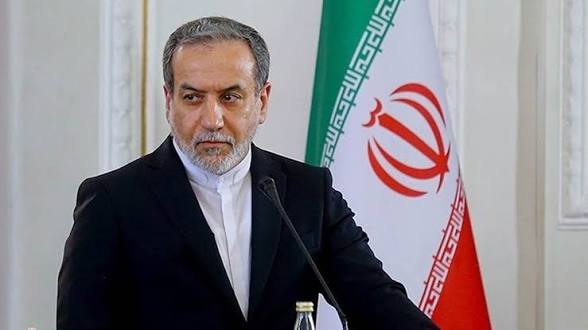
Algerie Gate: Iran has intensified its rhetorical offensive against France, branding Paris’s position on Iranian death sentences as “blatant hypocrisy” amid ongoing tensions over human rights and French policy toward Tehran.

Iranian Foreign Minister Abbas Araghchi said France lacked the moral authority to lecture Tehran on these issues. The comments came in response to French criticism of death sentences imposed on protesters in Iran. Paris had described the executions as a dangerous escalation and a form of repression against the opposition.

Iran Accuses France of Hypocrisy Over Human Rights Stance

Tehran’s response went further. Araghchi linked France’s position to what Iran regards as Paris’s bias toward Israel, particularly in the context of the war in Gaza and recent regional military developments. He argued that these stances had undermined France’s credibility when speaking about human rights and international law.

The exchange reflects broader and growing tensions between the two countries in recent months. These include disputes over French nationals detained in Iran, mutual accusations of espionage, disagreements over regional policy, and Iran’s nuclear program.

What began as a disagreement over executions and human rights has expanded into a wider political confrontation touching on double standards, international law, the conflict in the Middle East, and France’s role in the region.

#France#Iran
Author
Lys Iwannughen
View my articles
Europe
Share this post

Moroccan Nationals Linked to Criminal Network Laundering €8.6 Million in Cocaine Proceeds in Spain

Moroccan Nationals Linked to Criminal Network Laundering €8.6 Million in Cocaine Proceeds in Spain

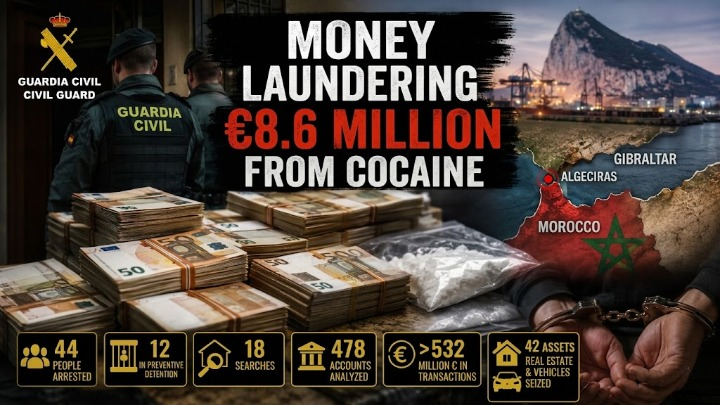
Algeria Gate/Agencies: Spanish authorities in Algeciras have dismantled a major criminal network accused of laundering €8.6 million in proceeds from cocaine trafficking, in an operation that uncovered the involvement of Moroccan nationals in a transnational drug-trafficking and money-laundering network.

Spanish Authorities Dismantle Cocaine Money-Laundering Network

The Spanish Civil Guard, in coordination with the European Union Agency for Law Enforcement Cooperation (Europol), dismantled the network as part of Operation Omnis, according to Spanish media reports.

The operation led to the arrest of 44 people, with 12 placed in pretrial detention. Authorities also carried out 18 searches across several Spanish provinces as part of the investigation into the criminal organization.

Investigators say the network was involved not only in international cocaine trafficking but also in sophisticated methods designed to conceal and launder the proceeds generated by the drug trade.

Shell Companies Used to Hide Cocaine Proceeds

According to investigators, money generated through international cocaine trafficking was moved through shell companies with little or no genuine commercial activity.

Some of these companies reportedly had no employees or actual business premises. The organization also allegedly relied on fragmented bank transfers, unpaid loans and international financial transactions that lacked a clear commercial purpose.

These methods were reportedly designed to obscure the criminal origin of the money and introduce drug proceeds into the legitimate financial system.

More Than €3 Million Used for Judicial Bail

The investigation also uncovered the use of drug-trafficking proceeds to finance the legal defense of members of the criminal organization.

Investigators identified more than €3 million allegedly allocated to pay judicial bail for members of the network. The funds were reportedly moved between different companies through fictitious transactions before reaching the accounts used to pay the bail.

This allowed proceeds allegedly generated through drug trafficking to be used to secure the release of suspects from prison.

Investigators Examined 478 Bank Accounts

Spanish authorities significantly expanded the financial investigation as they traced the movement of the suspected illicit funds.

Investigators analyzed 478 bank accounts and more than 228,000 financial transactions conducted between 2022 and 2024. The transactions had a combined value of more than €532 million.

Authorities also froze the bank accounts of 32 individuals and 26 companies. In addition, they seized 42 properties and 17 vehicles allegedly connected to the criminal network.

Previous Operations Targeted the Same Organization

Operation Omnis follows several earlier investigations into the same criminal organization.

In 2021, Operation Gimeta resulted in the arrest of 29 people and the seizure of 1.6 tonnes of cocaine and €16.5 million.

A separate operation in 2024 uncovered five alleged attempts to smuggle approximately 3.4 tonnes of cocaine through the Port of Algeciras, one of Spain’s most strategically important gateways for international maritime trade.

Moroccan Nationals and Cross-Border Drug Trafficking

The reported involvement of Moroccan nationals adds another dimension to the investigation into drug trafficking and money laundering networks operating between North Africa and Europe.

Southern Spain’s geographic position makes it a key area in investigations into drug trafficking between Morocco and Europe. The Strait of Gibraltar separates southern Spain from Morocco’s northern coast, creating a relatively short maritime corridor between the two regions.

European authorities have repeatedly investigated transnational networks involved in trafficking different types of drugs, including hashish and cocaine, as well as the subsequent laundering of criminal proceeds.

A Criminal Network Extending Beyond Drug Smuggling

The Algeciras investigation illustrates how modern drug-trafficking organizations can operate beyond the physical movement of narcotics.

According to investigators, the network allegedly combined cocaine trafficking, financial concealment, shell companies, suspicious bank transactions and money laundering in an effort to legitimize illicit proceeds.

The case therefore highlights the increasingly complex financial structures used by transnational criminal organizations to conceal drug profits and reinvest them through the legitimate economy.

#Morocco#Spain
Author
Lys Iwannughen
View my articles