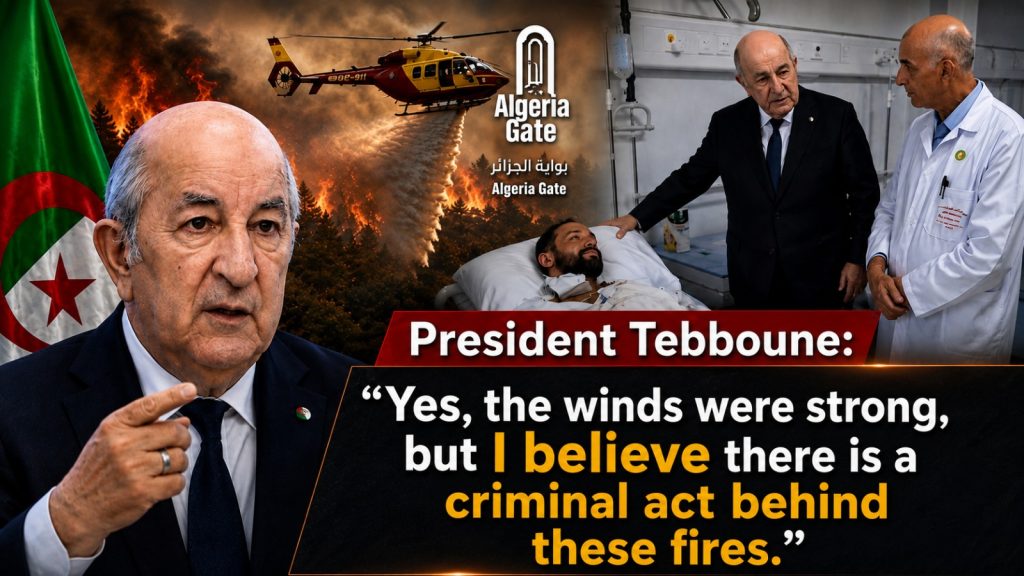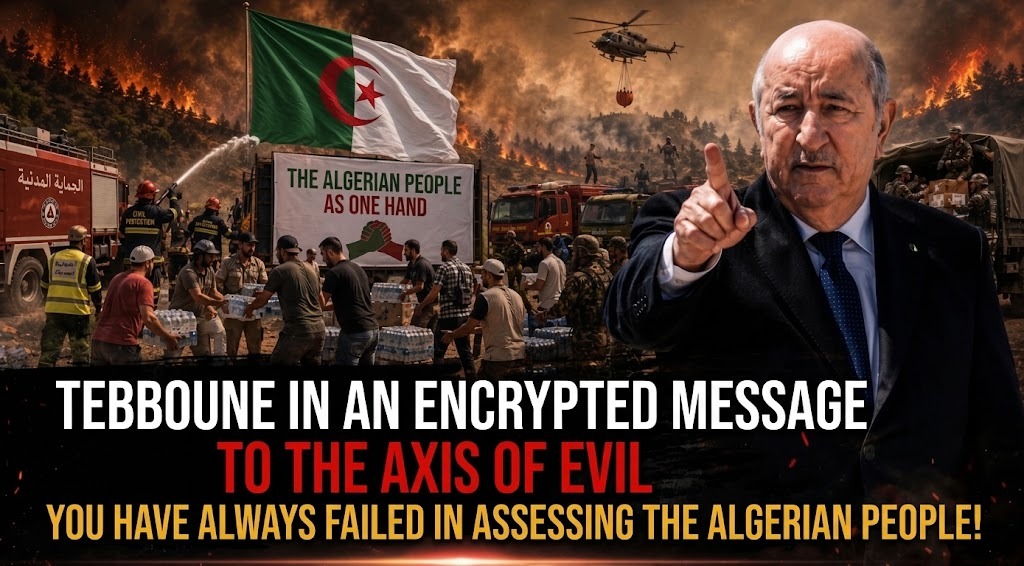
Algeria Gate: President of the Republic, Abdelmadjid Tebboune, summed up, in a single sentence, the secret behind the failure of all bets aimed at destabilizing Algeria: “All their analyses about Algeria are wrong.” His words, delivered while visiting victims of the forest fires, were not merely a description of a passing ordeal. They constituted a direct political message to all those who confuse pain with weakness and who gamble on turning natural disasters into a gateway for striking the internal front.
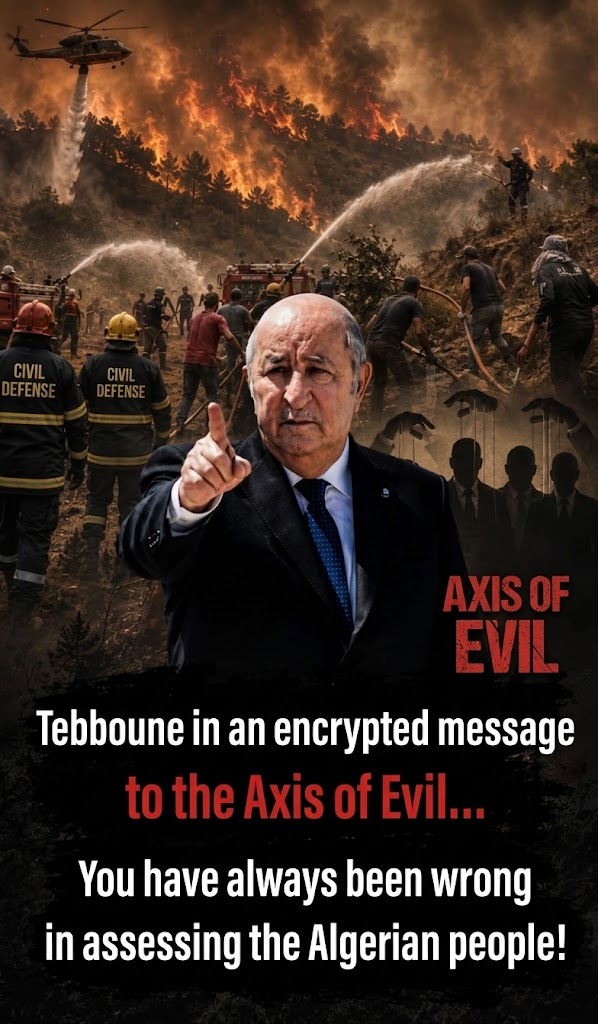
President Tebboune’s statement that those who had wagered on a different reaction from the Algerian people “do not know them” and have long been mistaken was not merely a mobilizing speech detached from reality. He was describing a recurring scene in every crisis: when danger intensifies, disagreements fade, and citizens close ranks with their state institutions in a single front.
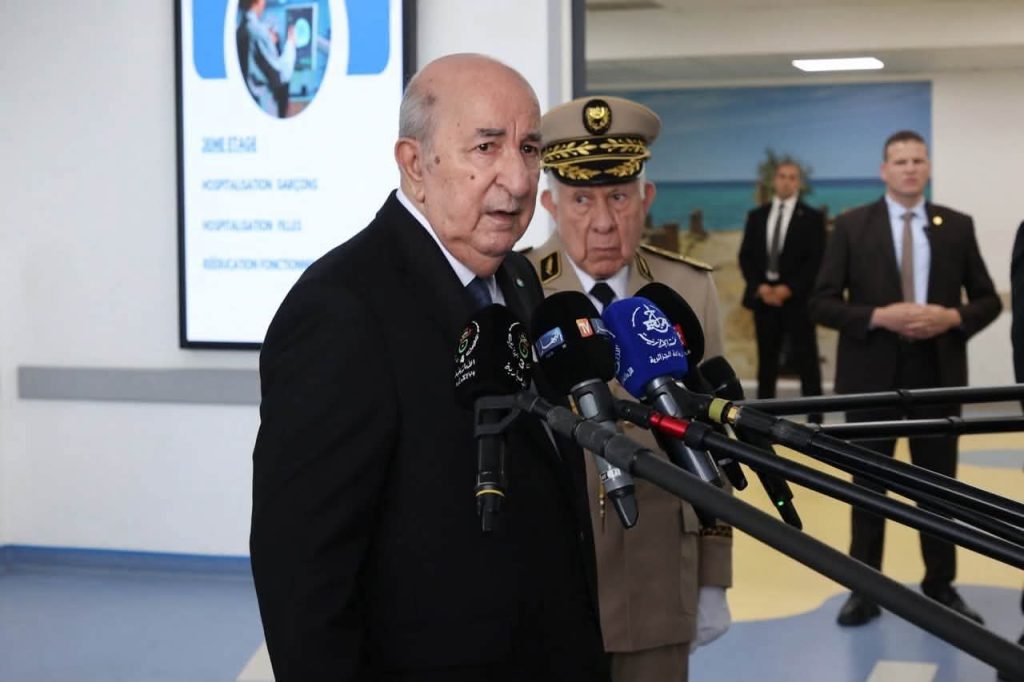
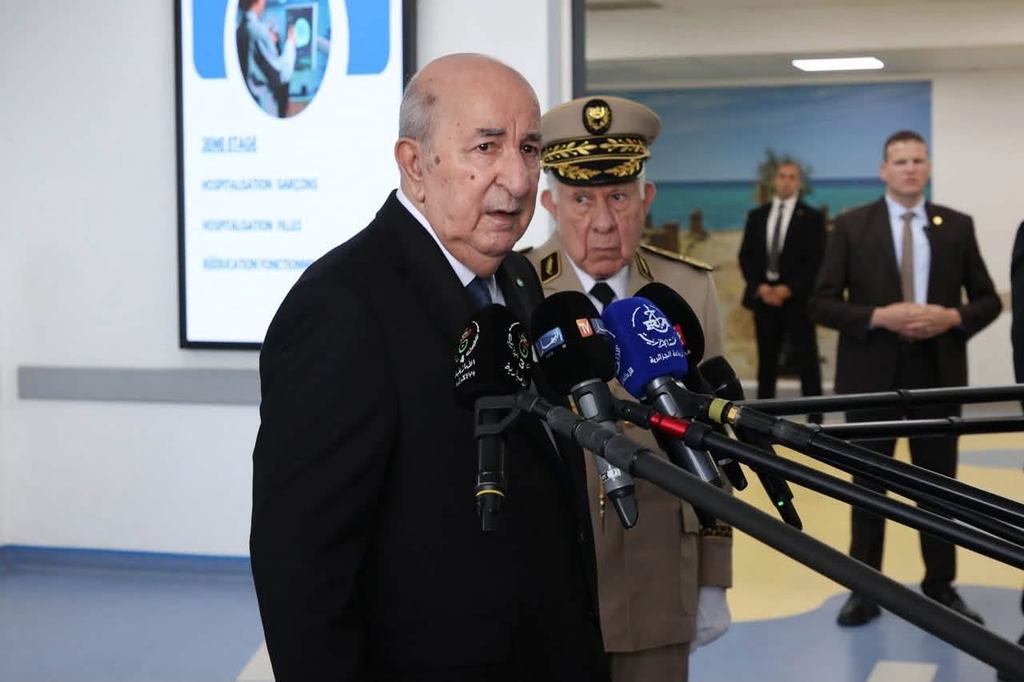
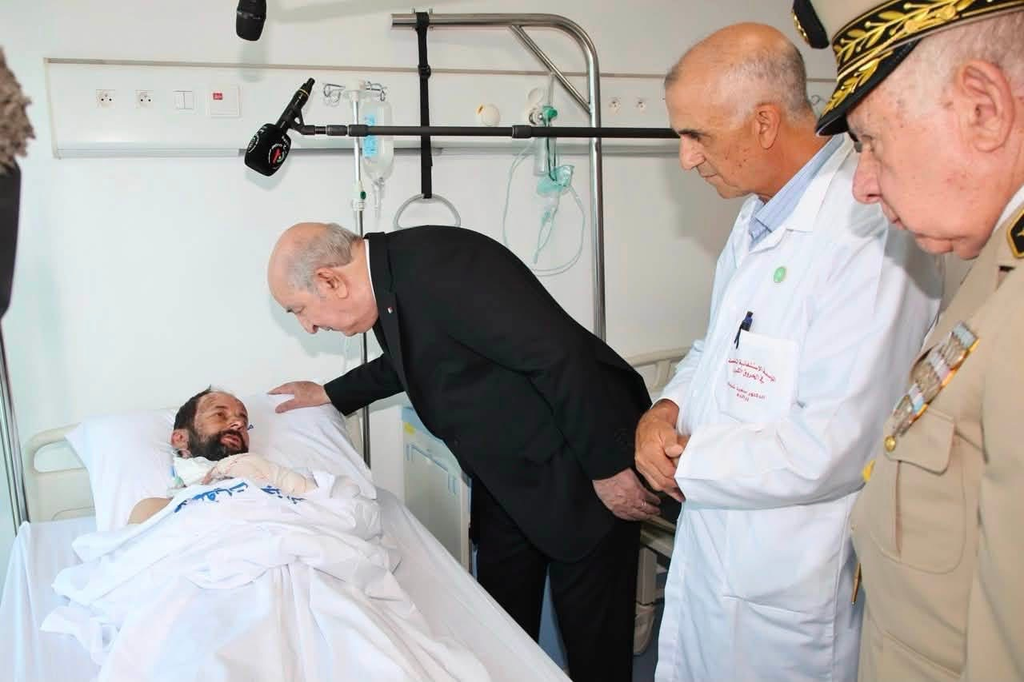
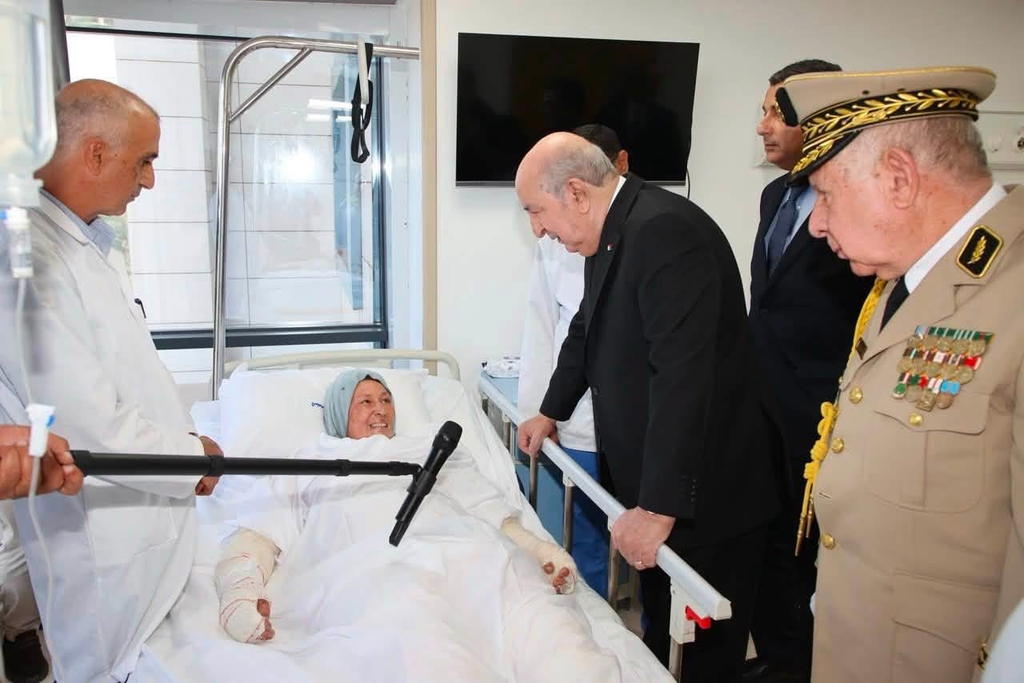
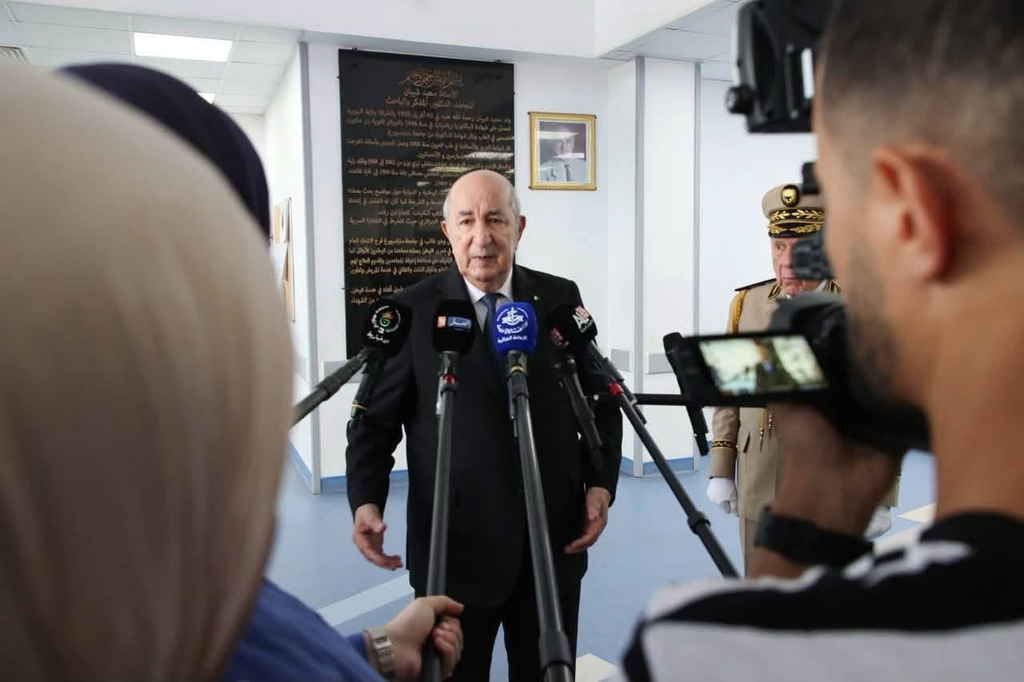
The message came from the Major Burns Hospital “Dr. Said Chibane” in Zeralda, where the President of the Republic, on Saturday, Agust 29th 2026, visited the injured who had been evacuated from the provinces affected by the recent fires. The visit carried both a direct humanitarian dimension and sovereign messages that went far beyond the walls of the medical institution.
When the Popular Uprising Becomes a Strategic Force
President Tebboune affirmed that Algeria’s consolation lies in the solidarity of its citizens, considering that the popular mobilization fills one with pride and attachment to the homeland. This statement reveals a profound understanding of the value of solidarity as more than temporary sympathy with the victims. It is a strategic asset that strengthens the resilience of the state and society and prevents tragedy from turning into unrest or strife.
The internal front is not measured solely by the capacity of agencies to intervene, but by the degree of trust that binds society to its institutions at the moment of danger. In Algeria, hardships reproduce a national scene that adversaries find difficult to understand: a people who may differ on details, yet know when to close ranks, protect their state, and support their army, civil protection, and medical teams.
https://algatedz.dz/en/president-tebboune-praises-the-popular-solidarity-surge/: President Tebboune in an Encrypted Message to the Axis of Evil… You Have Always Misjudged the Algerian People!This is the recurring miscalculation of those lying in wait. They mistake internal debate for division, treat criticism as weakness, and assume that crisis can sever the bond between Algerians and their state. Yet at every test they discover that external danger or a collective threat reactivates the full weight of national memory and turns solidarity into a political and social bulwark.
Thus the President’s phrase “You have been mistaken for a long time” amounted to a verdict on an entire school of failed analyses of Algeria; analyses whose titles may change, yet whose essence stays the same: underestimating the people’s steadfastness, misjudging the strength of the state, and failing to grasp the historical relationship between the Algerian, their land, and their sovereignty.
Field Leadership and a State That Does Not Abandon Its Citizens
President Tebboune’s presence among the injured gave the visit its deepest meaning. A strong state is not one that speaks from offices when hardship strikes, but one whose leadership is present where the human cost is paid, reassures the injured, listens to the medical teams, and assesses the quality of care on the ground.
This reflects a style of leadership that President Tebboune has established: demonstrating the state’s responsibility at the most sensitive moments and linking political decisions to the human being they are meant to serve. Sovereignty is not merely borders and international positions; it is also the state’s ability to evacuate the injured, mobilize its institutions, and ensure specialized treatment inside the country.
The President’s praise for the military institution, civil protection, and the health sector was an acknowledgment of the field performance of a national system that confronted extremely difficult conditions. The People’s National Army was, as the President of the Republic affirmed, present in the hardships; civil protection provided a model of sacrifice and professionalism; and health institutions took charge of the injured within specialized national capacities.
This integration between leadership, institutions, and citizens is what gives Algeria its true strength. No institution can manage a large-scale disaster alone; popular mobilization is insufficient without state organization; and decisions achieve nothing if societal trust is absent. When the three parties move in the same direction, the crisis loses its capacity to become a threat to national stability.
An Algeria That Learns from Every Blow
President Tebboune’s statement “Every blow we receive, we learn a lesson from it” carries special importance because it shifts the handling of disasters from a logic of reaction to a culture of accumulating experience.
States are not measured by their immunity to crises, but by the speed of their response, the efficiency of their coordination, and their ability to turn painful experience into a more prepared system. The Major Burns Hospital in Zeralda represents, in this regard, one of the tools of health sovereignty that allows complex cases to be treated inside Algeria, thereby saving critical time in saving lives and reducing the need for treatment abroad.
Evacuation, health mobilization, the deployment of army and civil protection units, and citizens’ response all show that Algeria no longer treats fires as limited seasonal incidents, but as a complex risk requiring prevention, foresight, and aerial, ground, and medical readiness.
Climate change, intensifying heatwaves, and high wind speeds impose continuous updating of prevention plans, strengthening of early warning, expansion of monitoring operations, and improved management of forest cover, tracks, and water points. Wisdom here does not lie in claiming the ability to prevent every fire, but in building a state capable of reducing losses, moving quickly, and then reviewing its performance after every crisis.
The Criminal Hand… Investigation Separates Suspicion from Truth
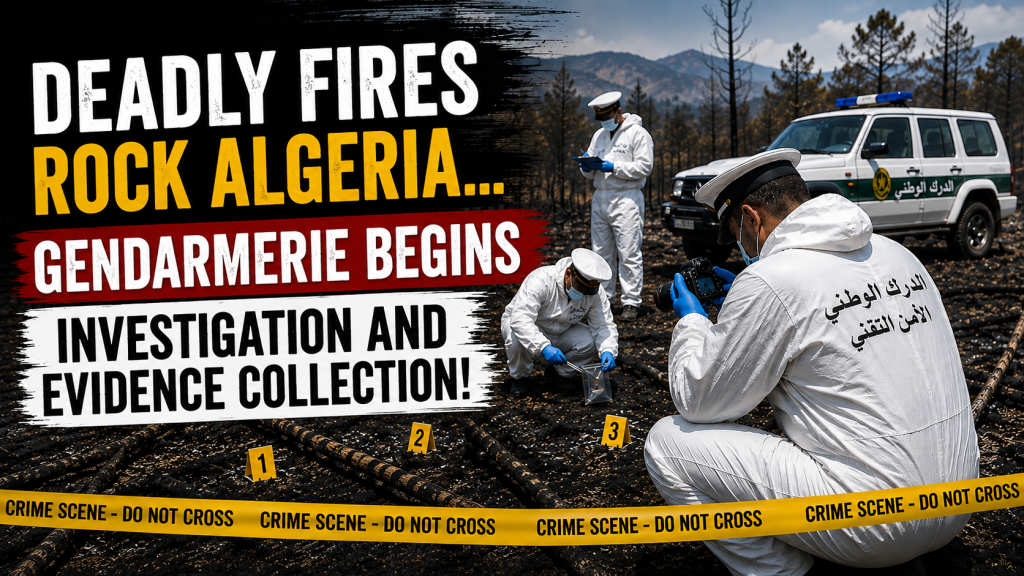
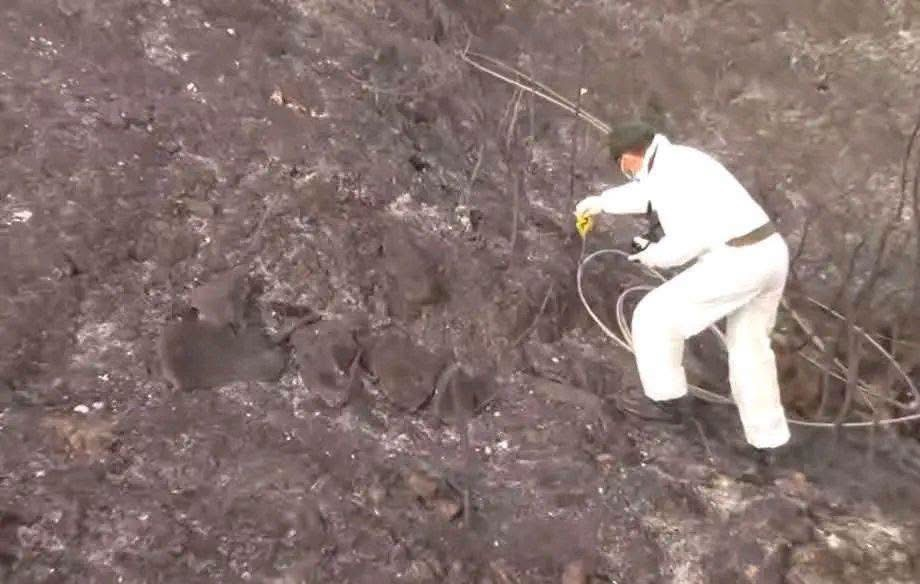
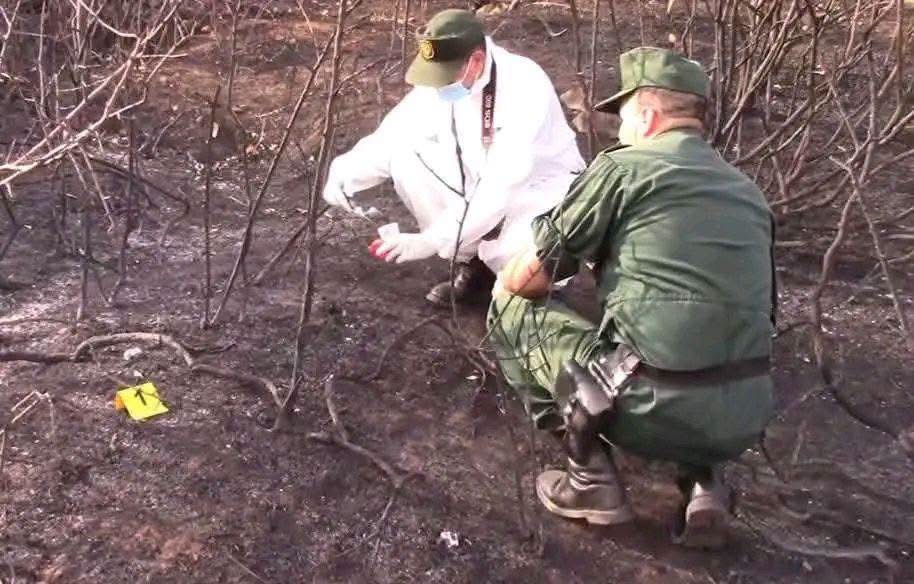
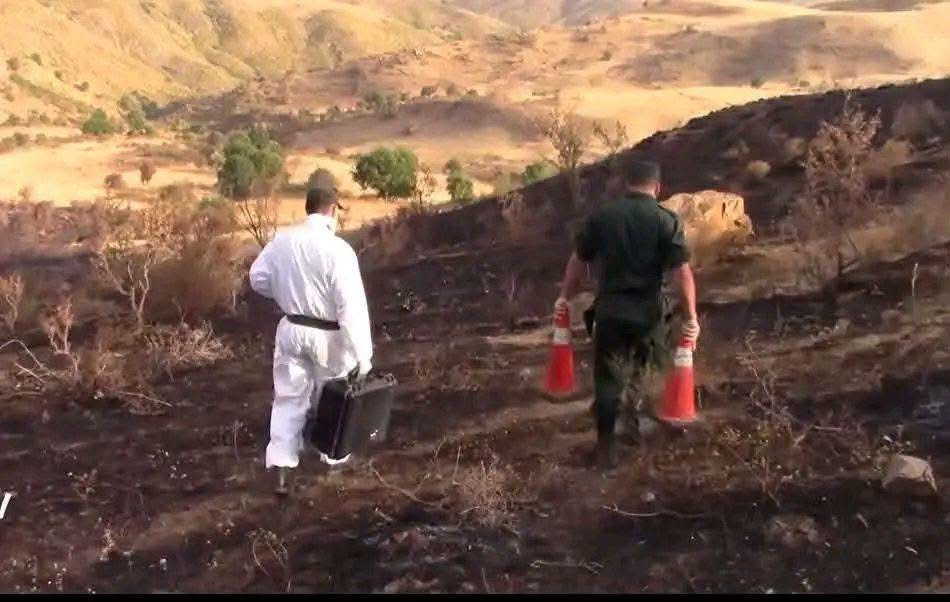
The President acknowledged the harsh natural conditions that accompanied the fires, including winds exceeding 100 kilometers per hour, yet he did not rule out the possibility of a criminal hand, stressing the need for investigation and inquiry to identify those responsible for the tragedies.
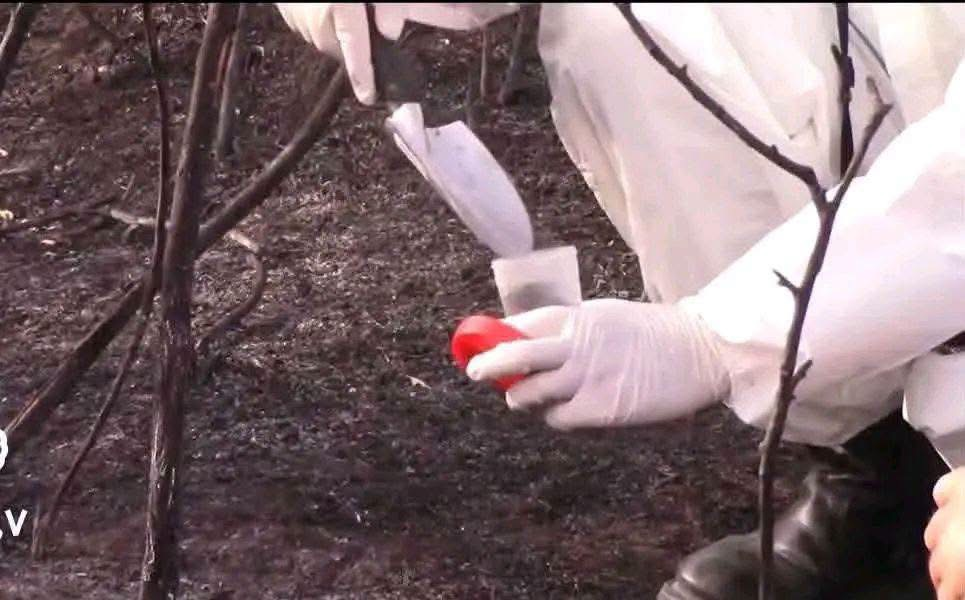
This balance is important professionally and institutionally. Climatic conditions may explain the speed and extent of the fire’s spread, but they do not preclude investigation into the causes of ignition. At the same time, describing any fire as deliberate remains tied to the evidence gathered by the competent agencies and the conclusions of the investigations, not to mere suspicion.
If investigations establish criminal action, it will not be an attack on trees alone, but a targeting of lives, property, and public security. Strict accountability will then become necessary to protect society and deter anyone who imagines that forests can be turned into a weapon against the country’s stability.
The Message Has Been Received: Algeria Does Not Burn from Within
President Tebboune’s message was not so much encrypted as it was clear to those concerned: whoever bets on hardship to unsettle Algeria does not know Algeria; whoever interprets pain as weakness has not read the history of its people; and whoever waits for the flames to turn into strife will find before him a mobilized state, a people united in solidarity, and institutions fighting to save every life.
The strength of the President’s discourse lies in the fact that he did not merely condemn those who wish the country harm, but placed before them the field evidence of the failure of their bet: an army performing its duty, civil protection confronting the flames, a health sector caring for the victims, and citizens spontaneously moving to support one another.
This is the Algeria that has turned its harsh experiences into a vigilant memory, losses into lessons, and solidarity into a national force that does not appear in statistics yet is powerfully present at the hour of danger.
As for those who bet every time on Algeria’s collapse, President Tebboune summarized the answer for them: revise your calculations; you have always misjudged the Algerian people, and you still do not know them.