Friday, 6 November 2026 • 19:49 Algiers time
Algeria Gate
Share this post

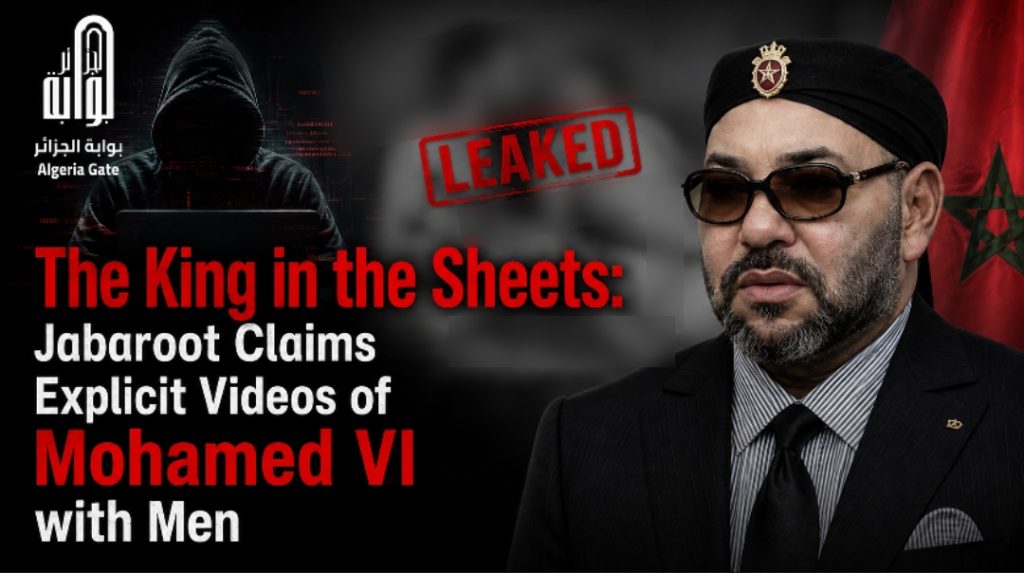
The King in the Sheets: Jabaroot Claims Explicit Videos of Mohamed VI with Men

• Author: Lys Iwannughen • 0 comments • 152 views
The King in the Sheets: Jabaroot Claims Explicit Videos of Mohamed VI with Men

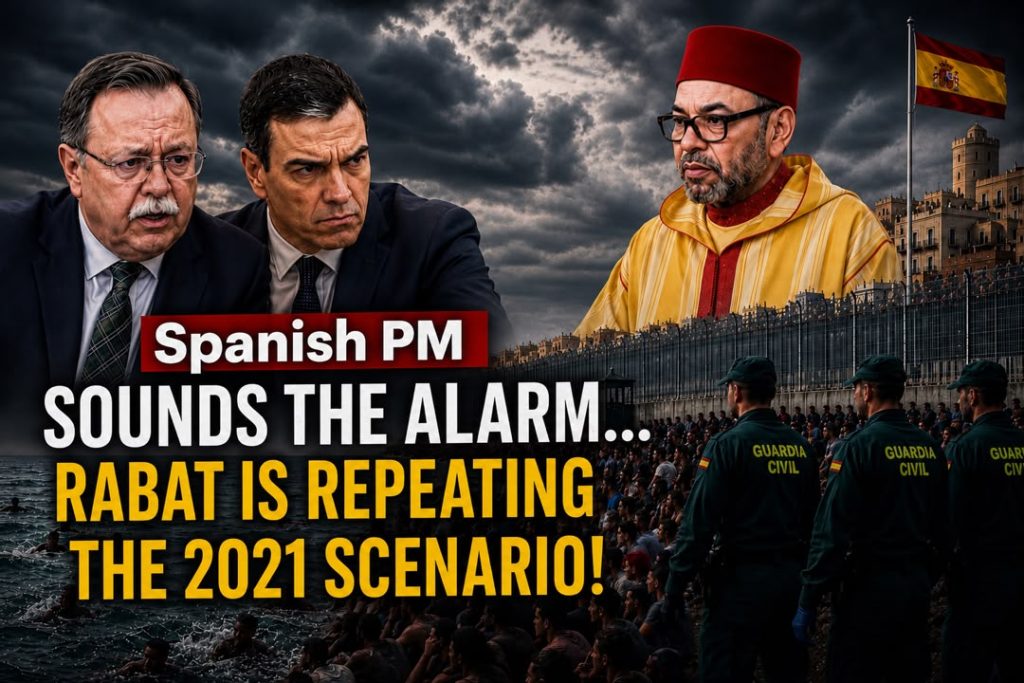
Algeria Gate: The shadowy hacker collective known as Jabaroot has thrown Moroccan intelligence into disarray and dangled the threat of exposing Pegasus spyware data stolen from Spanish Prime Minister Pedro Sánchez. But make no mistake: Sánchez is merely collateral. The true target is the Alawite monarch; King Mohamed VI.

In the past week, Jabaroot has dominated headlines after dumping a list of 70,000 alleged collaborators with the Moroccan secret services. Among the names were Spanish residents, including a former PSOE deputy and a CCOO trade unionist. The group then upped the pressure by threatening to release the sensitive material Morocco allegedly extracted from Sánchez’s phone using the Israeli spyware Pegasus; files that many believe explain Madrid’s consistently submissive posture toward Rabat.

Yet according to sources familiar with the operation, the Spanish prime minister is not the prize. Publishing the Pegasus haul would certainly detonate a political bomb in Spain. Jabaroot’s real ambition is far more personal and far more damaging: to strike at the carefully constructed image of Mohamed VI and the entire Alawite monarchy.

Exposing the King’s Private Life

Some analysts tie Jabaroot to Algeria. Others insist the group is made up of Moroccan defectors who have finally turned on the Makhzen. Their strategy is unmistakable. They are preparing to weaponize the monarchy’s most closely guarded secrets.

Moroccan opposition sources claim Jabaroot is in possession of videos that allegedly capture the king in highly compromising situations. One description making the rounds is particularly damning: “A video of a beautiful bed in Paris with the king flanked by two men between the sheets.”

The same sources assert that the group also holds proof that Mohamed VI is not the biological father of Crown Prince Moulay Hassan. This explosive claim was first raised by Abdelilah Issou, a former Moroccan officer now living in exile in Spain. Issou told ESdiario he possessed images of the prince’s real father and intended to publish both the man’s identity and photograph.

Issou has now gone further, confirming Jabaroot’s intentions in clear terms. The collective, he said, “possesses videos that show Mohamed VI having sexual relations with men, and it is planned to publish them; but not in the near future.”

The Monarchy’s Biggest Nightmare

While the threat of releasing Sánchez’s stolen data still hangs in the air, Jabaroot’s focus has clearly shifted to a far more valuable target. For decades the Alawite regime has protected the king’s private life with iron discipline. Whispers about wild parties in Paris and persistent questions surrounding his sexuality have never been allowed to surface in official channels.

That wall of silence is now under direct assault.

Pedro Sánchez can breathe a little easier. The hackers have bigger game in their sights. The Spanish prime minister may yet avoid the full force of the Pegasus leak. Mohamed VI, however, is facing a far more intimate and potentially catastrophic exposure; one that strikes at the very foundations of the image the Makhzen has spent generations constructing.


#Spain
Author
Lys Iwannughen
View my articles

Leave a comment

Your email address will not be published. Required fields are marked *

Algeria
Share this post

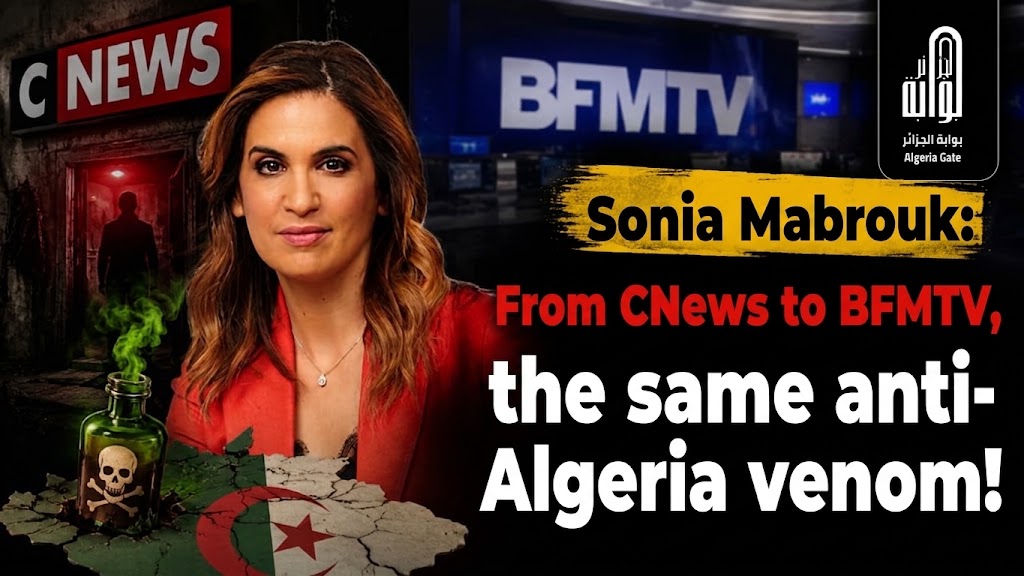
Sonia Mabrouk: From CNews to BFMTV, the same anti-Algeria venom!

Sonia Mabrouk: From CNews to BFMTV, the same anti-Algeria venom!

Algeria Gate: Sonia Mabrouk did not need long to prove that switching from CNews to BFMTV only changed the studio address. The compass of her discourse on Algeria remained exactly the same. From her first appearance on the new channel, the Franco-Tunisian journalist slipped back into the familiar register that reduces Algeria to a permanent, ready-made adversary; summoned whenever needed, accused before the facts are even examined.

Former Algerian diplomat Amar Belani did not let this professional freefall pass. He dismantled Mabrouk’s method and concluded that her bias is no longer a debatable editorial choice. It has hardened into a fixed approach: blame Algeria first, insert it systematically into a charged political narrative, and, when convenient, recycle false claims without hesitation.

Belani’s intervention comes as Mabrouk launches her daily programme 100% Mabrouk on BFMTV, occupying the prime 18:50–21:00 slot five evenings a week. Le Monde called the hire a costly gamble to claw back audience share ahead of the 2027 presidential election. Two full hours in one of French television’s most influential windows is not a journalistic assignment; it is a political investment.

The real problem, Belani stresses, is not a journalist changing channels. It is the cargo she brought with her: a discourse that treats Algeria as electoral raw material and as an external enemy useful for stirring the French right whenever ratings or a political deadline demand it. “Her bias, like that of several figures manufactured inside CNews, is no longer merely an editorial orientation; it has become a fixed method,” Belani observed. As the presidential race draws nearer, the timing of this discourse becomes even more revealing. Algeria is never invited onto these sets to explain its positions or to illuminate the complexity of bilateral relations. It is wheeled out as the permanent televisual villain, already guilty before the first question is asked.

Belani goes straight to the core: is this still journalism, or has it become “permanent score-settling”? Real journalism starts with facts, balances evidence, grants the right of reply, and keeps preconceived verdicts out of the studio. Turning Algeria into a standing defendant and building every exchange on accusatory premises is not investigation. It is the deliberate manufacture of public prejudice.

Mabrouk left CNews and Europe 1 in February 2026, yet she arrived at BFMTV carrying more than a decade of baggage accumulated inside Vincent Bolloré’s media empire. Even before her programme went on air, the Association of BFMTV Journalists publicly reminded management that the channel is supposed to rest on “facts and field reporting before opinions,” and that independence, neutrality and non-partisan treatment of information are non-negotiable. French journalists themselves sounded the alarm about the risk of importing CNews-style polarisation. The speed with which Mabrouk returned to targeting Algeria shows that a change of logo was never going to produce a change of method.

Her formal exit from CNews has not severed her ties to the Bolloré cultural sphere either. Since 2025 she has directed the “Pensée libre” imprint at Fayar; another Bolloré asset that has become a preferred publishing platform for figures of the French right and far right, from Jordan Bardella and Philippe de Villiers to Éric Ciotti and Alain de Benoist. These connections do not automatically falsify every word she utters, but they destroy any pretence of neutral arrival on BFMTV. Professionalism demands a clear line between news and personal conviction. Mabrouk’s relentless drive to drag Algeria into the dock proves that the conviction was already written before the questions began.

This style of discourse intensifies as presidential elections approach. Rather than hold French politicians accountable for economic and social failure at home, it is cheaper and more rewarding to hunt for an external scapegoat. Algeria fits the role perfectly in the right-wing imagination: immigration, memory, visas, security, the diaspora, sovereignty; every file is twisted until Algeria appears as the origin of the problem, no matter how much more complicated the reality is.

The political interview is thereby emptied of its proper function. Instead of interrogating French power, the studio becomes a stage for recycling an unresolved colonial complex. Independent, sovereign Algeria refuses the role of a former colony still expected to take orders from Paris. When it rejects that subordinate status, the microphone becomes a weapon of media punishment.

The contradiction is glaring. Mabrouk waves the banner of French sovereignty while bristling at Algerian sovereignty. She demands protection of French national interests while treating Algeria’s defence of its own interests as provocation. She celebrates independent decision-making in Paris yet expects Algiers to accept the place of the obedient junior partner. These are not mere double standards. They are the residual reflexes of a colonial mindset that regards sovereignty as a French privilege and any Algerian exercise of it as unacceptable insolence.
Algeria requires neither a certificate of good behaviour from Sonia Mabrouk nor a green light from BFMTV to defend its interests, its memory, its diaspora or its national choices. President Abdelmadjid Tebboune is not measured by the approval of Parisian studios. He is measured by his capacity to protect Algerian sovereignty and to conduct a balanced relationship with France; free of both the coloniser’s nostalgia and the former colonised’s submission.

Belani therefore places the issue in its proper frame. The objection is not to a French journalist’s right to criticise Algeria. It is to the conversion of criticism into a machine of permanent accusation, of questioning into a pre-arranged trial, of opinion into manufactured news, and of Algeria into an electoral scapegoat. A journalist may ask the hardest questions. The moment she decides the answers in advance and only invites the guest to decorate a ready-made verdict, she ceases to practise journalism.

BFMTV, having bet on Mabrouk to recover its audience before 2027, now faces an early test. Either it defends its declared commitment to facts and neutrality, or it allows a second CNews to take root inside its own studios. A channel can purchase a name and hand it two hours every evening. It cannot purchase credibility once an entire country is reduced to cheap fuel in the war for ratings.

When a nation becomes a regular target of suspicion and blame, when its president is dragged into French domestic quarrels that have nothing to do with the questions on the table, and when condemnation systematically replaces proof, this is no longer “combative journalism.” It is political activism wearing a television mask, packaging prejudice as news.

Belani’s verdict is final: “As for journalism in its professional sense, it does not appear to have much connection with this approach.” That single sentence captures the entire problem. The issue is not the sharpness of the question. It is the total absence of distance between the journalist and her hostility, between information and campaign, between the screen and the score-settling. Sonia Mabrouk has changed channels. Her discourse on Algeria remains locked inside the Bolloré studios; same accusations, same designated enemy, same confusion between journalism and political vendetta.

#Algeria#France
Author
Lys Iwannughen
View my articles
Hebrew press
Share this post

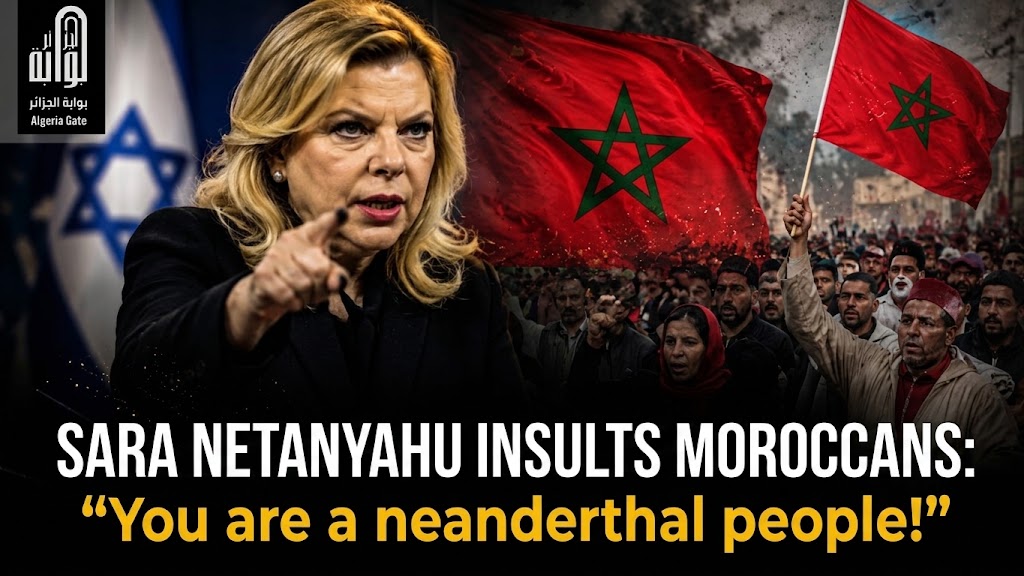
Sara Netanyahu insults Moroccans: “You are a neanderthal people!”

Sara Netanyahu insults Moroccans: “You are a neanderthal people!”

Algeria Gate: The Zionist newspaper Yedioth Ahronoth revealed details of a new lawsuit filed by a domestic worker of Moroccan origin against the Israeli Prime Minister’s Office. He accused Sara Netanyahu, wife of Prime Minister Benjamin Netanyahu, of insulting and mistreating him during his employment in the family home, describing Moroccans as “a neanderthal people.”

According to the lawsuit details, Rami Ben Hamou, who worked for more than ten years in the Israeli Prime Minister’s Office and the Netanyahu family home, filed a lawsuit seeking compensation of 450,000 shekels over what he described as “extremely harsh treatment.”

The lawsuit stated that Ben Hamou worked in the Prime Minister’s home between March 2023 and December 2025. He would start work around 7:30 a.m. and sometimes continue until late at night or even dawn, averaging between 60 and 80 overtime hours per month; a scene that recalls the deeply rooted Moroccan loyalty to the Zionists.

The case file, as reported by the newspaper, also included accusations that Sara Netanyahu directed insulting remarks at the Moroccan worker, including offensive questions about the role of Moroccans and their service to others, as well as remarks that belittled him and his work, such as: “Were Moroccans created to be servants for others? Don’t you know how to do anything except prepare tea?”

This case comes at a time when the Moroccan Makhzen regime is seeking to advance the normalization path it has adopted, without any regard for the Moroccan people, who are subjected to humiliation, displacement, and deprivation of the most basic rights.

#Israel#Morocco
Author
Lys Iwannughen
View my articles
Europe
Share this post

Sansal’s Book Becomes One of France’s Worst Sellers… A €1 Million Advance Scandal

Sansal’s Book Becomes One of France’s Worst Sellers… A €1 Million Advance Scandal

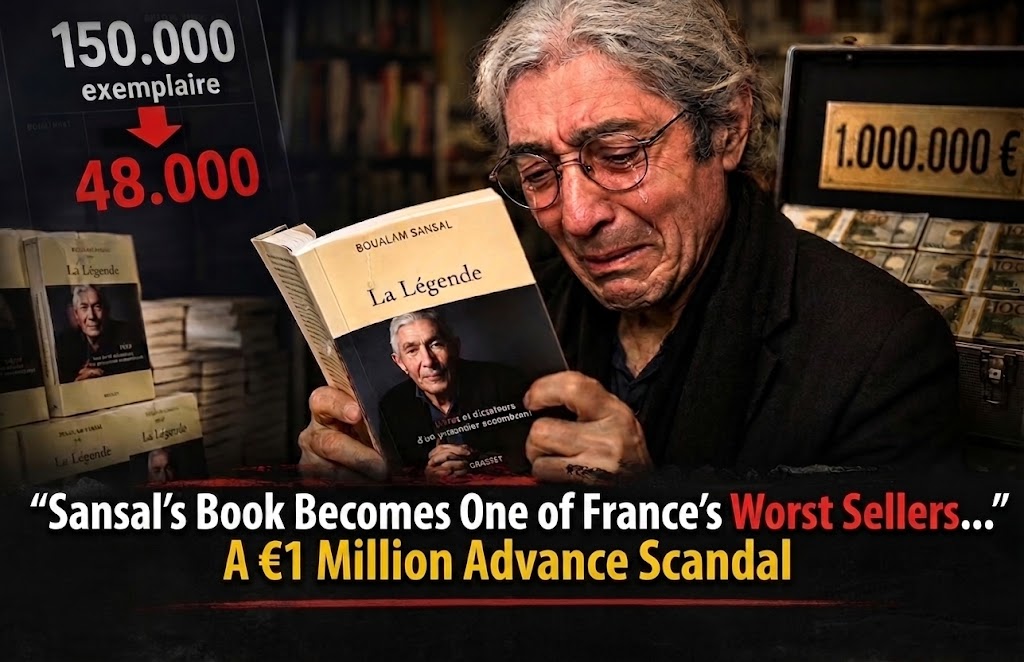
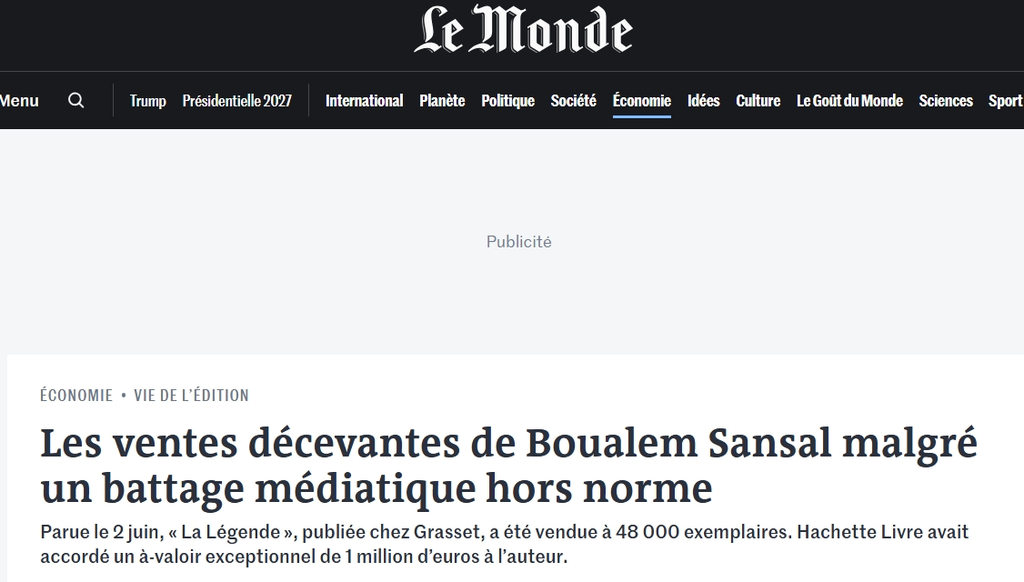
Algeria Gate: Boualem Sansal’s latest book, La Légende, published by Grasset on June 2, has reportedly sold only 48,000 copies, despite Hachette Livre granting the author an exceptional €1 million advance and investing heavily in its promotion.

Sansal’s Book Becomes One of France’s Worst Sellers… A €1 Million Advance Scandal

According to Le Monde, NielsenIQ BookData recorded 48,000 sales as of August 20, compared with an initial print run of 150,000 copies. The book initially performed strongly, selling nearly 17,000 copies in its first week and entering France’s top five bestsellers, but it quickly dropped out of the rankings.

The 252-page book, priced at €22, recounts Sansal’s year in an Algerian prison over accusations of undermining national unity. It was published by Grasset, part of Hachette, the French publishing giant owned by billionaire Vincent Bolloré.

Le Monde contrasted Sansal’s performance with former French President Nicolas Sarkozy’s Le Journal d’un prisonnier, published by another Hachette imprint, Fayard. Sarkozy’s book sold 90,000 copies in its first week alone.

Sansal’s Book Becomes One of France’s Worst Sellers… A €1 Million Advance Scandal

Hachette reportedly signed Sansal away from Gallimard, which had published his works since 1999. Gallimard and French publishing circles had campaigned for his release before Algerian President Abdelmadjid Tebboune granted him a presidential pardon on November 12, 2025.

Despite the modest sales, Hachette reportedly provided extensive promotional support, including full-page newspaper advertisements, widespread appearances on Bolloré-owned media outlets, and large-scale orders ensuring prominent placement in Relay stores across major train stations and airports.

The figures have therefore raised questions about the €1 million advance and the scale of the promotional campaign, particularly given the book’s relatively weak commercial performance.

#Boualem Sansal#France
Author
Lys Iwannughen
View my articles