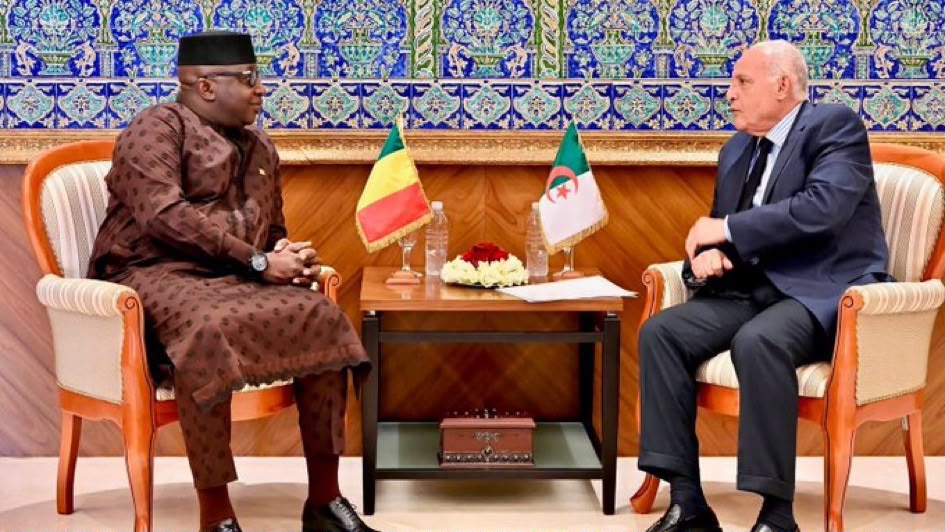
Algerian Minister of State, Minister of Foreign Affairs, National Community Abroad and African Affairs Ahmed Attaf received his Senegalese counterpart, Cheikh Niang, Minister of African Integration and Foreign Affairs, on Sunday during a working visit to Algiers.
The visit included a one-on-one meeting between the two ministers, followed by expanded talks attended by members of both delegations. Far from being a routine diplomatic engagement, the visit served as an opportunity to assess the current state of bilateral relations and explore new avenues for cooperation in sectors ranging from hydrocarbons and energy to pharmaceuticals, finance, and higher education.
Historic Ties and a Shared Role Within the African Union
Algeria and Senegal are long-standing diplomatic actors on the African continent, sharing a history of cooperation within the African Union and converging positions on major African issues, including regional stability and collective security.
During their meeting, both ministers agreed on the importance of revitalizing bilateral cooperation mechanisms by preparing for the next session of the Algeria–Senegal Joint Commission before the end of the year and relaunching the Algerian–Senegalese Business Council, with the aim of injecting new momentum into bilateral relations.
The Sahel: A Shared Security Priority
Security featured prominently in the discussions, with both sides exchanging views on regional and international developments, particularly the evolving situation in the Sahel.
The convergence of Algerian and Senegalese perspectives reflects a shared understanding that stability in the Sahel is essential for the security and economic development of West and North Africa alike. Algeria’s geographic proximity to the region and Senegal’s strategic position in West Africa make cooperation on security issues a key pillar of their partnership.
Banking Expansion: Algeria’s Gateway to West Africa
Economic cooperation has become the most tangible expression of the growing partnership.
The Algerian Bank of Senegal (ABS), operational since late 2023, is preparing a major regional expansion by seeking authorization to open a branch in Niamey, Niger, followed by another in Côte d’Ivoire.
According to the bank’s management, the objective extends beyond commercial activity. The ambition is to transform the institution into a regional banking hub capable of strengthening financial integration and facilitating trade between Algeria and African markets.
In this context, Senegal represents more than a destination market it serves as a strategic gateway to West Africa. The bank has already attracted major Senegalese companies operating in key sectors such as industry and energy, giving Algerian capital a stronger foothold in a regional market of nearly 300 million consumers.
This banking expansion mirrors Algeria’s broader strategy across the continent. Similar initiatives, including the establishment of the Algerian Union Bank in Mauritania, illustrate Algiers’ determination to strengthen its financial presence in Africa, support non-hydrocarbon exports, and deepen economic integration with neighboring countries.
Political Coordination Beyond Bilateral Relations
The meeting also highlighted both countries’ commitment to advancing the African Continental Free Trade Area (AfCFTA).
The two ministers agreed to strengthen bilateral trade by taking advantage of the opportunities offered by the continental free trade framework, reflecting a shared determination to translate Africa’s integration agenda into practical economic cooperation rather than limiting it to political declarations.
A Model for African Integration
As Africa faces growing security and economic challenges, Algeria and Senegal appear determined to build a partnership that extends well beyond traditional diplomacy.
By combining political coordination, economic investment, financial connectivity, and security cooperation, both countries are positioning themselves as advocates of a more integrated and resilient Africa one where development, stability, and shared interests form the foundation of continental cooperation.