Sunday, 18 October 2026 • 20:12 Algiers time
Algeria Gate
News Room
Cameron Hudson: UAE is virtually the sole backer of the RSF..without its support the war in Sudan would not continue Algeria-Niger: Official launch of Trans-Saharan fibre optic link Five minutes of lament over Algeria: Amar Belani exposes CNEWS’s real obsession Algerian courts hand down first death sentences under new drugs law Ségolène Royal’s masterclass on Algeria against an ignorant and demagogic journalist President Tebboune and senior officials receive the remains of Boualem Boualem in Algiers NAPEC 2026 in Oran: Algeria at the Heart of Africa’s and the Mediterranean’s New Energy Landscape Pegasus Files: Amnesty Uncovers Morocco’s Espionage Against Spain President Tebboune Orders Salary Increases in Algeria’s 2027 Budget, Rules Out New Taxes on Citizens Algeria Emerges as a Trusted Power for Regional Peace and Stability
Share this post

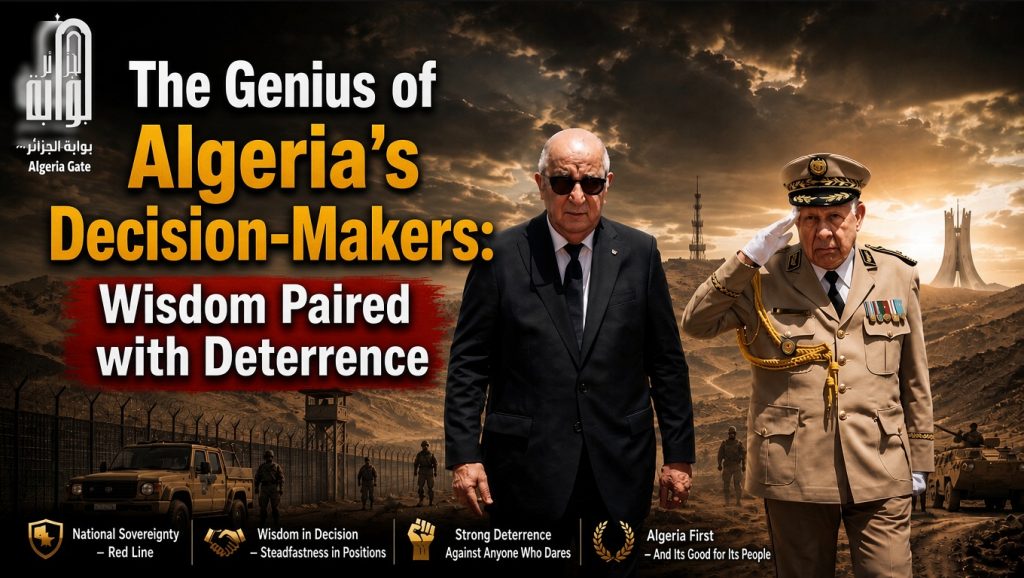
The Genius of Algeria’s Decision-Makers: Wisdom Paired with Deterrence

• Author: Lys Iwannughen • 0 comments • 33 views
The Genius of Algeria’s Decision-Makers: Wisdom Paired with Deterrence

Algeria Gate: Algeria’s strategic handling of the crises along its borders with Niger and Mali is not simply a display of diplomatic maturity. It is something rarer: a masterful fusion of political wisdom and preemptive deterrence. What we are witnessing is a sovereign state that understands, without the slightest hesitation, that securing its neighborhood is not a short-term tactic. It is the essential safeguard of national stability and the protective shield of Algeria’s strategic depth.

This firm and calculated containment has delivered a quiet but stinging blow to those political workshops that had grown drunk on the fantasy of undermining Algeria’s national security. The amateurs and strategic dwarfs who imagined they could disrupt the country’s posture have once again been exposed. They lack the capacity to decode the complex realities of the region. Their clumsy maneuvers amount to little more than diplomatic adolescence ; an approach that repeatedly collides with the solid rock of a state that knows exactly how to reduce the small to their proper size and force them back into place.

As the train of regional integration moves forward with irreversible momentum, the shadowy actors operating in the geopolitical backrooms are left scrambling in the dark. They search desperately for new openings, only to find themselves blocked by a solid wall of sovereign resolve and doors that remain firmly shut. They will retreat once more, dragging behind them the familiar weight of strategic failure and the inevitable defeats that come from challenging a state of Algeria’s stature.

#Algeria
Author
Lys Iwannughen
View my articles

Leave a comment

Your email address will not be published. Required fields are marked *

African coast
Share this post

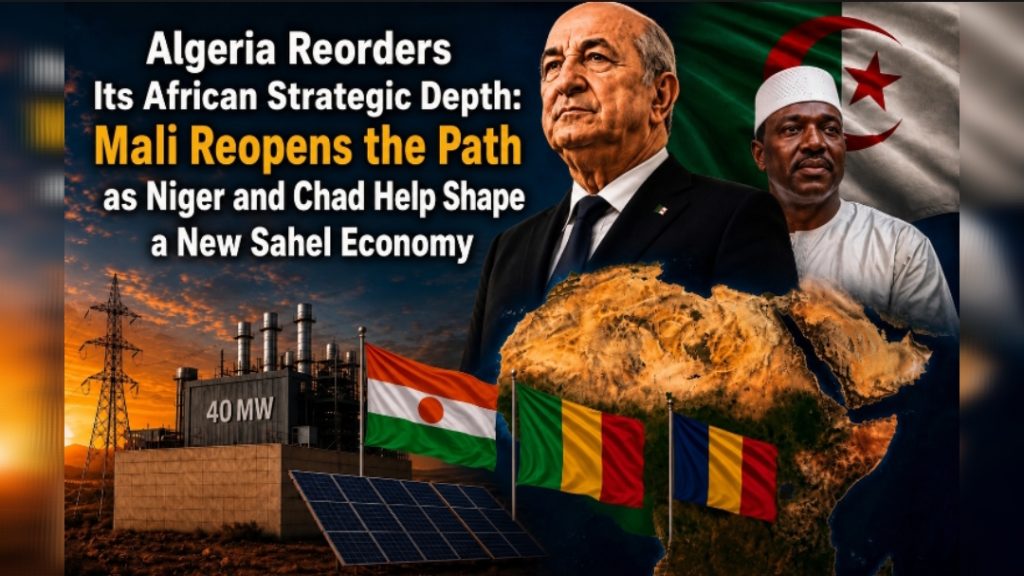
Algeria Reorders Its African Strategic Depth: Mali Reopens the Path as Niger and Chad Help Shape a New Sahel Economy

Algeria Reorders Its African Strategic Depth: Mali Reopens the Path as Niger and Chad Help Shape a New Sahel Economy

Abdoulaye Maiga’s visit to Algeria is far more than a diplomatic thaw. It is another piece in a broader Algerian strategy to rebuild its strategic depth in the Sahel; one that brings together security, energy, development, and sovereignty while pushing back against the logic of foreign interference.

Algeria Gate: President Abdelmadjid Tebboune is waging one of Algeria’s most consequential national-security battles without falling into the trap of open confrontation or an expensive race for regional influence. Instead, Algiers is relying on pragmatism: repairing what political tensions had damaged with Mali, deepening solidarity with Niger and Chad, and transforming that solidarity into concrete energy and development partnerships.

Rather than waiting for instability to reach Algeria’s southern borders, Algiers is moving the defensive line forward; toward the spaces where insecurity, institutional fragility, terrorism, trafficking, and foreign interference take root.

The visit of Mali’s Prime Minister and Head of Government, Abdoulaye Maiga, to Algiers on August 24, 2026, therefore carries a significance that goes well beyond the restoration of bilateral contacts. It completes an essential political and security component of Algeria’s wider Sahel strategy.

Mali is the sensitive western gateway. Niger occupies the center of the region’s security and energy equation. Chad provides an eastern extension toward Libya, Sudan, and Central Africa.

But Algeria is not attempting to build this strategic depth through military bases, political tutelage, or imposed alliances. Its tools are different: dialogue, respect for sovereignty, institutional support, technical expertise, infrastructure, energy, and training.

The message is increasingly clear: Algeria wants a Sahel that is stronger, more sovereign, and less vulnerable to external manipulation.

The 40-megawatt power project in Niger, the similar project launched in Chad, and the renewed political channel with Bamako all point in the same direction. Energy and development are no longer peripheral to Algeria’s security doctrine. They are becoming instruments of it.

Algeria Reorders Its African Strategic Depth: Mali Reopens the Path as Niger and Chad Help Shape a New Sahel Economy

For Algiers, the countries of the Sahel are not a buffer separating Algeria from danger. They are the first line of stability from which Algeria’s own security begins.

The real question is whether Tebboune can turn a region long treated as a belt of crises into a strategic depth capable of protecting Algeria, strengthening its neighbors, and reshaping its economic position in Africa.

Mali’s Return Reopens Algeria’s Sahelian Depth

The significance of Mali’s return becomes even clearer when viewed alongside Algeria’s expanding cooperation with Niger and Chad.

These are not isolated bilateral files. Together, they reveal a broader conception of the Sahel as an interconnected strategic space.

Mali represents Algeria’s most sensitive western gateway. Niger sits at the crossroads of security, energy, and geo-economic interests. Chad extends the strategic horizon eastward toward Libya, Sudan, and Central Africa.

Geography makes this approach unavoidable.

With its enormous southern territory and vast desert borders, Algeria cannot separate its domestic security from developments unfolding across the Sahel. Instability does not respect frontiers. Terrorism, weapons trafficking, organized crime, human trafficking, irregular migration, and disruptions to trade can quickly cross borders and turn local crises into regional threats.

But geography is only part of the equation. The future is becoming equally decisive.

The Sahel is facing rapid population growth, climate pressure, economic hardship, energy shortages, infrastructure deficits, and a lack of employment opportunities. At the same time, regional and global powers are competing aggressively for resources, markets, strategic corridors, and political influence.

That reality makes border security alone insufficient.

By the time a crisis reaches Algeria’s frontier, the cost of containing it is already high. Preventing instability at its source is far more strategic, and far less costly.

This is why Algeria’s understanding of national security is expanding. Security increasingly means helping neighboring states control their territories, strengthen their institutions, secure their resources, and create the minimum conditions necessary for economic and social stability.

Algeria’s strategic depth is therefore not about creating satellites or imposing a sphere of influence. It is about constructing a neighborhood in which interests are sufficiently intertwined that the stability of the Sahel becomes inseparable from Algeria’s own security.

Algeria’s Security Begins Before the Border

This is where Algeria’s approach sharply differs from the interventionist models that have repeatedly failed across Africa.

Algiers is not seeking to dictate political choices to its neighbors. It is betting on their ability to stand on their own feet.

Training personnel, transferring technical expertise, strengthening institutions, supporting civilian and military capabilities, and helping states develop their own infrastructure all serve the same objective: reducing institutional fragility and protecting independent national decision-making.

That approach has become even more important as the number of actors operating across the Sahel continues to grow.

Armed groups, trafficking networks, organized crime, private military companies, foreign powers, and cross-border economic interests all exploit institutional vacuums. The weaker the state, the wider the space available for penetration and manipulation.

For Algeria, strengthening the sovereignty of Sahelian states is therefore not simply a matter of diplomatic principle. It is a direct national-security interest.

Algiers does not need dependent neighbors. It needs strong neighbors; states capable of controlling their territory, defending their institutions, protecting their resources, and making independent decisions.

That is why empowerment is ultimately more durable than political influence. A country with functioning institutions and qualified human resources is harder to manipulate and less vulnerable to foreign dependency.

Algeria’s rejection of attempts to exploit the fragility of Sahelian states to impose political or security choices from abroad fits squarely into this strategy.

The weaker state institutions become, the more room armed groups, criminal networks, and foreign actors have to operate. The stronger those institutions become, the narrower that space becomes.

Three Imperatives Shape the Relationship

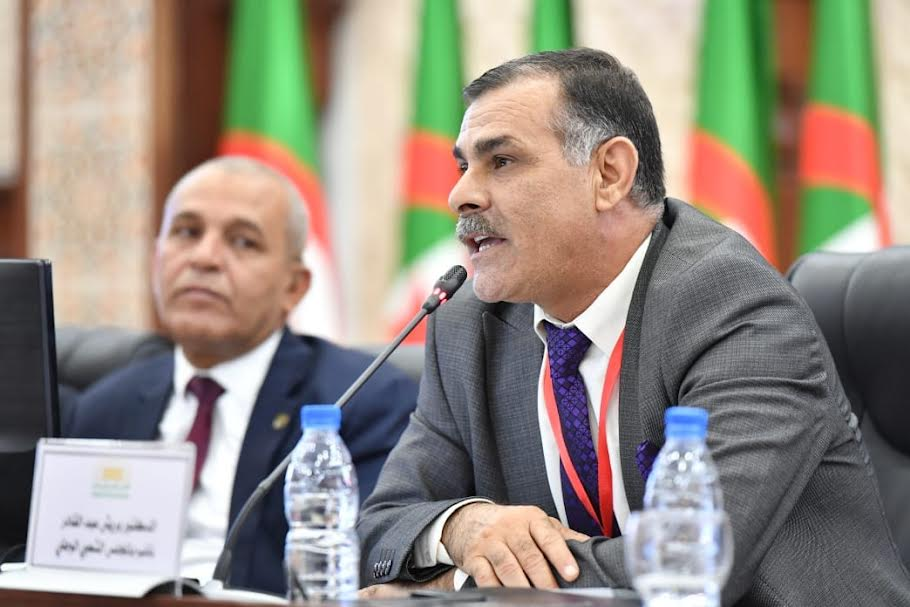
Professor Briche Abdelkader, an economic expert specializing in geopolitical and geo-economic affairs, places the renewed Algerian-Malian relationship and Algeria’s growing partnerships with Niger and Chad within three interconnected imperatives: history, geography, and the future.

His assessment is compelling.

Despite their different political and economic circumstances, Mali, Niger, and Chad form essential components of Algeria’s strategic environment. But building that depth does not require guardianship. It requires expanding the circle of stability, sovereignty, and shared interests.

The logic is straightforward: the more stable these countries become, the more secure Algeria becomes.

Historical ties and border continuity give the relationship with Mali particular weight. Niger occupies a central position in Algeria’s energy and geo-economic calculations. Chad opens an eastern corridor toward Libya, Sudan, and Central Africa.

Their differences do not weaken the strategy. They make it more flexible.

Algeria can adapt its tools to each country while maintaining the same principles: good-neighborliness, respect for sovereignty, non-interference, dialogue, and support for political solutions.

Briche is right to distinguish between influence and empowerment. Algeria does not need a neighborhood dependent on it. It needs a neighborhood capable of defending itself.

And this is where Algeria’s approach becomes particularly interesting: political and security cooperation is increasingly being reinforced by economic diplomacy.

The transition is underway; from solidarity as a principle to solidarity as an investment.

Electricity Turns Solidarity into Strategic Investment

The Algerian-Nigerien Solidarity Power Plant in Niamey is perhaps the clearest example.

Algeria completed the Gouro Banda plant, with a capacity of 40 megawatts, and inaugurated it on June 3, 2026, as an Algerian gift to Niger.

Algeria Reorders Its African Strategic Depth: Mali Reopens the Path as Niger and Chad Help Shape a New Sahel Economy

Its importance goes beyond the electricity it generates.

The project marked the first major energy achievement carried out by Sonelgaz International, giving it a double strategic value: strengthening Niger’s energy security while establishing Algerian technical expertise and companies more firmly in the African market.

In Chad, the same approach is taking shape.

An agreement was signed for the construction of a 40-megawatt power plant in N’Djamena, followed by the laying of its foundation stone in June 2026. The project also includes the transfer of Algerian expertise and the training of Chadian personnel in plant operation and network management.

This distinction matters.

Algeria is not merely delivering infrastructure and leaving. It is helping create the human and technical capacity needed to operate and maintain it.

In countries where energy access remains weak, electricity is not simply another public service. It is the foundation for industry, investment, healthcare, education, communications, public services, and economic activity.

Every additional megawatt can expand productive capacity and make previously impossible investments viable.

This makes energy diplomacy a security instrument.

Infrastructure reduces vulnerability. Employment reduces the social space exploited by extremist and criminal networks. Stronger public services reinforce the presence of the state.

A power plant, a transmission network, or a technical training program can therefore have consequences far beyond the energy sector.

At the same time, Algeria is not sacrificing its own economic interests.

The expansion of Sonelgaz International into Niger and Chad gives Algerian engineering and energy companies access to markets that desperately need power generation, distribution, maintenance, training, and renewable-energy solutions.

That can eventually create opportunities for other Algerian companies in construction, public works, transport, communications, banking, and logistics.

This is where solidarity becomes strategic economic policy.

Temporary aid can alleviate an immediate crisis. Infrastructure, training, investment, and trade create relationships that can survive political changes.

From Lines of Risk to Corridors of Value

The next step is even more ambitious: transforming Algeria’s southern borders from lines of security surveillance into corridors of economic value.

Algeria possesses geography, energy resources, engineering expertise, technical capacity, roads, and infrastructure. The Sahel possesses natural resources, expanding markets, and enormous demand for energy, transport, telecommunications, logistics, and services.

The opportunity is obvious.

Connect roads to trade corridors. Connect energy to industry. Connect telecommunications to markets. Connect logistics to border commerce.

If Algeria succeeds in doing this, the southern border will no longer be viewed primarily as a frontier exposed to risk. It can become a gateway into Africa.

Algeria can position itself as a northern platform for goods, services, investment, and expertise flowing toward the Sahel, while its southern partners gain access to Mediterranean markets and a stronger industrial and energy ecosystem.

The security dividends could be just as significant as the economic ones.

The more capable Sahelian states become of generating electricity, building infrastructure, creating employment, controlling their territories, and strengthening institutions, the fewer spaces remain for extremist organizations, trafficking networks, and foreign actors seeking to exploit instability.

Economic cooperation, in this context, is not separate from geopolitics. It is geopolitics.

What Algeria is gradually building is therefore more than a collection of infrastructure projects. It is the embryo of a geo-economic space connecting North Africa with the Sahel.

To make it work, however, Algiers will have to move beyond isolated projects and create an integrated regional strategy covering diplomacy, security, investment, energy, training, transportation, financing, insurance, and border trade.

The potential is enormous. But so is the competition.

Mali Completes the Strategic Picture

This is why Abdoulaye Maiga’s visit matters.

It is not simply a diplomatic reset between Algiers and Bamako. It restores a political pillar that Algeria needs if its broader Sahel strategy is to have real coherence.

Niger and Chad have already provided concrete examples of what Algeria calls developmental and energy diplomacy.

Mali brings the most sensitive geopolitical dimension.

Algeria’s objective is not to create a dependent neighborhood. It is to help build a neighborhood strong enough to defend its own sovereignty and prevent its territory from becoming a launchpad for threats or a playground for rival foreign powers.

That distinction is crucial.

Strategic depth should not be measured by how much influence Algeria can impose. It should be measured by how much stability it can help generate.

History binds Algeria to the Sahel. Geography makes the region’s security inseparable from Algeria’s own. The future demands a new model.

In that model, political mediation goes hand in hand with electricity. Border security is reinforced by roads. Solidarity evolves into investment. Training becomes a tool of sovereignty.

The return of Mali and the expanding partnerships with Niger and Chad therefore point toward a single strategic project: a more stable Sahel, stronger sovereign states, and an Algerian South surrounded by development partnerships rather than belts of crisis.

#Algeria#Chad#Mali#Niger#President tebboune
Author
Lys Iwannughen
View my articles
African coast
Share this post

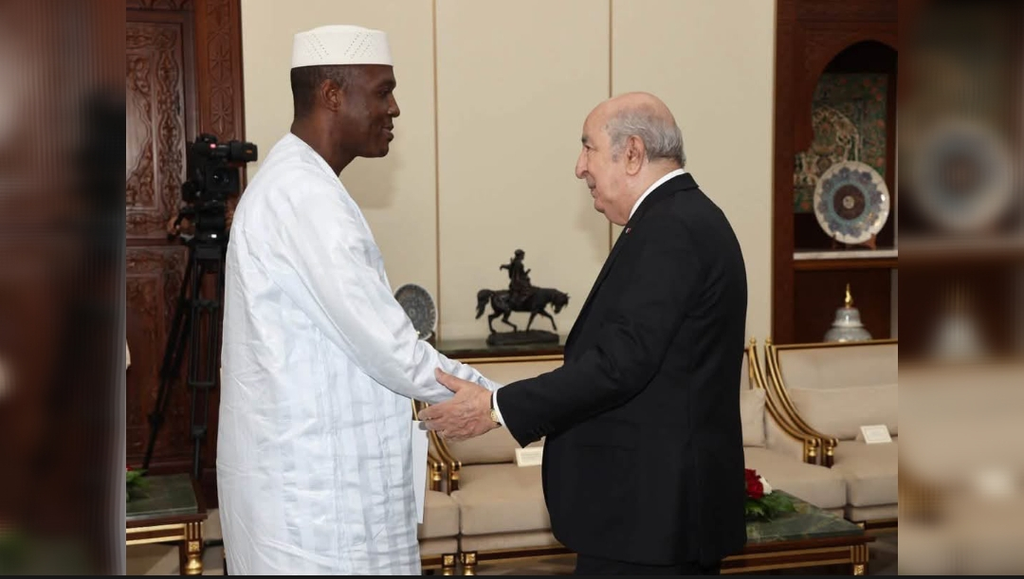
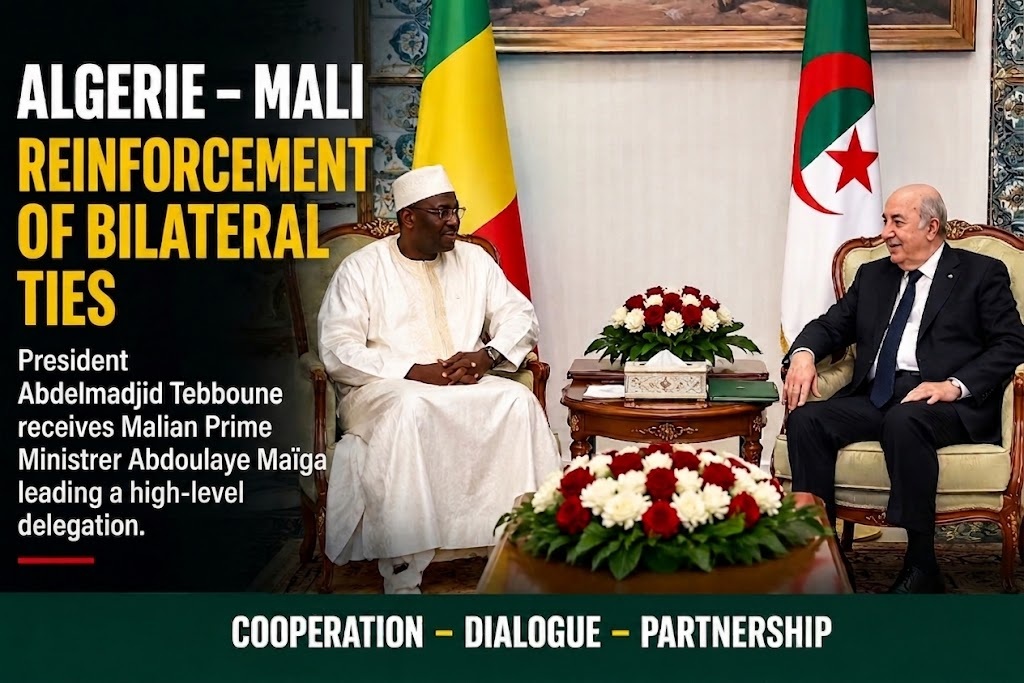
Abdelmadjid Tebboune receives Malian Prime Minister Abdoulaye Maiga

Abdelmadjid Tebboune receives Malian Prime Minister Abdoulaye Maiga

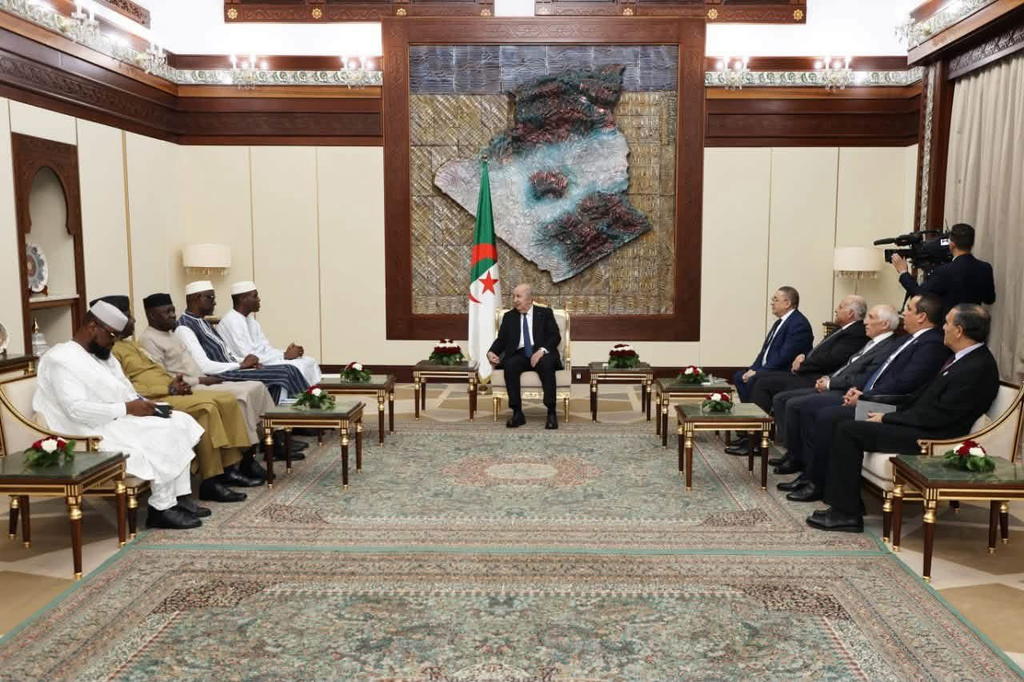
Algeria Gate: The President of the Republic, Abdelmadjid Tebboune, received this Monday the Prime Minister and head of government of the Republic of Mali, Abdoulaye Maiga, at the head of a major delegation.

Abdelmadjid Tebboune receives Malian Prime Minister Abdoulaye Maiga

This meeting takes place in a context marked by the desire of Algiers and Bamako to strengthen their bilateral relations and cooperation. Several senior Algerian officials took part in the talks, including the Minister of State, Minister of Foreign Affairs, Ahmed Attaf, as well as officials responsible for diplomatic and security matters.

This visit reflects the importance that both countries attach to consolidating their relations and coordinating on issues of common interest

#Algeria#Mali#President tebboune
Author
Lys Iwannughen
View my articles
African coast
Share this post

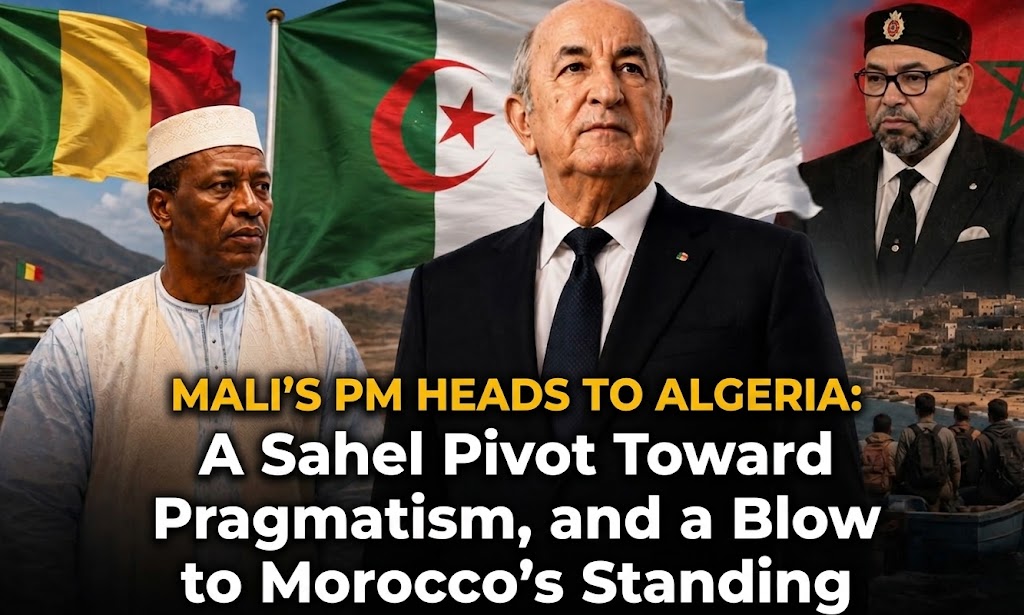
Mali’s PM Heads to Algeria: A Sahel Pivot Toward Pragmatism, and a Blow to Morocco’s Standing

Mali’s PM Heads to Algeria: A Sahel Pivot Toward Pragmatism, and a Blow to Morocco’s Standing

Algeria Gate: Malian Prime Minister Abdoulaye Maïga arrives in Algeria tomorrow, invited by his Algerian counterpart, carrying a message from President Assimi Goïta to President Tebboune, marking a thaw after a 14-month diplomatic crisis. He’ll be received by Tebboune, with talks aimed at launching bilateral cooperation.

The visit follows an August 9 phone call between the two PMs, the return of ambassadors, and the reopening of airspace in July; signs of gradual normalization. For Bamako, reconciling with Algiers reflects geographic and strategic reality: Algeria is a direct neighbor and key partner on security and development.

The move also comes as Mali’s earlier bet on Morocco’s Atlantic-access Sahel initiative has yielded little concrete progress, while Morocco faces its own economic and social strains and growing international criticism over using migration as political leverage, notably facilitating roughly 70,000 undocumented Moroccan migrants toward Ceuta.

Algeria, by contrast, points to tangible cooperation: a donated power plant in Niger, military support including helicopters and equipment, and a security approach tying its own stability to that of its neighbors.

Analysts frame Maïga’s visit as more than protocol; a sign Sahel states are prioritizing pragmatic, results-driven partnerships over unfulfilled promises, with Morocco’s regional influence appearing increasingly strained.

#Africa#Algeria#Mali
Author
Lys Iwannughen
View my articles