Sunday, 18 October 2026 • 18:03 Algiers time
Algeria Gate
News Room
Cameron Hudson: UAE is virtually the sole backer of the RSF..without its support the war in Sudan would not continue Algeria-Niger: Official launch of Trans-Saharan fibre optic link Five minutes of lament over Algeria: Amar Belani exposes CNEWS’s real obsession Algerian courts hand down first death sentences under new drugs law Ségolène Royal’s masterclass on Algeria against an ignorant and demagogic journalist President Tebboune and senior officials receive the remains of Boualem Boualem in Algiers NAPEC 2026 in Oran: Algeria at the Heart of Africa’s and the Mediterranean’s New Energy Landscape Pegasus Files: Amnesty Uncovers Morocco’s Espionage Against Spain President Tebboune Orders Salary Increases in Algeria’s 2027 Budget, Rules Out New Taxes on Citizens Algeria Emerges as a Trusted Power for Regional Peace and Stability
Share this post

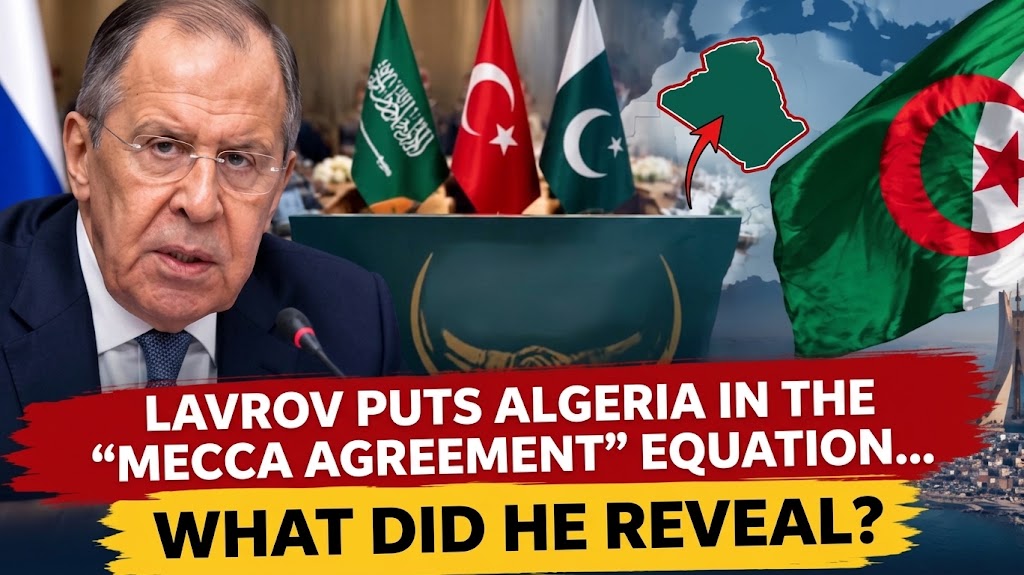
Lavrov Puts Algeria in the “Mecca Agreement” Equation… What Did He Reveal?

• Author: Lys Iwannughen • 0 comments • 48 views
Lavrov Puts Algeria in the “Mecca Agreement” Equation… What Did He Reveal?

Algeria Gate: Russian Foreign Minister Sergey Lavrov raised yesterday (Monday) the possibility of expanding the “Mecca Joint Defense Agreement” to include other countries in the region, placing Algeria among the states whose accession or expression of interest in this framework could have a very positive impact given the regional position Algeria occupies.

The “Mecca Agreement” is a joint defense agreement signed on August 7th 2026 by Saudi Arabia, Turkey, and Pakistan. It is based on the principle of cooperation and collective defense, while keeping the door open for the accession of other countries.

https://twitter.com/algatedzEng/status/2097292702807175489?s=20

The Russian reference to Algeria comes at a time when Foreign Minister Ahmed Attaf, yesterday in Cairo, reaffirmed Algeria’s position calling for addressing the region’s crises in a national and comprehensive manner, away from external interventions.

In the same statement, Lavrov also referred to Egypt and Iran as countries that could enter this framework in the future given the large convergence of visions and viewpoints on numerous global issues.

Author
Lys Iwannughen
View my articles

Leave a comment

Your email address will not be published. Required fields are marked *

Others
Share this post

457 years of visual deception: has the world map always distorted your sense of size?

457 years of visual deception: has the world map always distorted your sense of size?

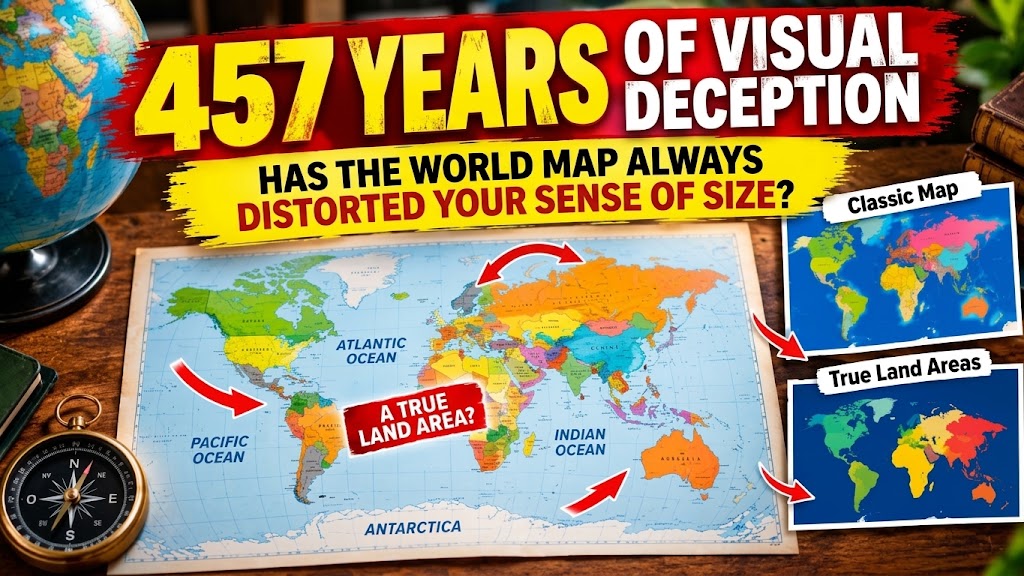
Algeria Gate: What if the world map you’ve always known had, for generations, skewed your real perception of surface areas? That’s the question behind a centuries-old debate now back in the spotlight: the Mercator projection.

A navigational breakthrough… that distorts areas

Created in 1569 by Flemish geographer Gerardus Mercator, this projection was the first to map the entire spherical Earth onto a flat surface while preserving angles; ideal for maritime navigation in the Age of Discovery. Nearly 457 years later, it remains one of the most widely used maps, including on Google Maps.

The catch: while it keeps angles accurate, it heavily distorts distances and areas, stretching them more the farther you move from the equator toward the poles. High-latitude regions like Europe, North America and Russia look far larger than they are; equatorial regions such as Africa and South America look much smaller.

Africa, the biggest victim

On a Mercator map, Africa appears roughly the size of Greenland; yet it is actually 14–15 times larger. At 30.4 million km², Africa could hold the United States, China, India, Japan and most of Western Europe combined.

Russia looks almost as big as Africa on the same map, but is nearly half the size (17.1 vs 30.4 million km²). German geographer Arno Peters noted that by inflating Europe and North America, Mercator helped create a visual sense of supremacy for those regions.

And Algeria?

Africa’s and the Arab world’s largest country (about 2.38 million km²) is often visually reduced on Mercator maps. France’s top diplomat recently pointed out that Greenland appears nearly as vast as all of Africa, when it is actually about the same size as the Democratic Republic of Congo or Algeria. A continent-dominating country thus ends up looking like a sparsely populated polar ice sheet.

More than a geography debate

The issue has become political. The African Union has formally proposed gradually replacing Mercator with equal-area projections (such as Equal Earth or Gall-Peters) that show true surface proportions. The goal is to correct the long-standing under-representation of Africa relative to high-latitude countries.

France has already announced it is dropping Mercator for more accurate maps, noting that no map is fully neutral and that Mercator gives disproportionate visual weight to certain powers over Africa, Latin America and Southeast Asia.

Changing the map doesn’t change the world, but it changes how we see it

A more accurate projection alters nothing about actual geography. It can, however, reshape how generations unconsciously perceive the weight and place of continents, especially Africa, the world’s second-largest, long minimised by more than four and a half centuries of inherited cartography.

Author
Lys Iwannughen
View my articles
International press
Share this post

Egypt: TV presenter Sarah Khalifa sentenced to death in a drug-trafficking case

Egypt: TV presenter Sarah Khalifa sentenced to death in a drug-trafficking case

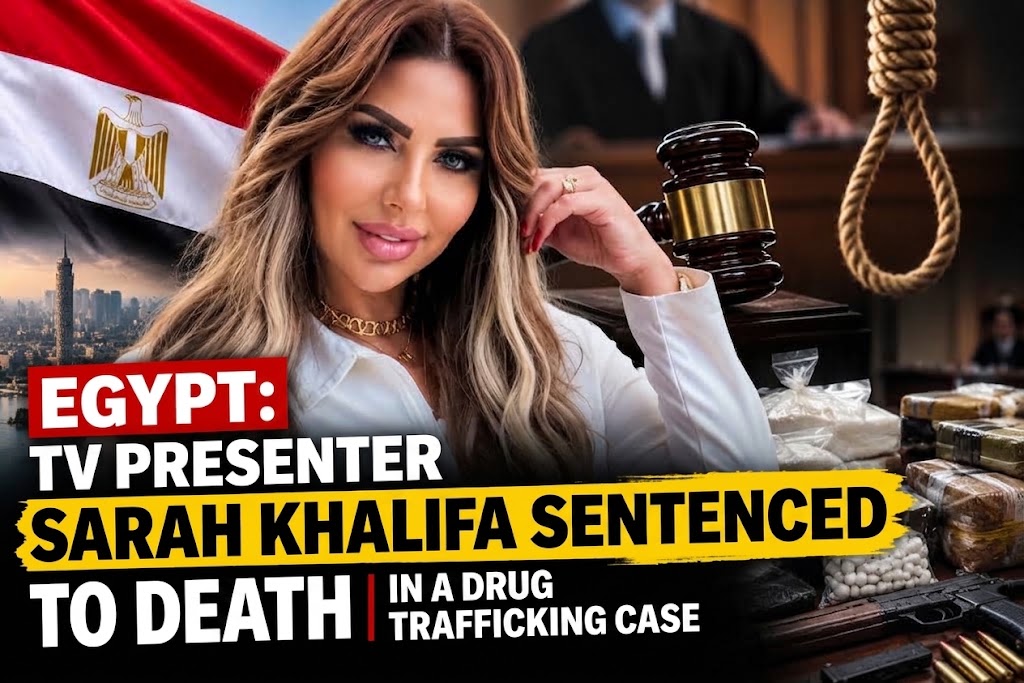
Algeria Gate: Egyptian justice delivered a striking verdict on Saturday, September 5th 2026: the presenter, producer and businesswoman Sarah Khalifa, 39, was sentenced to death by hanging, along with eleven other defendants, for her involvement in a vast network of manufacturing and trafficking synthetic drugs.

A criminal organisation dismantled

According to the official daily Al-Ahram, the Cairo Criminal Court ruled that Sarah Khalifa and her accomplices had set up a criminal organisation responsible for importing from abroad substances intended for the manufacture of narcotics before marketing them. The defendants were also found guilty of the illegal possession of firearms and ammunition.

https://twitter.com/algatedz/status/2096557090420469913?s=20

The investigation, opened last year, initially targeted 28 people, including the presenter’s brother. It led to the seizure of more than 750 kilograms of drugs and raw materials, as well as tools and machinery discovered in two apartments converted into clandestine laboratories.

In accordance with Egyptian procedure applicable to cases carrying the death penalty, the court had previously sought the advisory opinion of Egypt’s Grand Mufti. The sentence is not yet final, however: it may still be appealed.

Who is Sarah Khalifa?

Before her arrest in Giza in April 2025, Sarah Khalifa enjoyed a notoriety that extended well beyond Egypt’s borders. She began her career on the pan-Arab channel ART, then on the Iraqi television channel Al Sharqiya, before joining the private Egyptian channel Al-Mehwar, where she hosted Mission difficile, a programme devoted to security and crime affairs. She also had nearly two million followers on Instagram.

This drug-trafficking case is not the only one to have tarnished the presenter’s reputation. She was also sentenced to five years in prison in a separate case linked to the sequestration and assault of her private chauffeur.

The context of the death penalty in Egypt

Egypt maintains the death penalty for several serious offences, including premeditated murder, certain acts of terrorism, certain rapes and drug trafficking. According to the Egyptian Commission for Rights and Freedoms, a local non-governmental organisation, no fewer than 541 death sentences were handed down in the country in 2025 alone.

#Egypt
Author
Lys Iwannughen
View my articles
African coast
Share this post

Failed Niger coup: France and UAE in the frame

Failed Niger coup: France and UAE in the frame

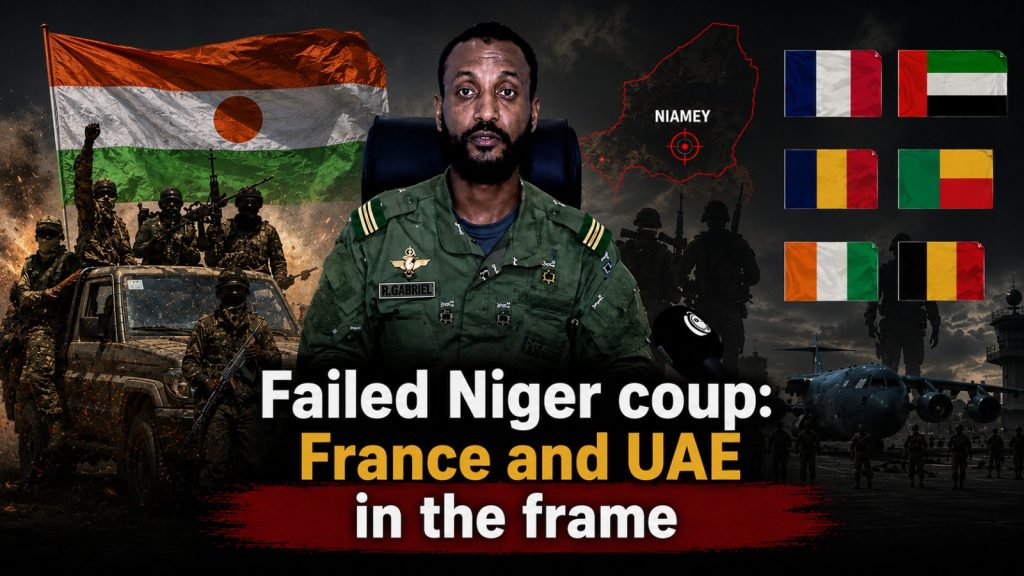
Algeria Gate: Nigerien authorities have unveiled new and explosive details about the military rebellion that shook the capital Niamey on the night of 28–29 August 2026. According to official accounts, both internal and external actors were behind the failed attempt to destabilise the country.

In a televised address on Tuesday evening, Captain Roger Gabriel, commander of Niamey’s 1st Parachute Battalion, named several officers he accused of leading the mutiny. He also claimed that members of the army’s Security and Intelligence Unit (BSR) took part in the operation.

https://twitter.com/algatedzEng/status/2094935294541770931?s=20

Gabriel widened the scope of the accusations. He implicated figures close to former president Mohamed Bazoum, as well as officers from France, Chad, Benin and Ivory Coast. The captain further stated that he had received phone calls from Belgium and Dubai urging his unit to join the rebels.

In the most serious claim, Gabriel alleged that plans were under way to deploy French special forces to Niamey airport in support of the mutineers, placing France firmly at the centre of Niger’s official narrative.

These revelations go far beyond a simple barracks revolt. They suggest a calculated effort to exploit internal rifts and reassert foreign influence in Niger, following the profound geopolitical and military realignments the country has undergone in recent years.

The message from Niamey is unambiguous. For the authorities, the struggle is no longer confined to a handful of mutineers. It is a broader confrontation with what they describe as an external network seeking to regain a foothold through local proxies.

#France#Niger#UAE
Author
Lys Iwannughen
View my articles