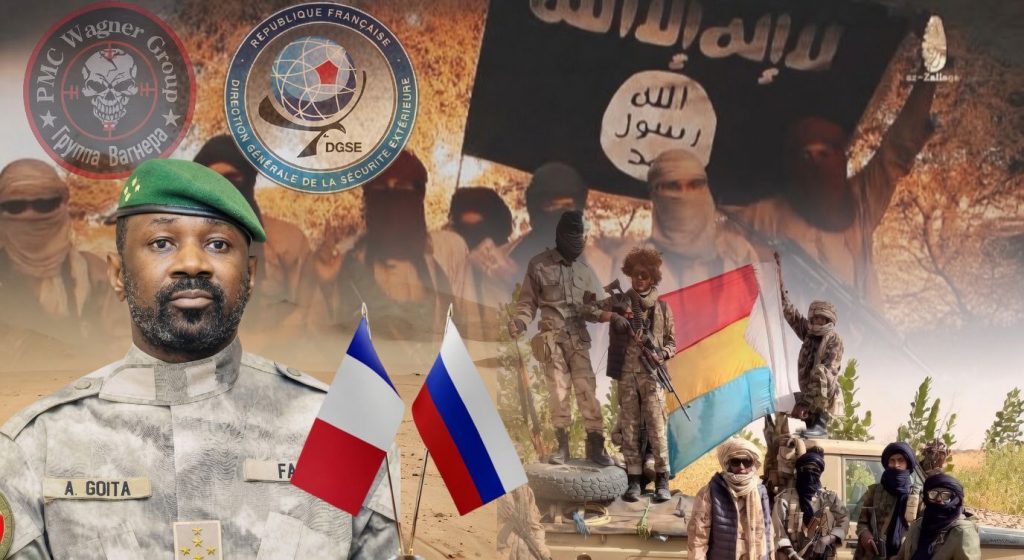
For those who do not understand the roots of Mali’s crisis…here is the full story
•Author: بوابة الجزائر•0 comments•86 views
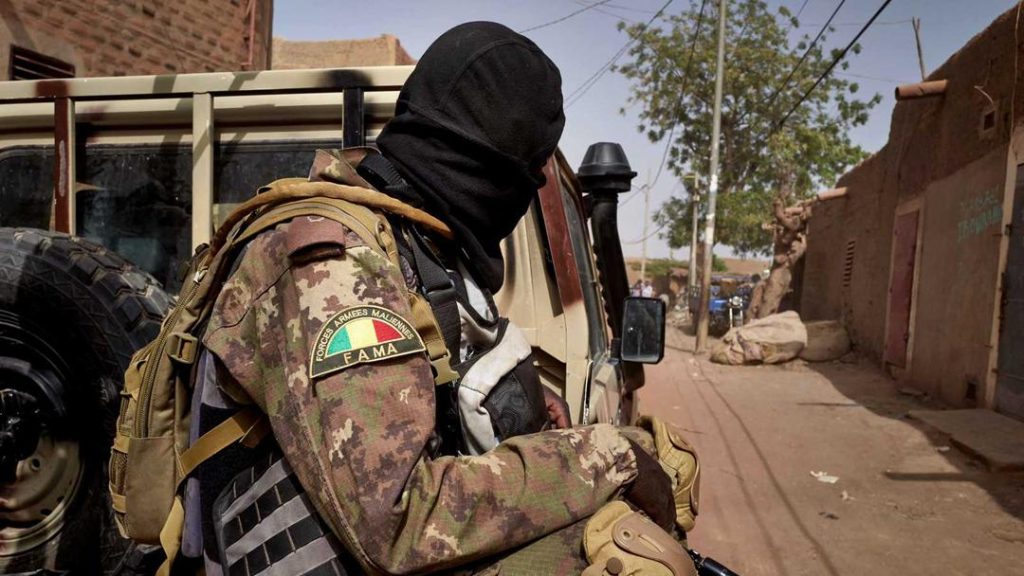
Algeria Gate – The current crisis in Mali is rooted in a long trajectory of transformations that affected Reconciliation Agreement signed in 2015 in Algeria, which for years represented a fundamental basis for halting tensions and launching a political settlement process between various actors. However, this path took a decisive turn with the decision of the transitional authority in Bamako to terminate the Algiers Agreement in 2024, leading to a reshuffling of cards on both the security and political levels.
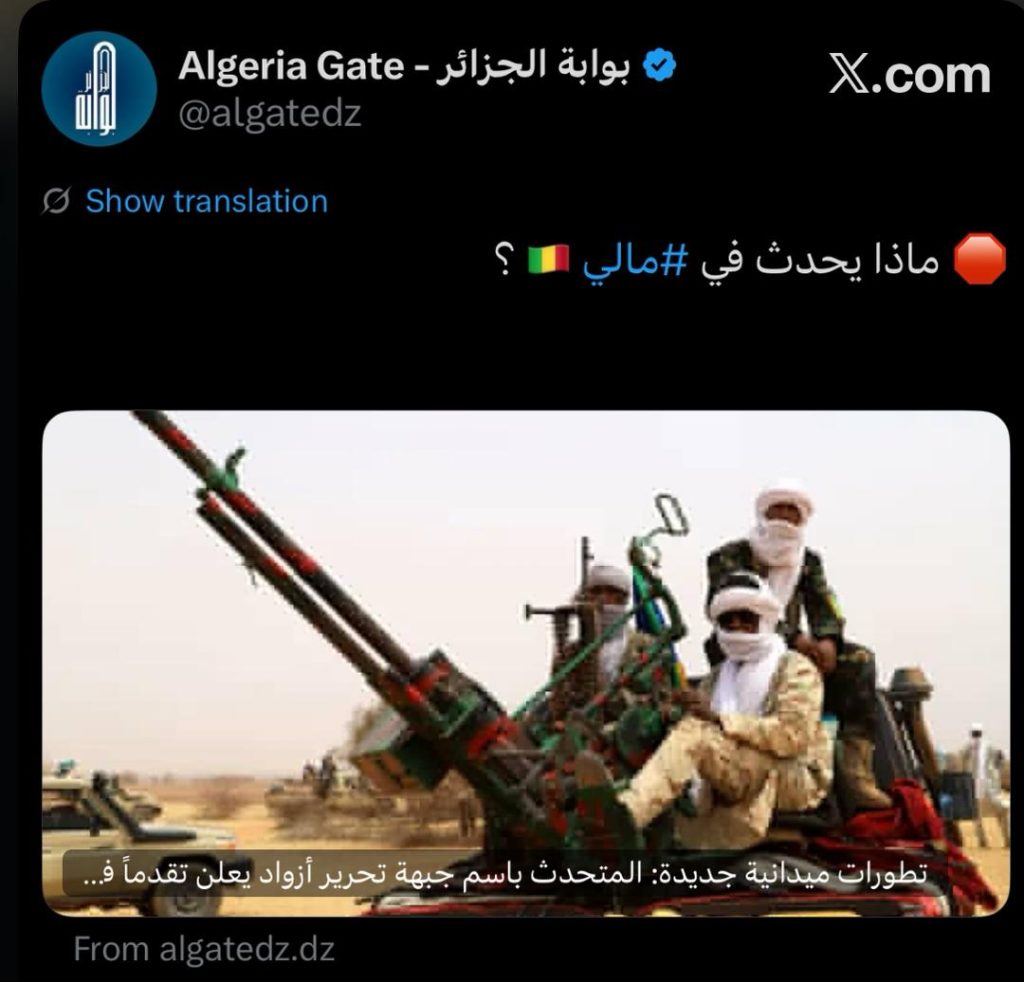
جبهة تحرير أزواد تفرض سيطرتها عل كيدال وانسحاب قوات الجيش المالي الانقلابي والفيلق الأفريقي#مالي 🇲🇱 pic.twitter.com/3ud6uBG22h
— بوابة الجزائر – Algeria Gate (@algatedz) April 25, 2026
With escalating field developments and increasing indicators of instability, observers believe that the roots of the current situation are directly linked to the disintegration of the previous consensual framework and the transitional toward military approaches that contributed to complicating the scene rather than containing it, leaving Mali today facing an open, multi-dimensional crisis.
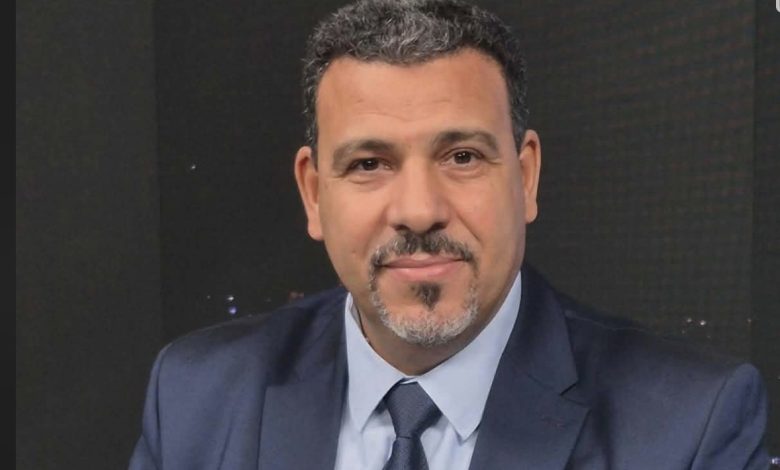
In this context, political analyst Ismail Khalafallah stated in a declaration to Algeria Gate that what is happening in Mali today is a natural inevitable result of the coup authority’s decision in January 2024 to terminate the reconciliation agreement known as the Algiers Agreement.
🛑 جبهة تحرير أزواد تعلن مسؤوليتها عن الهجمات المتزامنة في #مالي 🇲🇱
🛑 المتحدث باسم حركة أزواد: ندعو سلطات بوركينا فاسو والنيجر إلى عدم التدخل في الأحداث الجارية في مالي.
🛑 المتحدث باسم جبهة تحرير أزواد : ندعو السكان إلى التزام الهدوء والابتعاد عن المناطق العسكرية، فعملياتنا… pic.twitter.com/bQPqjh1Otg
— بوابة الجزائر – Algeria Gate (@algatedz) April 25, 2026
Khalafallah indicated that this coup and the reversal of the peace and reconciliation agreement led, according to him, to the current situation, emphasizing that the agreement had established a framework for stability before it was reneged upon.
#مالي 🇲🇱 إرهاب من يدعم الإرهابيين في مالي ؟ هل تدعم #فرنسا 🇫🇷 جماعة نصرة الإسلام والمسلمين ضد مالي انتقاماً لطردها من البلاد؟ أسئلة لابد أن تُطرح في ظل الأحداث الجارية في مالي لمعرفة من يقف وراءها ومن هو العدو الأول لمالي ..! pic.twitter.com/uddc8MrOqs
— بوابة الجزائر – Algeria Gate (@algatedz) April 25, 2026
He added that what Mali is experiencing today embodies, in his estimation, the outcome of a security situation that was “already unstable,” exacerbated by those decisions. He noted that Algeria had previously warned that the decision to terminate the agreement carries “grave risks” for Mali and regional stability, pointing out that the military option adopted by the transitional authorities in Bamako has historically proven to feed the seeds of civil war rather than opening the way for reconciliation, as he put it.
In the same context, he stressed that this path cannot achieve security and stability; rather, it leads to the persistence of tension factors, considering that Algeria remains a “party committed to the peace process” in Mali.
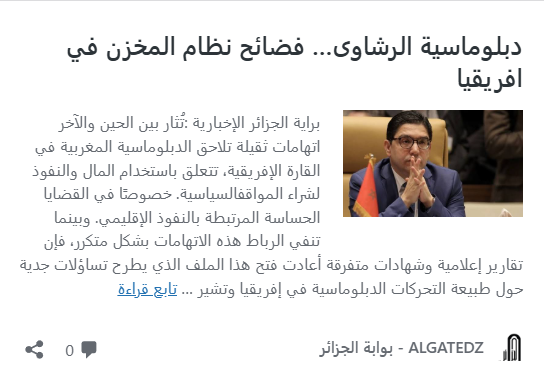
The speaker also pointed to attempts, as he described them, by certain parties—which he linked to the “Makhzen regime”—to direct accusations toward Algeria. He considered these accusations baseless, noting that the Algiers Agreement had contributed to stopping a civil war that lasted about seven and a half years.
Regarding the field situation, Khalafallah said that it is not possible to rely fully on what the coup authorities in Bamako announce, considering that there is a discrepancy between official statements and the reality on the ground.
جبهة تحرير أزواد تحذر بوركينا فاسو 🇧🇫 والنيجر 🇳🇪 من التدخل عسكريا لدعم الجيش الانقلابي في مالي 🇲🇱 ضد الأزواديين pic.twitter.com/mqXFNBOTkm
— بوابة الجزائر – Algeria Gate (@algatedz) April 25, 2026
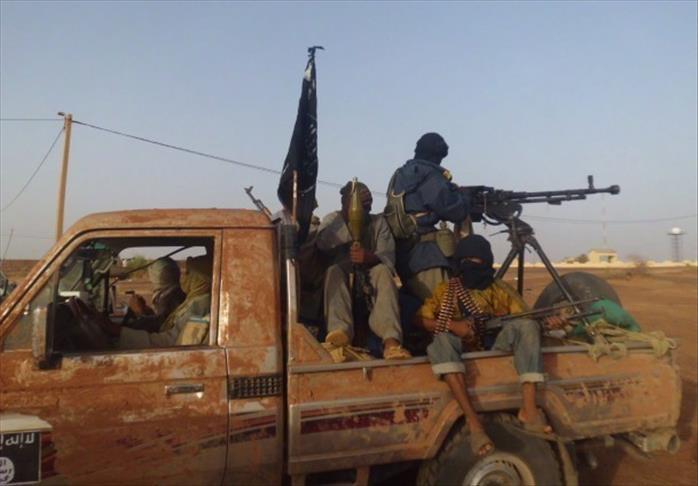
He noted the recording of a “series of coordinated attacks” targeting several sites, including the vicinity of the capital Bamako, and the cities of Kidal, Gao, and others. He added that some regions, according to what he reported, are witnessing movements by the Azawad Liberation Front and groups linked to Al-Qaeda, indicating that this reflects a loss of control in some northern regions. He also spoke of the targeting of sensitive sites, including Bamako Airport and the Kati region, which he described as a primary military base.
Khalafallah concluded by saying that field data “clearly differs from what the Bamako authorities announce,” considering that the Malian army in the north is “exhausted and unable to impose full control,” according to his assessment, reflecting the continued state of instability in the country.
Published on 25 April 2026 at 22:38 (local time)•Author: بوابة الجزائر•0 comments•117 views
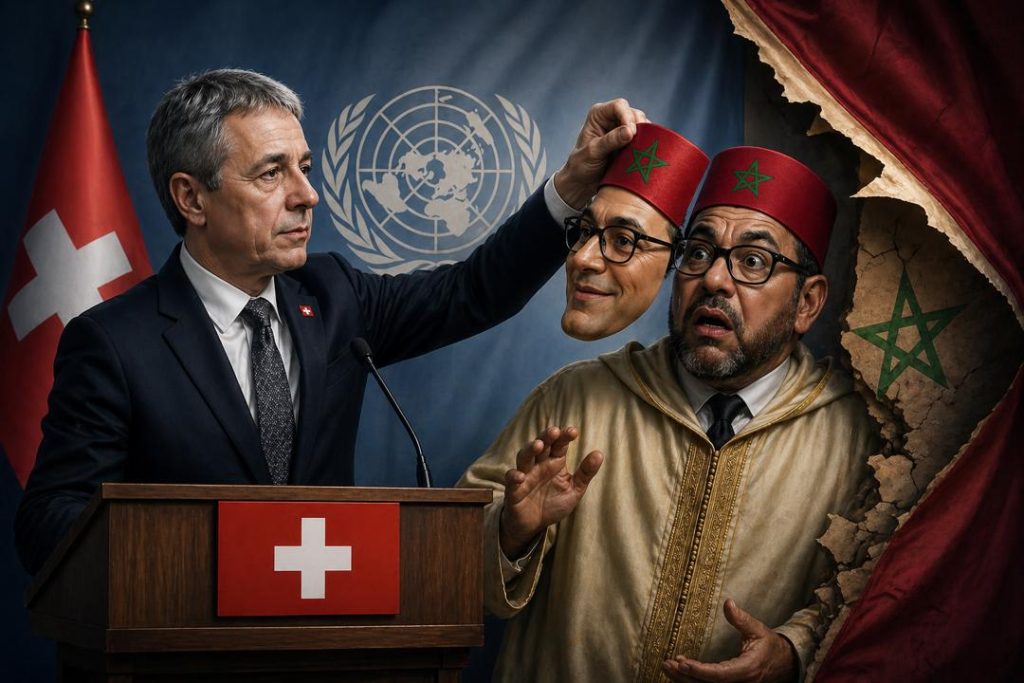
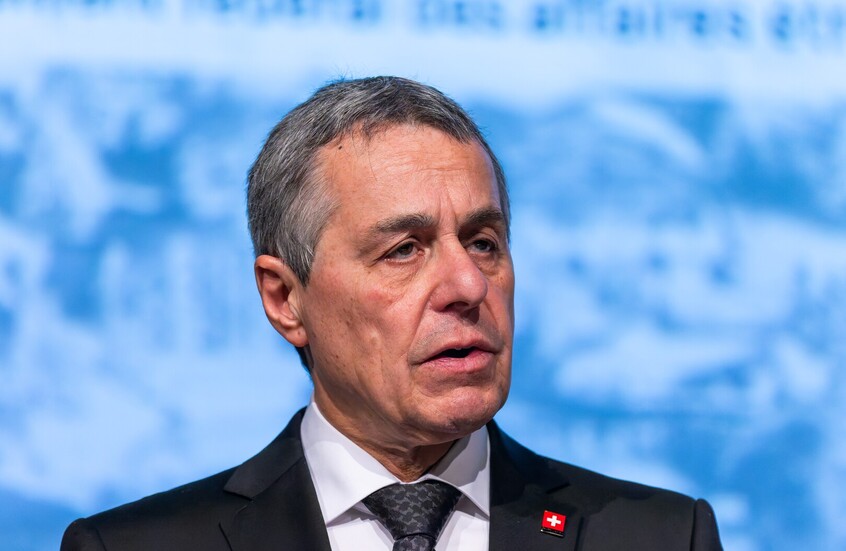
Once again, Morocco’s regime has chosen over truth. This time, its propaganda machine targeted Swiss Foreign Minister Ignazio Cassis, twisting his words after a meeting with Morocco’s foreign minister.
Cassis’s position was unambiguous; Switzerland backs the United Nations and its envoy as the central actors in resolving the Western Sahara conflict, a dispute that has lasted more than fifty years. He acknowledged Morocco’s autonomy plan as one possible option but stressed it is not the only one. Any solution must respect the principle of self‑determination.
Rabat’s media, however, rushed to replace the UN’s terminology of “non‑self‑governing territory” with the regime’s preferred fiction of “Moroccan Sahara.” In doing so, they erased the legal requirement for a referendum on self‑determination. This is a familiar tactic: manipulating foreign statements to claim the issue is “settled” in Morocco’s favor.
الشعب الصحراوي ينتفض بمدينة العيون المحتلة عقب جلب الاحتلال المغربي لطاقم طبي إسرائيلي متواجد بمستشفى المدينة الصحراوية المحتلة في مهمة مشبوهة #الصحراء_الغربيةpic.twitter.com/TP0UssM6RL
— بوابة الجزائر – Algeria Gate (@algatedz) April 23, 2026
Observers point out that such maneuvers reveal weakness, not strength. The regime’s insistence on declaring victory while bending diplomats’ words shows desperation. Its latest attempt was to falsely attribute remarks to Masoud Boulos, senior adviser to the U.S. president, during his meeting with Algerian Foreign Minister Ahmed Attaf at the Antalya Diplomacy Forum. No credible source reported such claims — only Rabat’s own echo chambers.
— بوابة الجزائر – Algeria Gate (@algatedz) April 18, 2026
Meanwhile, the Polisario Front remains steadfast: the only fair and lasting solution lies in international law and the UN Charter, guaranteeing the Sahrawi people their right to self‑determination and independence.
Published on 25 April 2026 at 21:25 (local time)•Author: بوابة الجزائر•0 comments•46 views
The security situation in northern Mali continues to deteriorate amid ongoing clashes between the Malian coup-led army and multiple armed groups operating across the region. The persistent instability highlights the difficulties faced by authorities in establishing durable territorial control in a highly fragmented security environment.
The situation is further complicated by reports of the continued presence of remnants of Wagner mercenary elements, who previously supported Malian military operations during earlier phases before their role evolved and became less formally defined within the Sahel security landscape.
At the same time, the African Corps affiliated with Russia has emerged as a new framework for restructuring Moscow’s military presence in the region, as security challenges intensify and local dynamics increasingly intersect with external geopolitical interests.
This overlap between the Malian coup-led army, remnants of Wagner forces, and the Russian African Corps reflects a highly complex security environment that extends beyond conventional counter-insurgency operations. It points instead to a broader reconfiguration of power relations within the country, where state authority armed groups, and external actors operate in a constantly shifting balanc
Overall, northern Mali appears to be entering a prolonged phase of structural instability rather than a temporary security crisis. The multiplicity of actors involved ranging from the Malian military leadership to fragmented armed groups and evolving foreign military presences suggests that the conflict is no longer purely internal in nature.
Instead, it has become a layered confrontation shaped by overlapping local grievances and external strategic interests. In this context, achieving a clear military resolution remains unlikely in the short term, while political stabilization will require more than security-based approaches alone Without a comprehensive framework addressing both governance failures and regional dynamics, northern Mali is likely to remain a volatile and contested space.
Instead, it has become a layered confrontation shaped by overlapping local grievances and external strategic interests. In this context, achieving a clear military resolution remains unlikely in the short term, while political stabilization will require more than security-based approaches alone. Without a comprehensive framework addressing both governance failures and regional dynamics, northern Mali is likely to remain a volatile and contested space.
Published on 25 April 2026 at 17:34 (local time)•Author: بوابة الجزائر•0 comments•104 views
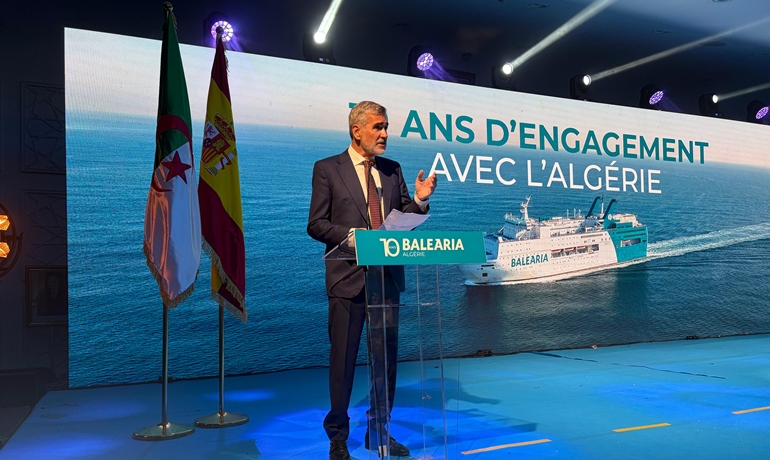
The Spanish shipping company Baleària is celebrating the 10th anniversary of its maritime link between the ports of Valencia (Spain) and Mostaganem (Algeria). Since inauguration of this roate in 2016, the company has established itself as a key operator in the maritime connection between the two shores of the Mediterranean.
The Spanish company revealed figures in a statement regarding passengers traffic which showed a trend of sustained growth, with the exception of the period affected by the pandemic. Additionally “In 2025, Baleària reached an all-time high in the country with 165,000 passengers, driven by the launch of new routes and the expansion of its commercial offer. In addition to the nearly 900,000 passengers carried in this first decade, the company has transported 360,000 vehicles and, in the cargo sector, around 100,000 linear meters.” The same source added.
Over the past ten years, the Valencia-Mostaganem line has become a vital corridor for both the Algerian diaspora and international travelers. The company’s commitment to this specific route highlights its strategic importance within Baleària’s broader Mediterranean network, providing a consistent link that has maintained operations throughout various market shifts since 2016.
Source: shippax.com — Article published on Apr 25 2026
Cameron Hudson: UAE is virtually the sole backer of the RSF..without its support the war in Sudan would not continue
Algeria Gate: In an interview with Ryan Grim on Drop Site News, Cameron Hudson; former CIA analyst, former NSC Africa director under George W. Bush, and former head...
Algeria-Niger: Official launch of Trans-Saharan fibre optic link
Algeria Gate: A major step forward in digital cooperation between Algeria and Niger. The official launch of the Trans-Saharan axial fibre optic link took place in Assamaka, Niger,...
Five minutes of lament over Algeria: Amar Belani exposes CNEWS’s real obsession
Algeria Gate – Editorial by Amar Belani: After five full minutes of complaining that Algeria no longer buys French products (except medicines), a CNEWS commentator ended his lament...