Sunday, 18 October 2026 • 23:22 Algiers time
Algeria Gate
News Room
Cameron Hudson: UAE is virtually the sole backer of the RSF..without its support the war in Sudan would not continue Algeria-Niger: Official launch of Trans-Saharan fibre optic link Five minutes of lament over Algeria: Amar Belani exposes CNEWS’s real obsession Algerian courts hand down first death sentences under new drugs law Ségolène Royal’s masterclass on Algeria against an ignorant and demagogic journalist President Tebboune and senior officials receive the remains of Boualem Boualem in Algiers NAPEC 2026 in Oran: Algeria at the Heart of Africa’s and the Mediterranean’s New Energy Landscape Pegasus Files: Amnesty Uncovers Morocco’s Espionage Against Spain President Tebboune Orders Salary Increases in Algeria’s 2027 Budget, Rules Out New Taxes on Citizens Algeria Emerges as a Trusted Power for Regional Peace and Stability
Share this post

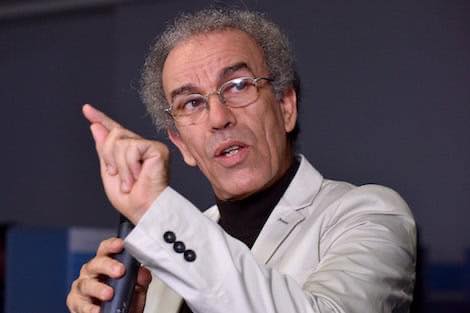
Ahmed Assid : Public Prayer is a Right, State “Exclusion” Policy to Blame

• Author: بوابة الجزائر • 0 comments • 51 views
Ahmed Assid : Public Prayer is a Right, State “Exclusion” Policy to Blame

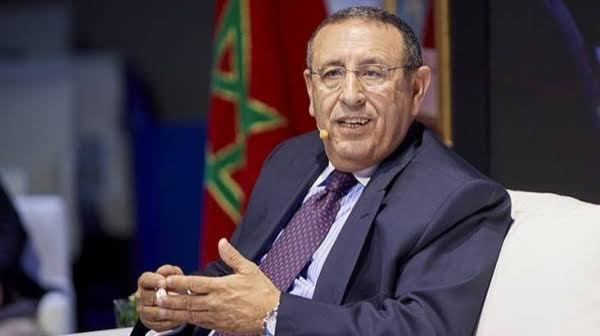
MARRAKECH – Moroccan writer and researcher Ahmed Assid has ignited a heated debate following “shocking” comments regarding Israeli settlers performing Talmudic rituals in front of the Bab Doukkala wall in Marrakech.

Assid dismissed the widespread public outrage a “storm in a teacup”, asserting that the backlash lacks any noble objective. He criticized those who labeled the prayers as “strange rituals”, arguing that such descriptions ignore the historical presence of Jews in Morocco since ancient times.
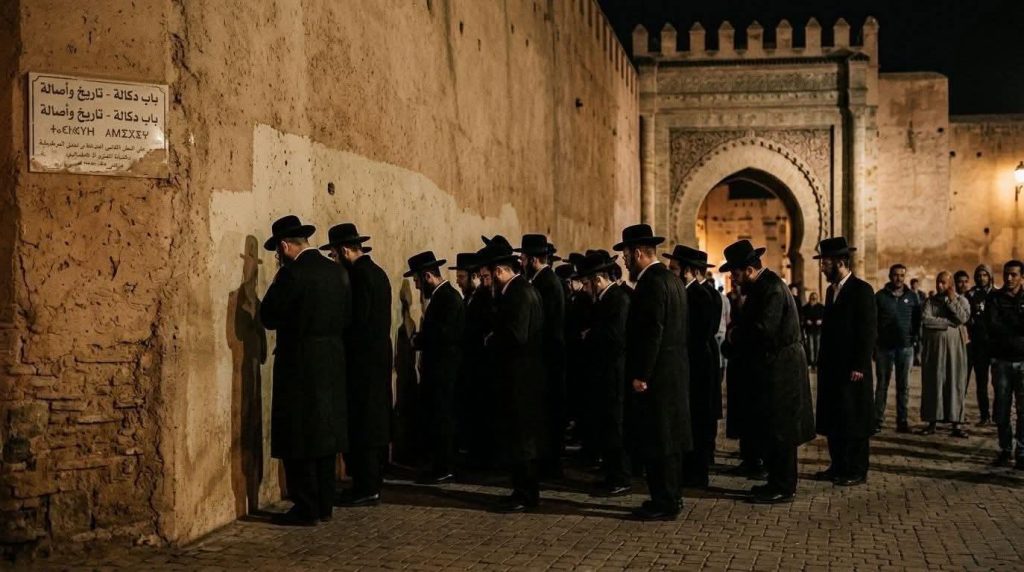
Ahmed Assid : Public Prayer is a Right, State “Exclusion” Policy to Blame

According to Assid, public space belongs to everyone, and Jews have a fundamental right to pray within it, emphasizing that Morocco is an open country for all people.

The researcher leveled that since 1956, the strategic error was the deliberate marginalization of Morocco’s diverse identity.

“The mistake from the begininig was due to the policies of the Moroccan state since independence, “Assid stated. “It hod the exiistence of Jews, the Amazigh identity , and the African and Mediterranean dimensions, focusing solely on Arabism, Islam amd Andalusia. This current social friction is the direct result of those policies”

His remarks come at a sensitive time as tensions rise over the increasing visibility of Israeli activities in the Kingdom, contrasting the state’s official normalization path with growing public resentment.


#Bab Doukkala#Marrakech#Morocco
Author
بوابة الجزائر
View my articles

Leave a comment

Your email address will not be published. Required fields are marked *

African coast
Share this post

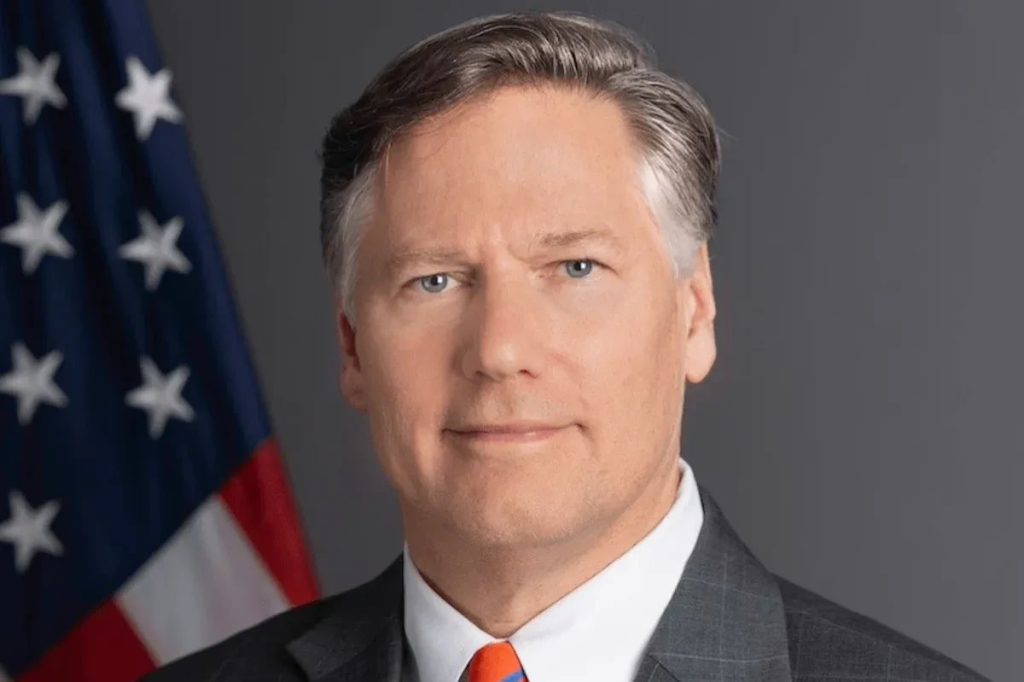
U.S. Deputy Secretary of State Christopher Landau to Visit Algeria and Morocco from April 27 to May 1

U.S. Deputy Secretary of State Christopher Landau to Visit Algeria and Morocco from April 27 to May 1

Washington sharpens its focus on Algeria with high-level diplomatic visit The United States is intensifying its diplomatic engagement in North Africa, with Deputy Secretary of State Christopher Landau set to visit Algeria from April 27 to May 1, according to an official State Department statement.

U.S. Deputy Secretary of State Christopher Landau to Visit Algeria and Morocco from April 27 to May 1

In Algeria, discussions are expected to focus on two key pillars: security and economic cooperation. Landau will meet senior Algerian officials to explore ways to strengthen bilateral ties, with particular attention to regional security challenges, especially in the Sahel, where instability continues to pose serious risks.

Economic issues will also be high on the agenda. Talks are expected to include potential major deals involving U.S. companies, reflecting Washington’s growing interest in expanding its economic footprint in Algeria beyond the energy sector.

The timing underscores a broader strategic context. North Africa is becoming an increasingly competitive arena, as global powers seek influence through investment, trade, and security partnerships. Algeria, given its geographic position and regional influence, is a key player in that dynamic.

Author
بوابة الجزائر
View my articles
African coast
Share this post

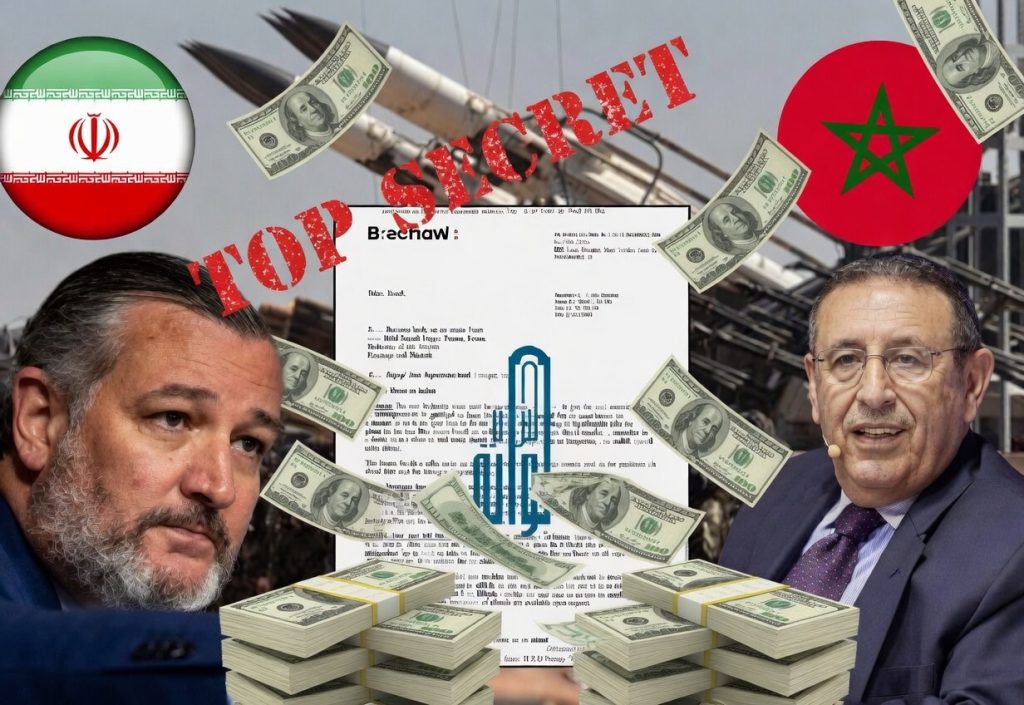
Morocco’s $65,000 Lobbying Campaign in Washington: Targeting Polisario Through Iran Narrative

Morocco’s $65,000 Lobbying Campaign in Washington: Targeting Polisario Through Iran Narrative

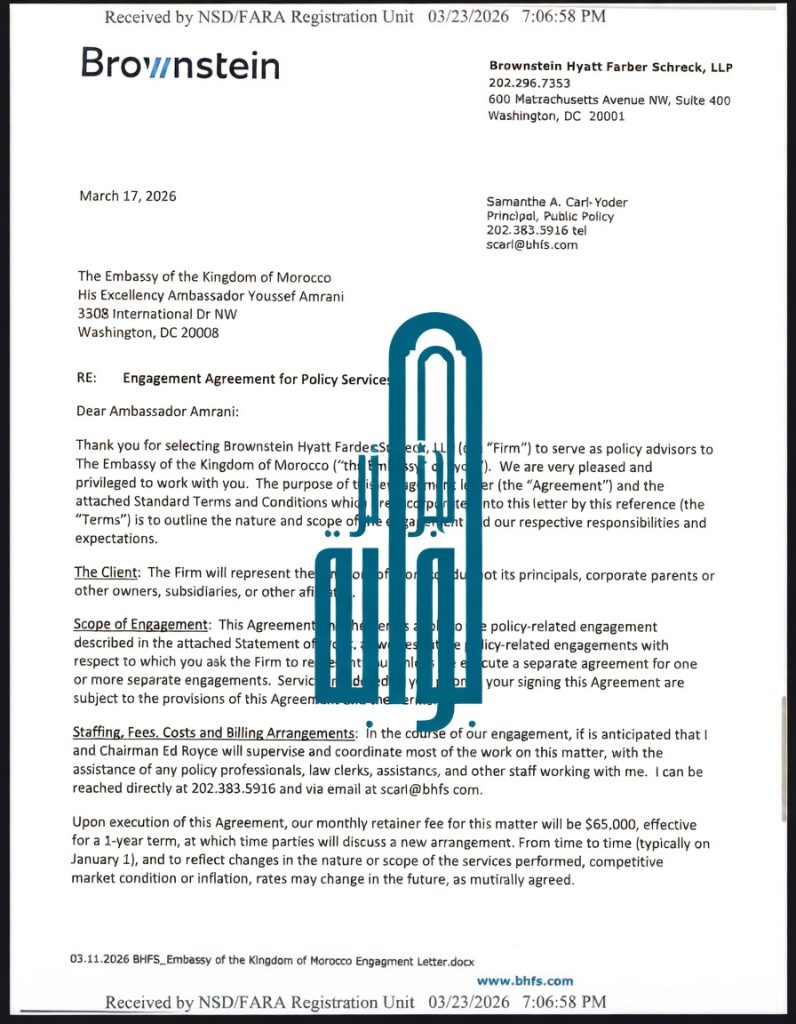
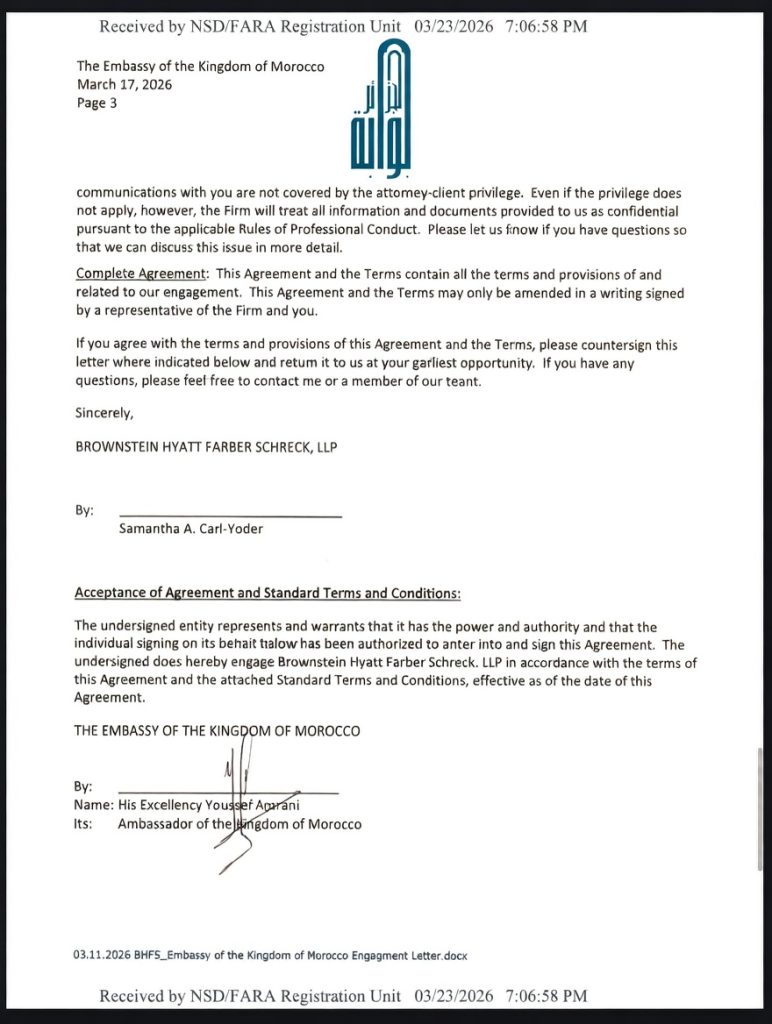
Fresh documents released by the U.S. Department of Justice in March 2026 have unveiled a striking lobbying contract between Morocco’s embassy in Washington and the powerful American law and lobbying firm Brownstein Hyatt Farber Schreck. The deal, valued at $65,000 per month, positions Morocco as an active “foreign client” under the Foreign Agents Registration Act (FARA), with the firm tasked to intensify political and media pressure campaigns in the United States.

Morocco’s $65,000 Lobbying Campaign in Washington: Targeting Polisario Through Iran Narrative

The contract, effective since March 13, 2026, outlines a one‑year renewable engagement aimed at shaping congressional attitudes and influencing U.S. policy. Central to this effort is the attempt to link the Polisario Front to terrorism and Iran’s Revolutionary Guard, thereby undermining its legitimacy as a liberation movement and reframing it as a threat to U.S. interests.

Morocco’s $65,000 Lobbying Campaign in Washington: Targeting Polisario Through Iran Narrative

Direct Pressure on Capitol Hill
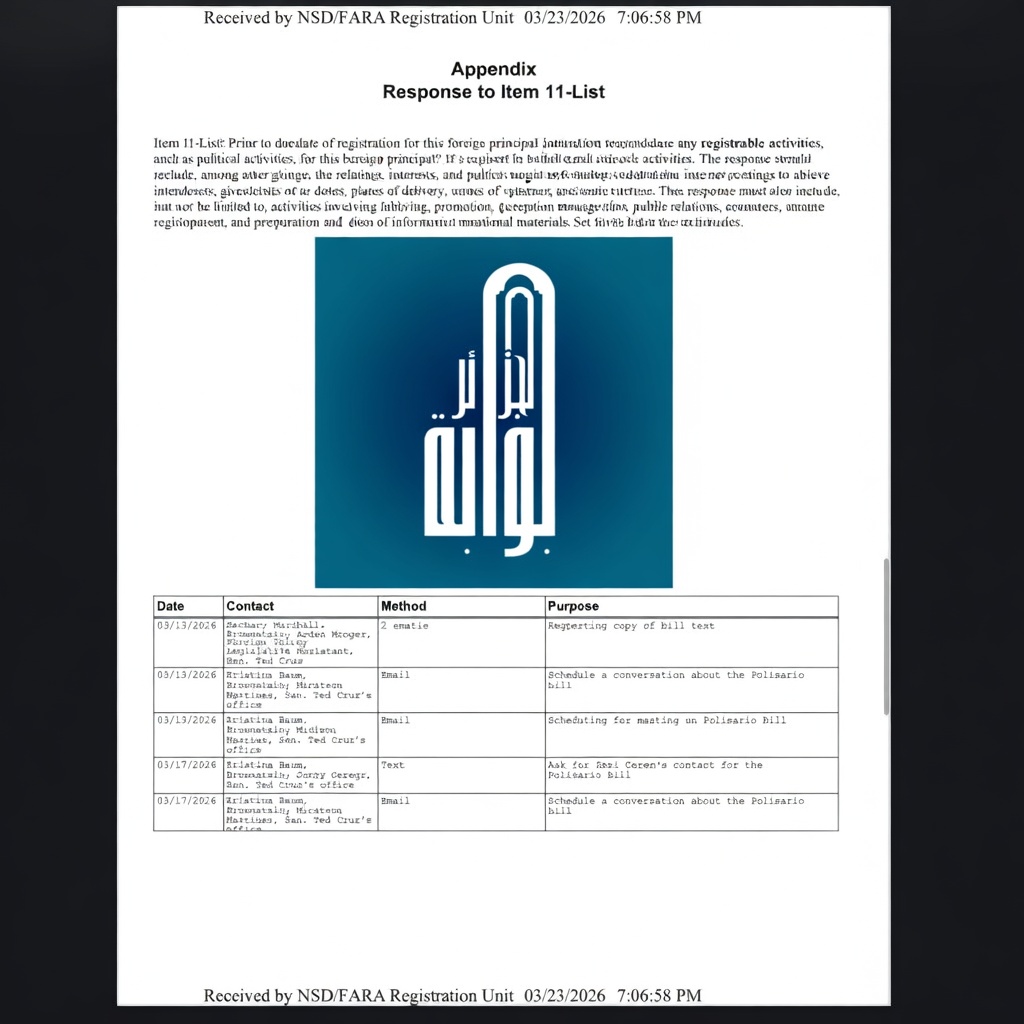
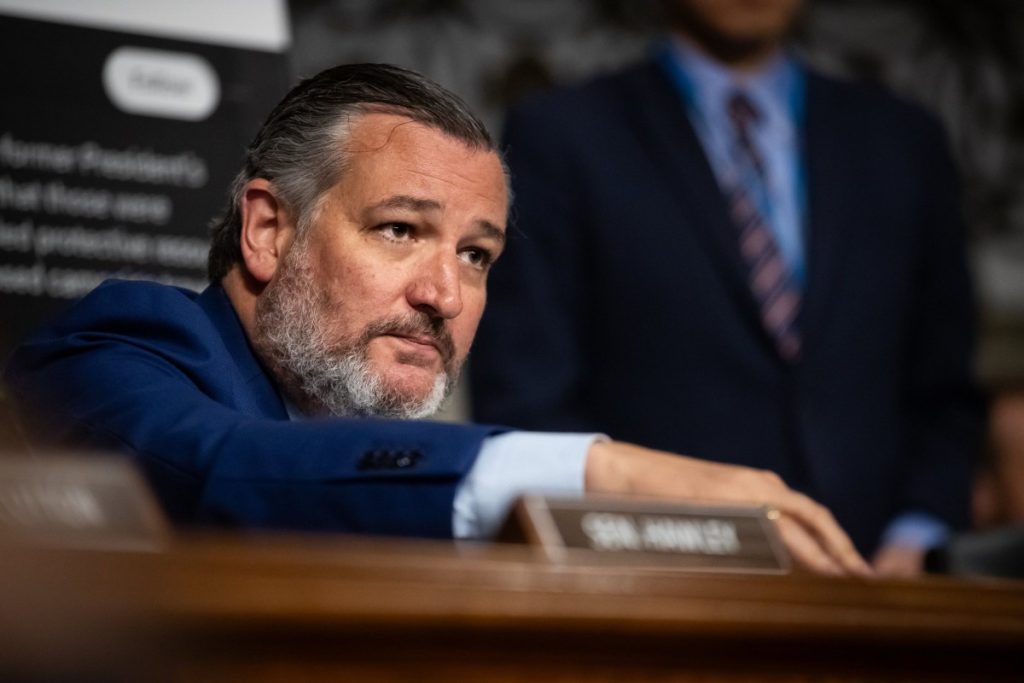
The lobbying activities have already targeted the office of Senator Ted Cruz, a prominent supporter of a draft bill known as the “Polisario Bill.” This legislation seeks to classify the Polisario Front—the recognized representative of the Sahrawi people—as a terrorist organization. Records show:

  • March 13, 2026: Request for the bill’s text via email.
  • March 16, 2026: Attempts to schedule discussions with Cruz’s staff.
  • March 17, 2026: Follow‑up communications and requests for direct contacts inside the senator’s office.

Such moves reveal a coordinated strategy to push the bill forward, aligning Morocco’s agenda with U.S. legislative processes.

Morocco’s $65,000 Lobbying Campaign in Washington: Targeting Polisario Through Iran Narrative
Signature: BNcZLvuVCENTzEzDs48lBI94y4Kn3McOCkfz3aNd9nCQNhqKb4o8otNPymDoYNxhCTjjxCcPdv+m8iqo/efasoeGS6zMGgY43heuMr2MKJsT6tb8tmFpDecnDzTIGTK3gRyqO5u2NIvNI7A4YUyUFoWJc41C3dk66NdoAaz20I3Y6gISkqxbp18THrt9jABWNLMaFBOfhx0oRpkoCPJwj7oI/NK8YLdgN4LS/kVn6cpx5SZ7aQhWTnuoQf6WDZIU
Morocco’s $65,000 Lobbying Campaign in Washington: Targeting Polisario Through Iran Narrative

A Geopolitical Play
The scope of the contract extends beyond mere lobbying. It includes public relations campaigns, media narratives, and economic initiatives designed to reinforce Morocco’s image and sway U.S. institutions. By framing Polisario as a terrorist proxy allegedly tied to Iran, Morocco seeks to:

  • Strip Polisario of international legitimacy.
  • Pressure Algeria, its main supporter, by associating it indirectly with terrorism.
  • Secure broader American backing by invoking Iran’s influence as a common adversary.
Morocco’s $65,000 Lobbying Campaign in Washington: Targeting Polisario Through Iran Narrative

This lobbying effort underscores Morocco’s determination to escalate its diplomatic offensive in Washington. By investing heavily in shaping narratives, Rabat aims not only to weaken Polisario’s standing but also to complicate Algeria’s international relations. The Iran angle, though not explicitly stated in the documents, is a calculated narrative designed to resonate with U.S. strategic concerns and rally bipartisan support against Polisario.

Morocco’s $65,000 Lobbying Campaign in Washington: Targeting Polisario Through Iran Narrative

Source: Translated from the Arabic version of Algeria Gate

#Morocco#Polisario
Author
بوابة الجزائر
View my articles
African coast
Share this post

Morocco at a Crossroads: Hunger, Normalization, and a Nation Divided

Morocco at a Crossroads: Hunger, Normalization, and a Nation Divided

RABAT – A series of explosive videos emerging from Morocco has deep social fracture, ranging from desperate cries of poverty to radical geopolitical shifts.

  • The Hunger Crisis: In a viral clip that has shocked the region, a Moroccan citizen claimed that if borders with Algeria opened for just 24 hours, there wouldn’t’t be a single Moroccan left. He described a dire reality of living on bread and tea, blaming the faming policies of the current regime.
  • The Sovereignty Debate: Adding fuel to the fire, a prominent human rights figure- the Secretary General of the Moroccan Organization for Human Rights and the Fight Against Corruption– sparked outrage by stating he would gladly welcome Israeli colonizers  into his home while explicitly declaring that Algerians are not welcome.
  • Identity wars : The tensions peaked with a citizen’s provocative demand to imprison anyone opposing the presence of Israeli settlers, shockingly claiming that Morocco belongs to Jews, not Muslims.

These contrasting narratives—desperate poverty on one side and radical ideological shifts on the other—paint a picture of a nation grappling with its identity and its future in a rapidly changing Maghreb.

#Marrakech#Morocco#Normalization#RABAT
Author
بوابة الجزائر
View my articles