Sunday, 18 October 2026 • 20:57 Algiers time
Algeria Gate
News Room
Cameron Hudson: UAE is virtually the sole backer of the RSF..without its support the war in Sudan would not continue Algeria-Niger: Official launch of Trans-Saharan fibre optic link Five minutes of lament over Algeria: Amar Belani exposes CNEWS’s real obsession Algerian courts hand down first death sentences under new drugs law Ségolène Royal’s masterclass on Algeria against an ignorant and demagogic journalist President Tebboune and senior officials receive the remains of Boualem Boualem in Algiers NAPEC 2026 in Oran: Algeria at the Heart of Africa’s and the Mediterranean’s New Energy Landscape Pegasus Files: Amnesty Uncovers Morocco’s Espionage Against Spain President Tebboune Orders Salary Increases in Algeria’s 2027 Budget, Rules Out New Taxes on Citizens Algeria Emerges as a Trusted Power for Regional Peace and Stability
Share this post

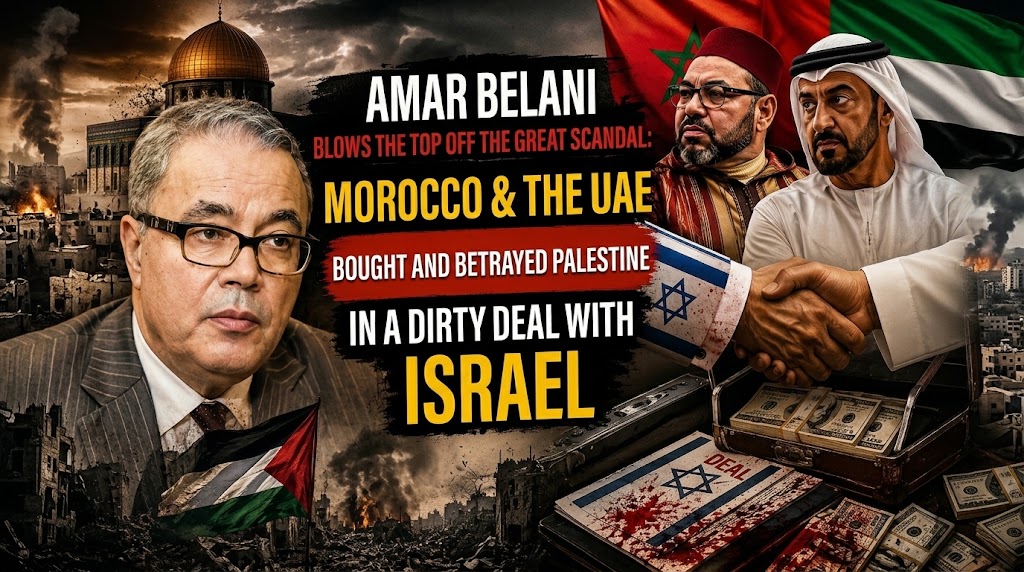
Ammar Belani Exposes the Major Scandal: Morocco and the UAE Sold Out and Betrayed Palestine for a Dirty Deal with Israel

• Author: Lys Iwannughen • 0 comments • 67 views
Ammar Belani Exposes the Major Scandal: Morocco and the UAE Sold Out and Betrayed Palestine for a Dirty Deal with Israel

Ammar Belani dismantles the diplomacy of barter: Rabat sold Palestine for a fragile presidential recognition, while Abu Dhabi tied its military and digital ambitions to Washington’s keys.

Algeria Gate: The Abraham Accords did not create balanced alliances so much as a political marketplace in which Arab normalization with Israel was traded for carefully calculated American privileges. Morocco exchanged the resumption of ties with Tel Aviv for U.S. presidential recognition of its claimed sovereignty over Western Sahara. The UAE bet on access to American arms vaults, F-35 fighters, AI chips, and dual-use technologies.

What Rabat and Abu Dhabi marketed as a strategic breakthrough lacks real immunity. Morocco’s recognition never became binding federal law. The UAE’s fighter deal stalled when the administration changed. Advanced chips remain subject to licenses Washington can expand or restrict at will.

The Accords granted no permanent sovereign guarantees. They tied the two countries’ gains to the White House, Congress, American national-security needs, and Israel’s interests. Protecting those gains requires constant renewal of the political, security, and economic quid pro quo, turning a one-time deal into an open-ended invoice.

This is the conclusion of former Algerian diplomat Ammar Belani. In his reading, these are not institutionally protected alliances but executive and personal arrangements linked to Donald Trump that any later administration can revise, reduce, or reprice.

Rabat Sold the Principle and Bought a Declaration

In December 2020, the resumption of official Moroccan-Israeli relations coincided with Trump’s Presidential Proclamation 10126 recognizing Moroccan claims over Western Sahara. The recognition was the direct price for joining normalization.

Rabat presented it domestically as a historic settlement while concealing its institutional fragility. Issued by proclamation rather than congressional legislation, it remains open to executive revision. Even a renewed Trump stance does not convert it into a permanent legal commitment.

Morocco gained an important political position but no legal instrument that ends the conflict or alters the territory’s international status. Western Sahara remains on the UN list of Non-Self-Governing Territories, and the Sahrawi right to self-determination continues to appear in Security Council resolutions. Resolution 2797 of 31 October 2025 reaffirmed the need for a just, lasting, mutually acceptable solution based on self-determination. The White House can offer political support; it cannot erase a decolonization file or turn occupation into completed legal sovereignty.

Morocco therefore purchased a revisable recognition at a heavy political and moral cost; normalizing with Israel while King Mohammed VI chaired the Al-Quds Committee and turning the Palestinian cause into a bargaining chip. Naming a road to occupied Dakhla after Trump adds symbolism but no legislative immunity or standing in international law.

A Recognition That Requires Continuous Installments

Belani argues the deeper problem is the ongoing cost of protecting the recognition. Rabat cannot simply rest on the 2020 deal; it must continually prove its usefulness to American and Israeli strategy.

Hence Morocco offers its location, facilities, and resources; military and security cooperation, phosphates, strategic minerals, green hydrogen, Tanger Med logistics, and West African positioning. Greater fear of a recognition retreat increases the pressure to present itself as a ready Western platform.

The relationship is clearly unequal. Washington decides the value of the Moroccan contribution; Rabat bears the burden of maintaining and expanding normalization even when it becomes a domestic liability before a public that rejects the war on Gaza.

Normalization placed Morocco inside a soft circle of blackmail: protecting the gain requires paying more; each change of administration demands fresh proof of loyalty and utility.

“Freeze” for Public Consumption and Deals Under the Table

Official talk of cooling or freezing normalization managed popular anger. Diplomatic visibility declined, but military and security cooperation expanded.

SIPRI data show Israel became Morocco’s third-largest arms supplier in 2020–2024, with roughly 11 percent of imports after the United States and France. Cooperation also includes a near-billion-dollar Ofek-13 reconnaissance satellite and the 2021 defense agreement covering intelligence exchange, procurement, and military industries. These interests continued while official voices spoke of a political “freeze.”

Rabat used calming language for domestic consumption while keeping military doors open. The gap was visible during Israeli Transport Minister Miri Regev’s visit: protests erupted, and authorities quickly labeled the trip private. Changing protocol does not erase the political meaning of hosting an official linked to extreme rhetoric toward Palestinians.

It is two-faced diplomacy: calculated discourse for the street, calculated cooperation for the agencies. Credibility erodes when a state retains the Al-Quds Committee chairmanship while deepening its military partnership with Israel.

The UAE Bought a Promise, Not Fighters

Abu Dhabi sought to upgrade its military and technological position rather than resolve a territorial dispute. After normalization, the Trump administration notified Congress in November 2020 of a potential $23.4 billion package including up to 50 F-35s, 18 MQ-9 drones, and advanced munitions.

The transfer of power showed Abu Dhabi had obtained only initial political approval. The deal was reviewed; talks were suspended at the end of 2021 over American conditions, technology-security concerns, Israel’s qualitative edge, and UAE-China relations.

The Accords did not hand the UAE the F-35 key; they placed it before a door Washington controls and Israel can effectively block. Abu Dhabi normalizes and invests, yet the final decision remains American.

The Chip Bet Under American Supervision

After the F-35 setback, the UAE shifted focus to artificial intelligence and large data centers. That ambition depends on advanced American chips it neither produces nor controls.

In July 2026 Washington eased some export restrictions on AI chips, military equipment, commercial satellites, and dual-use technologies. The wider access remains subject to regulatory change. Concerns about technology leaking to China ensure every Emirati AI expansion faces American scrutiny over ownership, partners, data security, and final destinations.

Dependency simply moved from a fighter that never arrived to a chip that can be halted. Mechanisms linking large processor volumes to reciprocal U.S. investment and non-transfer guarantees further condition Abu Dhabi’s digital ambitions on American rules.

Washington Collects the Price and Retains the Veto

The 2006 Dubai Ports World episode showed that White House proximity offers no protection when Congress invokes national security. Privileges tied to a president’s person and circle become more vulnerable when power or majorities change.

Reports of dealings linked to the Trump family’s economic circle have fueled conflict-of-interest debates, making advanced-weapons or strategic-chip privileges especially open to re-examination.

Washington gains in every scenario: normalization, arms sales, investment, guarantees, technology monitoring, and the right to suspend or rewrite terms. The Arab side pays first and waits for delivery later.

Michigan Breaks the Aura of AIPAC

Fragility extends to shifting American politics on Israel. Long low-cost electoral support is becoming a point of Democratic division and a potential liability for some Republicans.

In the August 2026 Michigan Democratic Senate primary, Abdel-Fattah al-Sayyid won the nomination despite nearly $30 million in AIPAC and affiliated spending; the group’s largest single-race investment, plus tens of millions more from outside groups. Financial superiority did not decide the outcome.

The defeat does not end the lobby’s influence, but it ends the myth that its money always buys results. Open association can become a liability in states with significant Arab and Muslim communities and younger voters angry over Gaza. Even allies of Republican Mike Rogers reportedly sought to limit public AIPAC support for fear of political cost.

Widening Democratic division over Israel aid and the Gaza war means normalization-linked privileges face higher scrutiny and higher congressional cost.

November 2026 Begins the Reckoning

The November 2026 midterms will test the durability of what Morocco and the UAE obtained. A more oversight-minded Congress could expand reviews of arms deals, chip licenses, and advanced technology, and reopen the Western Sahara proclamation as a non-legislative act.

For the UAE the risk is immediate in dual-use technology, AI, and advanced weapons. For Morocco the sharper question is what remains if the president changes: recognition rests with the executive, the UN status of Western Sahara endures, and Rabat must keep proving its usefulness.

January 2029, the end of Trump’s term, will test whether the privileges survive without their original sponsor. A new president can revisit the proclamation, alter chip-export rules, or add military conditions. Neither capital can prevent it; both accepted building gains on an American decision they do not control.

A Deal Whose Key the Americans Hold

Belani concludes that Morocco and the UAE obtained real privileges but no permanent guarantees. Rabat holds a presidential recognition that does not cancel Western Sahara’s international legal status. Abu Dhabi enjoys wider access to weapons and chips, still contingent on American licenses and guarantees.

The Accords function as a contract the American side can interpret and amend. Israel receives normalization and security cooperation; the United States receives investment, markets, and influence; the Arab partners bear internal and moral costs while continually proving eligibility.

Morocco’s price was heavier: it placed Palestine on the scales of barter for a recognition that cannot change a single UN decision, expanded military ties with Israel, and used “freeze” rhetoric to calm a public that rejects turning the Al-Quds Committee chairmanship into cover for partnership with the occupation.

The UAE moved from chasing a stealth aircraft to chasing chips; in both cases the technology stayed behind an American door. Every advance requires Washington’s approval and faces tests involving China, Israel’s edge, and U.S. national security.

The Accords sold the illusion of permanent privilege and delivered membership in a renewable system of dependency. Normalization was delivered, the Arab price paid, while the gains remained deferred, conditional, or revocable.

November 2026 will set the new price Washington demands. January 2029 will show whether the two capitals obtained strategic partnerships or merely temporary promises that expire when their sponsor leaves the White House.

Until then Morocco continues paying to protect a recognition without legal immunity, and the UAE invests to protect a chip flow it does not control. Palestine, used as the bridge to these privileges, remains the starkest witness to a deal in which the stronger party secured every guarantee while the Arab side paid before verifying the goods would last.

#Algeria#Israel#Morocco#UAE#USA
Author
Lys Iwannughen
View my articles

Leave a comment

Your email address will not be published. Required fields are marked *

Algeria
Share this post

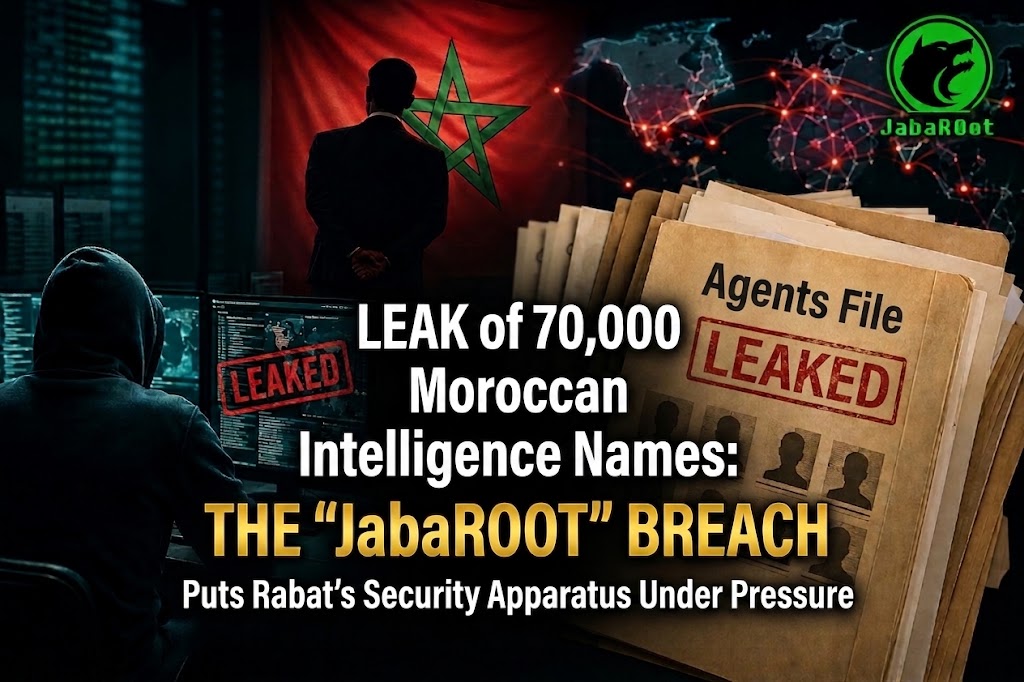
Leak of 70,000 Moroccan Intelligence Names: The “JabaROOT” Breach Puts Rabat’s Security Apparatus Under Pressure

Leak of 70,000 Moroccan Intelligence Names: The “JabaROOT” Breach Puts Rabat’s Security Apparatus Under Pressure

From the alleged “biggest blow to Moroccan intelligence” to threats over the Ceuta events, the scandal is exposing vulnerabilities that Rabat can no longer easily conceal.

Algeria Gate: What the JabaROOT group claims to have achieved is far more damaging to Morocco than an ordinary cyberattack. The group says it has published data on more than 70,000 people allegedly linked to Moroccan security and intelligence services, while threatening to reveal officials it claims were involved in planning and coordinating the events surrounding Ceuta.

The full authenticity and scope of the files still require independent technical verification. But the allegations have already triggered intense interest in the Spanish press, because they strike at the heart of Morocco’s security establishment and raise uncomfortable questions about Rabat’s activities inside Europe.

According to Spanish reports, the leaked material allegedly includes names, positions, dates of birth, identity numbers, ranks, recruitment dates and, in some cases, banking information. If confirmed, this would be much more than an embarrassing data breach: it could expose the structure, networks and operating methods of key Moroccan security institutions.

Leak of 70,000 Moroccan Intelligence Names: The “JabaROOT” Breach Puts Rabat’s Security Apparatus Under Pressure

The affair is particularly sensitive because the alleged targets include personnel linked to the General Directorate for Territorial Surveillance (DGST) and the General Directorate for National Security (DGSN), both headed by Abdellatif Hammouchi.

From Moroccan Cyberattack to Spanish Security Concern

Spanish newspaper ABC described the development as a new escalation in the cyberwar surrounding Morocco. It reported that JabaROOT had published a database containing tens of thousands of alleged members of Moroccan intelligence and police services.

But the most explosive element is the group’s threat to publish the names of those it claims coordinated the Ceuta operation.

The group has also accused senior figures close to the Moroccan royal palace of involvement in planning actions designed to put Spain under pressure. Among the names mentioned is Fouad Ali El Himma, a powerful adviser to King Mohammed VI. At the same time, the group reportedly excluded the king himself from prior knowledge of the alleged operation, directing the accusations instead toward figures surrounding the palace.

The Objective went further, reporting that the group claimed to have exposed 70,381 presumed agents, including senior intelligence officials, alongside sensitive information contained in several electronic files.

Meanwhile, El Confidencial described the episode as potentially “the biggest blow ever dealt to Moroccan intelligence.” Previous leaks attributed to JabaROOT reportedly contained accurate information, although that does not by itself establish the authenticity of every newly published file.

Ceuta: The Most Dangerous Part of the Story

The Ceuta dimension is what turns the scandal into a potentially explosive Spanish-Moroccan affair.

JabaROOT claims that the mass movement of Moroccans toward Ceuta was not simply the result of uncontrolled migration or a temporary failure of border management, but part of a broader operation allegedly prepared inside Morocco.

The group has threatened to publish the identities of Moroccan security personnel it says coordinated the operation, as well as alleged mission orders concerning agents who moved to Fnideq before and during the events.

If those documents are independently authenticated, the consequences would be enormous. Spain would not merely be confronting another Moroccan data breach; it would have to confront allegations that its own border environment was deliberately used as a tool of political pressure.

That raises a question Madrid has long preferred to handle cautiously: can Spain continue to rely so heavily on Morocco to manage migration and border security while ignoring the leverage that dependence gives Rabat?

The alleged leak does not, by itself, prove that Morocco orchestrated the events. But it has reopened precisely the question that the Spanish authorities would rather keep closed.

The “Impenetrable” Moroccan Security Machine Takes a Hit

For years, Rabat has carefully cultivated the image of an exceptionally capable security apparatus; one that Europe relies upon in the fight against terrorism, organized crime and irregular migration.

The JabaROOT affair strikes directly at that image.

If tens of thousands of sensitive records really escaped from Morocco’s security institutions, the damage would extend well beyond exposed names. Intelligence structures, recruitment networks, administrative links and operational relationships could potentially be compromised.

The Objective characterized the alleged breach as deep and extensive, while highlighting the appearance of information concerning senior security officials.

Still, Spanish reporting has also exercised some caution. Being listed in a security database does not automatically make someone an intelligence operative, and the publication of a genuine sample does not prove that the entire database of 70,000 names is authentic.

But that distinction does little to erase the central problem: someone appears to have obtained and published sensitive information connected to the Moroccan security apparatus.

And Rabat has yet to provide a convincing public explanation that settles the question of how such information could have escaped.

From Pegasus to JabaROOT

The scandal also inevitably revives the Pegasus affair.

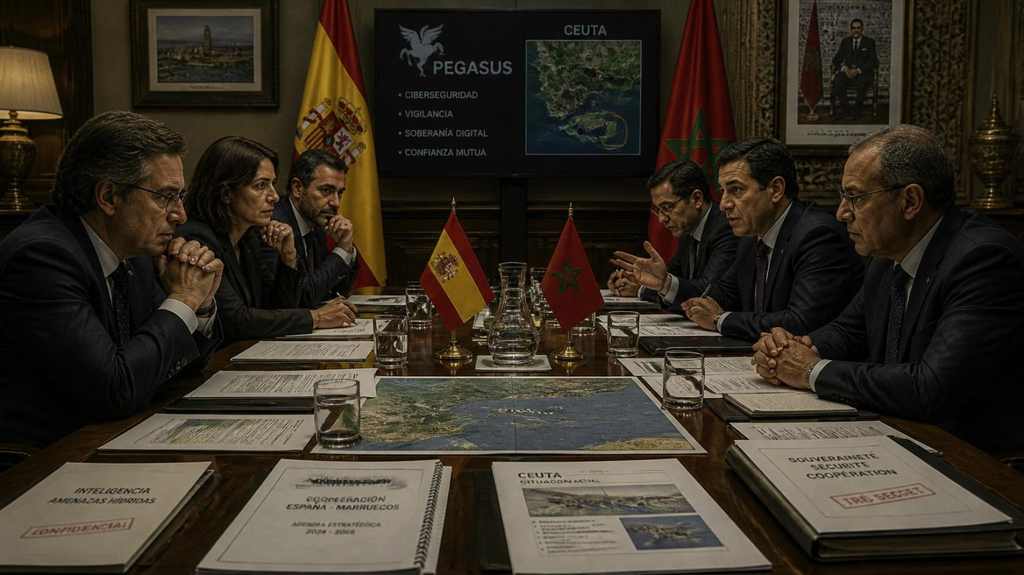
Spanish authorities previously confirmed that the phones of Prime Minister Pedro Sánchez and senior ministers had been compromised by Pegasus spyware. Although Morocco denied involvement and Spanish investigations have not established judicially that Rabat was responsible, suspicions surrounding the affair never fully disappeared.

The JabaROOT allegations do not prove Morocco’s involvement in Pegasus either. But by bringing espionage, surveillance and Moroccan intelligence activity back into the Spanish media spotlight, they have reopened an old political wound.

The stakes go beyond personal privacy. Any evidence of foreign intelligence operations inside Spain would inevitably raise questions about sensitive files such as Western Sahara, Ceuta, Melilla, migration and Madrid’s relations with Rabat.

An attempt to export the accusation toward Algeria

Faced with the leaks, Moroccan authorities have reportedly sought to attribute JabaROOT’s activities to Algeria, continuing a familiar pattern in which Rabat attempts to externalize damaging security crises.

Spanish media, however, have not treated that claim as established fact.

Reports citing cybersecurity specialists and intelligence sources have raised doubts about the Algerian hypothesis and pointed instead to the possibility of an insider with knowledge of Morocco’s security system, or even an internal struggle within the apparatus.

That uncertainty matters.

Instead of shifting the spotlight toward Algeria, the accusations have left the more uncomfortable question unanswered: how did such sensitive information allegedly escape Morocco’s most powerful security institutions in the first place?

The burden of proof remains with those making the accusation.

A Crisis of Confidence for Morocco

The real damage to Morocco may therefore extend far beyond the leaked files.

For years, Rabat has presented itself to Europe as an indispensable security partner and a reliable gatekeeper against migration and terrorism. But the JabaROOT affair is putting another image before European audiences: that of a security system allegedly vulnerable to major internal penetration and accused of conducting controversial activities beyond Morocco’s borders.

Not every allegation made by JabaROOT has been proven. But the scandal has already achieved something significant: it has placed Morocco’s intelligence apparatus under an unusually intense European microscope.

If the documents concerning Ceuta are authenticated, Spain could face evidence of an extraordinary attempt to use security and migration pressure against its own territory. If they are not, the scale of the alleged breach would still expose serious questions about the protection of Moroccan security data.

Either way, Rabat faces a difficult problem.

The issue is no longer simply whether 70,000 names were leaked. It is whether Morocco can still maintain the image of an impenetrable security apparatus while its alleged internal data, intelligence networks and cross-border activities are being dragged into the public arena.

And that may be the most damaging part of the JabaROOT affair: the scandal has moved from Moroccan servers to the heart of the European debate over trust in Rabat.

#Algeria#Morocco#Spain
Author
Lys Iwannughen
View my articles
Algeria
Share this post

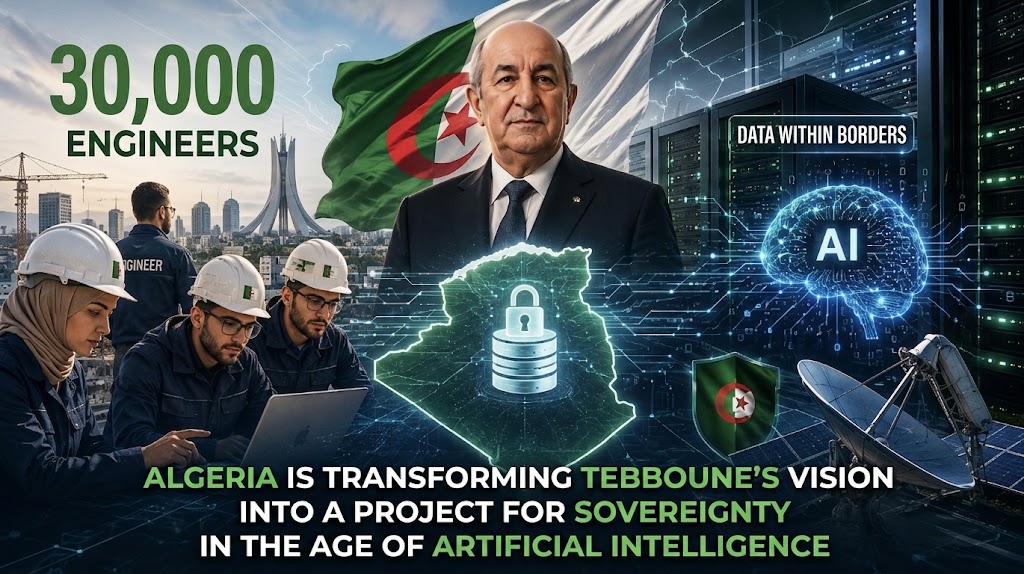
30,000 Engineers and Data Within Its Borders: Algeria Turns Tebboune’s Vision into AI Sovereignty

30,000 Engineers and Data Within Its Borders: Algeria Turns Tebboune’s Vision into AI Sovereignty

Algeria Gate: Algeria is not merely digitizing. Under President Abdelmadjid Tebboune, it is building the foundations of technological sovereignty in the age of artificial intelligence.

Thirty thousand AI engineers and specialists by 2030. Sovereign open-source models. High-performance computing on national soil. Public data that never leaves Algerian territory. These pillars are converging into a deliberate national project that refuses to treat AI as an imported product and instead treats it as a strategic capacity that must be owned.

A report by the American platform Muslim Network TV on 20 August 2026 placed the roadmap on the international radar. But the real story is older and more methodical. This is no late reaction to the global AI race. It is the outcome of years of sequential decisions: the creation of the National Higher School of Artificial Intelligence, the introduction of national data governance, the building of digital infrastructure, the interconnection of government databases, and the conversion of strategy into joint programs. The school’s first class graduated in June 2026. What began as an investment in the “economy of tomorrow” is now scaled to tens of thousands of specialists.

The 30,000 target is not a training slogan. Algeria is constructing the full chain of sovereignty: the people who design the systems, the data that train them, the computing power that runs them, the infrastructure that hosts them, and the rules that protect them.

Data first

On 9 February 2026, under President Tebboune’s high patronage, the national data-governance system entered service. Data were declared strategic national assets requiring organization, protection, and controlled use; explicitly linked to producing reliable, interoperable data for advanced AI models while respecting cybersecurity and personal-data protection.

Buying an AI application is easy. Building an AI ecosystem is not. Sovereignty demands organized data, secure hosting, computing capacity, skilled personnel, and institutions exchanging information under common rules. That logic drove the May decisions on a national decision-support system and the AI strategy itself, which named three pillars: data, digital infrastructure, and human skills.

In July the President inaugurated the National Center for Digital Services in Mohammedia and ordered rapid inter-sectoral interconnection. The center would not remain symbolic. At the same time, Algeria secured a seat at the table: on 16 July it became a founding member of the World Artificial Intelligence Organization in Shanghai. Capacity at home, voice abroad.

From buying intelligence to owning its foundations

By early August the strategy moved into coordinated implementation. The joint roadmap prioritizes sovereign open-source models, high-performance computing centers, secure domestic data storage, intensive training, and research structures that turn academic work into industrial applications.

The economic logic is clear. Closed foreign systems drain value through licensing, hosting, and support. Local development keeps that value circulating among Algerian engineers, software firms, data centers, cybersecurity companies, and start-ups. Open-source models allow systems adapted to Algeria’s administrative, linguistic, and economic reality. Domestic high-performance computing breaks dependence on foreign clouds. And government data; health, education, taxation, social services, are strategic assets. Keeping them inside a secure national infrastructure is basic statecraft.

Building the human capital

At the center stands Algeria’s decisive resource: its people. After the first graduating class of just over one hundred, the target is 30,000 by 2030; machine-learning engineers, data scientists, cybersecurity experts, infrastructure specialists, language-processing researchers, and professionals who can apply AI across energy, agriculture, healthcare, industry, finance, and transport.

Training alone is not enough. Algeria must create the market that retains them. AI and cybersecurity start-up clusters, including the one in Sidi Abdellah, link universities to companies that turn knowledge into products. Universities produce expertise, data centers provide infrastructure, computing turns knowledge into models, start-ups turn models into applications, and government and industry create demand. Every link that stays inside Algeria retains knowledge, intellectual property, jobs, and value.

Sovereignty in the age of algorithms

This is not about adding chatbots to websites. It is about entering the AI era while controlling as many of its essential foundations as possible. Not technological autarky, even the largest economies depend on international chains, but strategic autonomy: deciding when to use foreign technology, when to develop a national alternative, where critical data are stored, who can access them, and how much digital spending can be redirected to Algerian companies and jobs.

The same infrastructure can later support predictive maintenance in energy, precision agriculture, healthcare diagnostics, industrial quality control, logistics, and finance. Investment in AI becomes investment in the productivity of the entire economy.

Implementation will be the test; computing capacity brought online, sovereign applications deployed, databases made interoperable, Algerian companies winning contracts, and progress toward 30,000 specialists. Yet the direction is already clear.

What once looked like separate initiatives are locking into a coherent national architecture. Under President Tebboune, Algeria is extending sovereignty itself: after political decisions and natural resources comes sovereignty over data, computing power, and algorithms.

If the country connects its specialists, national data, computing centers, research institutions, and open-source models into a functioning ecosystem, the real achievement of 2030 will not be a headcount. It will be an Algerian technological capacity producing a substantial part of the intelligence the nation needs, with Algerian skills, on Algerian infrastructure, using Algerian data, under Algerian control.

#Algeria#President tebboune
Author
Lys Iwannughen
View my articles
African coast
Share this post

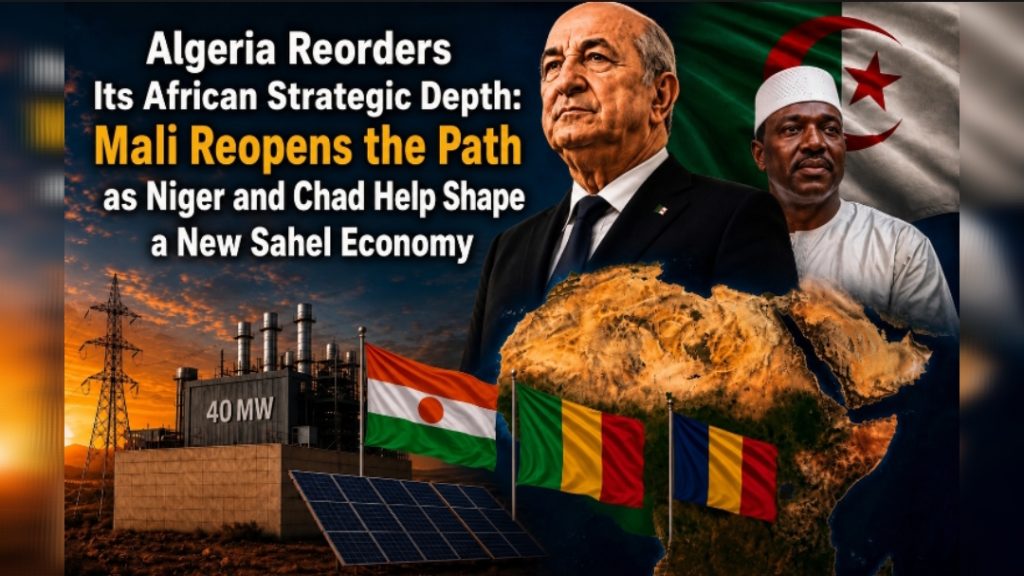
Algeria Reorders Its African Strategic Depth: Mali Reopens the Path as Niger and Chad Help Shape a New Sahel Economy

Algeria Reorders Its African Strategic Depth: Mali Reopens the Path as Niger and Chad Help Shape a New Sahel Economy

Abdoulaye Maiga’s visit to Algeria is far more than a diplomatic thaw. It is another piece in a broader Algerian strategy to rebuild its strategic depth in the Sahel; one that brings together security, energy, development, and sovereignty while pushing back against the logic of foreign interference.

Algeria Gate: President Abdelmadjid Tebboune is waging one of Algeria’s most consequential national-security battles without falling into the trap of open confrontation or an expensive race for regional influence. Instead, Algiers is relying on pragmatism: repairing what political tensions had damaged with Mali, deepening solidarity with Niger and Chad, and transforming that solidarity into concrete energy and development partnerships.

Rather than waiting for instability to reach Algeria’s southern borders, Algiers is moving the defensive line forward; toward the spaces where insecurity, institutional fragility, terrorism, trafficking, and foreign interference take root.

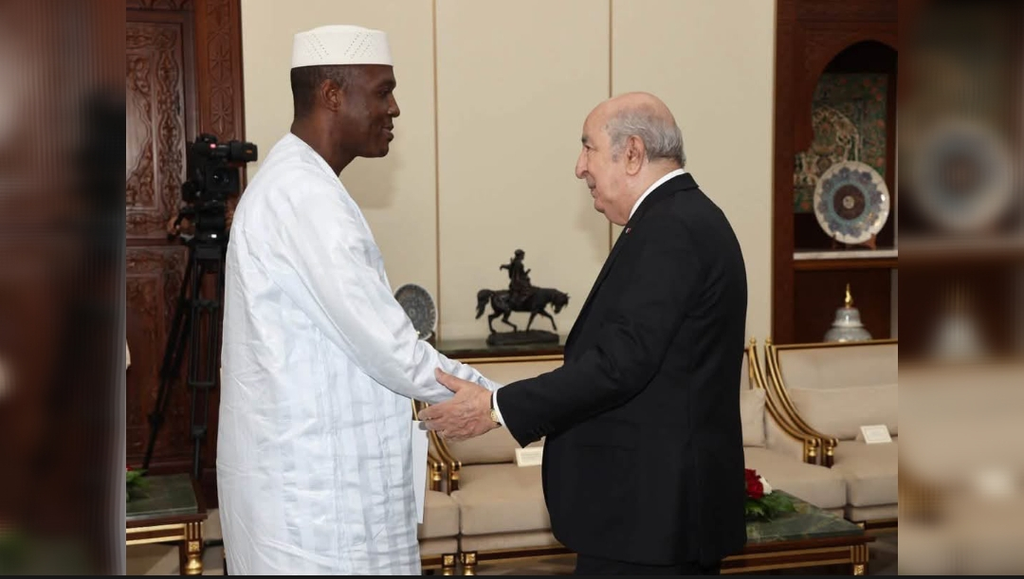
The visit of Mali’s Prime Minister and Head of Government, Abdoulaye Maiga, to Algiers on August 24, 2026, therefore carries a significance that goes well beyond the restoration of bilateral contacts. It completes an essential political and security component of Algeria’s wider Sahel strategy.

Mali is the sensitive western gateway. Niger occupies the center of the region’s security and energy equation. Chad provides an eastern extension toward Libya, Sudan, and Central Africa.

But Algeria is not attempting to build this strategic depth through military bases, political tutelage, or imposed alliances. Its tools are different: dialogue, respect for sovereignty, institutional support, technical expertise, infrastructure, energy, and training.

The message is increasingly clear: Algeria wants a Sahel that is stronger, more sovereign, and less vulnerable to external manipulation.

The 40-megawatt power project in Niger, the similar project launched in Chad, and the renewed political channel with Bamako all point in the same direction. Energy and development are no longer peripheral to Algeria’s security doctrine. They are becoming instruments of it.

Algeria Reorders Its African Strategic Depth: Mali Reopens the Path as Niger and Chad Help Shape a New Sahel Economy

For Algiers, the countries of the Sahel are not a buffer separating Algeria from danger. They are the first line of stability from which Algeria’s own security begins.

The real question is whether Tebboune can turn a region long treated as a belt of crises into a strategic depth capable of protecting Algeria, strengthening its neighbors, and reshaping its economic position in Africa.

Mali’s Return Reopens Algeria’s Sahelian Depth

The significance of Mali’s return becomes even clearer when viewed alongside Algeria’s expanding cooperation with Niger and Chad.

These are not isolated bilateral files. Together, they reveal a broader conception of the Sahel as an interconnected strategic space.

Mali represents Algeria’s most sensitive western gateway. Niger sits at the crossroads of security, energy, and geo-economic interests. Chad extends the strategic horizon eastward toward Libya, Sudan, and Central Africa.

Geography makes this approach unavoidable.

With its enormous southern territory and vast desert borders, Algeria cannot separate its domestic security from developments unfolding across the Sahel. Instability does not respect frontiers. Terrorism, weapons trafficking, organized crime, human trafficking, irregular migration, and disruptions to trade can quickly cross borders and turn local crises into regional threats.

But geography is only part of the equation. The future is becoming equally decisive.

The Sahel is facing rapid population growth, climate pressure, economic hardship, energy shortages, infrastructure deficits, and a lack of employment opportunities. At the same time, regional and global powers are competing aggressively for resources, markets, strategic corridors, and political influence.

That reality makes border security alone insufficient.

By the time a crisis reaches Algeria’s frontier, the cost of containing it is already high. Preventing instability at its source is far more strategic, and far less costly.

This is why Algeria’s understanding of national security is expanding. Security increasingly means helping neighboring states control their territories, strengthen their institutions, secure their resources, and create the minimum conditions necessary for economic and social stability.

Algeria’s strategic depth is therefore not about creating satellites or imposing a sphere of influence. It is about constructing a neighborhood in which interests are sufficiently intertwined that the stability of the Sahel becomes inseparable from Algeria’s own security.

Algeria’s Security Begins Before the Border

This is where Algeria’s approach sharply differs from the interventionist models that have repeatedly failed across Africa.

Algiers is not seeking to dictate political choices to its neighbors. It is betting on their ability to stand on their own feet.

Training personnel, transferring technical expertise, strengthening institutions, supporting civilian and military capabilities, and helping states develop their own infrastructure all serve the same objective: reducing institutional fragility and protecting independent national decision-making.

That approach has become even more important as the number of actors operating across the Sahel continues to grow.

Armed groups, trafficking networks, organized crime, private military companies, foreign powers, and cross-border economic interests all exploit institutional vacuums. The weaker the state, the wider the space available for penetration and manipulation.

For Algeria, strengthening the sovereignty of Sahelian states is therefore not simply a matter of diplomatic principle. It is a direct national-security interest.

Algiers does not need dependent neighbors. It needs strong neighbors; states capable of controlling their territory, defending their institutions, protecting their resources, and making independent decisions.

That is why empowerment is ultimately more durable than political influence. A country with functioning institutions and qualified human resources is harder to manipulate and less vulnerable to foreign dependency.

Algeria’s rejection of attempts to exploit the fragility of Sahelian states to impose political or security choices from abroad fits squarely into this strategy.

The weaker state institutions become, the more room armed groups, criminal networks, and foreign actors have to operate. The stronger those institutions become, the narrower that space becomes.

Three Imperatives Shape the Relationship

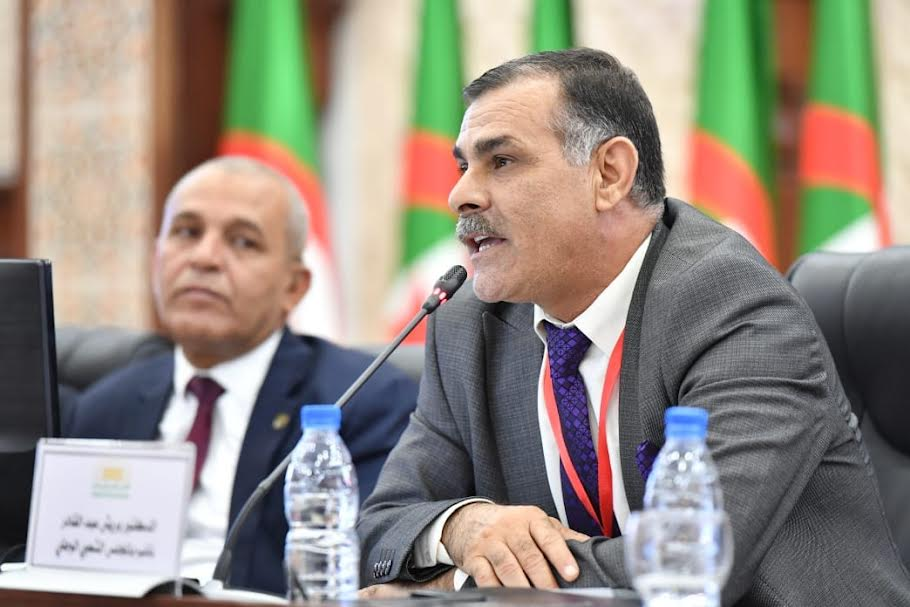
Professor Briche Abdelkader, an economic expert specializing in geopolitical and geo-economic affairs, places the renewed Algerian-Malian relationship and Algeria’s growing partnerships with Niger and Chad within three interconnected imperatives: history, geography, and the future.

His assessment is compelling.

Despite their different political and economic circumstances, Mali, Niger, and Chad form essential components of Algeria’s strategic environment. But building that depth does not require guardianship. It requires expanding the circle of stability, sovereignty, and shared interests.

The logic is straightforward: the more stable these countries become, the more secure Algeria becomes.

Historical ties and border continuity give the relationship with Mali particular weight. Niger occupies a central position in Algeria’s energy and geo-economic calculations. Chad opens an eastern corridor toward Libya, Sudan, and Central Africa.

Their differences do not weaken the strategy. They make it more flexible.

Algeria can adapt its tools to each country while maintaining the same principles: good-neighborliness, respect for sovereignty, non-interference, dialogue, and support for political solutions.

Briche is right to distinguish between influence and empowerment. Algeria does not need a neighborhood dependent on it. It needs a neighborhood capable of defending itself.

And this is where Algeria’s approach becomes particularly interesting: political and security cooperation is increasingly being reinforced by economic diplomacy.

The transition is underway; from solidarity as a principle to solidarity as an investment.

Electricity Turns Solidarity into Strategic Investment

The Algerian-Nigerien Solidarity Power Plant in Niamey is perhaps the clearest example.

Algeria completed the Gouro Banda plant, with a capacity of 40 megawatts, and inaugurated it on June 3, 2026, as an Algerian gift to Niger.

Algeria Reorders Its African Strategic Depth: Mali Reopens the Path as Niger and Chad Help Shape a New Sahel Economy

Its importance goes beyond the electricity it generates.

The project marked the first major energy achievement carried out by Sonelgaz International, giving it a double strategic value: strengthening Niger’s energy security while establishing Algerian technical expertise and companies more firmly in the African market.

In Chad, the same approach is taking shape.

An agreement was signed for the construction of a 40-megawatt power plant in N’Djamena, followed by the laying of its foundation stone in June 2026. The project also includes the transfer of Algerian expertise and the training of Chadian personnel in plant operation and network management.

This distinction matters.

Algeria is not merely delivering infrastructure and leaving. It is helping create the human and technical capacity needed to operate and maintain it.

In countries where energy access remains weak, electricity is not simply another public service. It is the foundation for industry, investment, healthcare, education, communications, public services, and economic activity.

Every additional megawatt can expand productive capacity and make previously impossible investments viable.

This makes energy diplomacy a security instrument.

Infrastructure reduces vulnerability. Employment reduces the social space exploited by extremist and criminal networks. Stronger public services reinforce the presence of the state.

A power plant, a transmission network, or a technical training program can therefore have consequences far beyond the energy sector.

At the same time, Algeria is not sacrificing its own economic interests.

The expansion of Sonelgaz International into Niger and Chad gives Algerian engineering and energy companies access to markets that desperately need power generation, distribution, maintenance, training, and renewable-energy solutions.

That can eventually create opportunities for other Algerian companies in construction, public works, transport, communications, banking, and logistics.

This is where solidarity becomes strategic economic policy.

Temporary aid can alleviate an immediate crisis. Infrastructure, training, investment, and trade create relationships that can survive political changes.

From Lines of Risk to Corridors of Value

The next step is even more ambitious: transforming Algeria’s southern borders from lines of security surveillance into corridors of economic value.

Algeria possesses geography, energy resources, engineering expertise, technical capacity, roads, and infrastructure. The Sahel possesses natural resources, expanding markets, and enormous demand for energy, transport, telecommunications, logistics, and services.

The opportunity is obvious.

Connect roads to trade corridors. Connect energy to industry. Connect telecommunications to markets. Connect logistics to border commerce.

If Algeria succeeds in doing this, the southern border will no longer be viewed primarily as a frontier exposed to risk. It can become a gateway into Africa.

Algeria can position itself as a northern platform for goods, services, investment, and expertise flowing toward the Sahel, while its southern partners gain access to Mediterranean markets and a stronger industrial and energy ecosystem.

The security dividends could be just as significant as the economic ones.

The more capable Sahelian states become of generating electricity, building infrastructure, creating employment, controlling their territories, and strengthening institutions, the fewer spaces remain for extremist organizations, trafficking networks, and foreign actors seeking to exploit instability.

Economic cooperation, in this context, is not separate from geopolitics. It is geopolitics.

What Algeria is gradually building is therefore more than a collection of infrastructure projects. It is the embryo of a geo-economic space connecting North Africa with the Sahel.

To make it work, however, Algiers will have to move beyond isolated projects and create an integrated regional strategy covering diplomacy, security, investment, energy, training, transportation, financing, insurance, and border trade.

The potential is enormous. But so is the competition.

Mali Completes the Strategic Picture

This is why Abdoulaye Maiga’s visit matters.

It is not simply a diplomatic reset between Algiers and Bamako. It restores a political pillar that Algeria needs if its broader Sahel strategy is to have real coherence.

Niger and Chad have already provided concrete examples of what Algeria calls developmental and energy diplomacy.

Mali brings the most sensitive geopolitical dimension.

Algeria’s objective is not to create a dependent neighborhood. It is to help build a neighborhood strong enough to defend its own sovereignty and prevent its territory from becoming a launchpad for threats or a playground for rival foreign powers.

That distinction is crucial.

Strategic depth should not be measured by how much influence Algeria can impose. It should be measured by how much stability it can help generate.

History binds Algeria to the Sahel. Geography makes the region’s security inseparable from Algeria’s own. The future demands a new model.

In that model, political mediation goes hand in hand with electricity. Border security is reinforced by roads. Solidarity evolves into investment. Training becomes a tool of sovereignty.

The return of Mali and the expanding partnerships with Niger and Chad therefore point toward a single strategic project: a more stable Sahel, stronger sovereign states, and an Algerian South surrounded by development partnerships rather than belts of crisis.

#Algeria#Chad#Mali#Niger#President tebboune
Author
Lys Iwannughen
View my articles