Saturday, 7 November 2026 • 06:35 Algiers time
Algeria Gate
Share this post

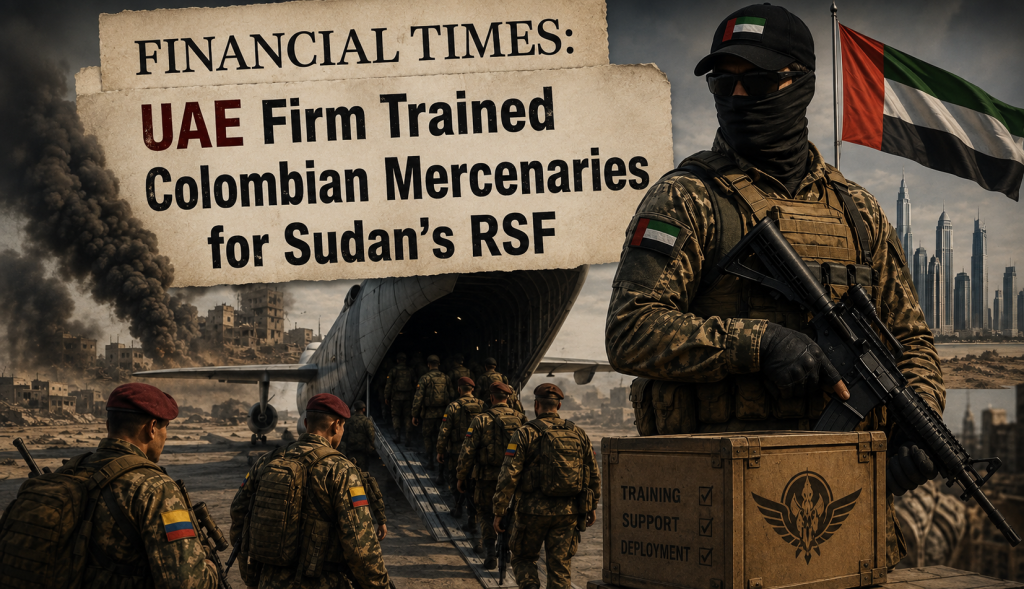
Financial Times: UAE Firm Trained Colombian Mercenaries for Sudan’s RSF

• Author: Lys Iwannughen • 0 comments • 94 views
Financial Times: UAE Firm Trained Colombian Mercenaries for Sudan’s RSF

Algeria Gate: A Financial Times investigation reveals that an Emirati company helped recruit, train, and deploy around 2,000 Colombian mercenaries to fight alongside Sudan’s Rapid Support Forces (RSF).

Most of the fighters have military backgrounds, including special forces veterans and former combatants from South American conflicts. Some previously worked for drug cartels or private security firms in the Middle East.

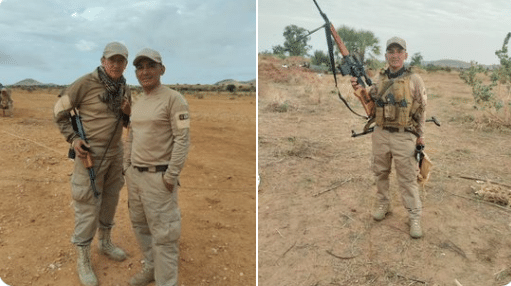
The operation relied on a network of security companies, airports, and bases in UAE-linked countries. Fighters’ accounts match flight passenger lists, immigration records, videos, eyewitness photos, and phone-tracking data analyzed by Conflict Insights Group.
Financial Times: UAE Firm Trained Colombian Mercenaries for Sudan’s RSF

One fighter, “Carlos,” said about 300 specialists received secret training on drones and anti-aircraft weapons in the UAE before deployment. He spent roughly three months there; two others confirmed similar training.

Some Colombians trained at a base in Ghayathi, Abu Dhabi; described by a 2021 UN Panel of Experts as a “military camp.” The site had earlier been used by Emirati firm Black Shield to train Sudanese mercenaries under UAE officers. Training involved the company GSSG and Emirati personnel in military uniforms. Fighters were assigned to specialized units for drones, anti-aircraft guns, and radar.

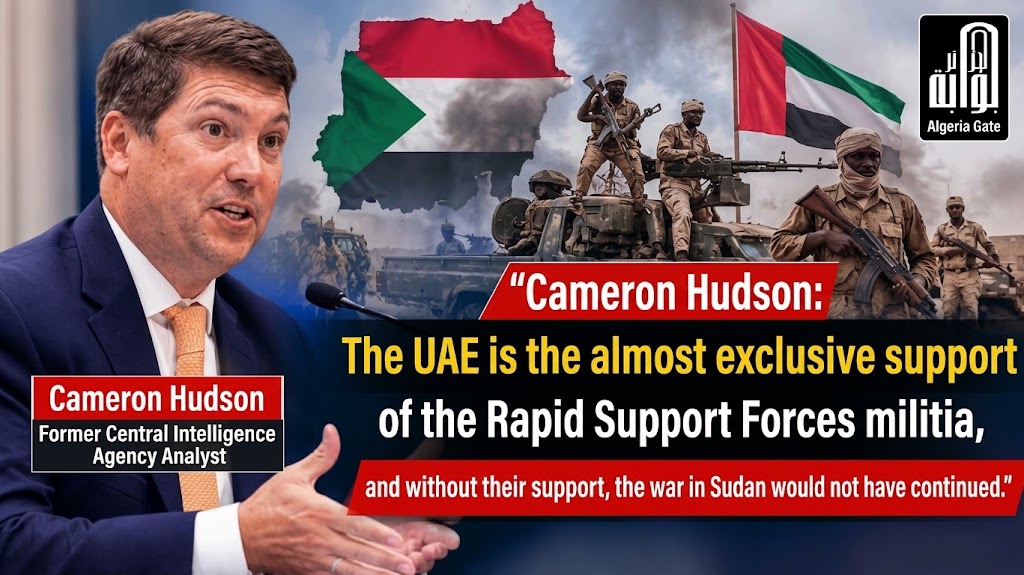
Conflict Insights Group director Justin Lynch stated the UAE funded and trained mercenaries who helped the RSF seize control of El Fasher. A prior Human Rights Watch report also linked two Emirati bases to mercenary activity.


#Sudan#UAE
Author
Lys Iwannughen
View my articles

Leave a comment

Your email address will not be published. Required fields are marked *

Europe
Share this post

Iran Accuses France of Hypocrisy Over Human Rights Stance

Iran Accuses France of Hypocrisy Over Human Rights Stance

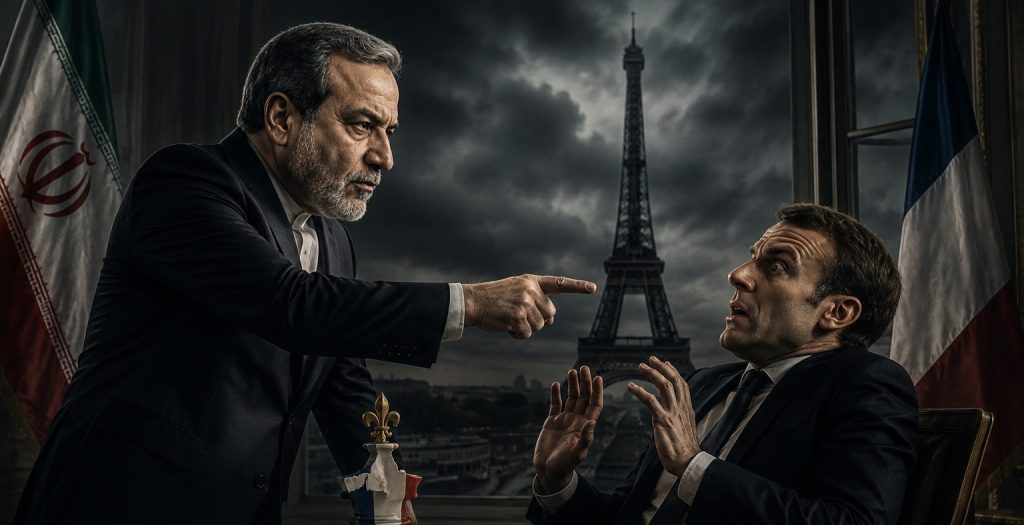
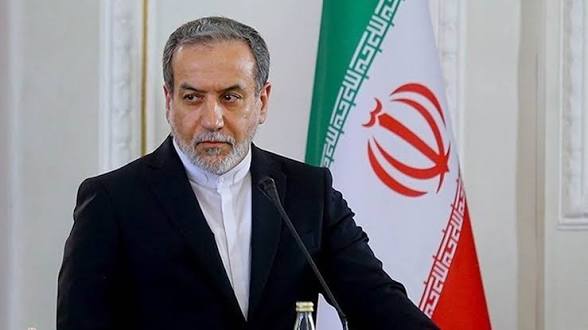
Algerie Gate: Iran has intensified its rhetorical offensive against France, branding Paris’s position on Iranian death sentences as “blatant hypocrisy” amid ongoing tensions over human rights and French policy toward Tehran.

Iranian Foreign Minister Abbas Araghchi said France lacked the moral authority to lecture Tehran on these issues. The comments came in response to French criticism of death sentences imposed on protesters in Iran. Paris had described the executions as a dangerous escalation and a form of repression against the opposition.

Iran Accuses France of Hypocrisy Over Human Rights Stance

Tehran’s response went further. Araghchi linked France’s position to what Iran regards as Paris’s bias toward Israel, particularly in the context of the war in Gaza and recent regional military developments. He argued that these stances had undermined France’s credibility when speaking about human rights and international law.

The exchange reflects broader and growing tensions between the two countries in recent months. These include disputes over French nationals detained in Iran, mutual accusations of espionage, disagreements over regional policy, and Iran’s nuclear program.

What began as a disagreement over executions and human rights has expanded into a wider political confrontation touching on double standards, international law, the conflict in the Middle East, and France’s role in the region.

#France#Iran
Author
Lys Iwannughen
View my articles
Maghrebi files
Share this post

Morocco Allows Israeli Military Boeing 707 to Cross Its Airspace After Spain’s Refusal

Morocco Allows Israeli Military Boeing 707 to Cross Its Airspace After Spain’s Refusal

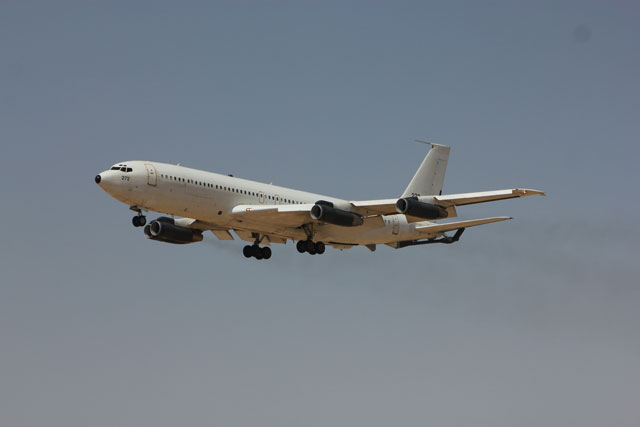
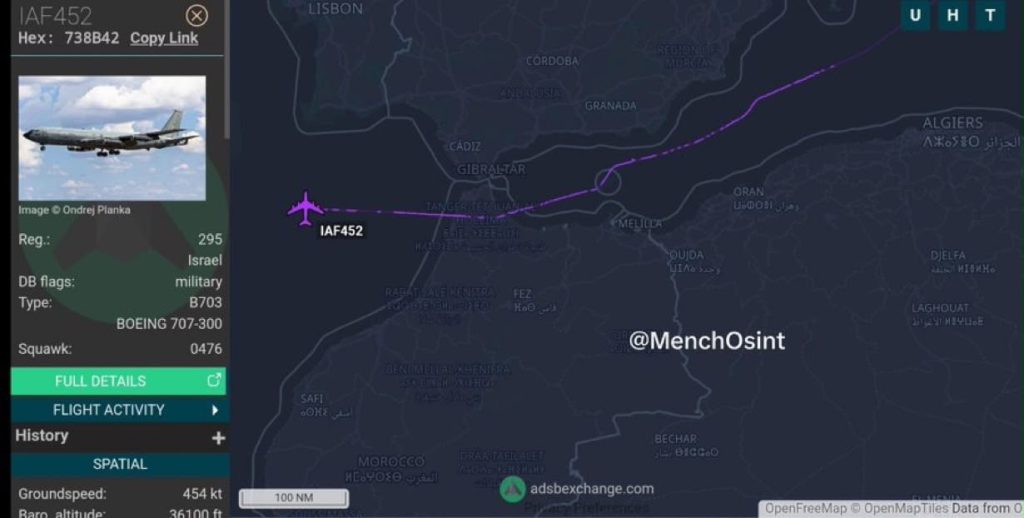
Algeria Gate: Morocco allowed an Israeli military Boeing 707 to transit its airspace en route to the United States after Spain denied the aircraft overflight rights, according to the open-source intelligence account MenchOsint.

The Israeli aircraft was forced to alter its flight path after Spain’s refusal before receiving clearance to cross Moroccan airspace, the account said in a post on X.

The development comes as military aircraft movements linked to regional tensions face heightened scrutiny, amid restrictions Spain has placed on its airspace due to ongoing operations in the region.

Morocco Allows Israeli Military Boeing 707 to Cross Its Airspace After Spain’s Refusal

Boeing 707 aircraft are used by the Israeli Air Force for military missions including transport and aerial refueling, which makes their overseas movements a subject of monitoring by military tracking accounts.

The reports emerge amid Spain’s stricter controls on military aircraft using its airspace for regional operations, following earlier restrictions announced by Madrid over ongoing conflicts and tensions.

The incident raises questions about the growing military and security cooperation between Morocco and Israel, and whether Rabat’s decision signals a readiness to grant Israeli military aircraft access to its airspace.

#Morocco
Author
Lys Iwannughen
View my articles
African coast
Share this post

From Rupture to Dialogue: Algeria’s Diplomatic Prudence Brings Mali Back to the Path of Strategic Partnership

From Rupture to Dialogue: Algeria’s Diplomatic Prudence Brings Mali Back to the Path of Strategic Partnership

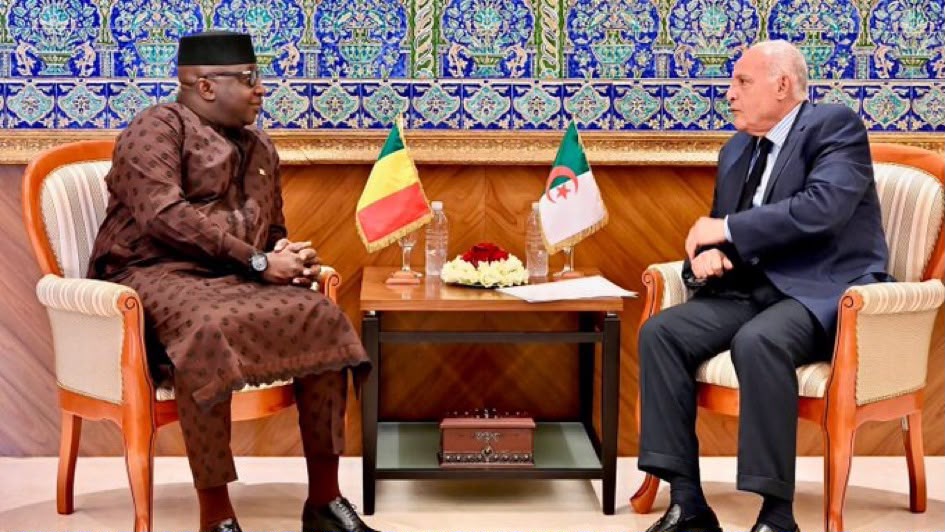
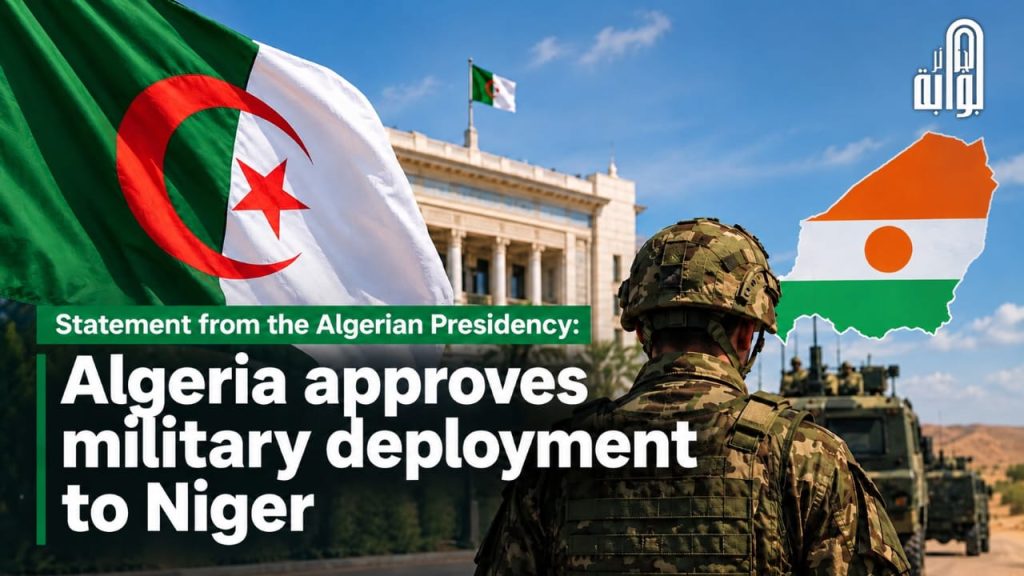
After months of an unprecedented diplomatic crisis, Mali has moved to restore its relationship with Algeria, underscoring Algiers’ enduring role as an indispensable pillar of stability in the Sahel. The visit of Algeria’s Minister of State, Minister of Foreign Affairs, National Community Abroad and African Affairs, Ahmed Attaf, to Bamako as the special envoy of President Abdelmadjid Tebboune highlighted how Algeria’s diplomacy characterized by strategic patience and consistency helped pave the way toward renewed engagement.

Algeria’s Steadfast Diplomacy Amid a Self-Inflicted Crisis

Bilateral relations deteriorated sharply following accusations and unilateral measures taken by the Malian authorities, including the withdrawal of their ambassador and the closure of Malian airspace to Algerian flights. These moves represented a serious escalation against a neighboring country that has historically played a central role in supporting Mali’s stability and security. Throughout the crisis, however, Algeria maintained its policy of restraint, preserving channels of communication and reaffirming that the security and stability of the Sahel remain a strategic priority above short-term political tensions.
Mali Returns to an Irreplaceable Regional Partner

Bamako’s decision to restore diplomatic representation in Algiers and reopen its airspace reflects a renewed recognition of Algeria’s strategic importance as a security and diplomatic partner. With decades of mediation experience, considerable regional influence, and a long shared border with Mali, Algeria remains a key actor in any security or political equation affecting the Sahel. Recent developments suggest that attempts to distance Mali from Algeria ultimately collided with the realities of geography and shared security interests.

Attaf Translates Algeria’s Vision into Practical Cooperation

Ahmed Attaf’s visit to Bamako carried significance well beyond diplomatic protocol. His meetings with Foreign Minister Abdoulaye Diop, as well as the Ministers of Defense and National Reconciliation, focused on strengthening bilateral cooperation, enhancing security coordination, supporting peace efforts in Mali, and reactivating dialogue mechanisms that had been suspended during the crisis. The discussions reflected Algeria’s long-standing preference for proactive diplomacy and practical solutions in addressing regional challenges.

The Sahel Needs Algeria More Than Ever

As terrorism, transnational crime, and geopolitical competition continue to intensify across the Sahel, Algeria has reinforced its position as one of the region’s most experienced and credible security actors. Its extensive border with Mali, decades of counterterrorism expertise, and sustained commitment to political mediation make it a pivotal partner in efforts to prevent further instability at a time when several external powers have reduced their engagement in the region.

Mali’s Return Reinforces Algeria’s African Diplomatic Standing

The normalization of relations further strengthens Algeria’s position as a leading diplomatic actor within the African Union and reaffirms its long-standing commitment to African solutions for African challenges. As Sahel states seek reliable regional partners amid an increasingly volatile geopolitical landscape, Algeria continues to project itself as a stable and credible actor, supported by decades of diplomatic engagement, regional mediation, and a consistent commitment to peaceful conflict resolution.

Author
بوابة الجزائر
View my articles