
Tuesday, 11 August 2026 00:18 Algiers time
Algeria Gate
News Room
Revealed: How Jeffrey Epstein Used Saint-Tropez as a Key Hub for Luring Victims UEFA, AFC and CONCACAF Unite Against FIFA Over ‘Fundamental Breach of Trust’ Moroccan invasion threatens Ceuta… The Makhzen pushes the migration crisis toward a new explosion on August 15th Algeria’s Diplomacy Secures the Release of German Hostage Morocco opens its doors to homosexuals… Mohammed VI violates the sanctities of God! Algerian petroleum product tops Europe’s imports… record shipments in 14 months President Tebboune congratulates world high jump champion Younes Ayachi “7-77” programme to develop digital skills… Algérie Télécom launches free courses in 3 provinces! Algerian army delivers 4 helicopters and military equipment to Niger on President Tebboune’s orders “Mercenary “Slimane Boussoufa Destroyed by Algeria’s Top Journalists Over Ceuta Coverage
Share this post

Scandal Rocks FIFA… Infantino Offers Morocco the 2030 World Cup Final in Exchange for His Support!

Author: Lys Iwannughen 0 comments 20 views
Scandal Rocks FIFA… Infantino Offers Morocco the 2030 World Cup Final in Exchange for His Support!

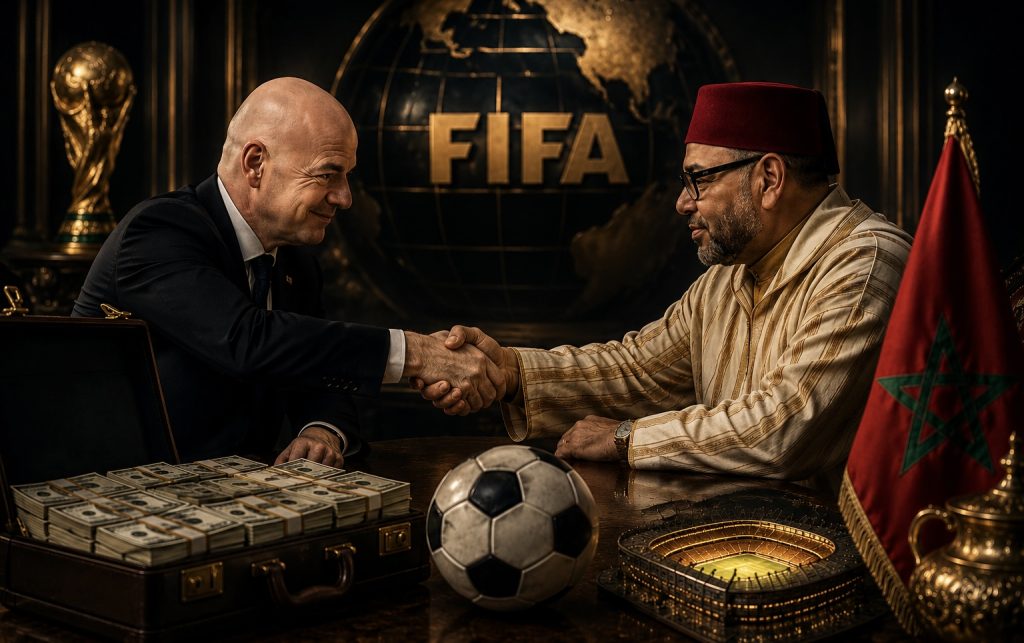
Algeria Gate: The Times has revealed that FIFA President Gianni Infantino offered Morocco the hosting rights for the 2030 World Cup final in exchange for official backing of his re-election bid, as he faces growing pressure to step down over his controversial plan to bring private investors into the tournament.

According to the newspaper, Infantino is seeking a questionable deal with Morocco and its support for his re-election as FIFA president, scheduled for March 2027 and to be hosted by Morocco, after the level of support he previously enjoyed within a number of football federations has declined.
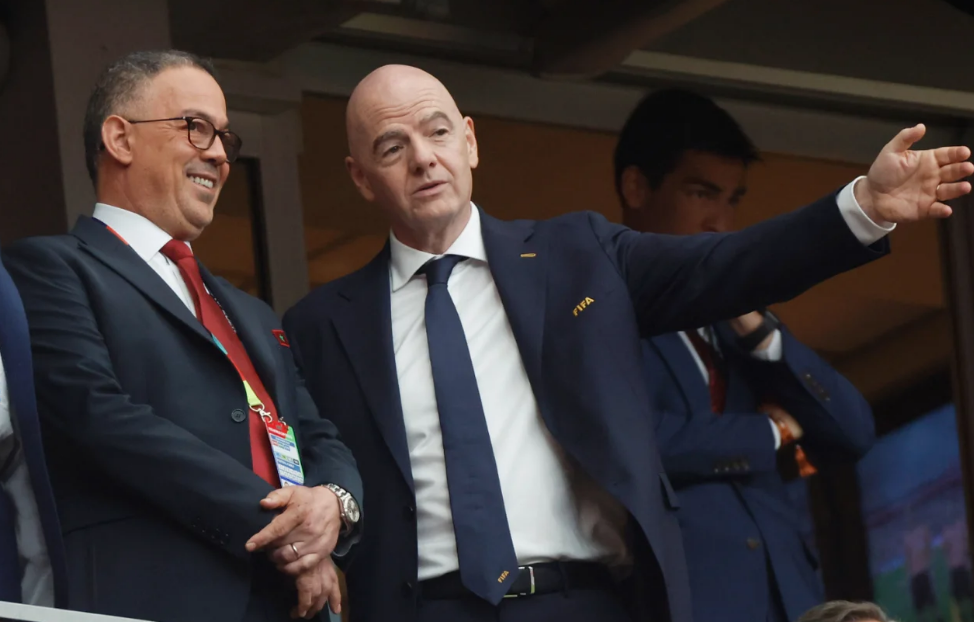
The newspaper added that Infantino held an emergency meeting with several senior FIFA officials in Morocco in an attempt to contain the crisis threatening his future.

Well-informed sources confirmed that he promised to grant Morocco the honour of hosting the 2030 World Cup final at the new Hassan II Stadium in Casablanca, a project that is experiencing significant delays in completion.

These developments come at a time when Spain is clinging to its right to host the tournament’s final match. Spanish Football Federation President Rafael Louzán affirmed that his country will be the “leader” in organising the 2030 World Cup, reiterating his confidence that Spain will host the final and stating that there is no justification for moving it to another country.

Infantino is facing an unprecedented wave of criticism following his proposal to sell a stake of up to 20% of the World Cup’s commercial rights to private-sector investors, in a deal expected to generate around $4.2 billion.
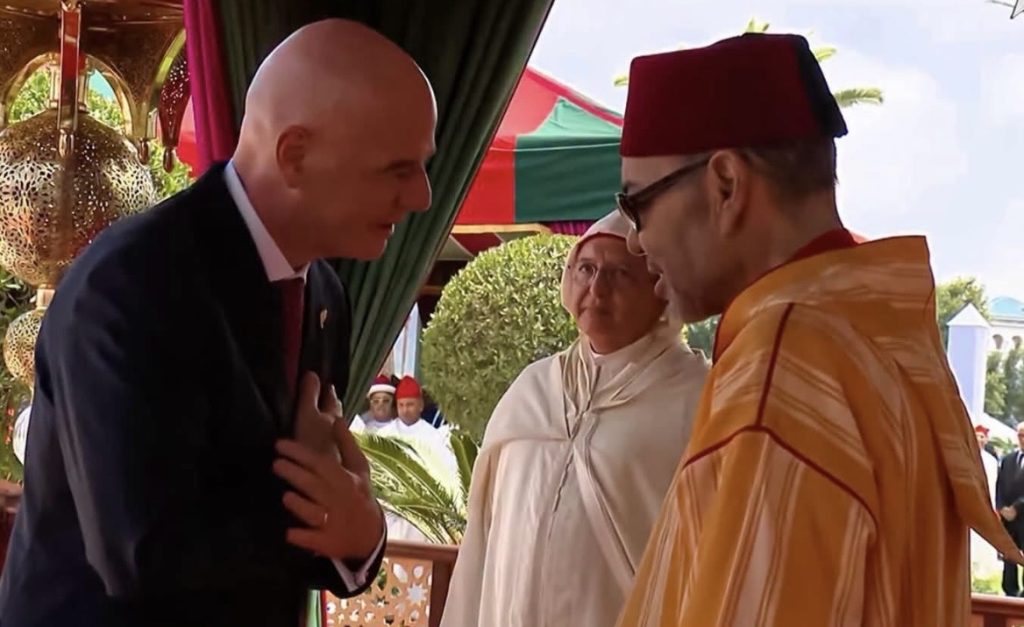
Screenshot

The project has sparked widespread opposition within football circles, with critics viewing it as a threat to FIFA’s nature as a non-profit organisation and an attempt to turn the World Cup into a commercial venture that serves investors’ interests at the expense of the game.

A number of European federations, including those of England and Wales, have announced the withdrawal of their support for Infantino, while UEFA voted to boycott all FIFA competitions in protest against the project. Calls for his resignation are growing amid what is considered one of the most serious crises since he took over the presidency of the world governing body.

Morocco is also facing sharp criticism, particularly in the wake of the fallout from the mass migration tragedy toward the Spanish enclaves of Ceuta and Melilla. The criticism is no longer limited to the humanitarian or political aspects but has extended to the sporting file of greatest importance to Morocco: hosting the 2030 World Cup.

#FIFA#Morocco
Author
Lys Iwannughen

Leave a comment

Your email address will not be published. Required fields are marked *

Algeria
Share this post

Attaf’s Visit to Belarus: Turning Political Trust into Strategic Partnership

Attaf’s Visit to Belarus: Turning Political Trust into Strategic Partnership

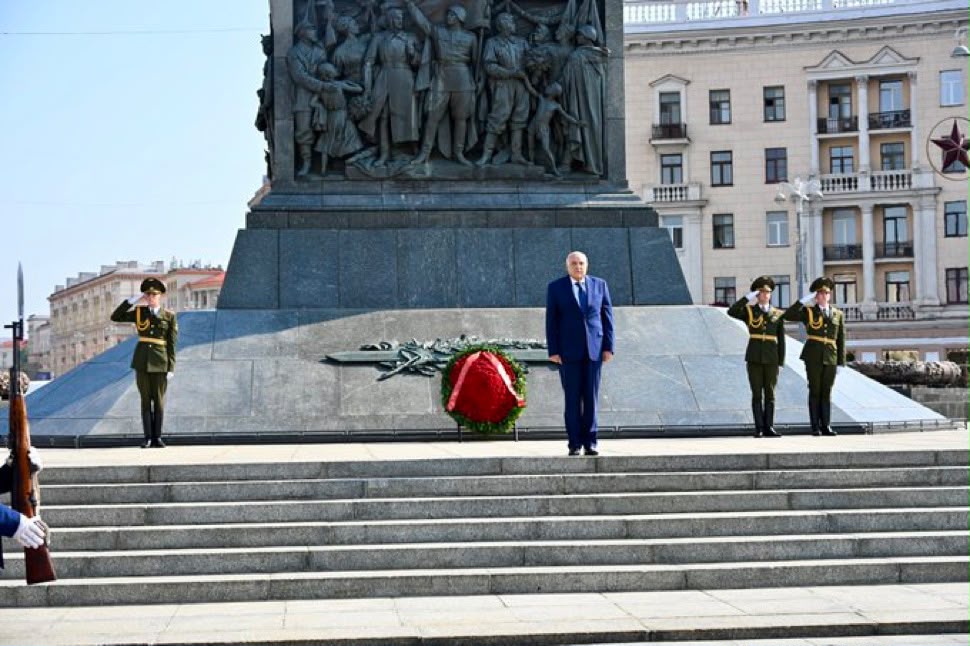
Algerian Minister of State for Foreign Affairs Ahmed Attaf’s official visit to Belarus reflects the growing momentum in relations between Algiers and Minsk. Beyond its diplomatic dimension, the visit aims to accelerate the implementation of bilateral cooperation and prepare for the upcoming visit of President Abdelmadjid Tebboune to Belarus.

https://twitter.com/algatedzEng/status/2085122478184038474?s=20

Talks focused on expanding cooperation in industry, agriculture, mechanical engineering, pharmaceuticals, and trade, while both sides stressed the need to translate political understanding into concrete economic projects. Belarusian President Aleksandr Lukashenko emphasized that the two countries possess significant potential for long-term partnerships, while Attaf highlighted the steady progress achieved in bilateral relations.

At a time when Algeria is diversifying its international partnerships, Belarus has emerged as a promising partner capable of supporting Algeria’s industrial ambitions and economic diversification. The visit therefore represents another step toward building a pragmatic partnership based on mutual interests and shared development goals.

Author
yasmine ouazib
Algeria
Share this post

Tunisia Thanks Sonelgaz for Safeguarding Its Power Grid

Tunisia Thanks Sonelgaz for Safeguarding Its Power Grid

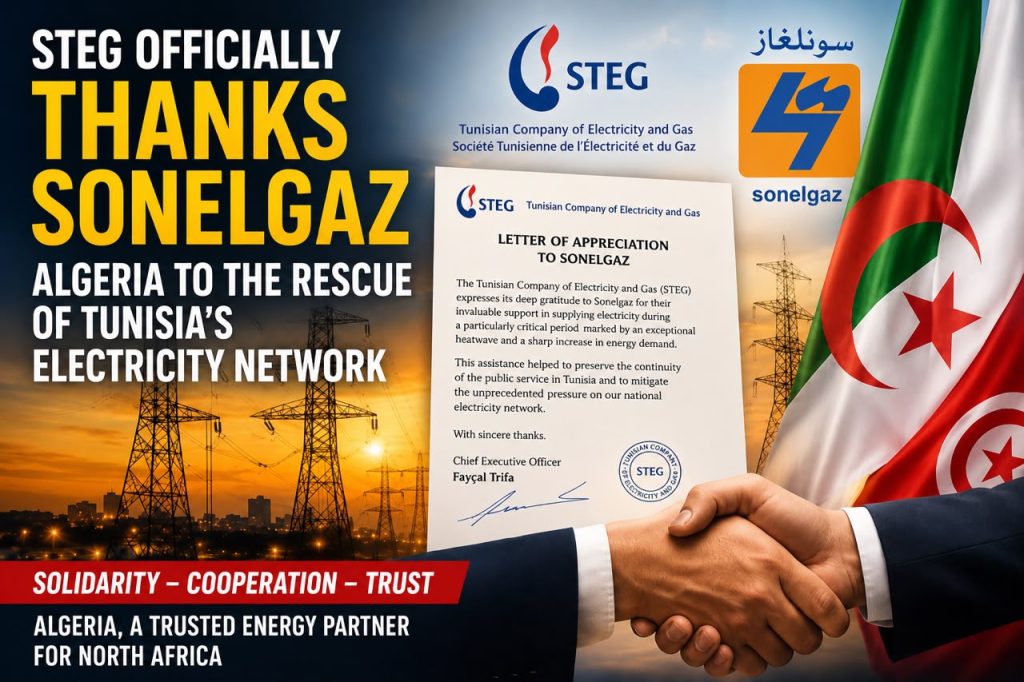
Algeria Gate: Energy cooperation between Algeria and Tunisia has reached a new milestone. Tunisia’s National Electricity and Gas Company (STEG) has officially sent a letter of appreciation to Sonelgaz, praising its crucial support in ensuring electricity supplies during a particularly critical period marked by an exceptional heatwave and a sharp surge in energy demand.

In the official message, STEG Chief Executive Officer Fayçal Trifa expressed his sincere gratitude to the leadership, executives, and employees of Sonelgaz for their swift response and unwavering commitment. He emphasized that this assistance helped maintain the continuity of Tunisia’s public electricity service and eased the unprecedented pressure on the country’s national power grid.

This official recognition highlights Algeria’s strategic role in supporting Tunisia’s energy security. Thanks to Sonelgaz’s generation capacity and the electricity interconnection linking the two countries, Algeria was able to respond rapidly to Tunisia’s needs as electricity demand reached record levels.

Beyond its technical dimension, this gesture reflects the strength of the longstanding partnership between Algiers and Tunis. The two countries enjoy close cooperation in the energy sector, built on solidarity, mutual trust, and shared interests aimed at reinforcing regional energy stability.

This latest expression of appreciation from STEG also reaffirms Sonelgaz’s position as a leading player in North Africa’s energy sector. By supporting Tunisia during a period of exceptional strain on its electricity network, the Algerian public utility has once again demonstrated Algeria’s ability to act as a reliable partner and a strategic energy provider committed to advancing regional cooperation.

Author
yasmine ouazib
Algeria
Share this post

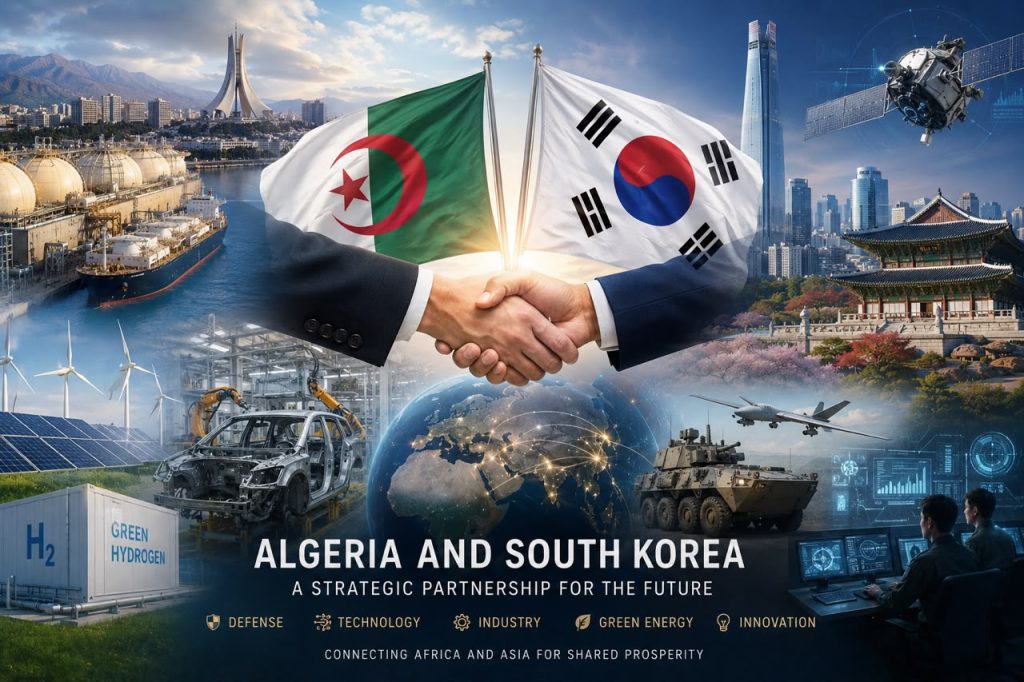
Algeria and South Korea: A Strategic Partnership Spanning Defense, Technology, and the Industries of the Future

Algeria and South Korea: A Strategic Partnership Spanning Defense, Technology, and the Industries of the Future

As the international order undergoes profound transformation and global supply chains and economic alliances are reshaped, relations between Algeria and the Republic of Korea have emerged as a compelling model of a multidimensional strategic partnership. Built on economic complementarity, industrial cooperation, political coordination, defense collaboration, and growing ties in education, culture, and innovation, the relationship continues to gain strategic significance.

https://twitter.com/algatedzEng/status/2085107523351150748?s=20

Since establishing diplomatic relations in 1990, Algeria and South Korea have steadily elevated their cooperation, culminating in Algeria becoming South Korea’s only strategic partner in Africa a designation that reflects the mutual trust, geopolitical importance, and long-term vision shared by both nations.

Political Partnership Built on Dialogue and Stability

Recent years have witnessed an accelerated pace of high-level exchanges, underscoring the shared determination of both governments to broaden bilateral cooperation.

In January 2026, Algeria welcomed a delegation from the Korea–Algeria Parliamentary Friendship Group. Discussions focused on strengthening political, economic, and parliamentary relations while promoting greater institutional exchanges and legislative cooperation.

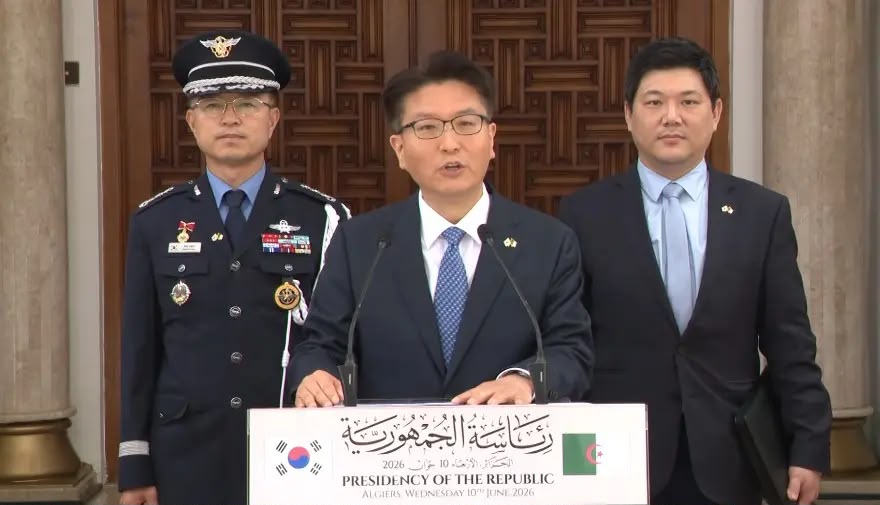
In APRIL 2026, Algeria’s Secretary-General of the Ministry of Foreign Affairs, Lounès Magramane, received South Korean Vice Minister of Foreign Affairs for Economic Affairs Park Jong-han. Their talks centered on expanding Korean investment in Algeria, revitalizing the Joint Economic Committee, and marking two decades of the strategic partnership between the two countries.

Beyond bilateral issues, Algiers and Seoul share common positions on numerous international challenges, including support for multilateralism, sustainable development, and reforms aimed at strengthening global economic governance.

Economic Cooperation: Where Natural Resources Meet Advanced Technology

Algeria is among South Korea’s key suppliers of liquefied natural gas (LNG), while South Korea contributes advanced technology, industrial expertise, and engineering capabilities that support Algeria’s modernization agenda.

Leading Korean companies including Hyundai Engineering & Construction, Samsung C&T, and Daewoo Engineering & Construction—have played major roles in strategic Algerian projects involving power generation, ports, industrial facilities, and critical infrastructure. These investments have also facilitated technology transfer and the development of Algerian technical expertise.

As Algeria accelerates its economic diversification strategy, South Korea has become an increasingly important partner in manufacturing, renewable energy, digital transformation, and innovation-driven industries.

Industrial Cooperation: From Import Dependence to Technology Transfer

Algeria’s ambition to establish a competitive industrial base aligns closely with South Korea’s globally recognized manufacturing model.

This complementarity creates significant opportunities for joint ventures in key sectors, including:

  • Automotive manufacturing and components;
  • Electronics and household appliances;
  • Mechanical industries;
  • Digital technologies and artificial intelligence;
  • Semiconductors and other advanced technologies.

Technology transfer and workforce development remain central priorities for Algeria as it seeks to build internationally competitive domestic industries capable of serving regional and global markets.

Expanding Defense Cooperation

Defense cooperation has emerged as one of the fastest-growing dimensions of bilateral relations.

In May 2025, Algeria and South Korea exchanged a Memorandum of Understanding on defense cooperation between their respective Ministries of National Defense. The agreement laid the foundation for expanded collaboration in defense industries, military technology, training, and capacity building.

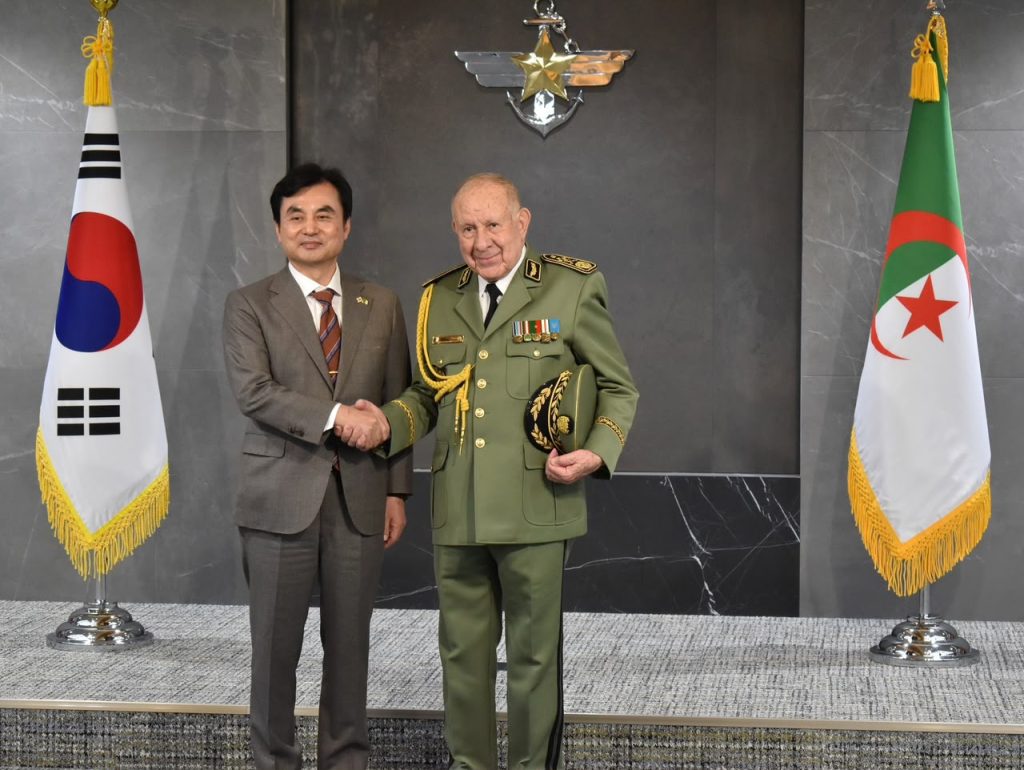
Later, in October 2025, General Saïd Chengriha, Algeria’s Minister Delegate to the Minister of National Defence and Chief of Staff of the People’s National Army, paid an official visit to Seoul, where he met South Korea’s Minister of National Defense and the Chairman of the Joint Chiefs of Staff. Their discussions focused on advancing defense-industrial cooperation, expanding technology transfer, strengthening military education and training, and exploring new opportunities in defense manufacturing.

General Chengriha also attended ADEX 2025 one of Asia’s premier aerospace and defense exhibitions where he reviewed cutting-edge defense systems, unmanned aerial platforms, cybersecurity technologies, and next-generation military innovations, reflecting Algeria’s commitment to modernizing its defense capabilities through strategic international partnerships.

Green Energy and Sustainable Development

Bilateral cooperation has expanded well beyond conventional energy into the fields of green growth and sustainable development.

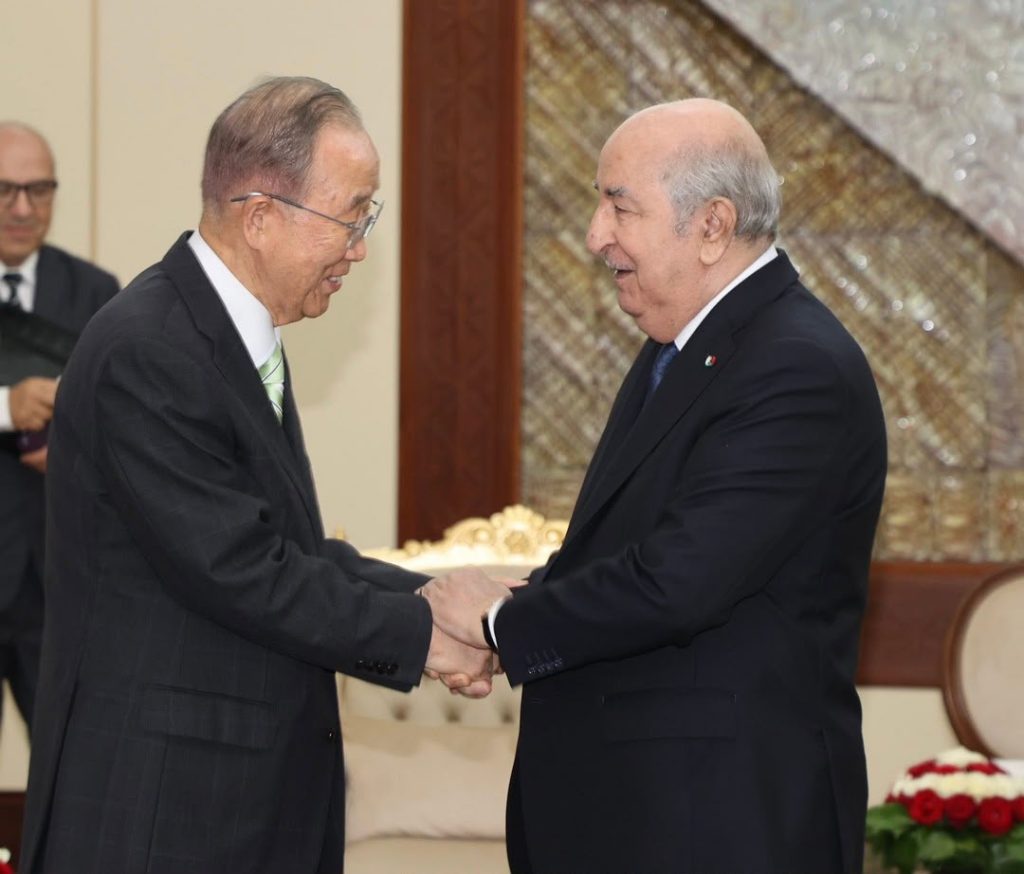
In June 2026, former United Nations Secretary-General Ban Ki-moon visited Algeria in his capacity as President and Chair of the Global Green Growth Institute (GGGI). Discussions with Algerian officials focused on sustainable development, green economic transformation, energy transition, and environmental innovation.

These priorities complement Algeria’s national strategy to expand renewable energy production and develop a green hydrogen industry, while drawing on South Korea’s internationally recognized expertise in clean technologies and sustainable industrial development.

Education, Culture, and Soft Power

People-to-people exchanges continue to strengthen bilateral relations.

Interest in the Korean language and culture has grown steadily among Algerian youth, accompanied by expanding scholarship opportunities, academic exchanges, and university cooperation.

Meanwhile, the Embassy of the Republic of Korea in Algeria regularly organizes cultural events showcasing Korean cinema, music, visual arts, and cuisine, reinforcing mutual understanding and strengthening the bonds between the two societies.

A Strategic Bridge Between Asia and Africa

For South Korea, Algeria offers a strategic gateway to African markets through its geographic position, expanding logistics infrastructure, and status as Africa’s largest country by land area.

For Algeria, South Korea represents a global leader in manufacturing excellence, technological innovation, digital transformation, and industrial competitiveness.

As bilateral relations enter a new phase, the Algeria–South Korea partnership has evolved beyond traditional trade into a comprehensive long-term strategic relationship encompassing security, advanced manufacturing, energy, scientific research, innovation, and the green economy.

At a time when technological leadership and industrial resilience are reshaping global power dynamics, Algeria and South Korea are uniquely positioned to build one of the most significant Africa Asia partnerships of the twenty-first century one founded on knowledge transfer, joint industrial development, sustainable investment, and shared prosperity, while reinforcing both countries’ roles within the evolving global economy.

Author
yasmine ouazib