Monday, 19 October 2026 • 02:35 Algiers time
Algeria Gate
News Room
Cameron Hudson: UAE is virtually the sole backer of the RSF..without its support the war in Sudan would not continue Algeria-Niger: Official launch of Trans-Saharan fibre optic link Five minutes of lament over Algeria: Amar Belani exposes CNEWS’s real obsession Algerian courts hand down first death sentences under new drugs law Ségolène Royal’s masterclass on Algeria against an ignorant and demagogic journalist President Tebboune and senior officials receive the remains of Boualem Boualem in Algiers NAPEC 2026 in Oran: Algeria at the Heart of Africa’s and the Mediterranean’s New Energy Landscape Pegasus Files: Amnesty Uncovers Morocco’s Espionage Against Spain President Tebboune Orders Salary Increases in Algeria’s 2027 Budget, Rules Out New Taxes on Citizens Algeria Emerges as a Trusted Power for Regional Peace and Stability
Share this post

Spanish Police Foil Hashish Smuggling from Morocco to Canary Islands, Arrest 11

• Author: Lys Iwannughen • 0 comments • 66 views
Spanish Police Foil Hashish Smuggling from Morocco to Canary Islands, Arrest 11

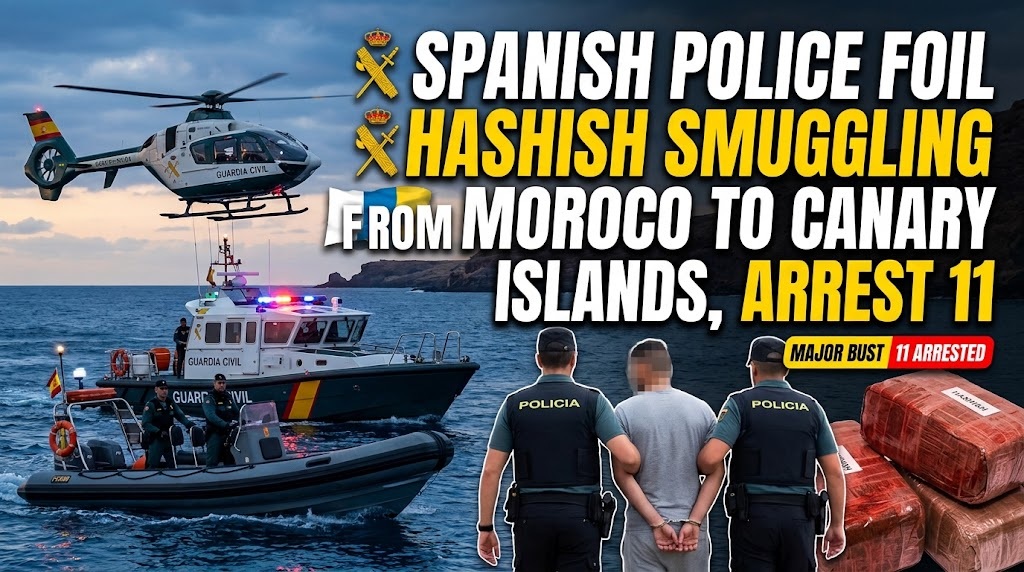
Algeria Gate/Agencies: Spanish police and Civil Guard officers have arrested 11 people after a rubber dinghy loaded with hashish from Morocco ran aground on the southern coast of Gran Canaria, authorities confirmed Friday.

The vessel was discovered stranded in the Castillo del Romeral area. Investigators say the boat was used to transport hashish across the short maritime route between the Moroccan coast and the Canary Islands. Nine of those detained have been ordered into provisional detention by Spanish judicial authorities. The status of the remaining two suspects and the exact quantity of the seized consignment have not yet been disclosed.

How the Operation Unfolded

The case began with the discovery of the beached dinghy. Follow-up inquiries by the National Police and Civil Guard quickly led to the 11 arrests for alleged involvement in unloading and moving the drugs ashore. Spanish security services are continuing to map the wider network, seeking additional suspects linked to the shipment’s reception and distribution on the islands.

The incident fits a familiar pattern. Drug-trafficking groups regularly exploit the relatively short sea distance between Morocco and the Canary Islands, using fast rubber boats to deliver hashish while attempting to avoid detection during offloading.

Part of a Larger Pattern in the Canaries

This latest bust is not an isolated event. In June, Spanish authorities dismantled a criminal network specialising in the introduction, storage and distribution of hashish between the Canary Islands and mainland Spain. That operation resulted in 25 arrests and the seizure of more than 7.5 tonnes of the drug.

In the same period, Spanish forces intercepted a yacht more than 400 miles south of the Canary Islands carrying approximately 500 kilograms of cocaine. The crew included Moroccan nationals.

These successive seizures highlight the persistent use of Atlantic routes connecting North Africa to Spain’s outermost region. While Moroccan authorities present themselves as active partners in regional anti-drug efforts, repeated European interdictions continue to identify Morocco as a key departure and transit point for both hashish and cocaine consignments bound for Europe.

Ongoing Challenges Along the Atlantic Corridor

The return of rubber-boat consignments to the headlines, despite repeated Spanish operations, underscores the resilience of the networks involved. Security officials note that the combination of short crossing distances, high profit margins and the difficulty of constant maritime surveillance keeps the route attractive to organised groups.

Investigations into the Gran Canaria case remain open as authorities work to identify further members of the organisation and fully reconstruct the logistics chain behind the stranded dinghy.


Author
Lys Iwannughen
View my articles

Leave a comment

Your email address will not be published. Required fields are marked *

Europe
Share this post

Iran Accuses France of Hypocrisy Over Human Rights Stance

Iran Accuses France of Hypocrisy Over Human Rights Stance

Algerie Gate: Iran has intensified its rhetorical offensive against France, branding Paris’s position on Iranian death sentences as “blatant hypocrisy” amid ongoing tensions over human rights and French policy toward Tehran.

Iranian Foreign Minister Abbas Araghchi said France lacked the moral authority to lecture Tehran on these issues. The comments came in response to French criticism of death sentences imposed on protesters in Iran. Paris had described the executions as a dangerous escalation and a form of repression against the opposition.

Iran Accuses France of Hypocrisy Over Human Rights Stance

Tehran’s response went further. Araghchi linked France’s position to what Iran regards as Paris’s bias toward Israel, particularly in the context of the war in Gaza and recent regional military developments. He argued that these stances had undermined France’s credibility when speaking about human rights and international law.

The exchange reflects broader and growing tensions between the two countries in recent months. These include disputes over French nationals detained in Iran, mutual accusations of espionage, disagreements over regional policy, and Iran’s nuclear program.

What began as a disagreement over executions and human rights has expanded into a wider political confrontation touching on double standards, international law, the conflict in the Middle East, and France’s role in the region.

#France#Iran
Author
Lys Iwannughen
View my articles
Maghrebi files
Share this post

Morocco Allows Israeli Military Boeing 707 to Cross Its Airspace After Spain’s Refusal

Morocco Allows Israeli Military Boeing 707 to Cross Its Airspace After Spain’s Refusal

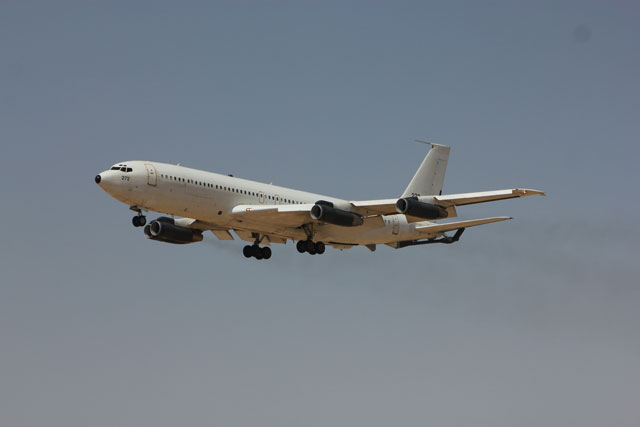
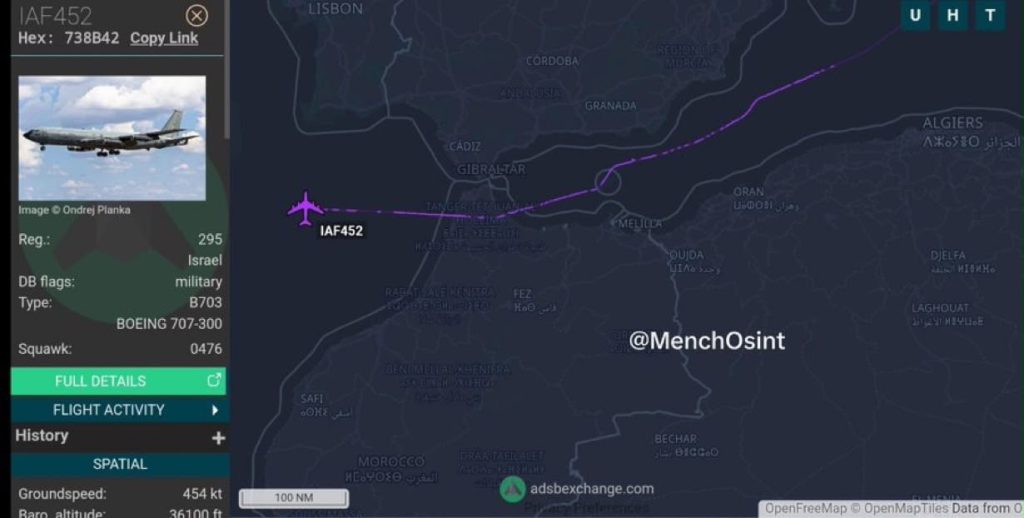
Algeria Gate: Morocco allowed an Israeli military Boeing 707 to transit its airspace en route to the United States after Spain denied the aircraft overflight rights, according to the open-source intelligence account MenchOsint.

The Israeli aircraft was forced to alter its flight path after Spain’s refusal before receiving clearance to cross Moroccan airspace, the account said in a post on X.

The development comes as military aircraft movements linked to regional tensions face heightened scrutiny, amid restrictions Spain has placed on its airspace due to ongoing operations in the region.

Morocco Allows Israeli Military Boeing 707 to Cross Its Airspace After Spain’s Refusal

Boeing 707 aircraft are used by the Israeli Air Force for military missions including transport and aerial refueling, which makes their overseas movements a subject of monitoring by military tracking accounts.

The reports emerge amid Spain’s stricter controls on military aircraft using its airspace for regional operations, following earlier restrictions announced by Madrid over ongoing conflicts and tensions.

The incident raises questions about the growing military and security cooperation between Morocco and Israel, and whether Rabat’s decision signals a readiness to grant Israeli military aircraft access to its airspace.

#Morocco
Author
Lys Iwannughen
View my articles
Maghrebi files
Share this post

Morocco Faces Setback as Russia Rejects 25 Tons of Fish Over Documentation Issues

Morocco Faces Setback as Russia Rejects 25 Tons of Fish Over Documentation Issues

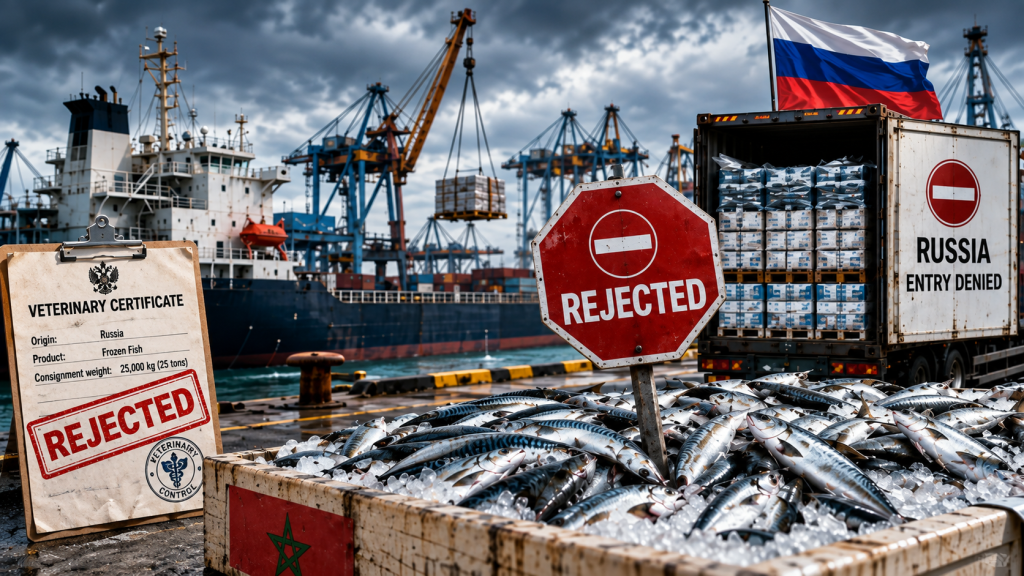
Algeria Gate: In a new blow to the image of Moroccan exports, a large shipment of fish arriving from Morocco ran into a regulatory obstacle in Russia, after Russian authorities blocked the entry of 25 tons of frozen mackerel, known as “capelin,” into Kaliningrad Oblast.

Morocco Faces Setback as Russia Rejects 25 Tons of Fish Over Documentation Issues

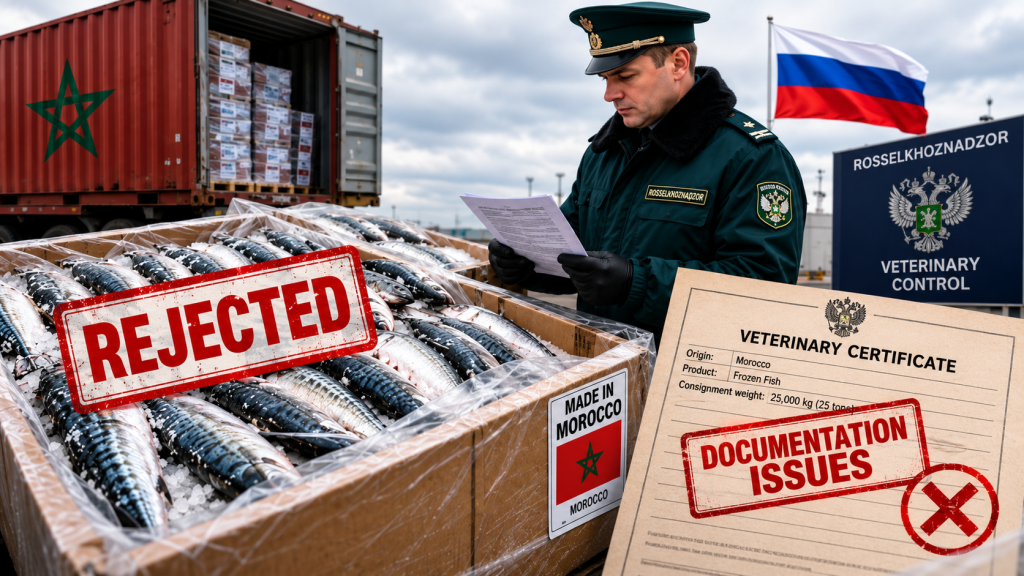
This time the issue concerns documents that are supposed to be the first links guaranteeing product safety and traceability. During the inspection, the competent Russian authorities recorded a violation in the accompanying veterinary documents after discovering that the name of the veterinary certificate does not match the model approved by the Russian authorities.

Faced with this discrepancy, the Russian authorities did not hesitate to suspend the release of the entire shipment and ban its entry into the market, placing the quantity in isolated warehouses pending official clarifications from the Moroccan veterinary services.

Morocco Faces Setback as Russia Rejects 25 Tons of Fish Over Documentation Issues

It is noteworthy that this is not a marginal piece of paper or an error that can be overlooked in the process of exporting food products. Veterinary certificates form an essential part of the international control system, particularly for animal and fish products, serving as a tool to verify origin, conformity, and traceability.

Thus, 25 tons of Moroccan fish found themselves stuck outside the Russian market due to a defect in the accompanying documents; an incident that once again raises questions about the rigor of Morocco’s export system and the extent to which it complies with the regulatory requirements imposed by international markets.

#Morocco#Russia
Author
Lys Iwannughen
View my articles