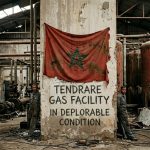


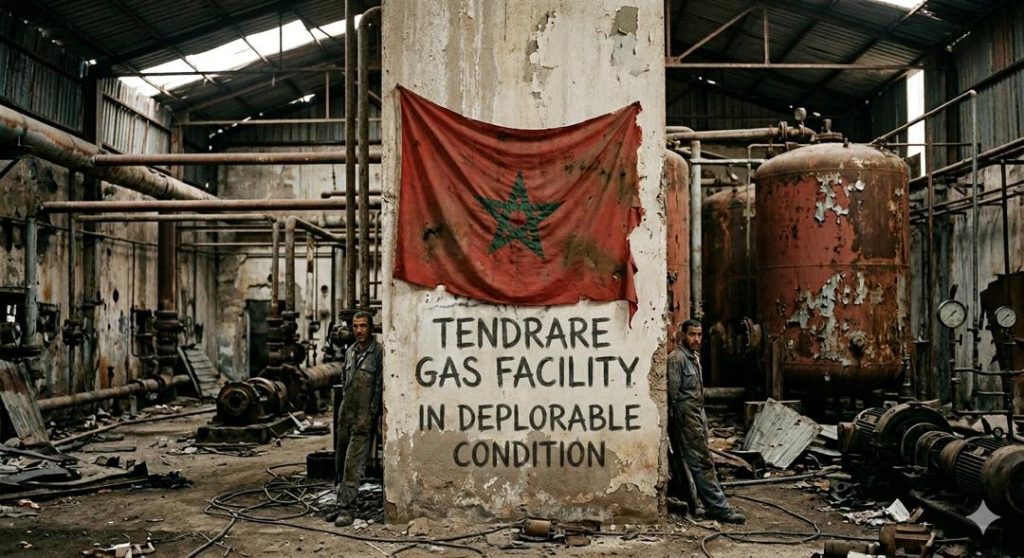
While drums were being beaten and promises piled up about Morocco entering an era of “energy independence,” the deal involving the British company Sound Energy has torn away the curtain on a harsher reality. The company’s exit from the Tendrara field is not “restructuring” it is a tactical escape that raises an unavoidable question: was the Moroccan public misled for years by gas promises that were nothing more than media bubbles?
- The Big Exit: Timing That Reveals Everything
The withdrawal was not a calm strategic decision, but rather a process of dumping assets that had become a heavy burden. When a company sells its stake in a “strategic” project and fully exits, it is not chasing energy transition narratives — it is trying to save itself before the financial and technical pressure turns into a full-blown collapse.
The company’s stock drop of more than 40% on the London market is not just a number — it is a verdict from investors on the project’s viability.
- “Managem”: A Lifeline or a Trap?
Managem presents itself as a rescuer, but in reality it may have inherited a “problem asset.” The exit of an experienced foreign partner raises a sharp question: if the foreign expert failed — or chose to leave — what exactly gives Managem the ability to succeed where others didn’t?
Are we witnessing the “nationalization of losses” instead of the nationalization of wealth? Taking full control of a struggling field may not be a gain, but rather a financial gamble in a project that has proven itself to be a “black hole” for capital.
- The “Big Discoveries” Narrative: Where Is the Gas?
For years, optimism was sold to the public: “huge discoveries,” “commercial gas,” “production is near.” Today, after years of waiting, the project is still stuck in place.
The uncomfortable truth is that either the gas does not exist in commercially viable quantities as promoted, or the cost of extraction makes it unattractive for serious investors.
So was this an investment story — or a staged performance where the main actor quietly leaves the stage, leaving an empty set behind?
- The Forbidden Question: Who Is Responsible for the Delay?
Valuable time has been lost, alternative energy projects delayed, all under the shadow of the “Tendrara gas dream.” Who is responsible for this prolonged uncertainty?
And who will pay the price of a strategy that may have relied on a losing horse? The British company’s exit is not the end of the story it is the beginning of a necessary reckoning: why was the reality of delays not openly addressed earlier?
What happened in Tendrara is a harsh lesson in managing national resources. The mask has fallen, and Morocco is left with two difficult choices: either inject massive public funds to rescue a project that a foreign investor has effectively abandoned, or admit that the “gas miracle” narrative may have been overestimated and is now fading as investors move elsewhere in search of real returns
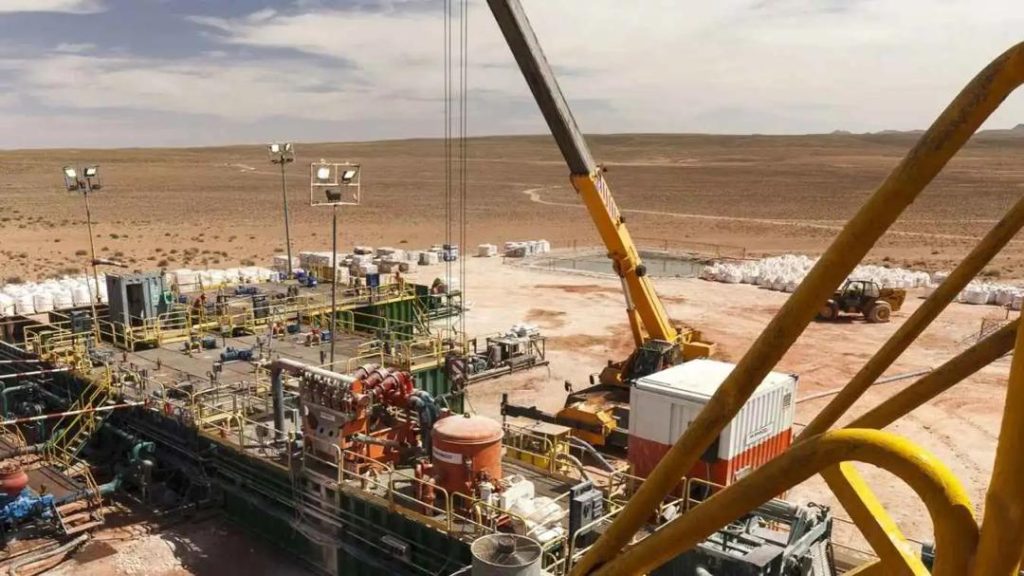
To be blunt: is there still any real future for this field, or are we looking at an “economic corpse” being cosmetically polished by public discourse?