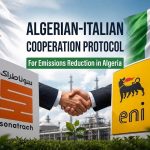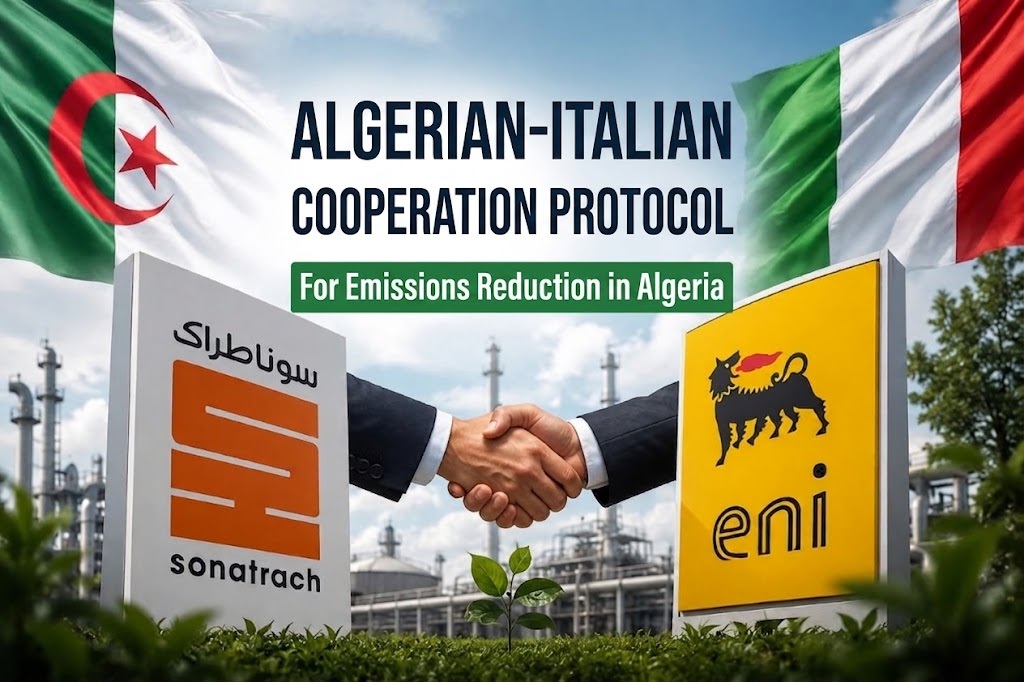
Algeria Gate: Algeria’s state energy group Sonatrach and Italy’s Eni have signed a new memorandum of intent aimed at cutting greenhouse gas emissions, including methane, across Algeria’s oil and gas sector. The agreement targets concrete decarbonization opportunities and initiatives, drawing on international best practices adopted across the global oil and gas industry.
Building on the 2023 Sonatrach-Eni Partnership
According to a Sonatrach statement, the new protocol extends work carried out under a 2023 memorandum of intent between the two companies, which focused on technological cooperation to reduce and make better use of flared gas, along with developing emissions-reduction technologies.
Energy audits and technical assessments carried out under that earlier agreement identified opportunities of mutual interest and paved the way for concrete emissions-reduction measures on the ground.
Joint Emissions-Reduction Initiatives
As part of the ongoing partnership, Sonatrach and Eni carried out a structured program of joint activities, including:
- Technical analyses of emissions sources
- Capacity-building initiatives and staff training
- Field visits to operational sites
Targeted training courses were also developed for immediate rollout, alongside precise technical measures required at individual production sites.
Leak Detection and Repair Campaign Cuts Fugitive Emissions
The implementation of the 2023 memorandum already enabled a joint leak detection and repair (LDAR) campaign, which significantly reduced fugitive methane emissions across shared operations.
Leak detection and repair measurement campaigns are now carried out on a regular, systematic basis at gas complexes jointly operated by Sonatrach and Eni. A baseline emissions assessment has also been completed across six facilities run jointly by the two companies in Algeria.
What the New Protocol Means Going Forward
The newly signed protocol allows Sonatrach and Eni to continue the emissions-reduction work launched in 2023 while exploring new areas for further initiatives. It also strengthens cooperation on natural carbon dioxide capture, including through a dedicated reforestation project, expanding the partnership beyond technical fixes to nature-based climate solutions.