Sunday, 18 October 2026 • 20:12 Algiers time
Algeria Gate
News Room
Cameron Hudson: UAE is virtually the sole backer of the RSF..without its support the war in Sudan would not continue Algeria-Niger: Official launch of Trans-Saharan fibre optic link Five minutes of lament over Algeria: Amar Belani exposes CNEWS’s real obsession Algerian courts hand down first death sentences under new drugs law Ségolène Royal’s masterclass on Algeria against an ignorant and demagogic journalist President Tebboune and senior officials receive the remains of Boualem Boualem in Algiers NAPEC 2026 in Oran: Algeria at the Heart of Africa’s and the Mediterranean’s New Energy Landscape Pegasus Files: Amnesty Uncovers Morocco’s Espionage Against Spain President Tebboune Orders Salary Increases in Algeria’s 2027 Budget, Rules Out New Taxes on Citizens Algeria Emerges as a Trusted Power for Regional Peace and Stability
Share this post

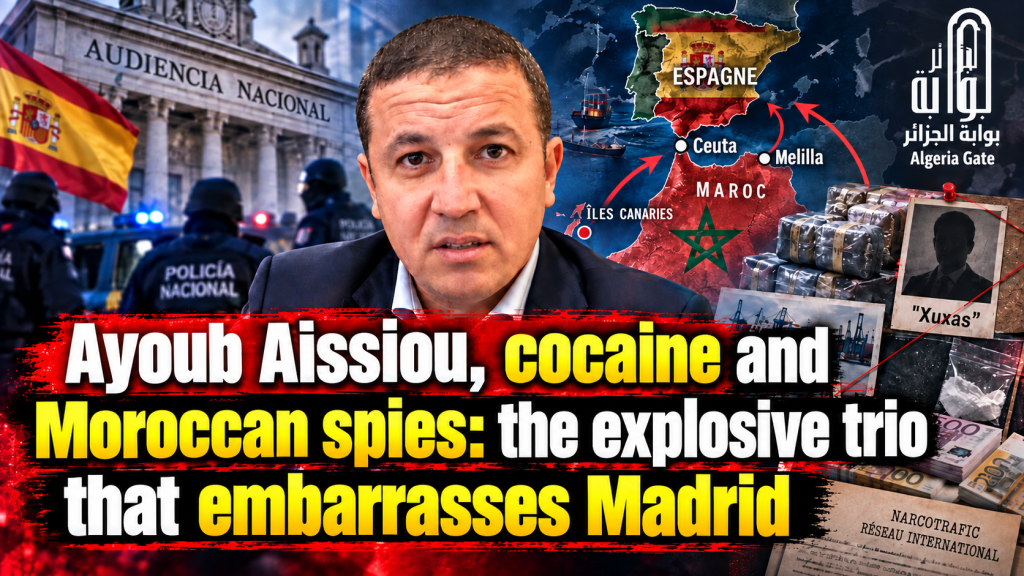
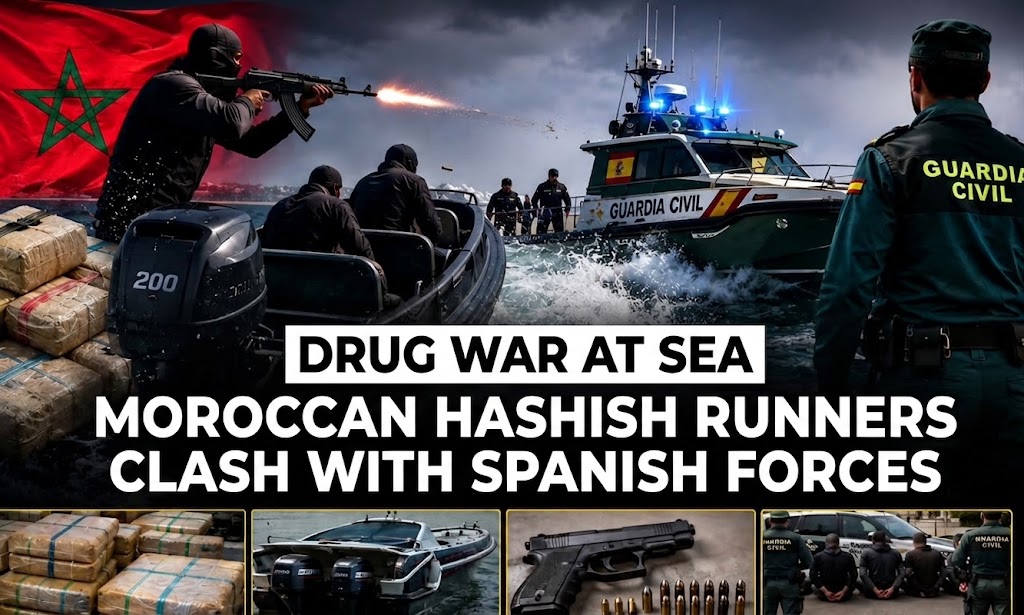
Drug War at Sea: Moroccan Hashish Runners Clash With Spanish Forces

• Author: Lys Iwannughen • 0 comments • 79 views
Drug War at Sea: Moroccan Hashish Runners Clash With Spanish Forces

Algeria Gate: A routine drug bust off the coast of Huelva turned violent this week, exposing just how far Morocco-linked hashish smuggling networks are now willing to go to protect their cargo.

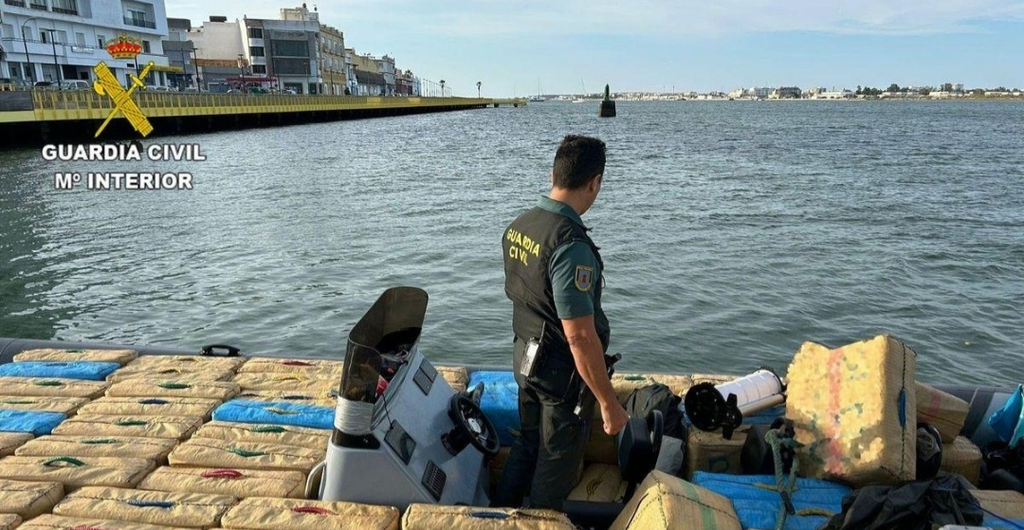
Spain’s Civil Guard said the operation began Monday when a maritime patrol, working with customs surveillance agents, spotted a semi-rigid boat suspected of running drugs and gave chase. The smugglers responded with reckless maneuvers on open water, dumping part of their load overboard before opening fire on the pursuing officers; a level of aggression rarely seen even in a region well accustomed to drug-running.

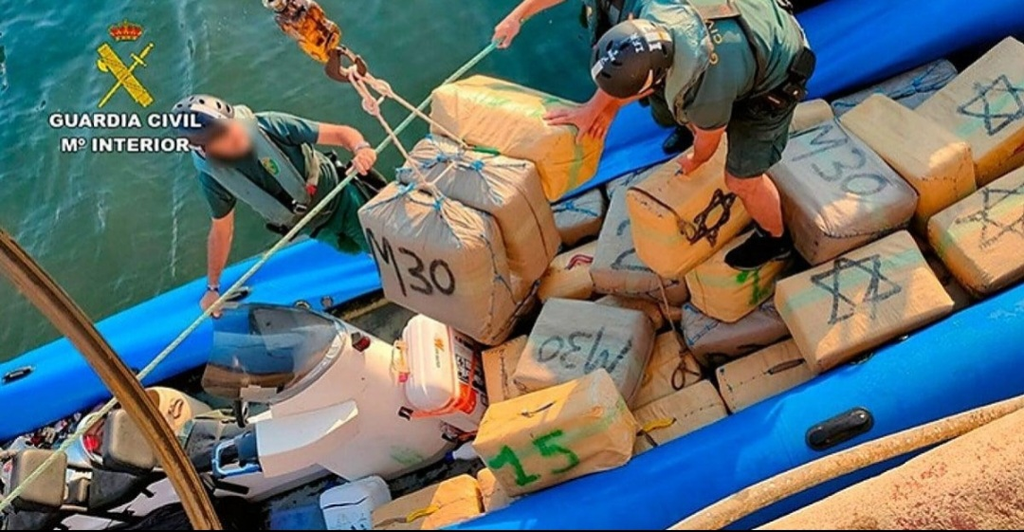
Guards returned fire, wounding one suspect, but the boat escaped after the patrol vessel broke down. Spanish forces spent the following days hunting for the crew and the missing cargo. By Thursday, they had located and intercepted both the original boat and a second vessel that had been backing it up at sea. Nine people were arrested and nearly six tons of hashish seized. A tenth suspect, shot during the earlier clash, was later found abandoned on the Cádiz coast and hospitalized.

In total, the operation netted ten arrests, roughly 5,926 kilograms of hashish and two speedboats, but more strikingly, it confirmed what Spanish authorities have increasingly warned: smuggling networks along the southern coast are no longer just evading patrols, they’re arming themselves to fight through them.
Drug War at Sea: Moroccan Hashish Runners Clash With Spanish Forces

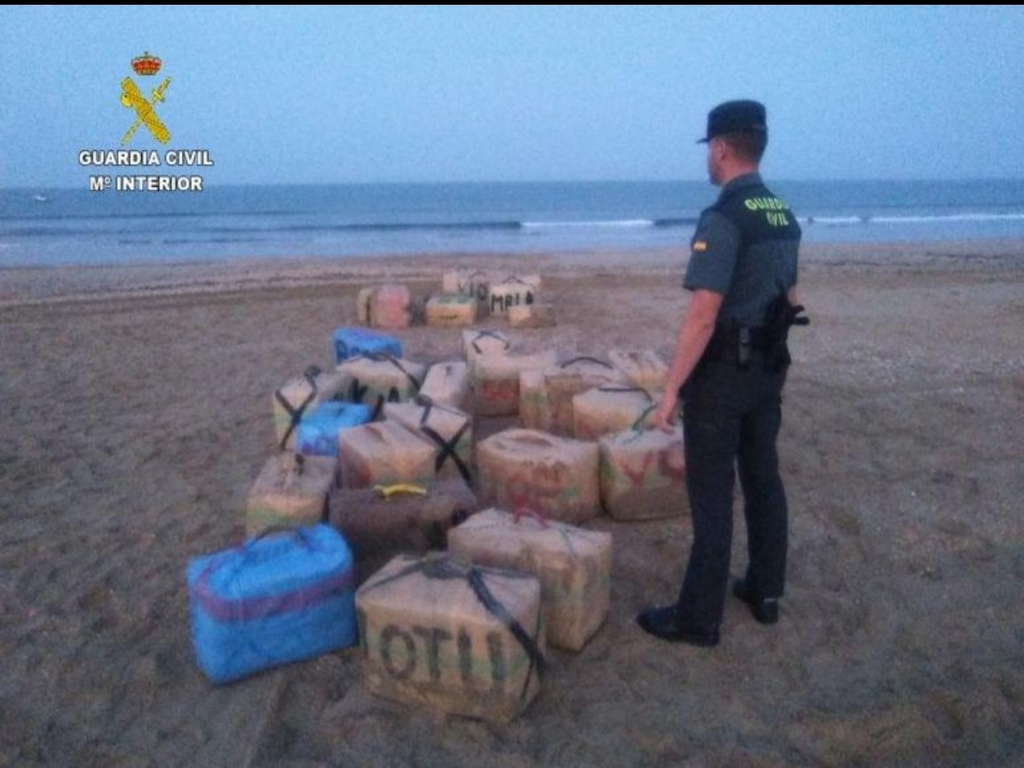
The Huelva bust wasn’t isolated. Earlier this month, Spanish police dismantled a separate network moving hashish and marijuana from Morocco, arresting 57 people across six provinces and seizing over 10.5 tons of hashish, 1.1 tons of marijuana, plus weapons, vehicles and cash. Days later, a joint operation with Ecuadorian police and Europol broke up a cocaine-trafficking ring linked to Morocco, seizing more than 21 tons of the drug and arresting 43 people, including two Moroccans.
Drug War at Sea: Moroccan Hashish Runners Clash With Spanish Forces

Taken together, the cases point to a fast-evolving threat: what was once opportunistic maritime smuggling has hardened into organized operations with speedboats, weapons, logistics networks and the cash to move between regions freely. Spain, and Cádiz’s coast in particular, remains the primary gateway for Moroccan drugs entering Europe, and incidents like Huelva suggest the networks running that pipeline are growing bolder, better armed, and increasingly willing to fight rather than flee.
Drug War at Sea: Moroccan Hashish Runners Clash With Spanish Forces
#Morocco#Spain
Author
Lys Iwannughen
View my articles

Leave a comment

Your email address will not be published. Required fields are marked *

Algeria
Share this post

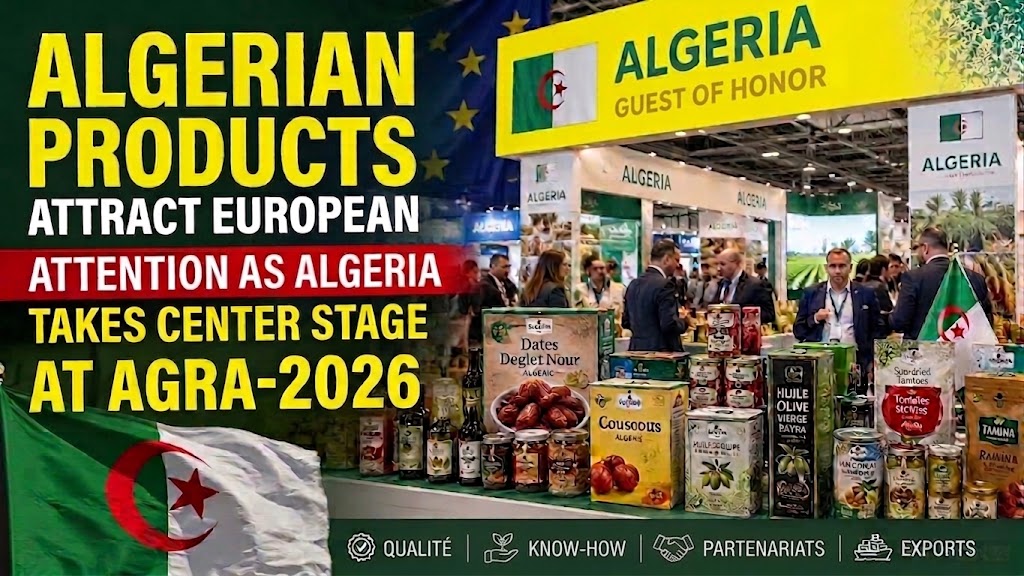
Algerian Products Attract European Attention as Algeria Takes Center Stage at Agra-2026

Algerian Products Attract European Attention as Algeria Takes Center Stage at Agra-2026

Algeria Gate: Algeria is making a strong impression at the Agra-2026 International Agriculture and Agri-Food Fair in Slovenia, where it is showcasing a wide range of products under the “Made in Algeria” label.

As this year’s guest of honor, Algeria is benefiting from a prominent platform to showcase the diversity and quality of its agricultural and agri-food production to European visitors and industry professionals.

For the second consecutive day, Algerian products have drawn significant interest from visitors and potential business partners, highlighting the growing competitiveness of the country’s agricultural and agri-food sectors and their potential in international markets.

The event is also providing Algerian companies with an opportunity to establish new partnerships, identify potential outlets in European markets, and expand non-hydrocarbon exports.

Algeria’s participation in Agra-2026 reflects the country’s broader efforts to promote its agricultural expertise, expand the international presence of its national products, and accelerate economic diversification.

The growing interest generated at the exhibition could open new opportunities for Algerian producers seeking to strengthen their foothold in European and other international markets.

#Agra 2026#Algeria#Europe
Author
Lys Iwannughen
View my articles
Europe
Share this post

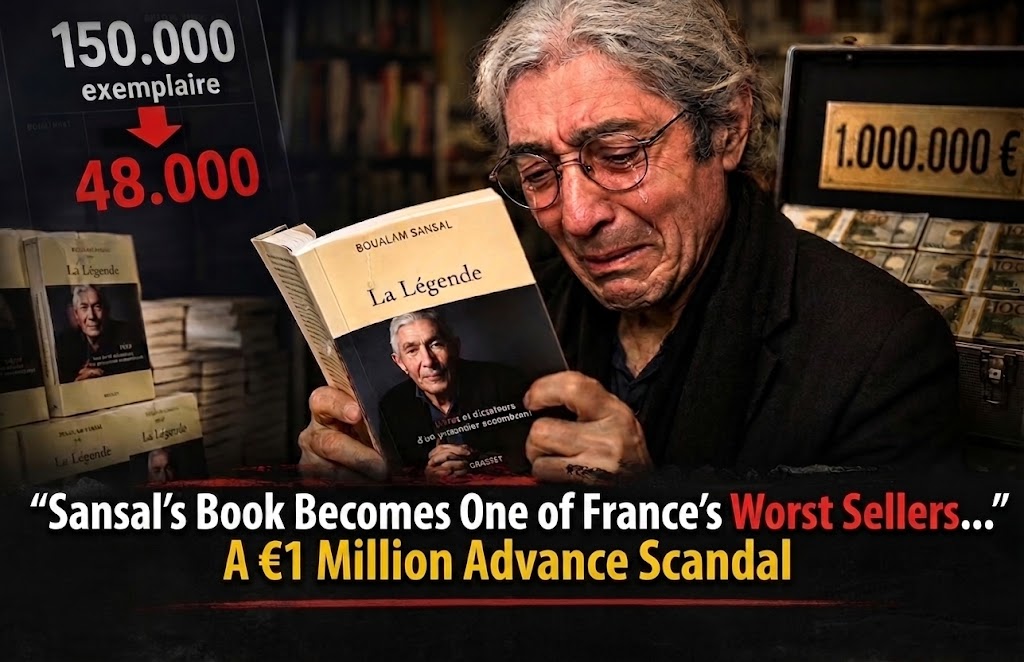
Sansal’s Book Becomes One of France’s Worst Sellers… A €1 Million Advance Scandal

Sansal’s Book Becomes One of France’s Worst Sellers… A €1 Million Advance Scandal

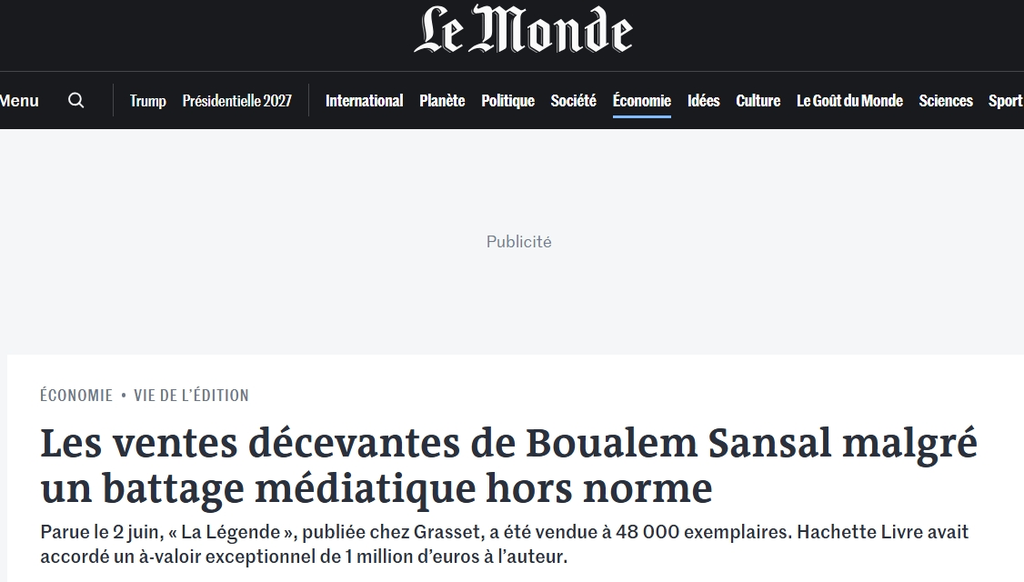
Algeria Gate: Boualem Sansal’s latest book, La Légende, published by Grasset on June 2, has reportedly sold only 48,000 copies, despite Hachette Livre granting the author an exceptional €1 million advance and investing heavily in its promotion.

Sansal’s Book Becomes One of France’s Worst Sellers… A €1 Million Advance Scandal

According to Le Monde, NielsenIQ BookData recorded 48,000 sales as of August 20, compared with an initial print run of 150,000 copies. The book initially performed strongly, selling nearly 17,000 copies in its first week and entering France’s top five bestsellers, but it quickly dropped out of the rankings.

The 252-page book, priced at €22, recounts Sansal’s year in an Algerian prison over accusations of undermining national unity. It was published by Grasset, part of Hachette, the French publishing giant owned by billionaire Vincent Bolloré.

Le Monde contrasted Sansal’s performance with former French President Nicolas Sarkozy’s Le Journal d’un prisonnier, published by another Hachette imprint, Fayard. Sarkozy’s book sold 90,000 copies in its first week alone.

Sansal’s Book Becomes One of France’s Worst Sellers… A €1 Million Advance Scandal

Hachette reportedly signed Sansal away from Gallimard, which had published his works since 1999. Gallimard and French publishing circles had campaigned for his release before Algerian President Abdelmadjid Tebboune granted him a presidential pardon on November 12, 2025.

Despite the modest sales, Hachette reportedly provided extensive promotional support, including full-page newspaper advertisements, widespread appearances on Bolloré-owned media outlets, and large-scale orders ensuring prominent placement in Relay stores across major train stations and airports.

The figures have therefore raised questions about the €1 million advance and the scale of the promotional campaign, particularly given the book’s relatively weak commercial performance.

#Boualem Sansal#France
Author
Lys Iwannughen
View my articles
Economy
Share this post

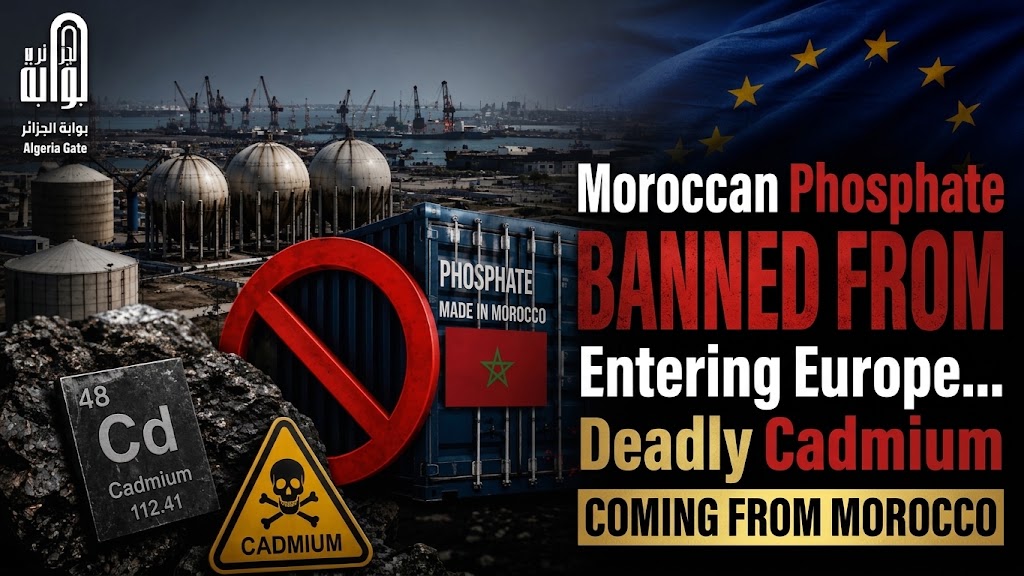
Moroccan Phosphate Banned from Entering Europe… Deadly Cadmium Coming from Morocco

Moroccan Phosphate Banned from Entering Europe… Deadly Cadmium Coming from Morocco

Algeria Gate: The Makhzen regime is facing growing challenges in maintaining its phosphate-derived fertilizer exports to European markets, amid rising concerns that these fertilizers may contain levels of toxic cadmium, a heavy metal that can migrate from soil into agricultural products and food, prompting warnings about its health and environmental risks.

In its natural state, phosphate contains cadmium, a heavy metal that is found in higher concentrations in phosphate deposits in Morocco, the United States, and Tunisia than in deposits in countries such as South Africa and Russia, according to data from the French health agency. The risks associated with this metal increase because it can migrate into agricultural soil and subsequently into food crops.

Cadmium is classified as a substance of health concern. It can cause damage to the kidneys, bones, and respiratory system and can increase the risk of cancer. It is a toxic heavy metal that occurs naturally in small quantities and can reach humans through air, water, and food. It can also accumulate in soil and agricultural crops, particularly when certain phosphate fertilizers containing high levels of cadmium are used.

The issue has become a public health concern in Europe, particularly in France, where calls have intensified for stricter controls on fertilizers imported from Morocco because of the potential risks they pose to agricultural products.

Faced with this pressure, the Moroccan Office Chérifien des Phosphates (OCP), which monopolizes the exploitation and processing of phosphate, attempted unsuccessfully to develop specific technologies to reduce cadmium levels in fertilizers destined for the European market. The group says the technology involves treating phosphoric acid and separating and isolating cadmium before it is used to manufacture fertilizers. However, this has not been enough to convince European health organizations, which have criticized the continued reliance on fertilizers imported from Morocco.

These measures have raised questions about cadmium levels in Moroccan fertilizers destined for markets outside the European Union, particularly since the company does not disclose the levels of this metal in all of its products. This has fueled concerns that different standards may be applied depending on the destination and market.

The Moroccan phosphate industry also faces environmental problems beyond cadmium, particularly those associated with fertilizer-production waste, most notably phosphogypsum, which contains heavy metals and acidic substances.

Between the risks posed by cadmium, European regulatory pressure, environmental problems, and supply disruptions, the phosphate sector produced by the Makhzen regime is entering a difficult period, while reducing toxic-metal levels has become an essential condition for maintaining its presence in the European market.

#Europe#Morocco
Author
Lys Iwannughen
View my articles