Algeria Gate: A routine drug bust off the coast of Huelva turned violent this week, exposing just how far Morocco-linked hashish smuggling networks are now willing to go to protect their cargo.
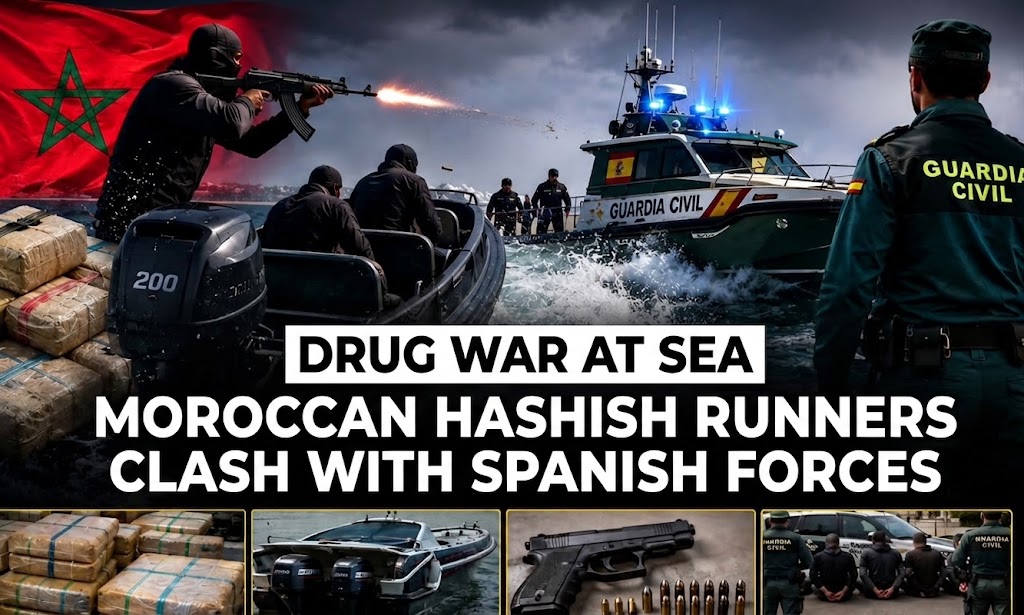
Spain’s Civil Guard said the operation began Monday when a maritime patrol, working with customs surveillance agents, spotted a semi-rigid boat suspected of running drugs and gave chase. The smugglers responded with reckless maneuvers on open water, dumping part of their load overboard before opening fire on the pursuing officers; a level of aggression rarely seen even in a region well accustomed to drug-running.
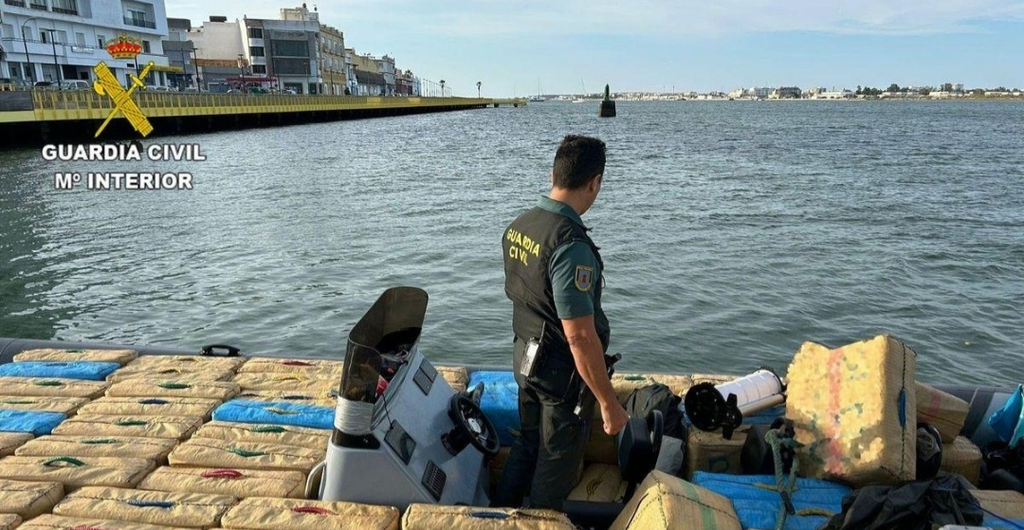
Guards returned fire, wounding one suspect, but the boat escaped after the patrol vessel broke down. Spanish forces spent the following days hunting for the crew and the missing cargo. By Thursday, they had located and intercepted both the original boat and a second vessel that had been backing it up at sea. Nine people were arrested and nearly six tons of hashish seized. A tenth suspect, shot during the earlier clash, was later found abandoned on the Cádiz coast and hospitalized.
In total, the operation netted ten arrests, roughly 5,926 kilograms of hashish and two speedboats, but more strikingly, it confirmed what Spanish authorities have increasingly warned: smuggling networks along the southern coast are no longer just evading patrols, they’re arming themselves to fight through them.
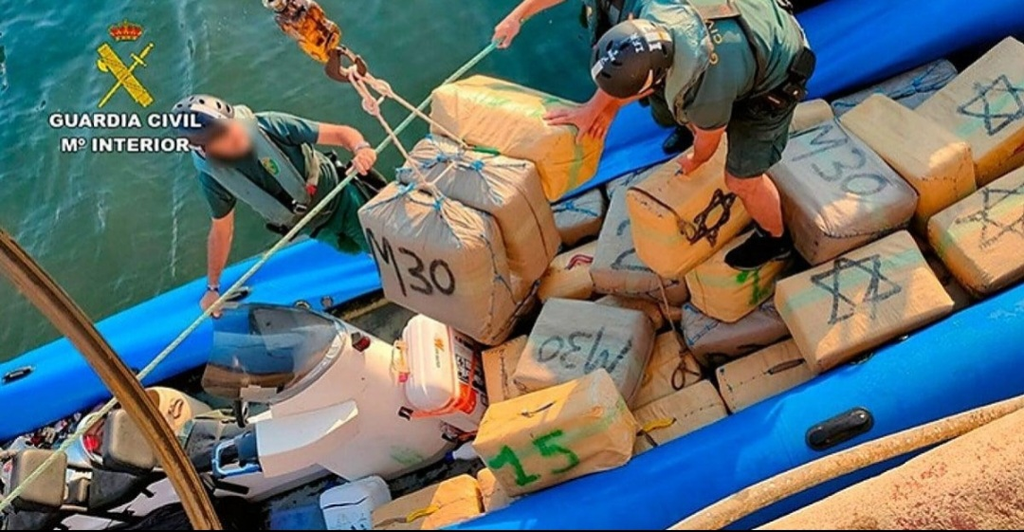
The Huelva bust wasn’t isolated. Earlier this month, Spanish police dismantled a separate network moving hashish and marijuana from Morocco, arresting 57 people across six provinces and seizing over 10.5 tons of hashish, 1.1 tons of marijuana, plus weapons, vehicles and cash. Days later, a joint operation with Ecuadorian police and Europol broke up a cocaine-trafficking ring linked to Morocco, seizing more than 21 tons of the drug and arresting 43 people, including two Moroccans.
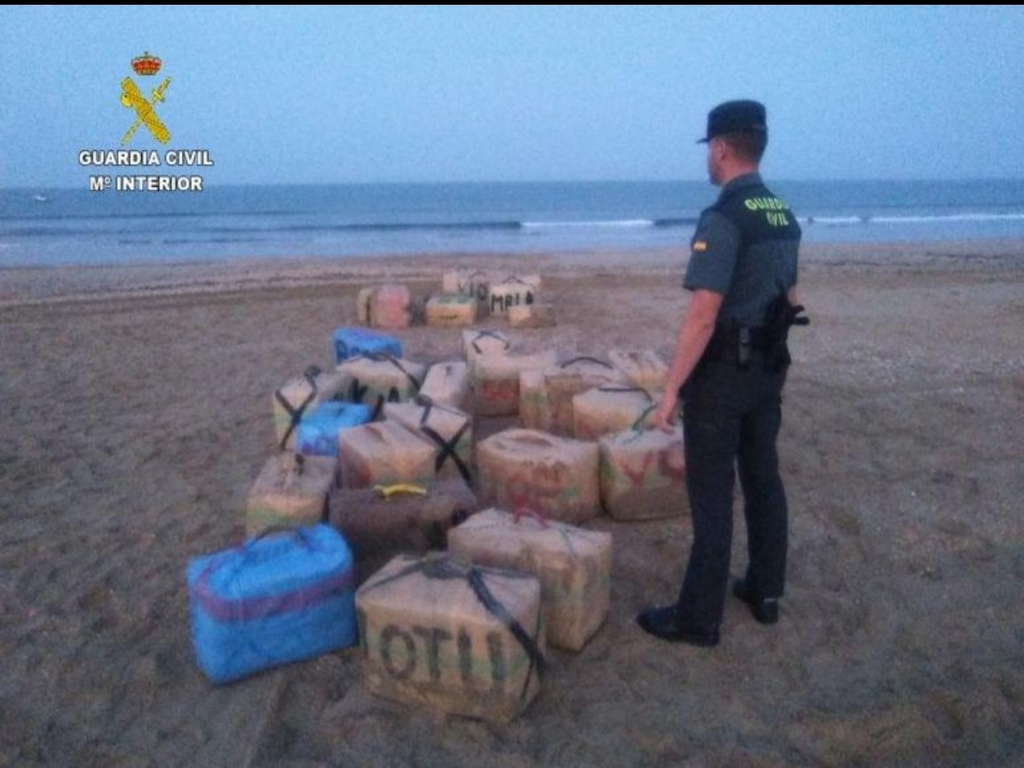
Taken together, the cases point to a fast-evolving threat: what was once opportunistic maritime smuggling has hardened into organized operations with speedboats, weapons, logistics networks and the cash to move between regions freely. Spain, and Cádiz’s coast in particular, remains the primary gateway for Moroccan drugs entering Europe, and incidents like Huelva suggest the networks running that pipeline are growing bolder, better armed, and increasingly willing to fight rather than flee.