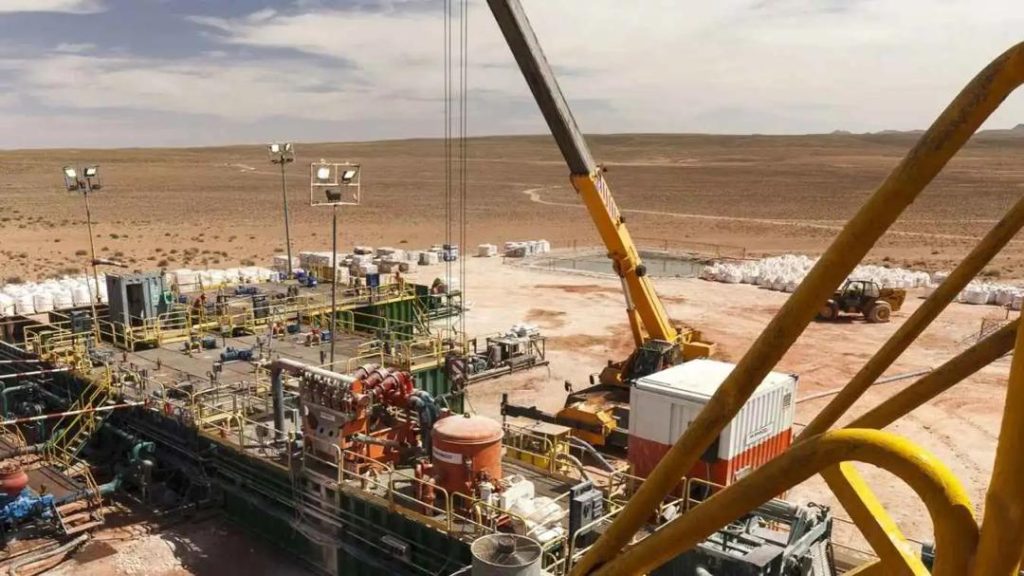
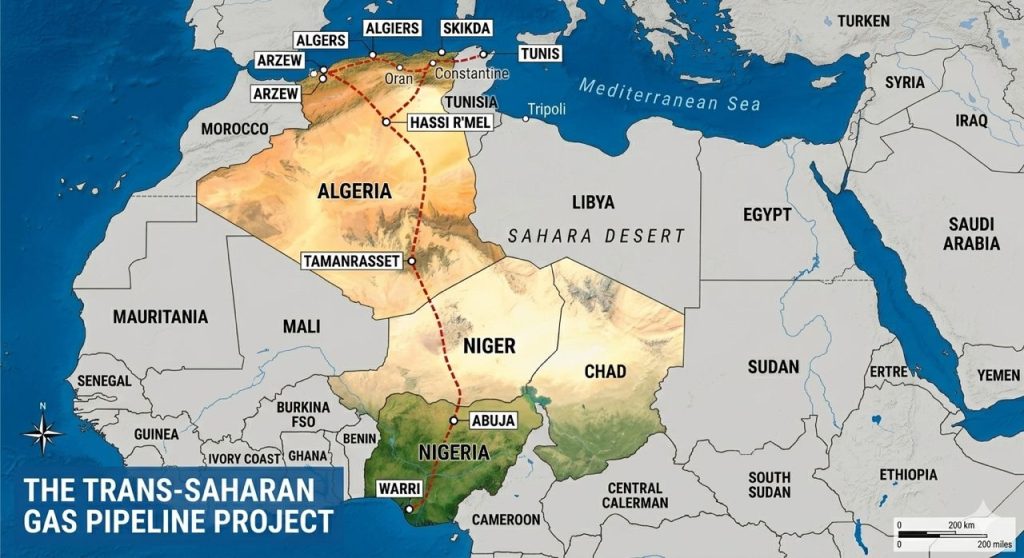
The Trans-Saharan Gas Pipeline (TSGP) is one of the largest energy projects on the African continent. It aims to transport natural gas from Nigeria, Africa’s largest gas producer, through Niger and onward to Algeria, and from there to European markets via existing pipeline networks along the Mediterranean coast.
Technical Specifications and Background
The project stretches over approximately 4,128 kilometers, with an estimated 2,200 kilometers already completed. It starts in the city of Warri in southern Nigeria, passes through Niger, and reaches the gas distribution hub in Hassi R’Mel, Algeria. Its transport capacity is estimated at 30 billion cubic meters per year, while its total cost is projected to exceed $13 billion.
The idea of the pipeline was first introduced more than four decades ago. A tripartite agreement between the concerned countries was signed in 2009, but security, financial, and political challenges prevented its realization for many years.
A Strong Return to the Agenda
The project gained renewed momentum in 2022, amid Europe’s accelerating efforts to diversify its energy supply sources. In July of that year, Algeria, Niger, and Nigeria signed a tripartite agreement to revive and accelerate the project. In February 2025, a ministerial meeting was held in Algeria, resulting in agreements to update the feasibility study through the consulting firm “PENSPEN,” with costs shared equally among the three parties, along with a non-disclosure agreement to ensure the confidentiality of technical data.
Algeria plays a central role in this framework due to its advanced gas transport and export infrastructure, as it is already connected to Europe through direct pipelines to Spain and Italy. The country also seeks to reinforce its position as a key transit hub for African gas to Europe, leveraging Nigeria’s vast reserves, estimated at around 210 trillion cubic feet as of 2025.
Economic and Geopolitical Dimensions
Economically, the project is expected to generate substantial revenues for the three countries, contribute to infrastructure development, create large-scale employment opportunities, and strengthen regional economic integration. Geopolitically, it would give Africa a stronger position in global energy dynamics at a time when Europe is increasingly seeking diversified supply sources.
The project differs from its Moroccan rival (the Nigeria–Morocco gas pipeline project spanning 14 countries) in that it involves only three countries, making it theoretically less costly and easier to implement.
Rising Challenges: Tensions with Niger Threaten the Project
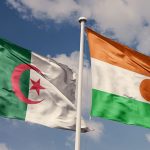
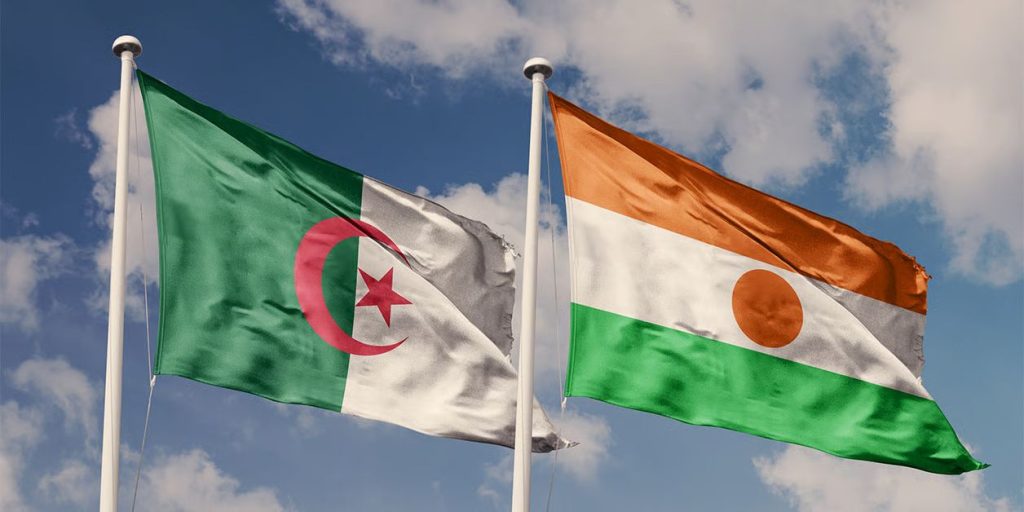
Despite promising prospects, the project is currently facing serious existential challenges. Since Niger’s coup in July 2023 and the resulting tensions with Algeria within the “Sahel alliance,” signs of potential disruption have emerged. According to sources in May 2025, Niamey halted its participation in the final stages of the studies, pushing the project close to collapse amid the absence of binding purchase agreements and delays in final investment decisions.
In addition, the project faces persistent structural challenges, including difficulties in securing international financing, ensuring the security of infrastructure along the vast desert route, and growing competition from LNG projects and renewable energy sources.
in Conclusion
Many analysts believe that the Trans-Saharan Gas Pipeline is no longer just an economic project, but a real test of African countries’ ability to overcome political divisions and effectively exploit their natural resources. Its success would strengthen African energy sovereignty, while its failure would prolong reliance on traditional systems that deliver limited benefits to these populations\
Ultimately, the project is technically feasible but its fate today is determined more by politics than by engineering.