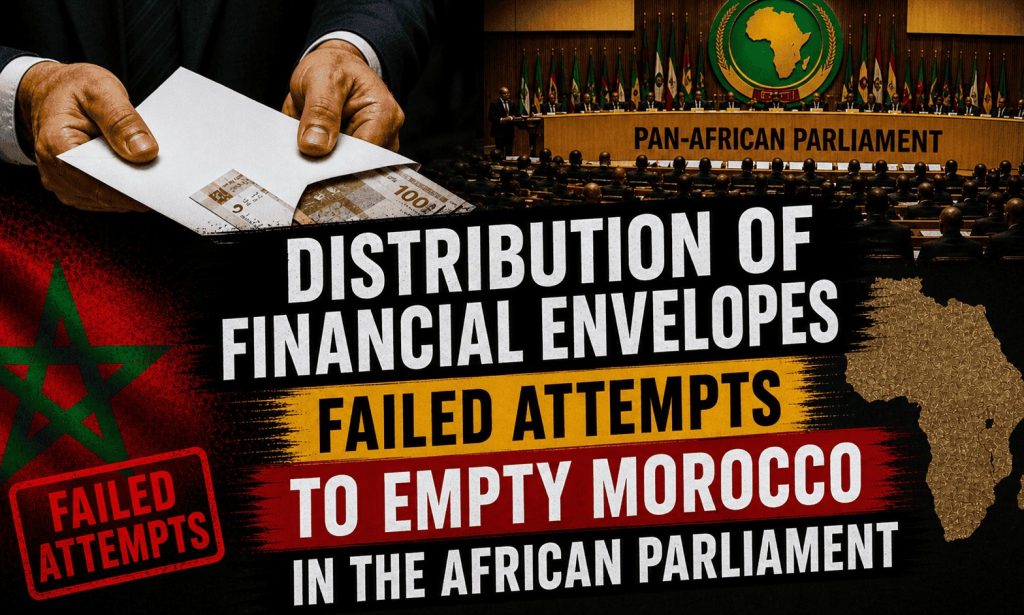
Algeria News Portal: Behind the scenes of the African Parliament elections in Midrand, Morocco attempted to sway the vote by courting a number of delegations through the distribution of cash envelopes on the sidelines of the sessions—a move that sparked widespread controversy within the conference halls. However, these attempts failed to alter the outcome, as the elections ended in a resounding failure for Moroccan diplomacy, which failed to secure any position within the continental institution’s structures, while its rivals saw a clear rise in influence.
الدبلوماسية الجزائرية تحظى بثقة الأفارقة مرة أخرى وتواصل اكتساحها لأعلى المناصب القيادية في الهيئات الأفريقية
— أحمد حفصي || HAFSI AHMED (@ahafsidz) April 30, 2026
انتخاب الجزائري #فاتح_بوطبيق 🇩🇿 رئيسا للبرلمان الأفريقي هو تكريم لدبلوماسية" المواقف " واعتراف بمكانة ودور الجزائر كلاعب فاعل ومؤثر في صناعة القرار إقليميا ودوليا .… pic.twitter.com/CARt3UKoCU
While Algeria secured victory by having its candidate elected as president of the African Parliament, the Moroccan delegation found itself completely sidelined after suffering a series of consecutive defeats within the North African group, losing every position up for grabs without exception.
The voting results were harsh and embarrassing, as Morocco lost the race for the presidency of the regional bureau, the vice-presidency, and the rapporteurship, as well as the region’s representation on the committee overseeing elections. It also failed to secure the region’s nomination for the presidency of the African Parliament, which went to Algeria—a clear indication of the extent of its isolation within the continent.
As for the remaining positions, they were distributed among the region’s countries, with the presidency of the Bureau going to Tunisia, while Mauritania secured the positions of vice-president and the region’s representative on the Follow-up Committee—a scene reflecting Morocco’s waning influence alongside the emergence of new power dynamics within the African sphere.
Behind the scenes, however, the situation was more revealing than the results, reflecting an unprecedented state of confusion within the Moroccan delegation, which attempted at the last minute to challenge the electoral process and exert pressure to alter its outcome. These efforts, however, were thwarted by the organizing body’s adherence to its rules and procedures.
Morocco also sought to circumvent the rules in force within the African Union by pushing for a surprise nomination during the plenary session for the presidency of the Assembly. However, this proposal was met with outright rejection for failing to meet the requirement of regional endorsement, further intensifying the embarrassment the delegation faced before the other participants.
Between fruitless attempts at influence and a resounding defeat in the voting results, Morocco finds itself facing a new diplomatic reality, the most prominent feature of which is a decline in its ability to persuade within Africa—a continent that now accepts only the logic of clear partnership and competition based on credibility.
Source:Algeria gate Arabic version