Sunday, 18 October 2026 • 19:26 Algiers time
Algeria Gate
News Room
Cameron Hudson: UAE is virtually the sole backer of the RSF..without its support the war in Sudan would not continue Algeria-Niger: Official launch of Trans-Saharan fibre optic link Five minutes of lament over Algeria: Amar Belani exposes CNEWS’s real obsession Algerian courts hand down first death sentences under new drugs law Ségolène Royal’s masterclass on Algeria against an ignorant and demagogic journalist President Tebboune and senior officials receive the remains of Boualem Boualem in Algiers NAPEC 2026 in Oran: Algeria at the Heart of Africa’s and the Mediterranean’s New Energy Landscape Pegasus Files: Amnesty Uncovers Morocco’s Espionage Against Spain President Tebboune Orders Salary Increases in Algeria’s 2027 Budget, Rules Out New Taxes on Citizens Algeria Emerges as a Trusted Power for Regional Peace and Stability
Share this post

Three major strategic projects at the heart of high-level Algerian-Nigerien discussions

• Author: Lys Iwannughen • 0 comments • 33 views
Three major strategic projects at the heart of high-level Algerian-Nigerien discussions

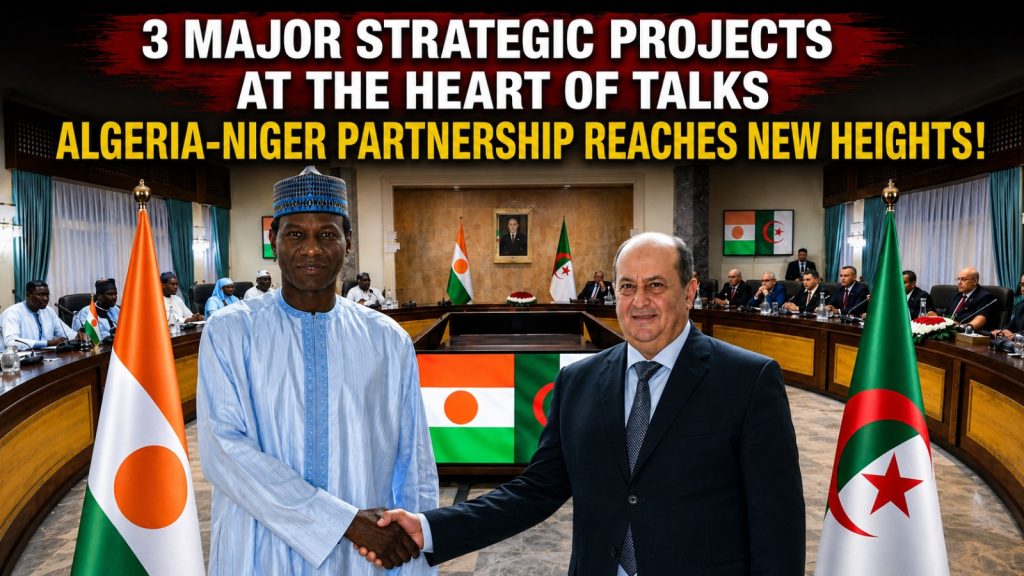
Algeria Gate: Algerian Prime Minister Sifi Ghrieb held bilateral talks today at the Government Palace with the Prime Minister of the Republic of Niger, Ali Mahamane Lamine Zeine, who is on a working visit to Algeria at the head of a large delegation.

Following these discussions, an expanded meeting with the delegations of both countries made it possible to examine the various aspects of Algerian-Nigerien cooperation and to exchange views on several issues of common interest.

The two sides underlined the depth of the bonds of brotherhood, solidarity and good neighborliness that unite Algeria and Niger, hailing the unprecedented momentum that bilateral relations are experiencing in several fields, driven by the political will of President Abdelmadjid Tebboune and Nigerien President Abdourahamane Tiani.

Discussions also covered the state of progress of the agreements and joint projects concluded during the second session of the Algerian-Nigerien Joint Great Commission, held last March. The two countries reaffirmed their determination to accelerate the implementation of projects still underway.

In this framework, Algiers and Niamey intend to further strengthen their partnership and exploit their significant potential in the service of development and stability for the entire Sahel region.

Among the major continental projects mentioned are notably the Trans-Saharan gas pipeline, the Trans-Saharan road and the strategic Trans-Saharan fiber-optic link, regarded as major projects to strengthen regional integration and exchanges between the two countries.

#Algeria#Niger
Author
Lys Iwannughen
View my articles

Leave a comment

Your email address will not be published. Required fields are marked *

African coast
Share this post

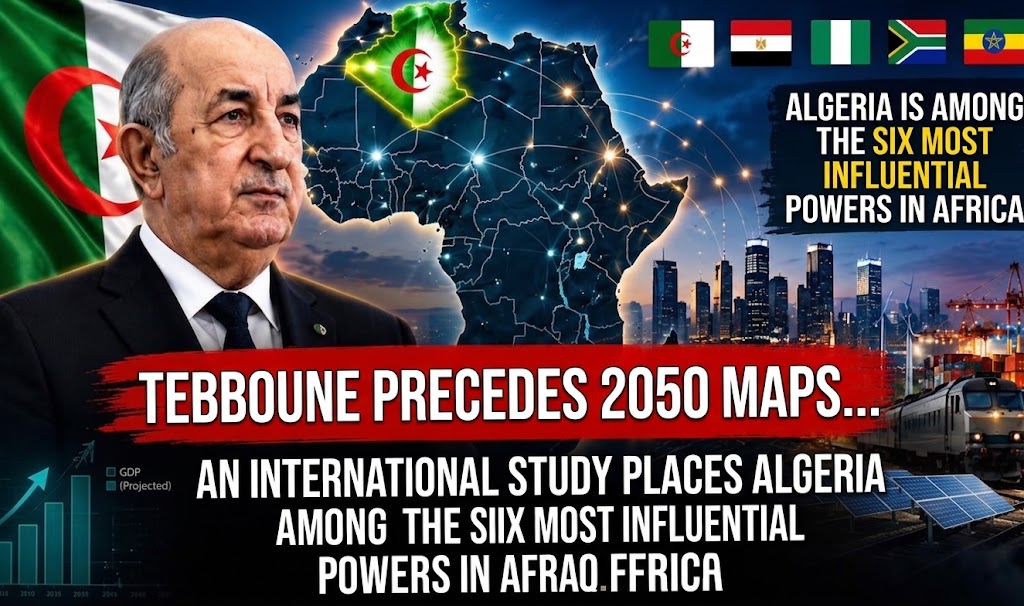
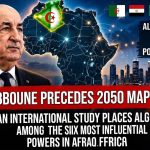
Tebboune anticipates the 2050 maps… An international study places Algeria among the six most influential powers in Africa

Tebboune anticipates the 2050 maps… An international study places Algeria among the six most influential powers in Africa

Gas, the army, the Mediterranean, and the Sahel are cards that President Tebboune has turned into negotiating power… Algeria consolidates its position as the fourth economy and fourth African power

Algeria Gate: When an international prospective study placed Algeria among the six African countries most capable of exercising influence until 2050, it measured the result of a political and strategic path by which President Abdelmadjid Tebboune anticipated the transformations reshaping Africa and the world. Ranked the fourth-largest economy on the continent and the fourth African power in the Global Power Index, Algeria did not reach this position through gas alone, but through an integrated system of sovereign decision-making, defensive capability, Mediterranean positioning, and a strong return to the African and Sahelian depth.

The map drawn by the Institute for Security Studies appears as international confirmation of the choices pursued by President Tebboune since assuming leadership. He reordered priorities on the basis that Algerian power cannot remain hostage to a single resource, and that geographic location becomes influence only when supported by a strong state, a diversified economy, an army capable of protecting national decision-making, and independent diplomacy spanning Africa, the Mediterranean, and the Arab world.

The study finds a state that has regained the initiative, raised its economic ambition, and restored importance to industry, mining, strategic agriculture, and major infrastructure while expanding African relations and diversifying partners. These choices show that Tebboune anticipated the shift toward a multipolar world in which dependence on a single center declines and the value of states possessing energy, location, defensive capability, and freedom of decision rises.

Tebboune anticipates the 2050 maps… An international study places Algeria among the six most influential powers in Africa

The updated study “Africa in the World 2043,” from the African Futures and Innovation program of the Institute for Security Studies, gives this path measurable dimensions. Based on the “International Futures” model linking economy, population, technology, energy, trade, governance, and security, it tested positions within four scenarios to 2050: a sustainable world, a markets-and-growth world, a world of competing blocs, and a world dominated by wars. Across these paths, Algeria remains within the narrow circle of African influence, resting on strategic assets that endure in different environments. This is the deeper achievement of Tebboune’s vision: building a state that retains value whether the world cooperates or divides.

International recognition of a power built by Algeria

Figures show the position Algeria has fortified. At market exchange rates it ranked fourth-largest African economy in 2025, after Nigeria, Egypt, and South Africa. It also ranked fourth in Africa on the Global Power Index and 50th out of 188 countries. The index measures economy, population, technology, resources, institutions, and military capabilities rather than raw GDP or population alone.

This status stems from the transformation led by Tebboune. Policies shifted from merely managing oil revenues toward restoring the productive base and launching major investments in mining, railways, industry, agriculture, energy, and seawater desalination, while prioritizing non-hydrocarbon exports, national institutions, and African markets.

The ranking measures an existing base whose strategic meaning comes from projects designed to advance the economy. The Gara Djebilet bet aims at an industrial and logistical chain from mine to railways, processing, and export. Expanding southern railways and roads establishes continental corridors linking the Mediterranean to the Sahel. Food security has become a sovereign issue tied to local production and strategic crops in the south, while desalination has become infrastructure protecting cities and freeing resources for development.

Power measured by international models is not a single figure but the capacity to secure energy, water, food, infrastructure, and defense, then convert them into independent decision-making and wider negotiating margins.

Tebboune read the transformation before it was complete

President Tebboune’s policy dealt early with a world that no longer tolerates dependence on a single axis. Algeria maintained deep ties with Europe while expanding partnerships with China, India, Turkey, Russia, the Gulf states, and Africa, without reducing its sovereign decision to a closed alignment.

This balance is a policy of power. A state with strategic resources, a sensitive location, and diverse partners can choose among offers and direct investments toward national priorities. The study confirms that China, India, the Gulf states, and Turkey have become growing sources of capital, trade, infrastructure, and security partnerships, while Europe remains central. In this multipolar world Algeria has pursued open partnerships with Algerian decision-making, investments within national priorities, and wide relations without trading sovereignty for immediate gains.

Algeria’s listing among India’s main African economic partners, alongside Nigeria, South Africa, Angola, Egypt, Kenya, Morocco, and Mozambique, evidences successful diversification as global trade and investment shift toward Asia and the Global South. Tebboune built from the outset an approach that keeps Europe as a partner while opening the economy to rising poles, treating global transformation as an opportunity rather than a forced choice of camps.

Tebboune anticipates the 2050 maps… An international study places Algeria among the six most influential powers in Africa

Only six countries possess the tools of influence

The Diplomacy, Military, and Economy (DiME) index places Algeria among only six African countries with the greatest capacity to exercise influence until 2050, alongside Egypt, Nigeria, South Africa, Morocco, and Libya. It measures usable tools: embassy networks and treaties, military capability, and economic base. The index asks not only about size but about what a state can do with its capacities.

Population size grants other countries large markets but does not by itself create influential foreign policy. Rapid growth does not automatically become influence without institutions, defensive capability, and diplomatic independence. Algeria has accumulated a coherent system combining economy, army, and diplomacy into a presence beyond its borders.

Nigeria will demographically surpass most competitors yet lacks South Africa’s institutional corporate reach, Egypt’s strategic location, or Algeria’s hydrocarbon resources and military capability. Algerian weight rests on an interweaving of assets difficult to gather in one state. Algeria is distinguished by sovereign decision-making, the absence of foreign military bases, and a defensive army designed to protect a vast territory and complex borders. Military power thus guarantees stability and independence rather than imposing tutelage.

Four cards from which Tebboune made Africa’s gateway

The study summarizes Algeria’s position in four words: gas, the Mediterranean, military capability, and access to the Sahel. These place it among the “gateway states” that major powers compete to engage because they offer access to energy, markets, corridors, or regional security.

Tebboune converted these from static privileges into interconnected policy. Gas has become an element of European energy security and a basis for long-term partnerships grounded in reliability. In turbulent markets Algeria presented itself as a responsible supplier that neither bargains with contracts nor squanders sovereign interests. The Mediterranean location has become a base linking Europe to African depth, with ports, roads, railways, energy lines, and communications positioned to make Algeria a passageway for production, trade, and investment.

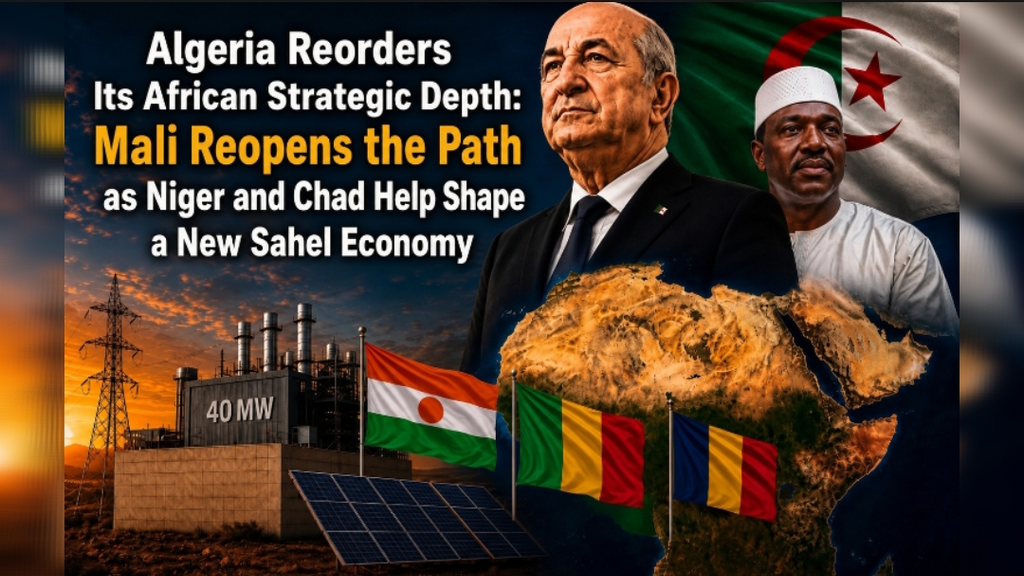
Military capability remains the shield protecting development and national decision-making amid expanding wars, organized crime, terrorism, and foreign interventions. Combining economic construction with a strong army allows Algeria to convert wealth into protected national power. The Sahel card most clearly expresses the prospective vision: southern borders are secured not by surveillance alone but by a stable neighborhood capable of managing its territory. Partnerships in electricity, energy, training, infrastructure, and trade make development the first line of defense. Moves with Mali, Niger, and Chad seek a strong neighborhood that protects its own sovereignty and prevents the Sahel from becoming an open arena for terrorism, smuggling, and foreign powers.

Gas is the beginning of power, not its end

Algeria’s importance for Europe has risen as the continent seeks to diversify gas sources. Tebboune’s vision goes beyond the traditional supplier role toward expanded exploration, production, and petrochemicals, alongside renewable energies, hydrogen, and electricity interconnection. The economic value of gas lies in using it as a lever for industry, fertilizers, iron and steel, and power, then directing revenues toward productive assets that outlast hydrocarbon markets.

The study’s recognition is a certificate of a base on which further construction is possible—and the leadership has already begun through major mining projects, railway expansion, processing industries, investment climate reform, and priority for national production and export. Algeria has the opportunity to become a multi-energy platform between Africa and Europe combining gas, electricity, hydrogen, renewables, and engineering services. Its value would then rest on its position within a broader system of production, transport, and distribution.

2050 is not a warning but a race Algeria has already begun

The study anticipates shifts in African economic rankings by mid-century, with Ethiopia, Kenya, Tanzania, and the Democratic Republic of Congo rising through population growth, expanding markets, and investment. Ethiopia may surpass Algeria’s economy and possibly South Africa’s if it converts demographic mass into productivity. This does not mean Algerian contraction but faster growth elsewhere in indicators favoring large population markets. Scenarios are paths that change with policies and productivity, not final judgments.

Algeria cannot compete numerically with demographic giants but can excel in economic quality, per capita income, infrastructure efficiency, energy security, technology, industry, and market access, making productivity the basis of power in 2050. Modeling shows Algeria remaining among relatively advanced African economies in GDP per capita at purchasing power parity. Crucially, it stays within the influential group in all scenarios, including divided or war-dominated worlds, thanks to gas, army, location, and diplomacy, while diversification offers a chance to improve rather than merely defend its position.

Algeria’s influence turns into an African gain

The rise of African powers does not automatically become collective continental strength if major states prioritize regional rivalries or external ties. The African Union, Continental Free Trade Area, and infrastructure integration are essential to convert national capabilities into continental weight. This aligns with Tebboune’s conception, which has restored Africa to the forefront of foreign policy because Algeria cannot separate its economic and security future from the continent’s. Opening markets, linking southern infrastructure, strengthening border trade, and supporting Sahel stability form a single project making Algeria a gateway between the continent and the Mediterranean.

Declining traditional European influence and the rise of China, India, Turkey, and the Gulf states widen Algeria’s margin for mediation. A state with balanced relations can serve as a bridge and direct external competition toward financing, technology, and expertise rather than struggles for influence on African soil. Algerian position becomes a continental gain when used to defend sovereignty, reject foreign interventions, settle crises through dialogue, and build linking projects rather than dependency.

Africa’s economy could exceed $17 trillion by 2050 in the sustainable scenario (versus about $3.4 trillion in 2025), but only $9.6 trillion in a war-dominated one. Intra-African trade remains just 16.3 percent of total continental trade, underscoring the opportunity Algeria can seize through production, logistics, energy, and services. The best guarantee of continued Algerian power is contributing to a more stable and interconnected continent: every southern road, railway, electricity, communications, or border trade project expands the market, reduces isolation costs, and turns security into economic value.

Tebboune anticipates the 2050 maps… An international study places Algeria among the six most influential powers in Africa

The Algeria that Tebboune saw before the models measured it

The Institute for Security Studies study places numbers behind a reality Tebboune has consolidated: Algeria is a pivotal state that cannot be reduced to gas, bypassed in Mediterranean and Sahel arrangements, or treated as a dependent market. It is the fourth African economy at the model’s starting point, the fourth power on an index combining economy, technology, population, resources, and army, and one of only six countries with practical tools of influence to 2050. It is classified as a gateway state granting access to gas, the Mediterranean, and the Sahel, protected by military capability and independent decision-making.

The real value lies in the fact that Tebboune read early what the study measures today. He understood that economic sovereignty begins with production, national security extends to the Sahel, gas should finance a post-gas economy, balance among partners protects decision-making, and Africa is the field in which Algerian power will be tested. While models draw four possible worlds to 2050, Algeria is building its own path under a president who has made foresight part of decision-making, transforming geography into an economic asset, energy into a sovereign card, the army into a guarantee of stability, and African belonging into a project of influence and development.

The question is not whether Algeria will remain an influential African power; the study answers that clearly. The real question is how far it will convert this influence into industry, technology, exports, and continental networks before 2050. Current indicators show Algeria did not wait for the future to arrive; Tebboune has already begun building the state that intends to meet it.

#Africa#Algeria#President tebboune
Author
Lys Iwannughen
View my articles
African coast
Share this post

Security Council: Algeria Calls for an End to the Use of Starvation as a Weapon of War

Security Council: Algeria Calls for an End to the Use of Starvation as a Weapon of War

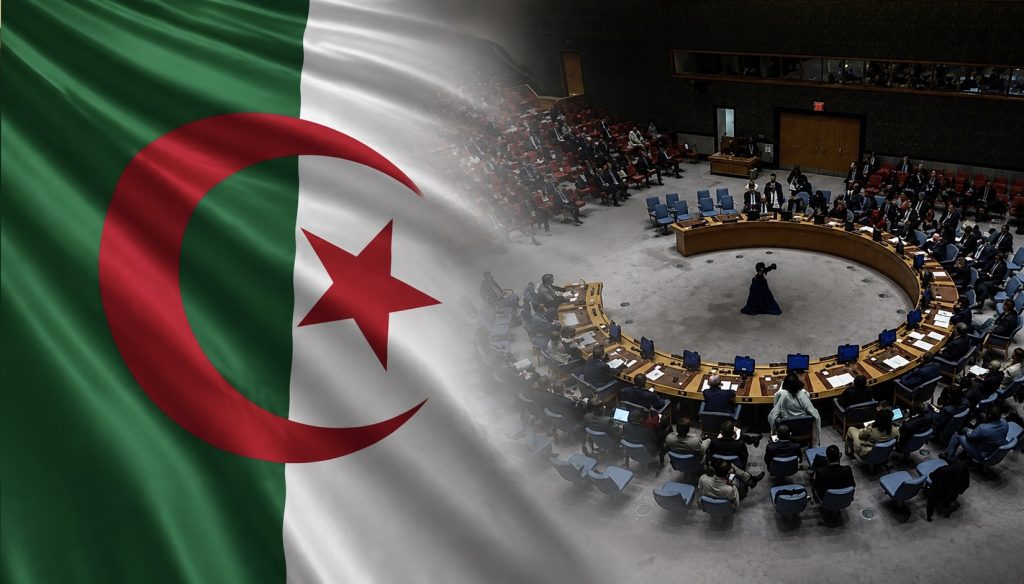
Algeria Gate: Algeria has called on the United Nations Security Council to take concrete and enforceable measures to prevent starvation from being used as a weapon of war, warning of the devastating humanitarian consequences witnessed in Gaza and Sudan.

Speaking before the Security Council on Tuesday, Algeria’s Deputy Permanent Representative to the United Nations, Mehdi Litim, highlighted the unprecedented scale of global food crises, noting that the Global Report on Food Crises recorded two simultaneous famines in 2025 for the first time in its history, affecting populations in Gaza and Sudan.

During a Security Council meeting focused on “Food under the Fire of War: The Role of the Security Council in Reducing Global and Local Food Crises,” Litim stressed that starvation cannot be justified under any circumstances as a method of warfare.

Algeria warns of catastrophic food crisis in Gaza

Addressing the situation in Gaza, the Algerian diplomat described the humanitarian crisis as “an open and deep wound,” pointing to the latest figures from the Integrated Food Security Phase Classification (IPC).

According to the data cited by Laitim, around 1.4 million people in Gaza continue to face acute food insecurity, underscoring the scale of the crisis facing the Palestinian population.

He warned that the famine conditions previously recorded in Gaza demonstrate the devastating consequences of deliberately depriving civilians of food and essential resources.

“Children are dying from malnutrition while trucks loaded with vital aid remain stuck just a few kilometers away,” he said.

Against this backdrop, Algeria renewed its call for an immediate ceasefire in Gaza and unrestricted humanitarian access, stressing that aid must be allowed to reach civilians without obstruction.

Sudan faces one of the world’s worst food emergencies

Laitim also drew attention to the worsening humanitarian situation in Sudan, describing it as one of the world’s most serious emergencies in terms of acute food insecurity.

The latest IPC figures cited during the Security Council meeting indicate that 19.5 million people; nearly 41% of Sudan’s population, are facing high levels of acute food insecurity.

Even more alarming, Laitim said, is the fact that 135,000 people have been classified in Phase 5, or catastrophe, and are experiencing famine, while approximately 825,000 children are suffering from severe acute malnutrition.

The Algerian representative attributed the deterioration to continued conflict, restrictions on humanitarian access, attacks on supply routes and the destruction of agricultural and food-production infrastructure.

He also expressed concern over the collapse of international funding for the food sector, which he said has fallen to its lowest level in a decade.

Algeria demands accountability for attacks on food and water infrastructure

For Algeria, the use of hunger against civilian populations represents a grave violation of international humanitarian law.

Litim reiterated that parties to armed conflicts have a strict obligation to protect civilians and the infrastructure essential to their survival, particularly food-production systems and water supplies.

He emphasized that safe, rapid and unhindered humanitarian access is indispensable, particularly in conflict zones where civilians are already facing displacement, hunger and the destruction of basic services.

Algeria, he noted, continues to contribute to international efforts in this area through its co-chairmanship of the working group on the protection of civilian infrastructure under a global initiative designed to strengthen political commitment to international humanitarian law.

He further recalled Algeria’s commitment to protecting humanitarian personnel, renewed through its signing of the Declaration on the Protection of Humanitarian Workers in September 2025.

Algeria proposes concrete measures against starvation as a weapon of war

Algeria called on the Security Council to move beyond declarations and adopt concrete measures to combat starvation and prevent its deliberate use as a weapon of war.

Among the measures proposed are:

  • Establishing strong early-warning mechanisms to monitor attacks against food and water infrastructure.
  • Mobilizing adequate resources to rebuild vital facilities destroyed or damaged by armed conflicts.
  • Guaranteeing safe, rapid and unrestricted humanitarian access.
  • Holding perpetrators accountable for attacks against civilian infrastructure.
  • Creating a specific sanctions regime against parties that violate UN Security Council Resolution 2417 and deliberately use starvation as a weapon of war.

The Algerian position reflects growing concern over the use of food deprivation and the destruction of essential civilian infrastructure as tools of warfare in contemporary conflicts.

Algeria: Hunger must never again be used as a weapon

Concluding his intervention, Mehdi Litim reaffirmed Algeria’s commitment to working with international partners to strengthen respect for international humanitarian law, protect human dignity and advance sustainable peace.

He stressed that hunger must never again be turned into a weapon against civilian populations.

For Algeria, the crises in Gaza and Sudan demonstrate the urgent need for the international community, and particularly the UN Security Council, to translate its commitments into effective mechanisms capable of preventing starvation, protecting civilians and ensuring humanitarian assistance reaches those who need it most.

#Africa#Algeria#United Nations
Author
Lys Iwannughen
View my articles
African coast
Share this post

Algeria Leads Africa Toward a Proactive System to Confront Threats

Algeria Leads Africa Toward a Proactive System to Confront Threats

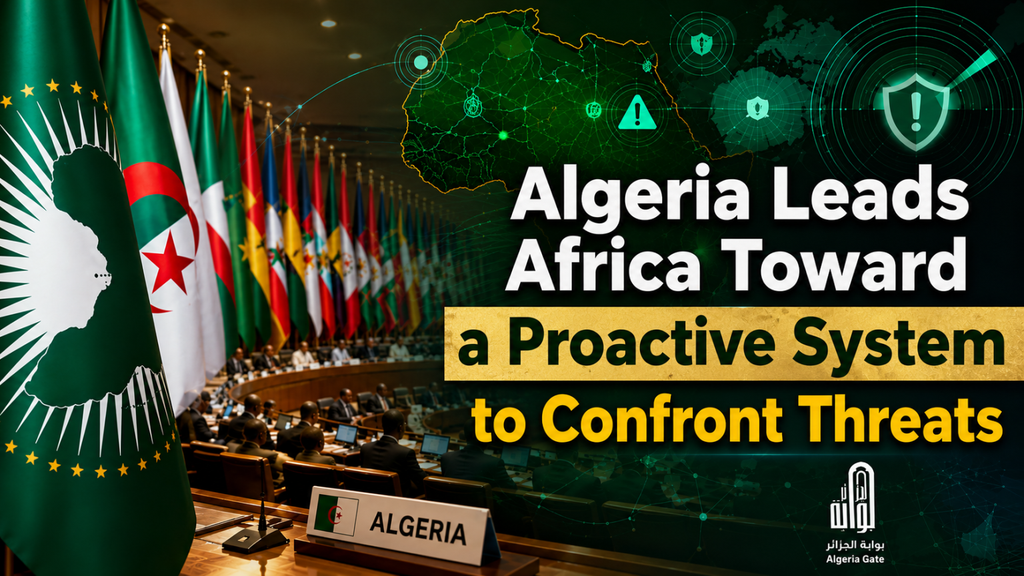
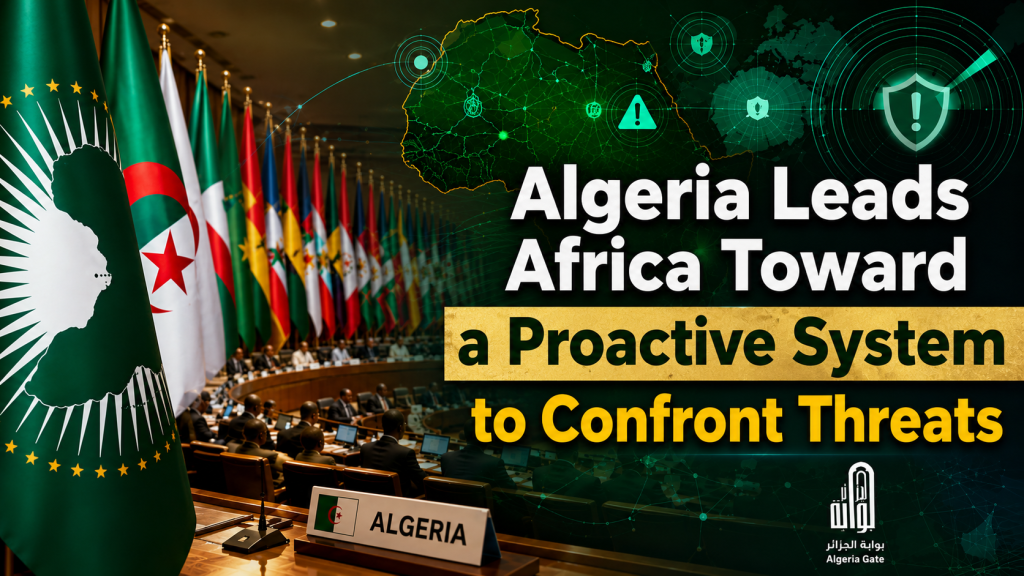
Algeria Gate: Algeria is taking a leading role in strengthening Africa’s security architecture. Under its presidency, the African Union Peace and Security Council held a key meeting focused on improving early warning, conflict prevention, and rapid response across the continent.

The discussion addressed major threats facing Africa today. These include terrorism, violent extremism, organized crime, armed conflicts, political instability, climate risks, cyber threats, and external interference.

Algeria’s Ambassador and Permanent Representative to the African Union, Mohamed Khaled, currently chairs the Council. In his opening remarks, he stressed the strategic importance of the Continental Early Warning System. He called for a shift from reactive measures to a proactive approach that anticipates crises before they escalate.

Four technical tools were presented to support this goal: the Continental Risk Assessment and Threat Mapping Tool, the African Union Response Activation Model, the Governance Early Warning System of the African Peer Review Mechanism, and the Analytical Matrix of Peace Agreements in Africa.

Ambassador Khaled highlighted the joint work of the AU Commission, the African Centre for the Study and Research on Terrorism, AFRIPOL, and the African Peer Review Mechanism. He emphasized the need to activate these tools and ensure reliable data and information sources.

High-level participants included AU Commissioner for Political Affairs, Peace and Security Bankole Adeoye, along with officials from CISSA, AFRIPOL, and other specialized bodies. Speakers focused on linking early warning more effectively to rapid response and improving threat monitoring systems.

Member states welcomed progress made by a technical working group. The group proposed a dynamic continental risk-mapping tool based on nine main threat categories. The Council stressed the importance of unified data methods, better information sharing, and stronger coordination between AU institutions and regional mechanisms.

Special attention was given to the Risk Mapping Tool, an Algerian initiative. The Council described it as a core pillar of the African response model. The tool helps measure threat levels accurately and identify when urgent action is required.

Member states endorsed the tools and supported a clear roadmap for implementation. This includes creating a coordination mechanism, information-sharing protocols, a digital platform with an interactive dashboard, pilot projects, and training for analysts. The long-term goal is to expand the system across Africa.

The Council concluded that a stronger early warning and risk assessment system will boost preventive diplomacy, improve decision-making, and help the African Union anticipate and contain emerging threats. The meeting reaffirmed the principle of “Early Warning for Rapid Response.”

#Africa#Algeria
Author
Lys Iwannughen
View my articles