Sunday, 18 October 2026 • 21:29 Algiers time
Algeria Gate
News Room
Cameron Hudson: UAE is virtually the sole backer of the RSF..without its support the war in Sudan would not continue Algeria-Niger: Official launch of Trans-Saharan fibre optic link Five minutes of lament over Algeria: Amar Belani exposes CNEWS’s real obsession Algerian courts hand down first death sentences under new drugs law Ségolène Royal’s masterclass on Algeria against an ignorant and demagogic journalist President Tebboune and senior officials receive the remains of Boualem Boualem in Algiers NAPEC 2026 in Oran: Algeria at the Heart of Africa’s and the Mediterranean’s New Energy Landscape Pegasus Files: Amnesty Uncovers Morocco’s Espionage Against Spain President Tebboune Orders Salary Increases in Algeria’s 2027 Budget, Rules Out New Taxes on Citizens Algeria Emerges as a Trusted Power for Regional Peace and Stability
Share this post

Ceuta crisis: Spain activates national security mechanism for first time

• Author: Lys Iwannughen • 0 comments • 46 views
Ceuta crisis: Spain activates national security mechanism for first time

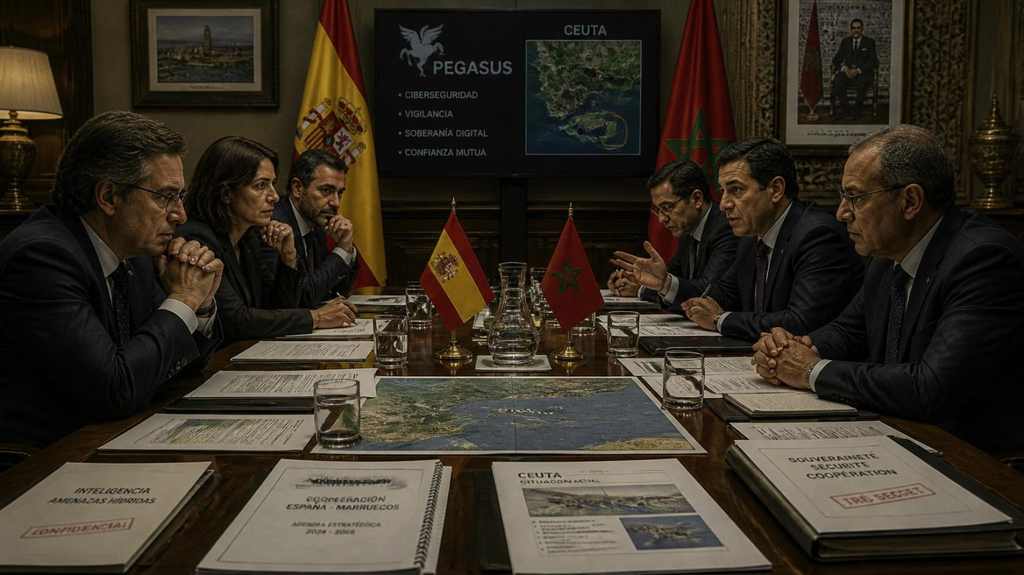
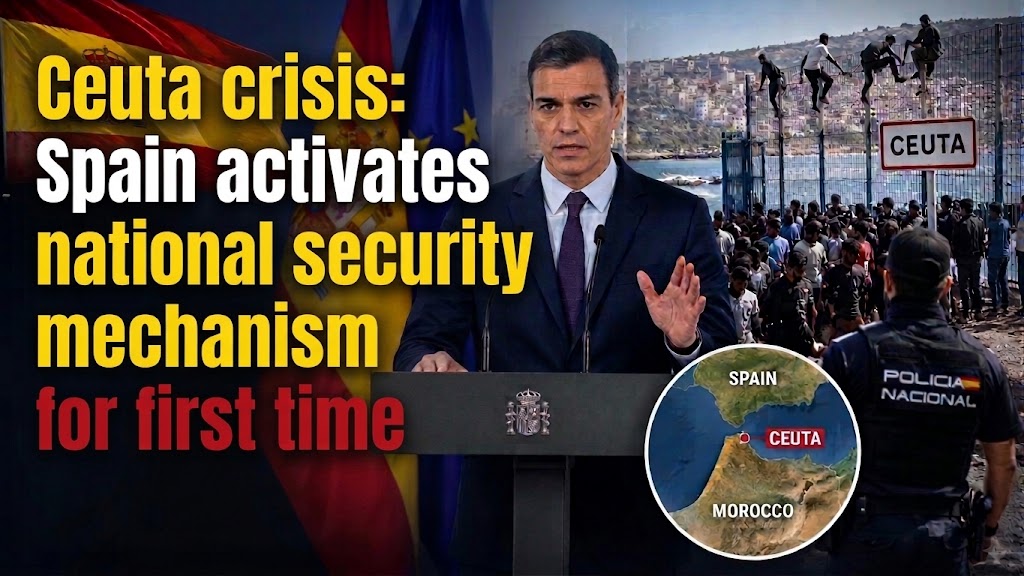
Algeria Gate: Spain has crossed an unprecedented threshold in its management of the crisis shaking Ceuta. On Tuesday, August 25th 2026, Pedro Sánchez’s government decided to declare the situation in the enclave a matter of “national security interest,” thereby activating for the first time a mechanism provided for by Spain’s 2015 National Security Law.

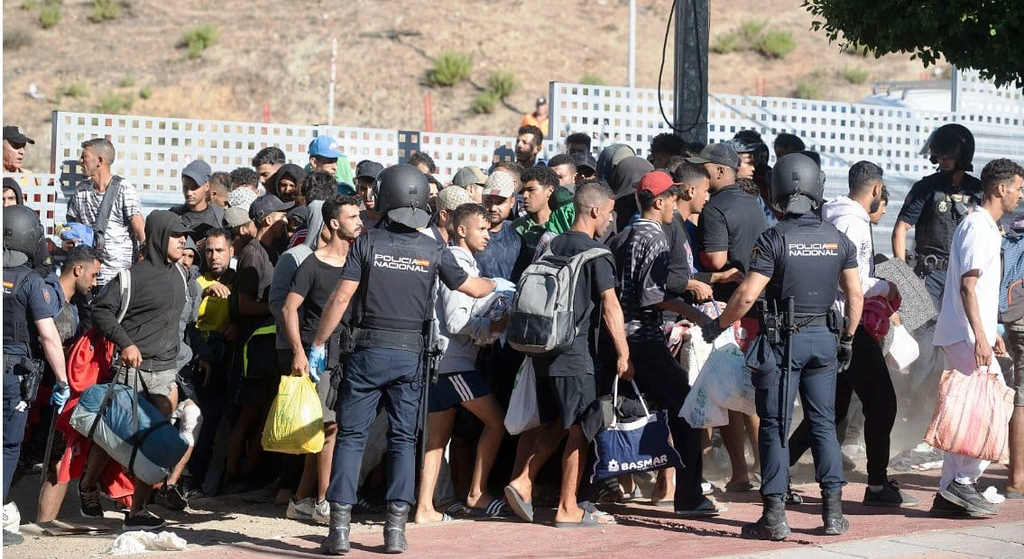
This decision comes nearly a month after the massive arrival of migrants in Ceuta from the border with Morocco. At the end of July, more than 70,000 people crossed or attempted to cross the border, creating an exceptional situation for the Spanish authorities and placing the enclave’s reception capacities under severe strain.
Ceuta crisis: Spain activates national security mechanism for first time

Madrid wants to centralise crisis management

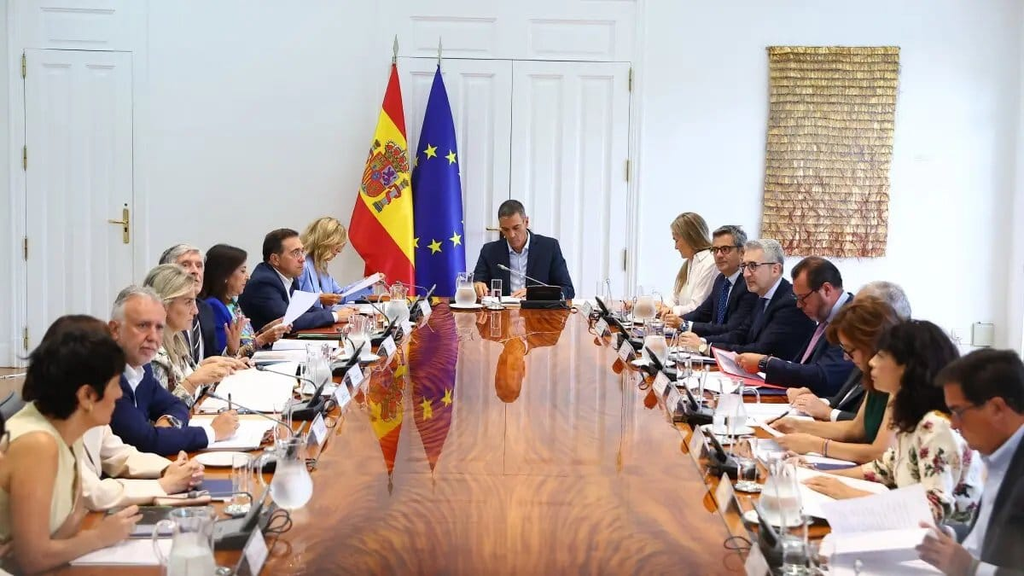
Meeting in an extraordinary session under the presidency of Pedro Sánchez, the National Security Council decided to strengthen coordination between the various Spanish administrations. The Minister for Territorial Policy, Ángel Víctor Torres, is notably to assume an enhanced coordinating role in order to put in place a unified response to the crisis.

Madrid’s stated objective is to coordinate operations more effectively, particularly the care of migrants still present in the enclave, their identification, and the procedures allowing their return to Morocco when this is legally possible.

A situation that now goes beyond the purely migratory issue

The scale of the crisis has gradually transformed what was initially regarded as a migratory crisis into a matter directly affecting national security and the external borders of the European Union.

Several thousand people are still in Ceuta, including a significant number of minors, while local infrastructure and reception services remain under heavy pressure.
Ceuta crisis: Spain activates national security mechanism for first time

Madrid is also seeking additional support from Brussels to deal with the consequences of this crisis. The Spanish government has in particular taken steps with the European Commission to obtain emergency funding.

A precedent in relations with Morocco

This decision also comes in a particularly sensitive context between Madrid and Rabat regarding Ceuta and Melilla. The scale of the July influx has revived debates on border control, migratory cooperation and Spanish sovereignty over the two enclaves.

By activating this national security mechanism for the first time, the Spanish government intends to show that the Ceuta crisis is now regarded as a strategic issue requiring a coordinated response at the highest level of the State.

The activation of this mechanism therefore constitutes a turning point in the management of the crisis: Madrid is no longer treating the migratory influx solely as a local emergency, but as a situation liable to have wider security, political and European repercussions.


#Spain
Author
Lys Iwannughen
View my articles

Leave a comment

Your email address will not be published. Required fields are marked *

Algeria
Share this post

Ayoub Aissiou case: French personalities oppose his handover to Algeria

Ayoub Aissiou case: French personalities oppose his handover to Algeria

Algeria Gate: The case of Algerian businessman Ayoub Aissiou is taking on a new dimension, as several French personalities mobilise to prevent his possible handover to Algeria.

According to the elements reported, a step would have been addressed to the Spanish authorities in order to oppose his transfer, while appeals would have been launched to Emmanuel Macron and the Spanish government to intervene in the dossier.

Ayoub Aissiou case: French personalities oppose his handover to Algeria

Among the personalities cited figure notably Arno Klarsfeld, Eric Naulleau, Boualem Sansal, Celine Pina and former minister Bernard Kouchner.

Ayoub Aissiou case: French personalities oppose his handover to Algeria

Ayoub Aissiou is the subject of judicial proceedings in Algeria in cases linked to corruption. His supporters in France nevertheless present his dossier under a political angle, feeding the controversy.

Ayoub Aissiou case: French personalities oppose his handover to Algeria

In Algiers, this mobilisation is liable to be perceived as an attempt at interference in a matter falling under Algerian justice. A new controversy that comes at a time when relations between Algiers and Paris remain particularly sensitive.

#Algeria#Ayoub Aissiou#France
Author
Lys Iwannughen
View my articles
Algeria
Share this post

Leak of 70,000 Moroccan Intelligence Names: The “JabaROOT” Breach Puts Rabat’s Security Apparatus Under Pressure

Leak of 70,000 Moroccan Intelligence Names: The “JabaROOT” Breach Puts Rabat’s Security Apparatus Under Pressure

From the alleged “biggest blow to Moroccan intelligence” to threats over the Ceuta events, the scandal is exposing vulnerabilities that Rabat can no longer easily conceal.

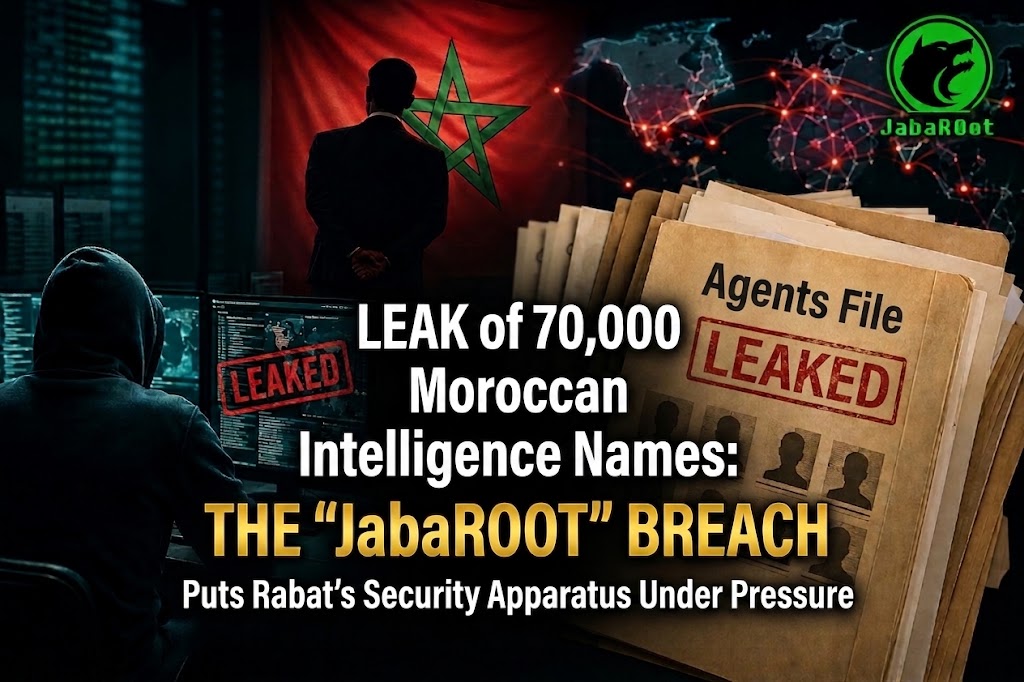
Algeria Gate: What the JabaROOT group claims to have achieved is far more damaging to Morocco than an ordinary cyberattack. The group says it has published data on more than 70,000 people allegedly linked to Moroccan security and intelligence services, while threatening to reveal officials it claims were involved in planning and coordinating the events surrounding Ceuta.

The full authenticity and scope of the files still require independent technical verification. But the allegations have already triggered intense interest in the Spanish press, because they strike at the heart of Morocco’s security establishment and raise uncomfortable questions about Rabat’s activities inside Europe.

According to Spanish reports, the leaked material allegedly includes names, positions, dates of birth, identity numbers, ranks, recruitment dates and, in some cases, banking information. If confirmed, this would be much more than an embarrassing data breach: it could expose the structure, networks and operating methods of key Moroccan security institutions.

Leak of 70,000 Moroccan Intelligence Names: The “JabaROOT” Breach Puts Rabat’s Security Apparatus Under Pressure

The affair is particularly sensitive because the alleged targets include personnel linked to the General Directorate for Territorial Surveillance (DGST) and the General Directorate for National Security (DGSN), both headed by Abdellatif Hammouchi.

From Moroccan Cyberattack to Spanish Security Concern

Spanish newspaper ABC described the development as a new escalation in the cyberwar surrounding Morocco. It reported that JabaROOT had published a database containing tens of thousands of alleged members of Moroccan intelligence and police services.

But the most explosive element is the group’s threat to publish the names of those it claims coordinated the Ceuta operation.

The group has also accused senior figures close to the Moroccan royal palace of involvement in planning actions designed to put Spain under pressure. Among the names mentioned is Fouad Ali El Himma, a powerful adviser to King Mohammed VI. At the same time, the group reportedly excluded the king himself from prior knowledge of the alleged operation, directing the accusations instead toward figures surrounding the palace.

The Objective went further, reporting that the group claimed to have exposed 70,381 presumed agents, including senior intelligence officials, alongside sensitive information contained in several electronic files.

Meanwhile, El Confidencial described the episode as potentially “the biggest blow ever dealt to Moroccan intelligence.” Previous leaks attributed to JabaROOT reportedly contained accurate information, although that does not by itself establish the authenticity of every newly published file.

Ceuta: The Most Dangerous Part of the Story

The Ceuta dimension is what turns the scandal into a potentially explosive Spanish-Moroccan affair.

JabaROOT claims that the mass movement of Moroccans toward Ceuta was not simply the result of uncontrolled migration or a temporary failure of border management, but part of a broader operation allegedly prepared inside Morocco.

The group has threatened to publish the identities of Moroccan security personnel it says coordinated the operation, as well as alleged mission orders concerning agents who moved to Fnideq before and during the events.

If those documents are independently authenticated, the consequences would be enormous. Spain would not merely be confronting another Moroccan data breach; it would have to confront allegations that its own border environment was deliberately used as a tool of political pressure.

That raises a question Madrid has long preferred to handle cautiously: can Spain continue to rely so heavily on Morocco to manage migration and border security while ignoring the leverage that dependence gives Rabat?

The alleged leak does not, by itself, prove that Morocco orchestrated the events. But it has reopened precisely the question that the Spanish authorities would rather keep closed.

The “Impenetrable” Moroccan Security Machine Takes a Hit

For years, Rabat has carefully cultivated the image of an exceptionally capable security apparatus; one that Europe relies upon in the fight against terrorism, organized crime and irregular migration.

The JabaROOT affair strikes directly at that image.

If tens of thousands of sensitive records really escaped from Morocco’s security institutions, the damage would extend well beyond exposed names. Intelligence structures, recruitment networks, administrative links and operational relationships could potentially be compromised.

The Objective characterized the alleged breach as deep and extensive, while highlighting the appearance of information concerning senior security officials.

Still, Spanish reporting has also exercised some caution. Being listed in a security database does not automatically make someone an intelligence operative, and the publication of a genuine sample does not prove that the entire database of 70,000 names is authentic.

But that distinction does little to erase the central problem: someone appears to have obtained and published sensitive information connected to the Moroccan security apparatus.

And Rabat has yet to provide a convincing public explanation that settles the question of how such information could have escaped.

From Pegasus to JabaROOT

The scandal also inevitably revives the Pegasus affair.

Spanish authorities previously confirmed that the phones of Prime Minister Pedro Sánchez and senior ministers had been compromised by Pegasus spyware. Although Morocco denied involvement and Spanish investigations have not established judicially that Rabat was responsible, suspicions surrounding the affair never fully disappeared.

The JabaROOT allegations do not prove Morocco’s involvement in Pegasus either. But by bringing espionage, surveillance and Moroccan intelligence activity back into the Spanish media spotlight, they have reopened an old political wound.

The stakes go beyond personal privacy. Any evidence of foreign intelligence operations inside Spain would inevitably raise questions about sensitive files such as Western Sahara, Ceuta, Melilla, migration and Madrid’s relations with Rabat.

An attempt to export the accusation toward Algeria

Faced with the leaks, Moroccan authorities have reportedly sought to attribute JabaROOT’s activities to Algeria, continuing a familiar pattern in which Rabat attempts to externalize damaging security crises.

Spanish media, however, have not treated that claim as established fact.

Reports citing cybersecurity specialists and intelligence sources have raised doubts about the Algerian hypothesis and pointed instead to the possibility of an insider with knowledge of Morocco’s security system, or even an internal struggle within the apparatus.

That uncertainty matters.

Instead of shifting the spotlight toward Algeria, the accusations have left the more uncomfortable question unanswered: how did such sensitive information allegedly escape Morocco’s most powerful security institutions in the first place?

The burden of proof remains with those making the accusation.

A Crisis of Confidence for Morocco

The real damage to Morocco may therefore extend far beyond the leaked files.

For years, Rabat has presented itself to Europe as an indispensable security partner and a reliable gatekeeper against migration and terrorism. But the JabaROOT affair is putting another image before European audiences: that of a security system allegedly vulnerable to major internal penetration and accused of conducting controversial activities beyond Morocco’s borders.

Not every allegation made by JabaROOT has been proven. But the scandal has already achieved something significant: it has placed Morocco’s intelligence apparatus under an unusually intense European microscope.

If the documents concerning Ceuta are authenticated, Spain could face evidence of an extraordinary attempt to use security and migration pressure against its own territory. If they are not, the scale of the alleged breach would still expose serious questions about the protection of Moroccan security data.

Either way, Rabat faces a difficult problem.

The issue is no longer simply whether 70,000 names were leaked. It is whether Morocco can still maintain the image of an impenetrable security apparatus while its alleged internal data, intelligence networks and cross-border activities are being dragged into the public arena.

And that may be the most damaging part of the JabaROOT affair: the scandal has moved from Moroccan servers to the heart of the European debate over trust in Rabat.

#Algeria#Morocco#Spain
Author
Lys Iwannughen
View my articles
Algeria
Share this post

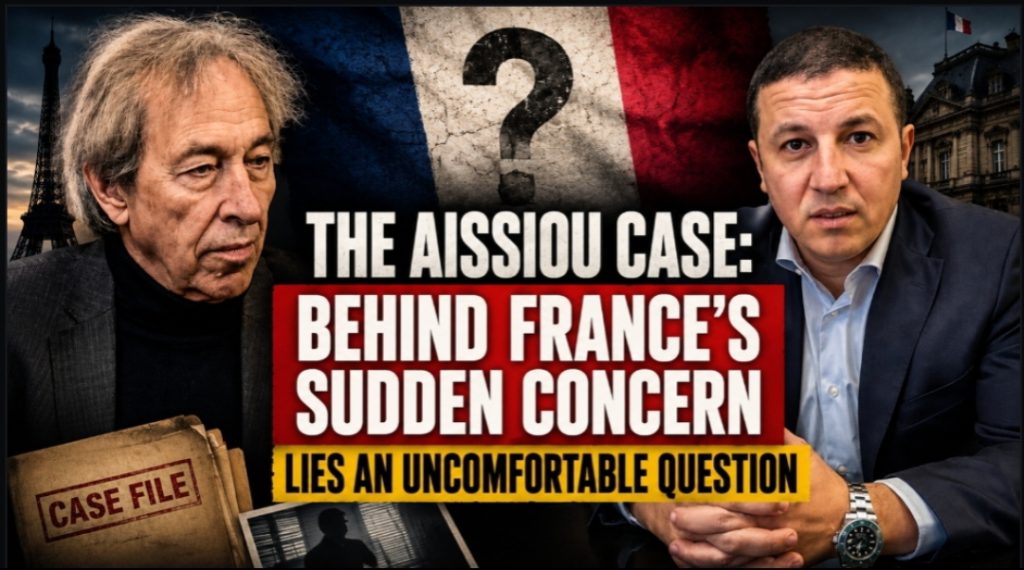
The Aissiou Case: Behind France’s Sudden Concern Lies an Uncomfortable Question

The Aissiou Case: Behind France’s Sudden Concern Lies an Uncomfortable Question

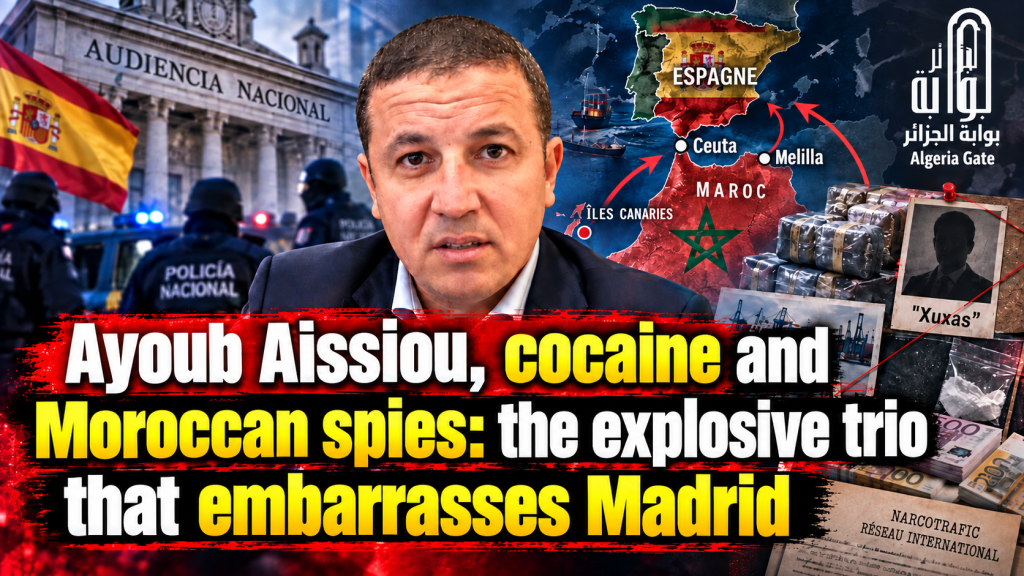
Algeria Gate: The extradition case of Ayoub Aissiou, a former businessman arrested in Barcelona on July 25 on the basis of an international arrest warrant, is stirring surprising mobilization within certain French political and media circles, even though nothing in this purely judicial matter appears to justify such agitation.

Convicted by Algerian courts and wanted for economic and financial offenses, Aissiou is the subject of extradition proceedings to Algiers. Yet several French public figures are now calling on Madrid not to hand him over to Algerian authorities, presenting him as a “political opponent”; a label that raises questions, given that the man has no connection whatsoever to journalism, literature, or the defense of political ideas.

This mobilization strangely echoes the one deployed around Boualem Sansal, who is himself a signatory of the appeal sent to Spanish authorities on Aïssiou’s behalf. While the Sansal case could be dressed up under the pretext of defending a “writer,” backed by the CRIF and France’s literary elite, the same mechanism now appears to be applied to a case of a strictly financial nature, with no apparent justification.

One essential question remains: what does Ayoub Aissiou actually know? A former figure in business circles with ties to networks of power in both France and Morocco, he could hold sensitive information on financial circuits, intermediaries, shell companies, and political protections inherited from the former system. All of this, in the event of thorough questioning by Algerian justice, could shed light on names and influence networks that remain active today.

This case also fits within the broader framework of the proxy war waged by the Makhzen against Algeria, backed by French, Israeli, and Emirati relays. In this context, public figures, media outlets, and business networks based in Europe can become instruments serving interests far larger than the individual case of a businessman prosecuted for financial crimes.

Beyond the opportunistic rhetoric about “human rights,” the real question raised by this case is simple: who has an interest in preventing Ayoub Aïssiou from speaking before Algerian justice? The profile of those rallying to his defense; largely close to the pro-Israel lobby in France, leaves little doubt as to the true nature of what lies behind this agitation.

#Algeria#Ayoub Aissiou#France
Author
Lys Iwannughen
View my articles