


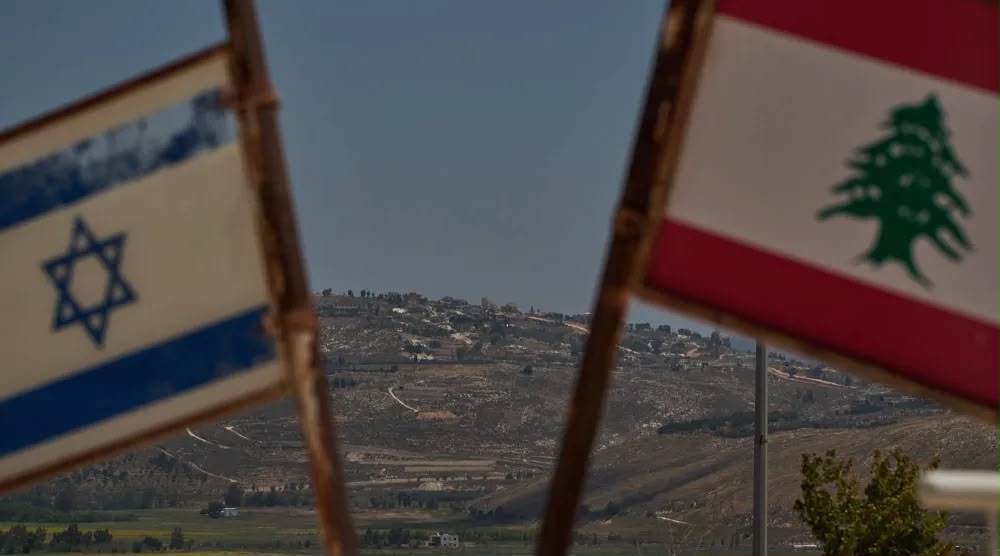
ALGERIA GATE: It’s easy to place the blame for what’s happening in Lebanon on Israel alone. Yes, Israel occupied the south, bombed cities and villages, and no violation of another state’s sovereignty can be justified. But settling for that narrative alone conceals a more uncomfortable question: how did Lebanon arrive at a point where its south became an open arena for foreign interference, occupation, and proxy wars in the first place?
The harsh truth is that Israel did not create the Lebanese collapse alone. The Lebanese created it too for decades, when the state failed to monopolize arms and assert its sovereignty over its entire territory. And once decisions over war and peace began being made outside state institutions, it was only natural that Lebanon would gradually lose its ability to protect itself and dictate its own terms.
No sovereign state can endure while a parallel armed force, independent of its official army, holds its own arsenal and its own strategic decision-making. Lebanese may disagree on how to judge Hezbollah’s role or the justifications for its arsenal, but the political outcome is clear: two centers of sovereign decision-making produced a weak state, incapable of imposing its will either domestically or abroad.
Nor is it fair to claim this division was simply “imposed” on Lebanon from outside. True, civil war and past occupations created the conditions that allowed parallel forces to emerge alongside the state. But it was Lebanon’s own political elite who chose, after all of that, to coexist with this duality rather than end it. The Taif Agreement gave the state a constitutional mandate to monopolize arms yet political forces chose to freeze that provision rather than implement it, hiding behind a rotating set of justifications: “resistance” at one point, “internal balance” at another, “avoiding strife” at a third. This was not failure born of incapacity. It was a political choice, made repeatedly by Lebanon’s own ruling factions, generation after generation because dismantling that duality meant a real confrontation that every faction, not Hezbollah alone, kept avoiding.
The recent agreement laid this truth bare. Lebanon today cannot implement the demand to disarm Hezbollah without risking internal confrontation, nor can it reject Israeli conditions and force a full withdrawal. It is the outcome of years of accumulated crises, concessions, and a fundamentally divided concept of statehood.
What’s worse: Lebanon is no longer even the one deciding its own crisis. The recent agreement is not merely an understanding between Lebanon and Israel under American sponsorship it sits within a far wider regional context where American, Iranian, and Israeli calculations all intersect. When Hezbollah describes the agreement as an attempt to disrupt the course of regional understandings, it inadvertently reveals, from its own vantage point, a painful truth: Lebanon is no longer a principal actor shaping its own fate it is an arena where other parties’ projects collide.
Here lies the greater irony. Hezbollah, which for decades presented itself as the guardian of Lebanon’s sovereignty and the defender of its independent decision-making, now finds itself a piece on a regional chessboard that extends well beyond Lebanon itself. And when its officials warn that implementing the agreement could trigger civil war, that warning exposes just how deep the deadlock runs: a state unable to assert its sovereignty, an armed force that cannot stand down without threatening the country’s internal balance, while other capitals draw the lines of what is permitted and what is not.
This is the harshest regional truth of all: Lebanon has not only lost its monopoly over domestic decisionmaking it has lost any real ability to shape its own regional fate. Even the forces that once raised the banner of defending Lebanon have become subordinate to balances larger than themselves, while ordinary Lebanese keep paying the price of conflicts whose outcomes they have no power to decide.
Israel’s occupation of the south is not an Israeli success story so much as evidence of Lebanese failure. States are not occupied solely because their neighbors are strong they are occupied because of their own internal fragility and their failure to build a state that monopolizes arms, decision making, and sovereignty. Sovereignty is not lost in a single day; it erodes gradually, as state institutions weaken, power centers multiply, and regional interests come to outweigh any unifying national project.
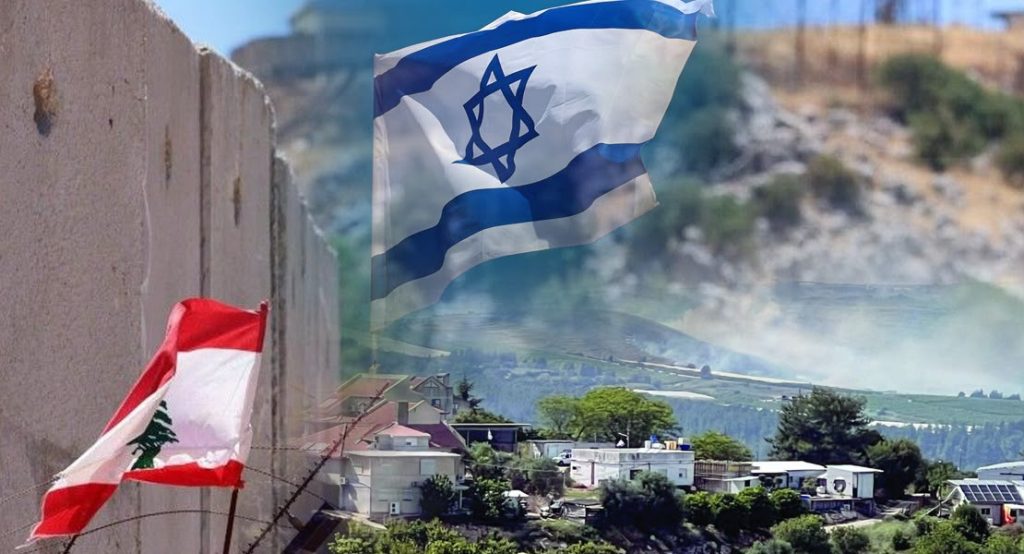
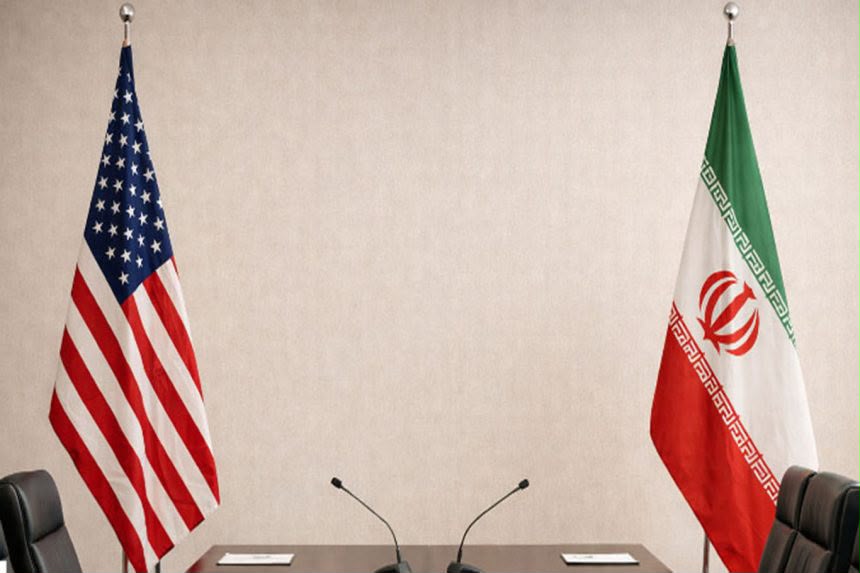
Lebanon’s real tragedy is not that Israel occupies part of its south, nor that the United States and Iran are negotiating at Beirut’s expense. The tragedy is that Lebanon, after decades of war and crisis, still cannot answer the most basic question: who actually holds the power to decide for the Lebanese state?
There is no conspiracy against Lebanon greater than the Lebanese themselves failing to build a single state with a single decision making authority and a single arsenal. And as long as that failure persists, the south will not be the last territory occupied, nor will this agreement be the last settlement imposed on a country that has yet to decide who actually governs it.
And until the Lebanese settle that question for themselves, others from Tel Aviv to Washington to Tehran will keep writing their own answers for them, on the ground and by force of arms, not by what sovereignty’s slogans claim.


















so true and no one notice that thank you for your hardworking
Le sujet a été abordé d’un point de vue que je n’avais jamais rencontré auparavant. C’est un grand angle
Your point of view need to be discussed