Monday, 19 October 2026 • 00:49 Algiers time
Algeria Gate
News Room
Cameron Hudson: UAE is virtually the sole backer of the RSF..without its support the war in Sudan would not continue Algeria-Niger: Official launch of Trans-Saharan fibre optic link Five minutes of lament over Algeria: Amar Belani exposes CNEWS’s real obsession Algerian courts hand down first death sentences under new drugs law Ségolène Royal’s masterclass on Algeria against an ignorant and demagogic journalist President Tebboune and senior officials receive the remains of Boualem Boualem in Algiers NAPEC 2026 in Oran: Algeria at the Heart of Africa’s and the Mediterranean’s New Energy Landscape Pegasus Files: Amnesty Uncovers Morocco’s Espionage Against Spain President Tebboune Orders Salary Increases in Algeria’s 2027 Budget, Rules Out New Taxes on Citizens Algeria Emerges as a Trusted Power for Regional Peace and Stability
Share this post

Attaf in Jeddah to participate in an extraordinary session of the Organization of Islamic Cooperation

• Author: Lys Iwannughen • 0 comments • 39 views
Attaf in Jeddah to participate in an extraordinary session of the Organization of Islamic Cooperation

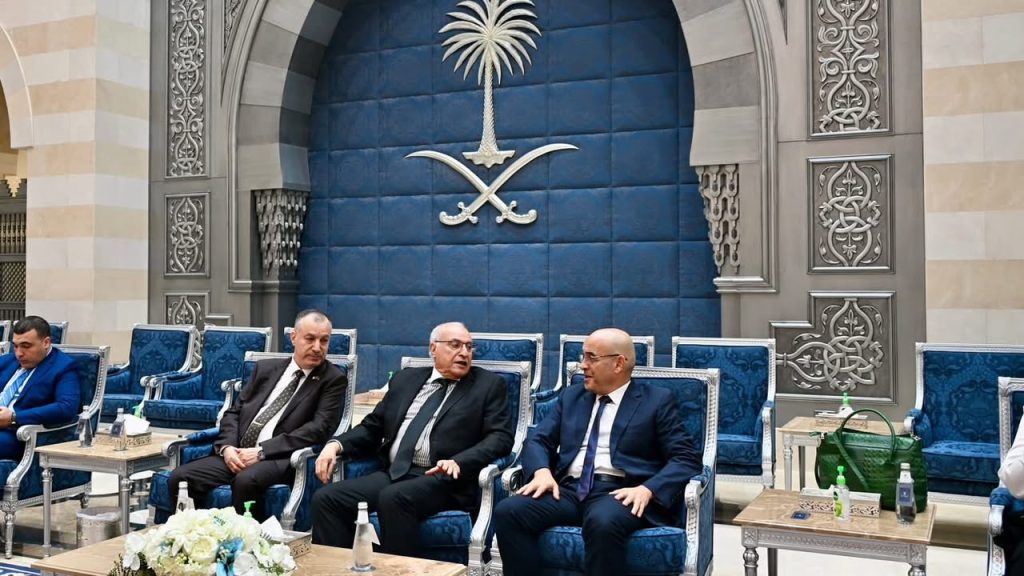
Algeria Gate: On the instructions of President of the Republic, Abdelmadjid Tebboune, Minister of State, Minister of Foreign Affairs, the National Community Abroad and African Affairs, Ahmed Attaf, arrived this evening in the city of Jeddah in the Kingdom of Saudi Arabia to participate in the work of the 23rd extraordinary session of the Council of Foreign Ministers of the Member States of the Organization of Islamic Cooperation, scheduled to be held on August 27.

The session’s work is expected to include the election of a new Secretary-General of the Organization of Islamic Cooperation to succeed the current Secretary-General, Hussein Ibrahim Taha.

The session will also discuss the serious and rapidly evolving developments in the Palestinian cause amid the ongoing Israeli aggression and the escalating violations committed against the Palestinian people, particularly in the Gaza Strip and the West Bank, including occupied Jerusalem.

On the sidelines of his participation in the meeting, Minister Attaf will hold a number of bilateral meetings and talks with his counterparts from member states, as well as meetings with officials of the Organization of Islamic Cooperation, to discuss a number of issues of common interest and regional and international developments.

Author
Lys Iwannughen
View my articles

Leave a comment

Your email address will not be published. Required fields are marked *

African coast
Share this post

Security Council: Algeria Calls for an End to the Use of Starvation as a Weapon of War

Security Council: Algeria Calls for an End to the Use of Starvation as a Weapon of War

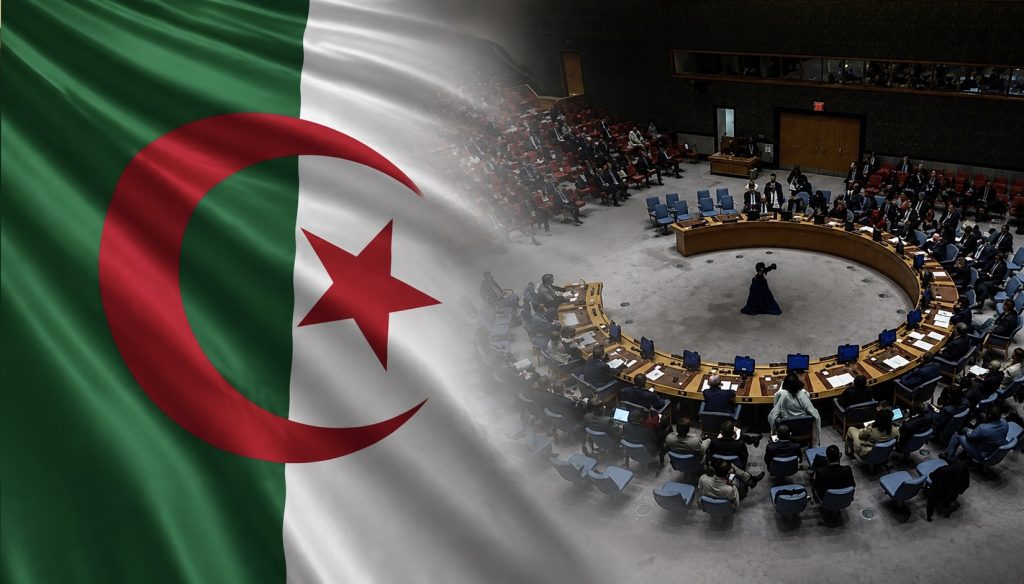
Algeria Gate: Algeria has called on the United Nations Security Council to take concrete and enforceable measures to prevent starvation from being used as a weapon of war, warning of the devastating humanitarian consequences witnessed in Gaza and Sudan.

Speaking before the Security Council on Tuesday, Algeria’s Deputy Permanent Representative to the United Nations, Mehdi Litim, highlighted the unprecedented scale of global food crises, noting that the Global Report on Food Crises recorded two simultaneous famines in 2025 for the first time in its history, affecting populations in Gaza and Sudan.

During a Security Council meeting focused on “Food under the Fire of War: The Role of the Security Council in Reducing Global and Local Food Crises,” Litim stressed that starvation cannot be justified under any circumstances as a method of warfare.

Algeria warns of catastrophic food crisis in Gaza

Addressing the situation in Gaza, the Algerian diplomat described the humanitarian crisis as “an open and deep wound,” pointing to the latest figures from the Integrated Food Security Phase Classification (IPC).

According to the data cited by Laitim, around 1.4 million people in Gaza continue to face acute food insecurity, underscoring the scale of the crisis facing the Palestinian population.

He warned that the famine conditions previously recorded in Gaza demonstrate the devastating consequences of deliberately depriving civilians of food and essential resources.

“Children are dying from malnutrition while trucks loaded with vital aid remain stuck just a few kilometers away,” he said.

Against this backdrop, Algeria renewed its call for an immediate ceasefire in Gaza and unrestricted humanitarian access, stressing that aid must be allowed to reach civilians without obstruction.

Sudan faces one of the world’s worst food emergencies

Laitim also drew attention to the worsening humanitarian situation in Sudan, describing it as one of the world’s most serious emergencies in terms of acute food insecurity.

The latest IPC figures cited during the Security Council meeting indicate that 19.5 million people; nearly 41% of Sudan’s population, are facing high levels of acute food insecurity.

Even more alarming, Laitim said, is the fact that 135,000 people have been classified in Phase 5, or catastrophe, and are experiencing famine, while approximately 825,000 children are suffering from severe acute malnutrition.

The Algerian representative attributed the deterioration to continued conflict, restrictions on humanitarian access, attacks on supply routes and the destruction of agricultural and food-production infrastructure.

He also expressed concern over the collapse of international funding for the food sector, which he said has fallen to its lowest level in a decade.

Algeria demands accountability for attacks on food and water infrastructure

For Algeria, the use of hunger against civilian populations represents a grave violation of international humanitarian law.

Litim reiterated that parties to armed conflicts have a strict obligation to protect civilians and the infrastructure essential to their survival, particularly food-production systems and water supplies.

He emphasized that safe, rapid and unhindered humanitarian access is indispensable, particularly in conflict zones where civilians are already facing displacement, hunger and the destruction of basic services.

Algeria, he noted, continues to contribute to international efforts in this area through its co-chairmanship of the working group on the protection of civilian infrastructure under a global initiative designed to strengthen political commitment to international humanitarian law.

He further recalled Algeria’s commitment to protecting humanitarian personnel, renewed through its signing of the Declaration on the Protection of Humanitarian Workers in September 2025.

Algeria proposes concrete measures against starvation as a weapon of war

Algeria called on the Security Council to move beyond declarations and adopt concrete measures to combat starvation and prevent its deliberate use as a weapon of war.

Among the measures proposed are:

  • Establishing strong early-warning mechanisms to monitor attacks against food and water infrastructure.
  • Mobilizing adequate resources to rebuild vital facilities destroyed or damaged by armed conflicts.

  • Guaranteeing safe, rapid and unrestricted humanitarian access.

  • Holding perpetrators accountable for attacks against civilian infrastructure.

  • Creating a specific sanctions regime against parties that violate UN Security Council Resolution 2417 and deliberately use starvation as a weapon of war.

The Algerian position reflects growing concern over the use of food deprivation and the destruction of essential civilian infrastructure as tools of warfare in contemporary conflicts.

Algeria: Hunger must never again be used as a weapon

Concluding his intervention, Mehdi Litim reaffirmed Algeria’s commitment to working with international partners to strengthen respect for international humanitarian law, protect human dignity and advance sustainable peace.

He stressed that hunger must never again be turned into a weapon against civilian populations.

For Algeria, the crises in Gaza and Sudan demonstrate the urgent need for the international community, and particularly the UN Security Council, to translate its commitments into effective mechanisms capable of preventing starvation, protecting civilians and ensuring humanitarian assistance reaches those who need it most.

#Africa#Algeria#United Nations
Author
Lys Iwannughen
View my articles
Hebrew press
Share this post

Sara Netanyahu insults Moroccans: “You are a neanderthal people!”

Sara Netanyahu insults Moroccans: “You are a neanderthal people!”

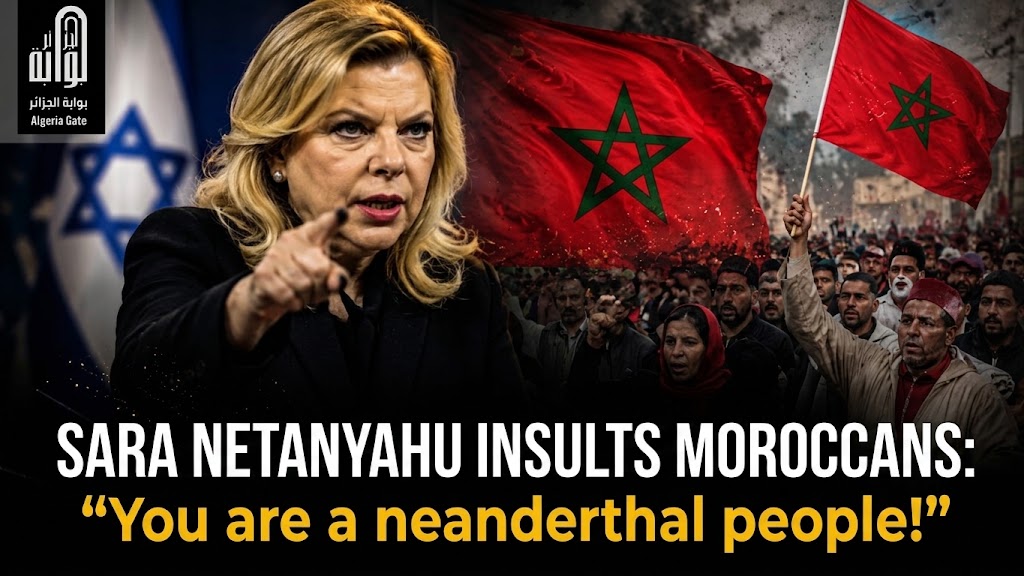
Algeria Gate: The Zionist newspaper Yedioth Ahronoth revealed details of a new lawsuit filed by a domestic worker of Moroccan origin against the Israeli Prime Minister’s Office. He accused Sara Netanyahu, wife of Prime Minister Benjamin Netanyahu, of insulting and mistreating him during his employment in the family home, describing Moroccans as “a neanderthal people.”

According to the lawsuit details, Rami Ben Hamou, who worked for more than ten years in the Israeli Prime Minister’s Office and the Netanyahu family home, filed a lawsuit seeking compensation of 450,000 shekels over what he described as “extremely harsh treatment.”

The lawsuit stated that Ben Hamou worked in the Prime Minister’s home between March 2023 and December 2025. He would start work around 7:30 a.m. and sometimes continue until late at night or even dawn, averaging between 60 and 80 overtime hours per month; a scene that recalls the deeply rooted Moroccan loyalty to the Zionists.

The case file, as reported by the newspaper, also included accusations that Sara Netanyahu directed insulting remarks at the Moroccan worker, including offensive questions about the role of Moroccans and their service to others, as well as remarks that belittled him and his work, such as: “Were Moroccans created to be servants for others? Don’t you know how to do anything except prepare tea?”

This case comes at a time when the Moroccan Makhzen regime is seeking to advance the normalization path it has adopted, without any regard for the Moroccan people, who are subjected to humiliation, displacement, and deprivation of the most basic rights.

#Israel#Morocco
Author
Lys Iwannughen
View my articles
Europe
Share this post

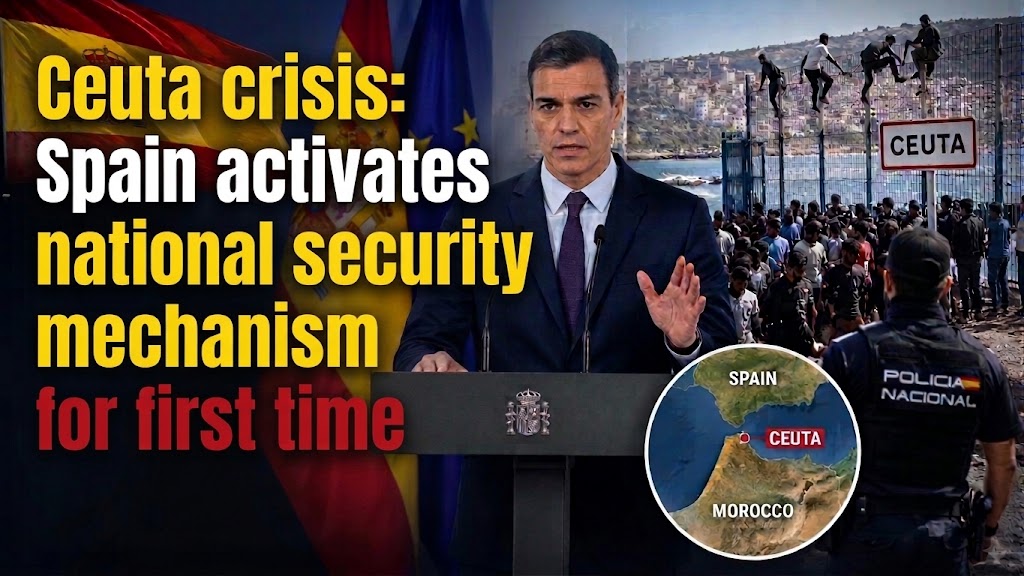
Ceuta crisis: Spain activates national security mechanism for first time

Ceuta crisis: Spain activates national security mechanism for first time

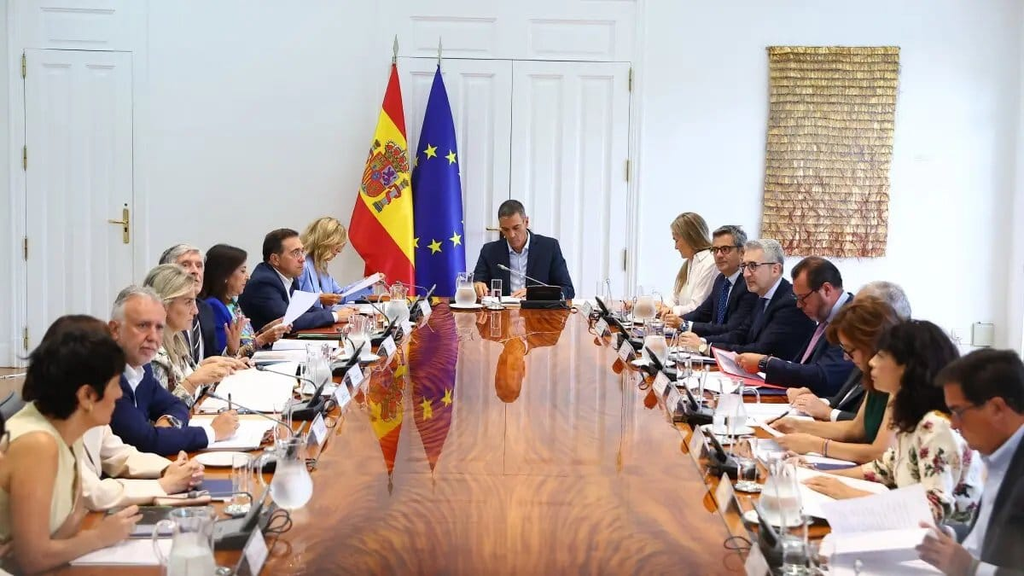
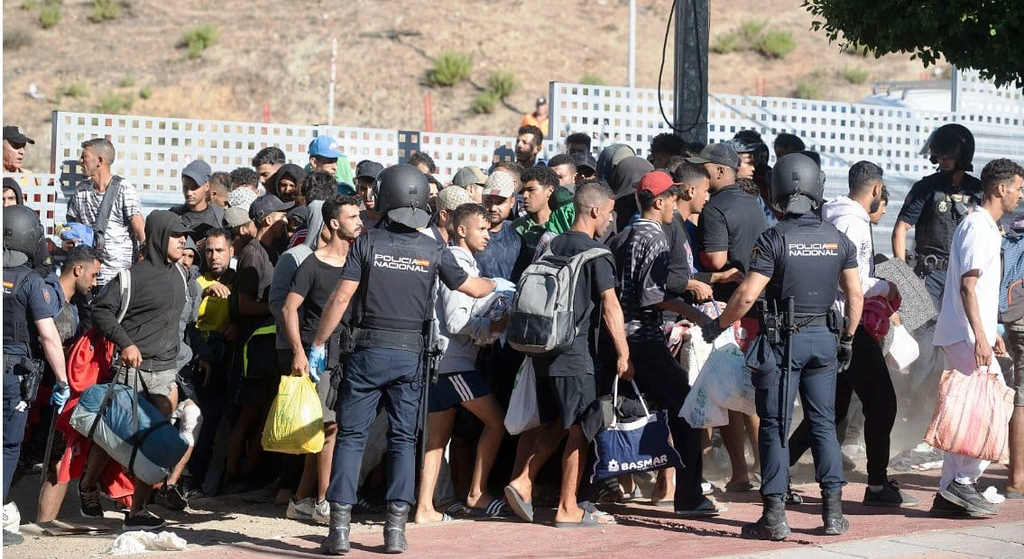
Algeria Gate: Spain has crossed an unprecedented threshold in its management of the crisis shaking Ceuta. On Tuesday, August 25th 2026, Pedro Sánchez’s government decided to declare the situation in the enclave a matter of “national security interest,” thereby activating for the first time a mechanism provided for by Spain’s 2015 National Security Law.

This decision comes nearly a month after the massive arrival of migrants in Ceuta from the border with Morocco. At the end of July, more than 70,000 people crossed or attempted to cross the border, creating an exceptional situation for the Spanish authorities and placing the enclave’s reception capacities under severe strain.

Ceuta crisis: Spain activates national security mechanism for first time

Madrid wants to centralise crisis management

Meeting in an extraordinary session under the presidency of Pedro Sánchez, the National Security Council decided to strengthen coordination between the various Spanish administrations. The Minister for Territorial Policy, Ángel Víctor Torres, is notably to assume an enhanced coordinating role in order to put in place a unified response to the crisis.

Madrid’s stated objective is to coordinate operations more effectively, particularly the care of migrants still present in the enclave, their identification, and the procedures allowing their return to Morocco when this is legally possible.

A situation that now goes beyond the purely migratory issue

The scale of the crisis has gradually transformed what was initially regarded as a migratory crisis into a matter directly affecting national security and the external borders of the European Union.

Several thousand people are still in Ceuta, including a significant number of minors, while local infrastructure and reception services remain under heavy pressure.

Ceuta crisis: Spain activates national security mechanism for first time

Madrid is also seeking additional support from Brussels to deal with the consequences of this crisis. The Spanish government has in particular taken steps with the European Commission to obtain emergency funding.

A precedent in relations with Morocco

This decision also comes in a particularly sensitive context between Madrid and Rabat regarding Ceuta and Melilla. The scale of the July influx has revived debates on border control, migratory cooperation and Spanish sovereignty over the two enclaves.

By activating this national security mechanism for the first time, the Spanish government intends to show that the Ceuta crisis is now regarded as a strategic issue requiring a coordinated response at the highest level of the State.

The activation of this mechanism therefore constitutes a turning point in the management of the crisis: Madrid is no longer treating the migratory influx solely as a local emergency, but as a situation liable to have wider security, political and European repercussions.

#Spain
Author
Lys Iwannughen
View my articles